News & Events
AJMI Discusses Press Freedom and Information integrity in a seminar at Qatar University
AJMI -Doha
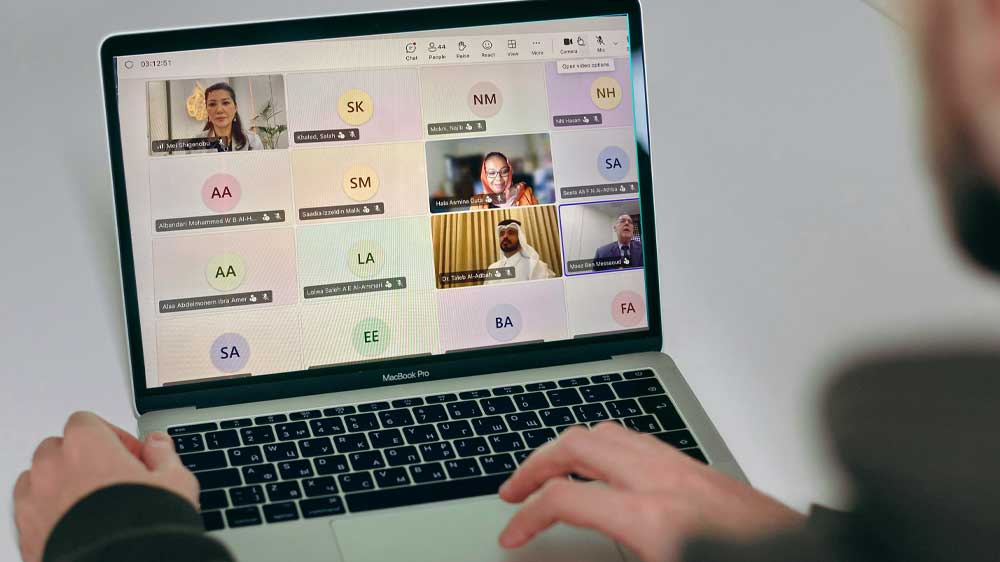
Al Jazeera Media Institute took part in a seminar organized by Department of Mass Communication at Qatar University, in collaboration with the UNESCO Office for Gulf States and Yemen, on the occasion of World Press Freedom Day. The seminar titled “Press Freedom and Information Integrity in a changing world: Challenges of independence and building trust,” was held on Sunday, May 3, 2026.
The virtual seminar brought together faculty members and media students from Qatar University, alongside journalists, media professionals, and individuals interested in issues of press freedom and media integrity in Qatar. The Institute was represented by Dr. Mi Shigenobu, editor of Journalism Magazine (English edition). In her remarks, she highlighted the alarming figures cited in the report of Reporters Without Borders, issued on April 30, noting that global press freedom has reached its lowest level in 25 years, with more than half of the world’s countries classified as being in a difficult or very dangerous situation. Dr. Shigenobu addressed legal, economic, and political pressures facing journalists, in addition to direct violence against them in conflict zones, particularly in Gaza and Lebanon, where journalism and information have been directly targeted. She noted that Al Jazeera Network alone has lost 12 journalists and media workers in Gaza since the beginning of the war, and around 27 journalists and media workers were killed in Israeli attacks on Lebanon, according to the Lebanese Press Editors Syndicate.
She also discussed the issue of ownership and control of digital platforms, and their role in shaping content distribution by suppressing certain narratives while amplifying others, which impacts the public’s ability to access accurate and balanced information. Dr. Shigenobu called for greater accountability for these platforms and a deeper understanding of how algorithms function and who holds power in digital public sphere. She expressed hope that media students will develop critical thinking skills to distinguish between sensational, misleading, or manipulated news, and use their innate digital skills to produce ethical, professional, and credible content that strengthens information integrity rather than contributing to noise.
The seminar program also included two editorial speeches by Mr. Salah Khaled, representing UNESCO, and Dr. Hala Gouta, Head of Mass Communication Department at Qatar University. This was followed by a panel moderated by Dr. Taleb Al-Atheba, featuring Mr. Sadiq Al-Amari, who addressed the situation of journalism in Qatar and the region in general, and challenges of protecting journalistic work amid digital transformations and professional pressures, in addition to Mr. Najib Mekni, who presented UNESCO’s brief report titled “Global trends in freedom of expression and media development.”