India’s youth uprising showed that independent digital journalism can now break stories, build audiences, and challenge legacy media’s power to decide what the nation sees, though sustaining that independence remains the harder battle.
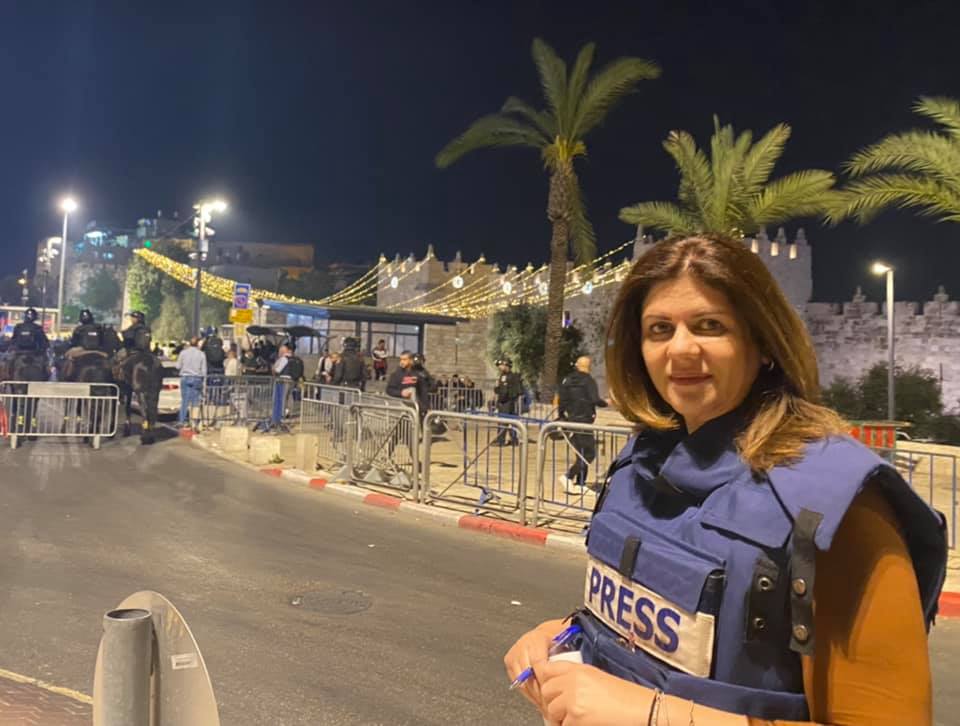
On July 20, as India’s monsoon parliamentary session opened, Parliament Street in New Delhi disappeared beneath a sea of bodies. Tens of thousands of young people had gathered to protest systemic exam leaks and institutional corruption, demanding the resignation of Education Minister Dharmendra Pradhan, led by the satirical youth body Cockroach Janata Party (CJP). In the middle of the crowd, amidst the haze of tear gas and the thrum of police sirens, a young journalist stood holding a microphone, her colleague crouching nearby with a handheld camera.
This describes the kind of independent journalism seen on the streets of Delhi covering one of the largest protests in recent times: rigorous, on-the-ground reporting that, this time, was not led by legacy prime-time Indian media, but by independent journalists whose work was defined by a simple imperative: be there.
While mobile video footage circulated rapidly across social media platforms, major television networks were slower to provide sustained live coverage of a mobilisation that had been assembling for weeks at nearby Jantar Mantar.
The delayed coverage of dissenting voices by broadcast networks highlighted long-standing critiques of India’s media landscape. According to Reporters Without Borders (RSF), India ranked 157th out of 180 countries in its 2026 World Press Freedom Index, down from 140th in 2014. RSF and media analysts attribute the decline to concentrated corporate ownership, political pressure, and escalating economic and legal challenges faced by independent outlets.
This describes the kind of independent journalism seen on the streets of Delhi covering one of the largest protests in recent times: rigorous, on-the-ground reporting that, this time, was not led by legacy prime-time Indian media, but by independent journalists whose work was defined by a simple imperative: be there.
The Reuters Institute’s 2025 Digital News Report similarly notes that major broadcast media ownership in India remains concentrated among a small number of industrial conglomerates that generally align with the ruling administration. Concurrently, independent journalists critical of government policies frequently encounter legal hurdles and harassment online. These structural dynamics have eroded public trust in legacy broadcast television as the primary venue for public grievance and crisis reporting.
The numbers alone do not explain July 20, but they frame a pivotal question: What happens when the institutions traditionally entrusted with documenting a public crisis are no longer the only ones capable of doing so?
On Parliament Street, the answer was immediately visible. The reporter with the microphone was hardly the only person documenting the day. Protesters were filming. Content creators were livestreaming. Independent journalists were publishing directly from the ground. Footage moved across social platforms while conventional newsrooms were still deciding how prominently the protest belonged in their rundowns.
The Story Before It Became a Story
The student movement, initially organised online under the banner of the Cockroach Janata Party (CJP), gradually expanded from digital satire into a large-scale physical mobilisation demanding the resignation of Union Education Minister Dharmendra Pradhan.
Mainstream television outlets largely overlooked the early weeks of the demonstration. Digital outlet Peek TV began reporting from Jantar Mantar on June 6. Priyanshi Sharma, a journalist and founder of the outlet, says the initial decision to cover it was partly driven by curiosity: was an internet-born movement actually going to translate into a sustained presence on the ground?
Soon, however, the newsroom’s decision to keep returning became a story in itself. As Peek TV continued its coverage, Sharma says journalists and viewers began asking why the outlet was still interested in a protest that appeared to have little public traction.
“Some people also asked us, ' Why are you covering this? Nobody even cares about this anymore. Are you guys official media partners of the CJP or are you getting paid by them to do this?” she recalls. Even senior journalists, she says, called and advised them to stop. PeekTV nevertheless continued, despite believing that the protesters’ demands were unlikely to be met.
The reason was less about predicting the protest’s eventual scale than about a principle of journalism.
“Hunger strikes should not be normalised,” Sharma says. “If somebody is starving themselves just to be heard by their government, that should not be normalised in a democracy.”
By June 28, the protest had acquired a figure capable of changing its political and media gravity. Activist Sonam Wangchuk began an indefinite hunger strike at Jantar Mantar. Yet even as Wangchuk’s hunger strike gave the demonstration a new focal point, Sharma says mainstream coverage remained limited.
The crowds included unaffiliated students, parents and older citizens, alongside organised student groups. Sharma recalls meeting a young person from Odisha who could not afford the journey to Delhi but was determined to attend. The protest was becoming a story before much of the national media had decided to tell it. “It was clear that we can’t stop covering this because so many people found their voice in this protest,” Sharma explains.
At this protest, people realised they don’t even need legacy media. Till now, people didn’t like legacy media, but they still thought they needed legacy media to bring attention to certain issues. At this protest, people realised they don’t even need legacy media.
In the Face of It
By July 20, the scale of the protest made it impossible for mainstream Indian media to overlook.
Sharma describes the initial absence of legacy coverage as deliberate rather than accidental. “I think that was an active choice, that they blocked it out for the first few days. They didn’t even acknowledge that something like this was happening.” Eventually, the protest became too large to ignore.
“The media couldn’t block this out anymore because at this point it was too apparent for you to ignore. You just risk looking irrelevant.”
But the arrival of television cameras introduced another contest: not over whether the protest existed, but over what it meant. While independent media documented both protester violence, such as stone-pelting and damaged police vehicles, and police tactics, including tear gas and physical force, mainstream television disproportionately emphasised the former.
The distinction, for Sharma, was not between showing one side and showing another. It was about proportion. “We also showed the damaged police cars. But alongside, we also showed the police brutality,” she says. “There was less stone-pelting and less violence by protesters compared to the brutality of the police. So we showed everything in that proportion.”
The difference was not merely editorial. It was visible on the ground. Several mainstream broadcast crews were heckled and confronted by protesters chanting “godi media”, a colloquial term used to describe outlets perceived as overly subservient to the government. The hostility was itself symptomatic of a deeper collapse of trust: for many protesters, the problem was no longer simply what a particular channel had reported, but what they believed the institution represented.
Several mainstream broadcast crews were heckled and confronted by protesters chanting “godi media”, a colloquial term used to describe outlets perceived as overly subservient to the government. The hostility was itself symptomatic of a deeper collapse of trust: for many protesters, the problem was no longer simply what a particular channel had reported, but what they believed the institution represented.
The Language of Gen-Z
The remarkable thing about the youth movement was that its participants did not merely reject particular stories. They increasingly rejected the machinery producing them.
Gen Z’s information ecosystem stood intact before the physical protest gained momentum. The Cockroach Janata Party emerged from internet satire; its language was deliberately irreverent, its political identity shaped through memes and social media, and its following accumulated online before spilling into the streets. The movement therefore did not require television to manufacture a sense of collective participation. People could watch the same video, share the same joke, circulate the same demand and arrive at Jantar Mantar having already experienced the protest digitally.
The Reuters Institute’s 2026 India report captures the broader transformation: a majority of respondents said they found news online, more than half used social media for news, while television remained at 44%. Traditional and digital media now operate in the same ecosystem, with video platforms hosting both established newsrooms and independent journalists.
And this is precisely where independent journalists such as Peek TV, alongside digital political commentators and reporters such as Samdish Singh, have found an audience that television increasingly struggles to retain.
For decades, television’s ability to make an event nationally visible gave legacy media an enormous amount of agenda-setting power. The protest demonstrated what happens when that monopoly weakens. A movement could gather, document itself and build an audience without first receiving permission from a television newsroom.
The remarkable thing about the youth movement was that its participants did not merely reject particular stories. They increasingly rejected the machinery producing them.
The Cost of Independence
But someone still has to pay for this independence. The logistics of Peek TV’s coverage illustrate how the basic mechanics of journalism change when they are not supported by a colossal newsroom infrastructure.
After July 20, Sharma worked on the ground with a lean crew of four: two journalists and two camera operators. Internet blackouts broke their normal workflow. Unable to transmit raw footage back to an editorial desk, the reporters edited videos on their phones, got into a car and drove through the city searching for a usable cell signal.
“After shooting, Vedanta [PeekTV’s co-founder] and I only used to edit our videos on our phones, and just go out in a car, looking for Internet,” Sharma recalls. “We would go around looking for signals… and just post from our phones.” It is an absurd physical image of the modern press: a journalist leaving the protest site not to escape the story, but to find enough connectivity to publish it.
Amid this chaos, camaraderie ebbed on the ground. When Peek TV lacked personnel to operate a camera, Sharma received copious support. “Sometimes I’ve gotten a fellow journalist. Sometimes I’ve gotten that help from budding content creators. Sometimes I’ve gotten that help from protesters also,” she says.
On the ground, the conventional boundaries between reporter, creator, witness and audience became porous. “There’s no competition that way on the field when it comes to ground movements,” Sharma says.
This network model marks a striking departure from traditional rival newsrooms competing for exclusive footage. The digital protest ecosystem operates less like an industry and more like a fluid network.
Amid this chaos, camaraderie ebbed on the ground. When Peek TV lacked personnel to operate a camera, Sharma received copious support. “Sometimes I’ve gotten a fellow journalist. Sometimes I’ve gotten that help from budding content creators. Sometimes I’ve gotten that help from protesters also.”
But there is little reason to romanticise independent media’s financial realities. A small newsroom’s flexibility is its greatest asset, but its size is also its greatest vulnerability. Independent outlets lack the safety net required for long-term investigative work, sustained field presence or legal defence. As Sharma points out, digital ad revenue is thin, many outlets reject corporate sponsorships to preserve editorial independence, and audiences remain hesitant to pay for news they consider a public good.
The question, then, is not whether independent media has defeated legacy media. It has not. Nor is it whether television has become irrelevant. The more consequential shift is that the public no longer appears to regard legacy media as the only bridge between an event and the nation watching it.
For years, the power of a newsroom lay partly in its ability to decide what counted as a national story. “At this protest, people realised they don’t even need legacy media,” Sharma says. “Till now, people didn’t like legacy media, but they still thought they needed legacy media to bring attention to certain issues. At this protest, people realised they don’t even need legacy media.”
But Sharma is wary of declaring victory. “We have bad memory as a society,” she says. “In a few days, we might forget that all of this happened and we might go back to our usual routines, almost not caring.”
That caution matters. The future of Indian journalism will not be decided simply by whether independent journalists can outpace television in honest reporting. It will depend on whether they can build institutions capable of surviving after the crowds leave, the algorithms move on, and the cameras are switched off.
In the end, this episode made one thing clear: the truth can no longer be gatekept. The old gatekeepers haven't disappeared, but they’ve certainly realised the gates are no longer the only way in.