
Vietnam’s tightly controlled media environment relies on narrative distortion, selective omission, and propaganda to manage politically sensitive news. Exiled journalists and overseas outlets have become essential in exposing these practices, documenting forced confessions and smear campaigns, and preserving access to information that would otherwise remain hidden.
In August 2023, a seven-year-old from a wealthy Hanoi neighborhood was kidnapped for a ransom of 15 billion VND (about USD $638,297). Within 24 hours, the kidnapper, a debt-ridden troubled police officer, was arrested. To protect the police’s image, Deputy Director of Hanoi Police, Nguyễn Thanh Tùng, labeled him an "unemployed loafer" resorting to blackmail out of desperation.
Despite this, several state-run outlets initially published details that went beyond the official police statement, including information about the suspect’s background as a debt-ridden troubled police officer, but they quickly deleted these articles. According to Radio Free Asia, which is frequently inaccessible in Vietnam and often labeled as 'reactionary', some of those reports were later removed or altered. Screenshots of the original articles subsequently circulated on social media, drawing attention to discrepancies between official statements and earlier coverage.
The kidnapping tale highlights a rare instance where government efforts at news manipulation failed. Exiled journalists and often-blocked outlets play a vital role in covering politically sensitive events in a country ranked 173rd out of 180 by Reporters Without Borders in 2025. State-imposed disinformation is often complex, involving distortion of facts, omission of key events, use of state-affiliated journalists for fake news, and defamation of independent journalists.
"Exiled journalists have played a crucial role in adding value to what cannot be done by internal media. On sensitive topics such as corruption and scams, local media are often more concerned about their safety, security, and censorship in their reporting," says Nop Vy, Executive Director and one of the founding members of the Cambodian Journalists Alliance Association (CamboJA).
Omission in Unison
The recent incident involving Hoàng Xuân Chiến, Deputy Minister of Defence, who was accused of sexual harassment against a South Korean public servant last September during the Vietnam–Republic of Korea Defense Dialogue in Seoul, received little to no coverage in major state media. News that is detrimental to the Party is often omitted or disappears entirely. The same was true for the alleged sexual harassment perpetrated by the bodyguard of President Lương Cường in November 2024, as well as another similar case reportedly involving two Vietnamese officials in March 2024 in New Zealand.
It is not uncommon to see major current affairs conspicuously absent on domestic media.
There is no explicit top-down ban on covering foreign elections, nor are there any hard and fast rules on pre and post-publication censorship. Yet incidents of injustices, and penalties for outlets that dare to publish beyond their remit and overly bold tone has increased self-censorship. In addition, only outlets under the purview of state agencies are allowed to produce news, especially political news, according to the 2019 National Press Plan (government’s decision 362/QD-TTg (April 3, 2019) approving the national press plan through 2025) that was meant to restrict the media space.
Domestic media outlets, whose editors-in-chief must be Party members, must acquire a deep understanding of unwritten rules, adhere to time- and theme-specific directives, and adapt to the prevailing circumstances in order to strike a balance between profit and Party obedience. It goes without saying that the ultimate editor-in-chief is the Head of the Central Department of Propaganda of the CPV.
The media outlets that cautiously and cursorily reported on the 2024 election results of the Taiwanese chief leader (avoiding the term "president,”) are the more liberal ones based in Ho Chi Minh City, such as Tuổi Trẻ and Thanh Niên. These outlets have faced previous repercussions for publishing information that the CPV deemed as untruthful, resulting in financial penalties and temporary suspensions.
Tiếng Dân, which literally means 'The Voice of the People', is an online Vietnamese-language publication registered and headquartered in the United States. According to Thu Đinh, Managing Editor, since its founding in 2017, the independent outlet has always been firewalled in Vietnam. The team is well aware that contributions to or collaboration with international outlets deemed hostile to the Vietnamese government are also subject to harassment.
“Vietnamese writers living inside Vietnam do not openly take credit for their work,” says Đinh.
Fake News by Design
Like in China, fabricated on-air confessions are no longer rare occurrences in Vietnam. In her 2021 article, "Televised Confessions in Việt Nam: Is Television a Courtroom?", Dr. Thi Thanh Phuong Nguyen Pochan, associate professor of information and communication sciences at the Université Catholique de l’Ouest in France, analyzed the collusion between Vietnamese police and media in humiliating victims of human rights abuses. Her study covered coercive confessions from 2009, 2017, and 2021, all following a similar script: deny regime criticism, denounce oneself and others, and defend the Party-state.
A notable case is that of Trần Huỳnh Duy Thức, a former prisoner of conscience. Arrested in 2009 for "theft of telephone lines," he was later charged under Article 88 of Vietnam’s Penal Code for "conducting propaganda against the state." After eight months in pre-trial detention, he received a 16-year sentence for "attempting to overthrow the people’s administration." Notably, Thức never admitted guilt, making his sentence one of the longest ever meted out for a dissident at the time.
However, in a news program in 2009, prior to his trial, he was featured in a video of his own confession as well as that of other defendants in the same case. Lawyer Lê Công Định, one of his accomplices facing the same charge, told the BBC that they were forced to make the confession.
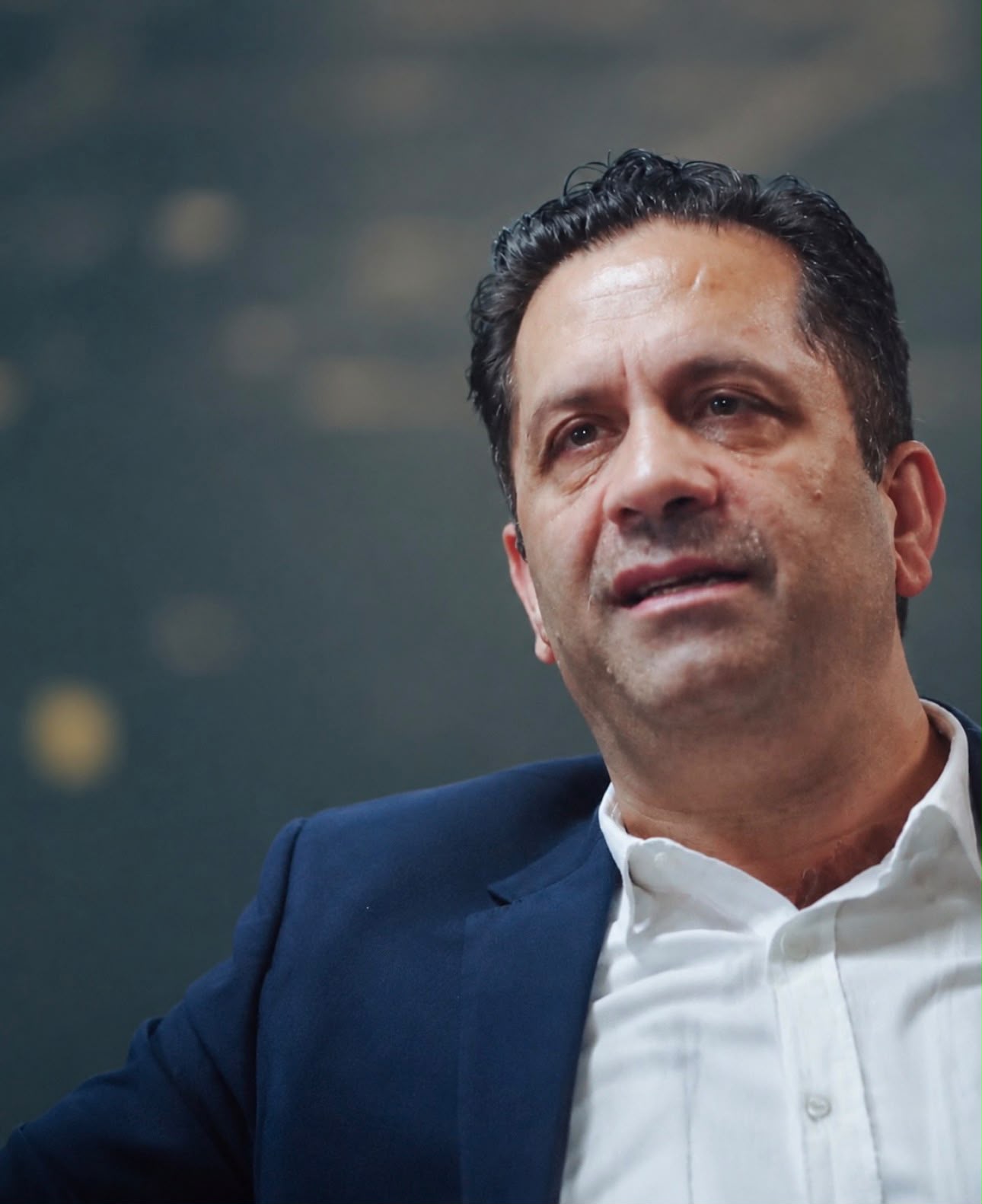
“First, the police gave us some prepared questions," recalled Định. “We had to respond to them orally. Then, we were asked to write down our answers on a written report. After that, we were asked to read the confession out loud, purportedly for their superiors to monitor their interrogation process. However, I was well aware that the video was meant for propaganda purposes, even though they claimed it was for supervision. I had no way to stop them from doing so. I was being filmed while reading the confession. When I watched that video, I realized that the filming was far from smooth from start to finish. It was cut and edited and did not reflect the continuity of the statements I made.”
Dr. Nguyen-Pochan emphasized that these confessions reflect imposed narratives rather than genuine admissions, undermining the principle of presumption of innocence for those not yet judged.
“The words of confession do not stem from the intentions of the speakers but are imposed on them from the outside”, wrote Dr Nguyen-Pochan. “They demonstrate a complete disregard for the principle of the presumption of innocence for individuals who have not yet been judged but are forced into public admissions”.
Defamation of Citizen Journalists
On 21st June, Vietnam celebrated the 100th anniversary of the country’s 'revolutionary' journalism for state-affiliated journalists, whose duties are to serve the Communist Party before the people. Meanwhile, exceedingly long jail terms are meted out to independent journalists. For example, in 2019, freelance journalist and VOA contributor Phạm Chí Dũng, founder of the Independent Journalists’ Association of Vietnam (IJAVN), was sentenced to 15 years in prison.
Phạm Thanh Nghiên is a former prisoner of conscience and a freelance journalist. Like other high-profile activists, she was designated as a “reactionary” by state media. She also appeared on a website titled “anti-reactionary news”, dedicated to exposing human rights defenders in a negative light, precisely in tune with state propaganda. In 2010, Nghiên was sentenced to four years in jail and three years under house arrest on charges of anti-state propaganda, primarily for her protests against China’s illegal claim over the sovereignty of the Paracel and Spratly Islands, as well as her blogging on human rights. Nghiên always had to resort to pseudonyms while contributing to international media, before and after imprisonment. In 2023, Nghiên had to leave Vietnam due to constant harassment from local authorities.
Since her exile in the United States, the 2009 recipient of the Human Rights Watch Hellman/Hammett Award for harassed writers has continued to face digital challenges.
Her blog is still firewalled in Vietnam, and her Facebook accounts documenting the situations of political prisoners have experienced regular blockages, invisibility, and threatening comments from cybertroopers.
In early 2025, she became the spokesperson of the Facebook page Đường về nhà (The Road Home) to document cases of injustices perpetrated by state agencies that cannot make it to national news. This includes the case of a mother pursuing justice for her unjustly imprisoned son for more than a decade and a woman suing her local authorities for land confiscation, only to be beaten and left disabled. A YouTube channel with similar content was also created.
A few months later, the Facebook page became inaccessible, and the YouTube channel was reported for violating community standards. Yet, the team has prepared backup pages.
Yet, Nghiên refuses to succumb to pressure tactics employed by the authorities to silence them.
“We believe that Facebook and YouTube will have to return the page to us because we have not done anything wrong,” says Nghiên.
With her team’s efforts, the page was quickly recuperated.
The views expressed in this article are those of the author and do not necessarily reflect the views of the Al Jazeera Journalism Review.