هل الصحافة تنتمي إلى العلوم الاجتماعية؟

هل الصحافة تنتمي إلى العلوم الاجتماعية؟


فضاء القراء. مساحة جديدة لقراء مجلة الصحافة للتفاعل مع المقالات  بمقاربة نقدية، أو لتقديم مقترحاتهم لتطوير المحتوى أو اقتراح مواضيع يمكن أن تغني النقاش داخل هيئة التحرير.
المساهمة الأولى للزميل محمد مستعد  الذي يقدم قراءته النقدية في مقال  "تقاطعات الصحافة والعلوم الاجتماعية في الميدان" للكاتب محمد أحداد، مناقشا حدود انفتاح الصحافة على العلوم الاجتماعية وموقفها "النضالي" من تحولات السلطة والمجتمع.


شكرا على المقال الغني  الذي يفتح باب النقاش حول قضية أساسية هي علاقة الصحافة بعلم الاجتماع. هذه العلاقة ينبغي أن تبقى دائما مطروحة على رأس جدول أعمال مجلة الصحافة، بشكل يسمح لها بأن تظل منبرا منفتحاً في آن واحد على الصحفيين (المنغلقين داخل مكاتبهم ووسط قصاصاتهم) وعلى الأكاديميين (علماء الاجتماع المنغلقين داخل مختبرات البحث). وهذا دور أساسي نادراً ما تقوم به المجلات المتخصصة في الصحافة والإعلام.

أوحى لي المقال ببعض الأفكار، التي أشاركها معكم:

- ثورة 1968 كانت - في العمق - تجسيدا لتقاليد فرنسية عريقة ومعروفة للمثقف الملتزم وللأدوار الخاصة التي تقوم بها الصحافة منذ -على الأقل - قضية "دريفوس" مع الموقف الشهير للروائي إميل زولا الذي عبر عنه في مقاله الشهير: J’accuse  هذه التقاليد تكشف عن دور الصحافة باعتبارها واجهة للنقاش العمومي المفتوح في المجتمع حول كل القضايا. وهذا ما يميز الصحافة عن علم الاجتماع، أي أن الصحافة يمكن أن تحتضن عالم الاجتماع، أو الكاتب، أو الفنان أو السينمائي ... وتعطيه مساحة للتعبير عن رأيه.


-  صحيح -كما يقول المقال - أنه "في البحث الميداني يكون الصحفي ملتصقا أكثر بالواقع وأقدر على إنتاج معرفة تحترم شروط الحقيقة الموضوعية"، ولكن من المفروض أيضا أن على عالم الاجتماعي أيضا أن يقوم بالدور نفسه وأن يذهب إلى الميدان للتحقيق والتنقيب وليس فقط التنظير. (فالصحافة والعلوم الاجتماعية تستعملان نفس أدوات البحث: الملاحظة المباشرة – الأسئلة – الاستطلاع...). وهذا أمر نادر في العالم العربي وخصوصا في المغرب اليوم؛ حيث إن ما نلاحظه هو أن عالم الاجتماع في منطقتنا أصبح في الغالب يقف في الخلف متفرجا على هذا الواقع وعلى قضايا حرية التعبير أو تحولات المجتمع العميقة، في حين أن الصحفي هو من يقف وحده في الواجهة يحاول متابعة تحولات هذا الواقع رغم أن حرية التعبير -مثلا- هي قضية وجودية تهم أيضا عالم الاجتماع.

-  صحيح أن هناك "خضوعا من قادة غرف الأخبار للنخب السياسية حسب وصف سيرج حليمي" لكن علماء الاجتماع أيضا يعيشون نفس الوضع ويخضعون للنخب السياسية ويقدمون لهم الخبرات والتقارير للسيطرة على المجتمع. وهو ما كتبه أحداد في خلاصة المقال: "ينبغي النظر إلى وظيفة العلوم الاجتماعية في تقاطعها بالصحافة من باب أنّ وظيفتها هي خدمة المجتمع وليس السيطرة عليه.".

-  لا أدري إن كان من الممكن تصنيف الصحافة ضمن العلوم الاجتماعية. أعتقد أن الصحافة لها مهام نضالية نوعا ما ولعل أبرز مثال على ذلك هي الافتتاحية أو زاوية الرأي التي تكتب في الصحف. في العلوم الاجتماعية ليست هناك افتتاحيات أو زاوية رأي، لكن يمكن لعالم الاجتماع أن يأخذ موقفا معينا من قضية معينة كما كان يفعل ريمون آرون عندما كان ينشر مقالات في صحافة اليمين مثل "لوفيغارو" ضد مواقف الاشتراكيين أو ضد الاتحاد السوفياتي... إلخ

-   ربما كان من المفيد تقديم تعريف بسيط لموريس بريتون. هل هو كاتب؟ صحفي؟ أم عالم اجتماع. أنا شخصيا لم أكن أعرفه.
 

More Articles

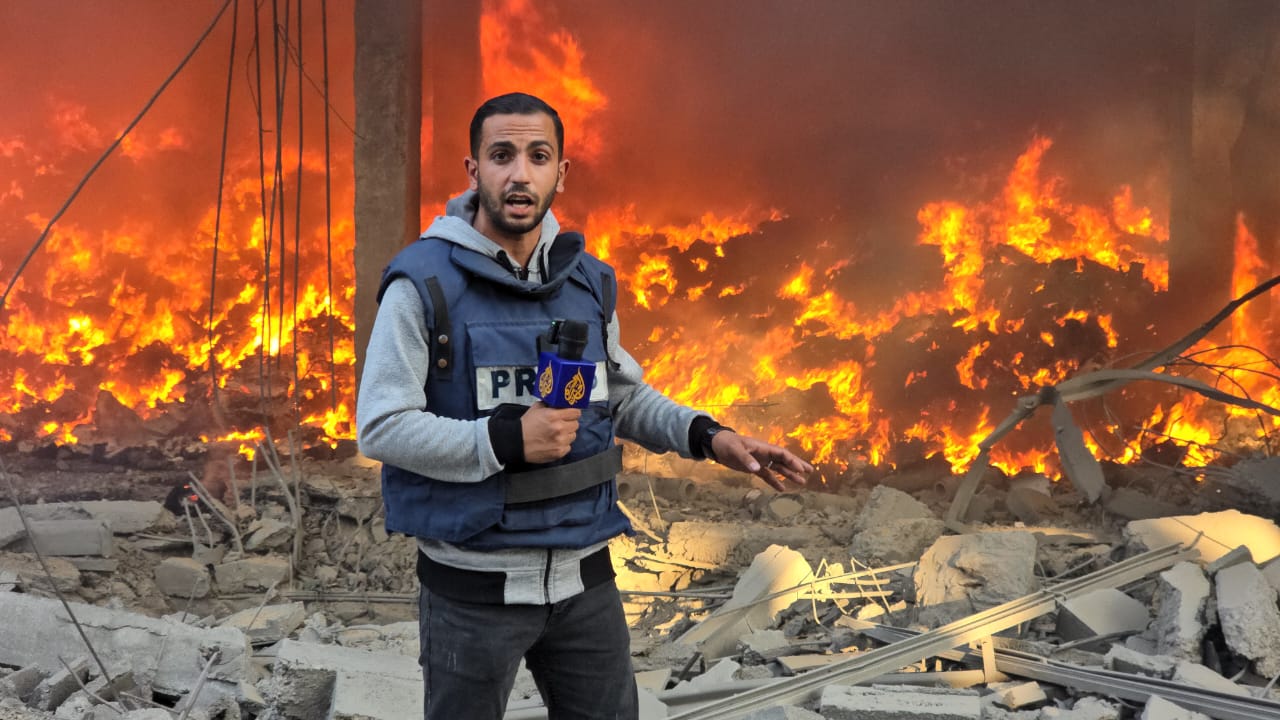
From News Reporting to Documentation: Practical Lessons from Covering the War on Gaza

From the very first moment of the genocidal war waged by Israel on Gaza, Al Jazeera correspondent Hisham Zaqout has been a witness to hunger, devastation, war crimes, and the assassination of his colleagues in the field. It is a battle for survival and documentation, one that goes beyond mere coverage and daily reporting.
Hisham Zakkout Published on: 26 Jan, 2026
Investigating the Assassination of My Own Father

As a journalist, reporting on the murder of my father meant answering questions about my own position as an objective observer.

Diana López Zuleta
Diana López Zuleta Published on: 16 Jan, 2026
What Image of Gaza Will the World Remember?

Will the story of Gaza be reduced to official statements that categorise the Palestinian as a "threat"? Or to images of the victims that flood the digital space? And how can the media be transformed into a tool for reinforcing collective memory and the struggle over narratives?

Hassan Obeid
Hasan Obaid Published on: 13 Jan, 2026
Bridging the AI Divide in Arab Newsrooms

AI is reshaping Arab journalism in ways that entrench power rather than distribute it, as under-resourced MENA newsrooms are pushed deeper into dependency and marginalisation, while wealthy, tech-aligned media actors consolidate narrative control through infrastructure they alone can afford and govern.

Sara Ait Khorsa
Sara Ait Khorsa Published on: 10 Jan, 2026
Generative AI in Journalism and Journalism Education: Promise, Peril, and the Global North–South Divide

Generative AI is transforming journalism and journalism education, but this article shows that its benefits are unevenly distributed, often reinforcing Global North–South inequalities while simultaneously boosting efficiency, undermining critical thinking, and deepening precarity in newsrooms and classrooms.

Carolyne Lunga
Carolyne Lunga Published on: 2 Jan, 2026
Intifada 2.0: Palestinian Digital Journalism from Uprising to Genocide

From underground newsletters during the Intifadas to livestreams from Gaza, Palestinian journalism has evolved into a decentralised digital practice of witnessing under occupation. This article examines how citizen journalists, fixers and freelancers have not only filled gaps left by international media, but fundamentally transformed how Palestine is reported, remembered and understood.

Zina Q.
Zina Q. Published on: 24 Dec, 2025
How Can Journalism Make the Climate Crisis a People’s Issue?

Between the import of Western concepts and terminology that often fail to reflect the Arab context, and the denial of the climate crisis, or the inability to communicate it in clear, accessible terms, journalism plays a vital role in informing the public and revealing how climate change directly affects the fabric of daily life in the Arab world.

Bana Salama
Bana Salama Published on: 19 Dec, 2025
Inside Vietnam’s Disinformation Machine and the Journalists Exposing It from Exile

Vietnam’s tightly controlled media environment relies on narrative distortion, selective omission, and propaganda to manage politically sensitive news. Exiled journalists and overseas outlets have become essential in exposing these practices, documenting forced confessions and smear campaigns, and preserving access to information that would otherwise remain hidden.

AJR Contributor Published on: 15 Dec, 2025
What It Means to Be an Investigative Journalist Today

A few weeks ago, Carla Bruni, wife of former French president Nicolas Sarkozy, was seen removing the Mediapart logo from view. The moment became a symbol of a major victory for investigative journalism, after the platform exposed Gaddafi’s financing of Sarkozy’s election campaign, leading to his prison conviction. In this article, Edwy Plenel, founder of Mediapart and one of the most prominent figures in global investigative journalism, reflects on a central question: what does it mean to be an investigative journalist today?

Edwy Plenel
Edwy Plenel Published on: 27 Nov, 2025
In-Depth and Longform Journalism in the AI Era: Revival or Obsolescence?

Can artificial intelligence tools help promote and expand the reach of longform journalism, still followed by a significant audience, or will they accelerate its decline? This article examines the leading AI tools reshaping the media landscape and explores the emerging opportunities they present for longform journalism, particularly in areas such as search and content discovery.

. سعيد ولفقير. كاتب وصحافي مغربي. ساهم واشتغل مع عددٍ من المنصات العربية منذ أواخر عام 2014.Said Oulfakir. Moroccan writer and journalist. He has contributed to and worked with a number of Arab media platforms since late 2014.
Said Oulfakir Published on: 24 Nov, 2025
Leaked BBC Memo: What Does the Crisis Reveal?

How Should We Interpret the Leak of the “BBC Memo” on Editorial Standards? Can we truly believe that the section concerning U.S. President Donald Trump was the sole reason behind the wave of resignations at the top of the British broadcaster? Or is it more accurately seen as part of a broader attempt to seize control over editorial decision-making? And to what extent can the pressure on newsrooms be attributed to the influence of the Zionist lobby?

 Mohammed Abuarqoub. Journalist, trainer, and researcher specializing in media affairs. He holds a PhD in Communication Philosophy from Regent University in the United States.محمد أبو عرقوب صحفي ومدرّب وباحث متخصص في شؤون الإعلام، حاصل على درجة الدكتوراه في فلسفة الاتّصال من جامعة ريجينت بالولايات المتحدة الأمريكية.
Mohammed Abuarqoub Published on: 20 Nov, 2025
Crisis of Credibility: How the Anglo-American Journalism Model Failed the World

Despite an unprecedented global flood of information, journalism remains strikingly impotent in confronting systemic crises—largely because the dominant Anglo-American model, shaped by commercial imperatives and capitalist allegiances, is structurally incapable of pursuing truth over power or effecting meaningful change. This critique calls for dismantling journalism’s subordination to market logic and imagining alternative models rooted in political, literary, and truth-driven commitments beyond the confines of capitalist production.

Imran Muzaffar
Imran Muzaffar, Aliya Bashir, Syed Aadil Hussain Published on: 14 Nov, 2025
Why Has Arab Cultural Journalism Weakened in the Third Millennium?

The crisis of cultural journalism in the Arab world reflects a deeper decline in the broader cultural and moral project, as well as the collapse of education and the erosion of human development. Yet this overarching diagnosis cannot excuse the lack of professional training and the poor standards of cultural content production within newsrooms.

Fakhri Saleh
Fakhri Saleh Published on: 10 Nov, 2025
Podcasters, content creators and influencers are not journalists. Are they?

Are podcasters, content creators, and influencers really journalists, or has the word 'journalist' been stretched so thin that it now covers anyone holding a microphone and an opinion? If there is a difference, where does it sit? Is it in method, mission, accountability, or something else? And in a media landscape built on noise, how do we separate a journalist from someone who produces content for clicks, followers or sponsors

Derick Matsengarwodzi
Derick Matsengarwodzi Published on: 7 Nov, 2025
The Power to Write History: How Journalism Shapes Collective Memory and Forgetting

What societies remember, and what they forget, is shaped not only by historians but by journalism. From wars to natural disasters, the news does not simply record events; it decides which fragments endure in collective memory, and which fade into silence.

Daniel Harper
Daniel Harper Published on: 30 Oct, 2025
Journalism in Spain: Why Omitting Ethnicity May Be Doing More Harm Than Good

In Spain, a well-intentioned media practice of omitting suspects’ ethnic backgrounds in crime reporting is now backfiring, fuelling misinformation, empowering far-right narratives, and eroding public trust in journalism.

Ilya إيليا توبر 
Ilya U Topper Published on: 10 Sep, 2025
Interview with Zina Q. : Digital Cartography as a Tool of Erasure in Gaza

Amid Israel’s war on Gaza, Zina Q. uncovers how Google Maps and satellite imagery are being manipulated; homes relabelled as “haunted,” map updates delayed, and evidence of destruction obscured, revealing digital cartography itself as a weapon of war. By exposing these distortions and linking them to conflicts from Sudan to Ukraine, she demonstrates how control over maps and AI surveillance influences not only what the world sees, but also what it remembers.

Al Jazeera Journalism Review
Al Jazeera Journalism Review Published on: 6 Sep, 2025
Canadian Journalists for Justice in Palestine: A Call to Name the Killer, Not Just the Crime

How many journalists have to be killed before we name the killer? What does press freedom mean if it excludes Palestinians? In its latest strike, Israel killed an entire Al Jazeera news crew in Gaza—part of a systematic campaign to silence the last witnesses to its crimes. Canadian Journalists for Justice in Palestine (CJJP) condemns this massacre and calls on the Canadian government to end its complicity, uphold international law, and demand full accountability. This is not collateral damage. This is the targeted erasure of truth.

Samira Mohyeddin
Samira Mohyeddin Published on: 14 Aug, 2025
Protecting Palestinian Journalists Should be First Priority - Above Western Media Access

Why demand entry for foreign reporters when Palestinian journalists are already risking—and losing—their lives to tell the truth? Real solidarity means saving journalists' lives, amplifying their voices, and naming the genocide they expose daily.

Synne Furnes Bjerkestrand
Synne Bjerkestrand, Kristian Lindhardt Published on: 10 Aug, 2025
The Washington Post: When Language Becomes a Veil for Pro-Israel Bias

How did The Washington Post's coverage differ between Israel’s bombing of Gaza hospitals and Iran’s strike on an Israeli hospital? Why does the paper attempt to frame Palestinian victims within a “complex operational context”? And when does language become a tool of bias toward the Israeli narrative?

Said Al-Azri
Said Al-Azri Published on: 6 Aug, 2025
In the War on Gaza: How Do You Tell a Human Story?

After nine months of genocidal war on Palestine, how can journalists tell human stories? Which stories should they focus on? And does the daily, continuous coverage of the war’s developments lead to a “normalisation of death”?

Yousef Fares
Yousef Fares Published on: 8 Jul, 2025
How Much AI is Too Much AI for Ethical Journalism

As artificial intelligence transforms newsrooms across South Asia, journalists grapple with the fine line between enhancement and dependency

Saurabh Sharma
Saurabh Sharma Published on: 1 Jul, 2025
How to Tell the Stories of Gaza’s Children

Where does compassion end and journalism begin? How can one engage with children ethically, and is it even morally acceptable to conduct interviews with them? Palestinian journalist Reem Al-Qatawy offers a profoundly different approach to human-interest reporting. At the Hope Institute in Gaza, she met children enduring the harrowing aftermath of losing their families. Her experience was marked by intense professional and ethical challenges.

Rima Al-Qatawi
Rima Al-Qatawi Published on: 26 Jun, 2025
Do Foreign Journalists Matter in Covering Genocide? A Look into Bosnia, Rwanda, and Gaza

How did foreign journalists cover the killings in both Bosnia-Herzegovina and Rwanda? Did they contribute to conveying the truth and making an impact? Would the entry of foreign journalists into the Gaza Strip change the reality of the ongoing genocide? And would their coverage of the famine and massacres add to the daily coverage of local journalists? Why is the local press's coverage of wars seen as deficient compared to Western journalism, even though they incur greater losses and casualties?

Saber Halima
Saber Halima Published on: 20 Jun, 2025