
A generation of reporters-built careers on confidential sources, many now write without them.
Rohit still checks his phone at night, a habit formed over years when the most important calls arrived after dusk and could redirect a story before dawn.
Those calls once came from inside ministries, police units, and intelligence desks, where officials shared details that rarely reached public briefings and often contradicted them.
He sits in a crowded café near Khan Market and scrolls through contacts that once defined his work, names that used to open doors now reduced to silent entries that offer nothing beyond memory.
“Earlier, one call led to five,” he says in a steady tone that suggests he has repeated this line before. “Now even the first one does not happen.”
The shift he describes has altered the daily practice of journalism in New Delhi, where anonymous sourcing once powered the most important reporting and gave journalists leverage over institutions that preferred silence.
Reporters built those networks over years, often meeting officials in public parks, calm corners of government buildings, or late-night gatherings where information moved without record or attribution.
That system now shows visible strain, dented by legal pressure, technological surveillance, and a political structure that rewards control over disclosure.
Everything leaves a trail now. Calls, locations, messages, all of it. Digital surveillance has altered the mechanics of sourcing, as investigators rely on metadata that reveals patterns of communication without accessing content.
Fractured State
Aditi remembers the week before August 2019 as a moment when the old system broke in full view of those who depended on it.
Newsrooms in Delhi tracked unusual troop deployments in Jammu and Kashmir, along with administrative signals that suggested something significant, while reporters reached out to contacts who had guided them through earlier crises.
Answers came back incomplete, hesitant, or simply absent, leaving even senior journalists working with fragments that refused to form a clear picture.
On August 5, the government revoked the special constitutional status of the region under Article 370, a decision that revamped the political landscape overnight.
Aditi recalls the silence inside the newsroom that morning.
“People who had spent decades building sources had nothing to say,” she explains, her voice measured and precise as she revisits the moment that still defines her understanding of the shift.
Reporters come in asking how to protect their sources. We explain what the law allows, and that changes the story before it is written.
That episode revealed a deeper structural change inside the state, where decision-making now sits within smaller groups, information moves along restricted channels, and even senior officials receive instructions without full context.
A senior reporter who covers internal security describes the system in blunt terms.
“You reach someone, and they know their part,” he says. “They cannot tell you the whole story because they do not have it.”
This fragmentation has made traditional sourcing far less effective, as reporters gather pieces that do not connect and confirmations that fail to clarify.
The state, in this form, produces fewer leaks by design.
Law Enters the Room
Inside a newsroom in south Delhi, an editor listens to a reporter outline a story based on two officials willing to speak without attribution, supported by documents that suggest misconduct during a security operation.
The editor listens, then asks a question that has become standard.
“If this reaches court, how do we defend it?”
The reporter hesitates, aware that the answer carries consequences beyond the story itself.
The editor closes the discussion.
Later, he explains the decision in clear terms that show a wider shift in editorial thinking.
“Anonymous sources once made us stronger,” he says. “Now they expose us.”
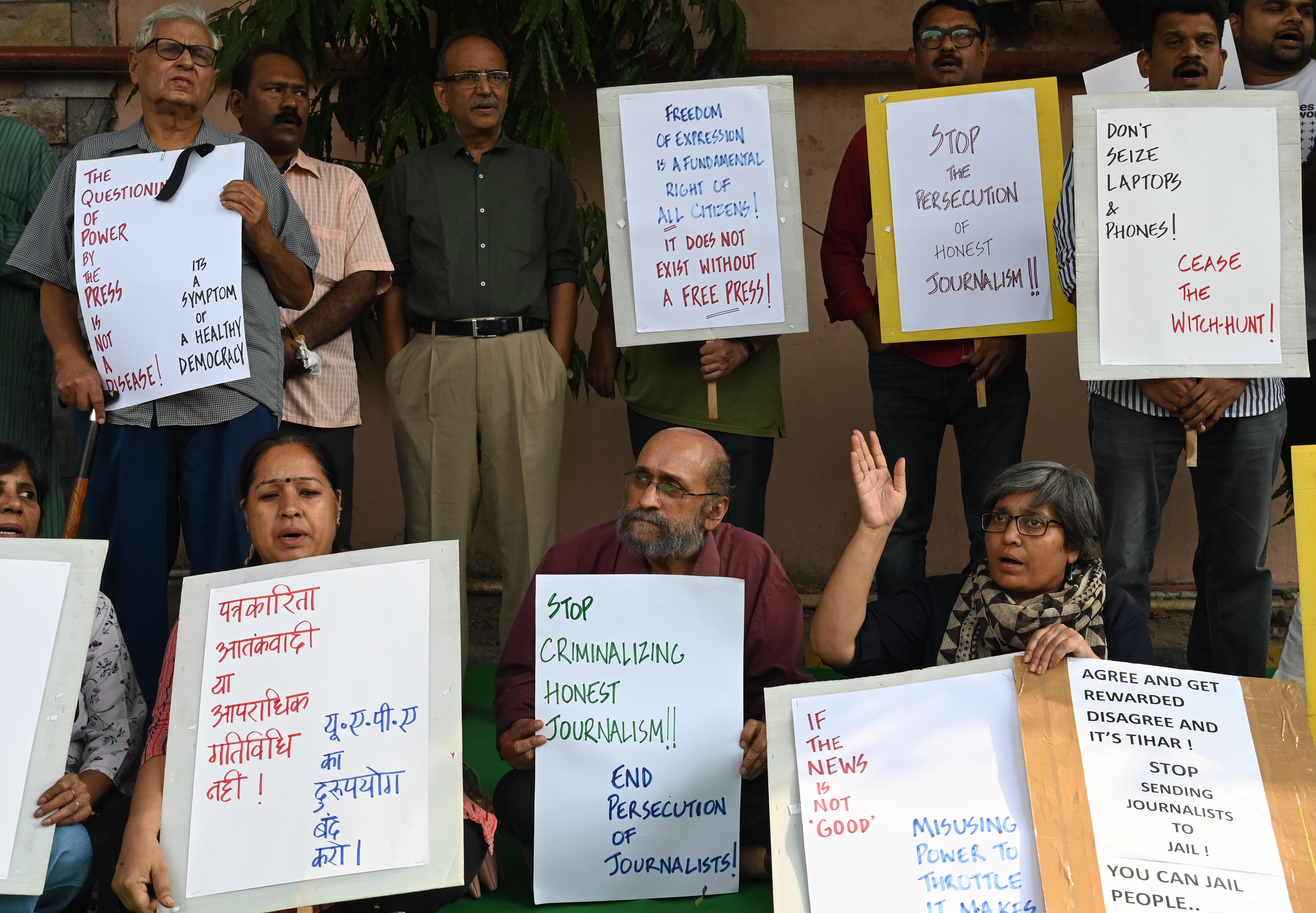
Legal pressure has redefined how stories move from reporting to publication, as journalists operate within laws that allow authorities to investigate their work and demand disclosure of sources.
The Unlawful Activities Prevention Act allows extended detention during investigations, while the Official Secrets Act criminalizes handling classified information, and sedition provisions widen the scope of legal scrutiny.
Cases involving journalists have reinforced these risks in ways that newsroom discussions now treat as precedent rather than exception.
There is deeper structural change inside the state, where decision-making now sits within smaller groups, information moves along restricted channels, and even senior officials receive instructions without full context.
Siddique Kappan spent more than two years in jail after his arrest in 2020 while on his way to report on a gang-rape case, with investigators questioning his work and associations before he secured bail in 2022.
Journalist Siddharth Varadarajan, founding editor of The Wire, faced police cases over his reporting, including charges related to tweets citing sources, which drew attention to how legal mechanisms can extend into editorial decisions.
In 2023, NewsClick founder Prabir Purkayastha was arrested under anti-terror laws in a case that involved scrutiny of funding and editorial direction, raising concerns among journalists about the expanding scope of legal action.
Police in multiple cases have sought access to devices and communication records of journalists, including during investigations linked to protests and communal violence, a trend documented by civil liberties groups. A media lawyer in Delhi explains how these cases influence newsroom decisions long before any story reaches publication.
“Reporters come in asking how to protect their sources,” she says. “We explain what the law allows, and that changes the story before it is written.”
Editors now evaluate anonymous sourcing with caution defined by these precedents, weighing the value of information against the possibility of legal exposure for both reporter and source.
The Trace That Follows
Rohit meets a former contact in Lodhi Garden on a winter afternoon, choosing a public setting that once provided a sense of safety through anonymity. They walk along a path before settling on a bench, where chat moves carefully toward a recent policy decision that has drawn attention in the press. The official listens, then responds with a clarity that reflects a changed environment.
“Everything leaves a trail now,” he says, glancing around before continuing. “Calls, locations, messages, all of it.”
Digital surveillance has altered the mechanics of sourcing, as investigators rely on metadata that reveals patterns of communication without accessing content. A reporter covering defense describes the effect in practical terms. “You can avoid recording a conversation,” he says. “You cannot avoid the fact that you spoke.”
Some journalists adopt measures to reduce exposure, using encrypted platforms such as Signal, arranging meetings in crowded public spaces, and limiting digital communication. These methods require time, resources, and technical awareness that many reporters lack, particularly those working outside large organizations. Sources respond with caution driven by these realities, often limiting discussions to generalities or avoiding them entirely. The flow of information slows at its origin.
Phone records show contact between individuals, location data places them together, and messaging logs indicate frequency and timing, creating a map that can expose relationships once protected by discretion.
Stories That Never Reach Print
Imran spent months working on a story about alleged abuses within a paramilitary unit, building a case through documents and discourses with officers willing to speak without attribution. The story reached the editorial stage, where legal review raised concerns about exposure under existing laws.
The decision followed quickly. “We cannot run this,” his editor told him, closing the discussion without ambiguity. Imran accepted the outcome while understanding what it meant for his work and for the public. “That story exists,” he says. “People will never read it.”
Such decisions repeat in different forms across newsrooms. A correspondent covering economic policy describes how her sources inside the finance ministry stopped speaking off the record, citing concerns about monitoring and digital traces. “She told me she will only speak on record now,” the reporter explains. “That removes everything that matters.”
Defense procurement stories now emerge through audits or parliamentary reports rather than insider disclosures, while environmental reporting depends on official data releases instead of leaked scientific findings.
Political coverage relies heavily on public statements, press conferences, and social media posts from officials. Timing reveals the deeper change. Stories appear after events conclude, often through court filings or formal investigations, reducing the ability of journalism to question decisions before they take effect. An editor summarizes the shift with clarity.
“We publish what we can defend in court,” he says. “Earlier, we published what we could find out.”
Some journalists adopt measures to reduce exposure, using encrypted platforms such as Signal, arranging meetings in crowded public spaces, and limiting digital communication. These methods require time, resources, and technical awareness that many reporters lack, particularly those working outside large organizations.
The Silence That Remains
Press freedom organizations track these developments through data that describes a broader trend. The Committee to Protect Journalists has documented an increase in legal pressure on journalists in India, including arrests, interrogations, and device seizures.
Reporters Without Borders has noted a decline in India’s press freedom ranking, linking it to legal pressure and surveillance concerns that affect reporting practices.
These findings align with what journalists describe in their daily work. Aditi explains the change in terms that connect directly to the reader’s experience.
“You see the final decision,” she says. “You do not see how it was made.”
A few days after our meeting, Rohit tries the same number again, repeating a routine that once defined his work. This time, the call connects.
The voice on the other end sounds familiar, though careful in tone. They exchange greetings before Rohit asks about a recent development that has drawn attention in the press. The official listens, then responds with a line that captures the shift in a single moment.
“I cannot discuss this now,” he says. “Things have changed.”
The call ends within seconds. Rohit looks at his phone, then places it on the table and opens his notebook, preparing to write the next story based on an official statement that will pass every check required for publication. He writes with the same discipline that built his career.
The difference sits in the discussions that never happen, the details that never surface, and the voices that once spoke freely and now remain silent, leaving behind a version of journalism that tells the story while holding something essential back.