Al Jazeera Journalism Review

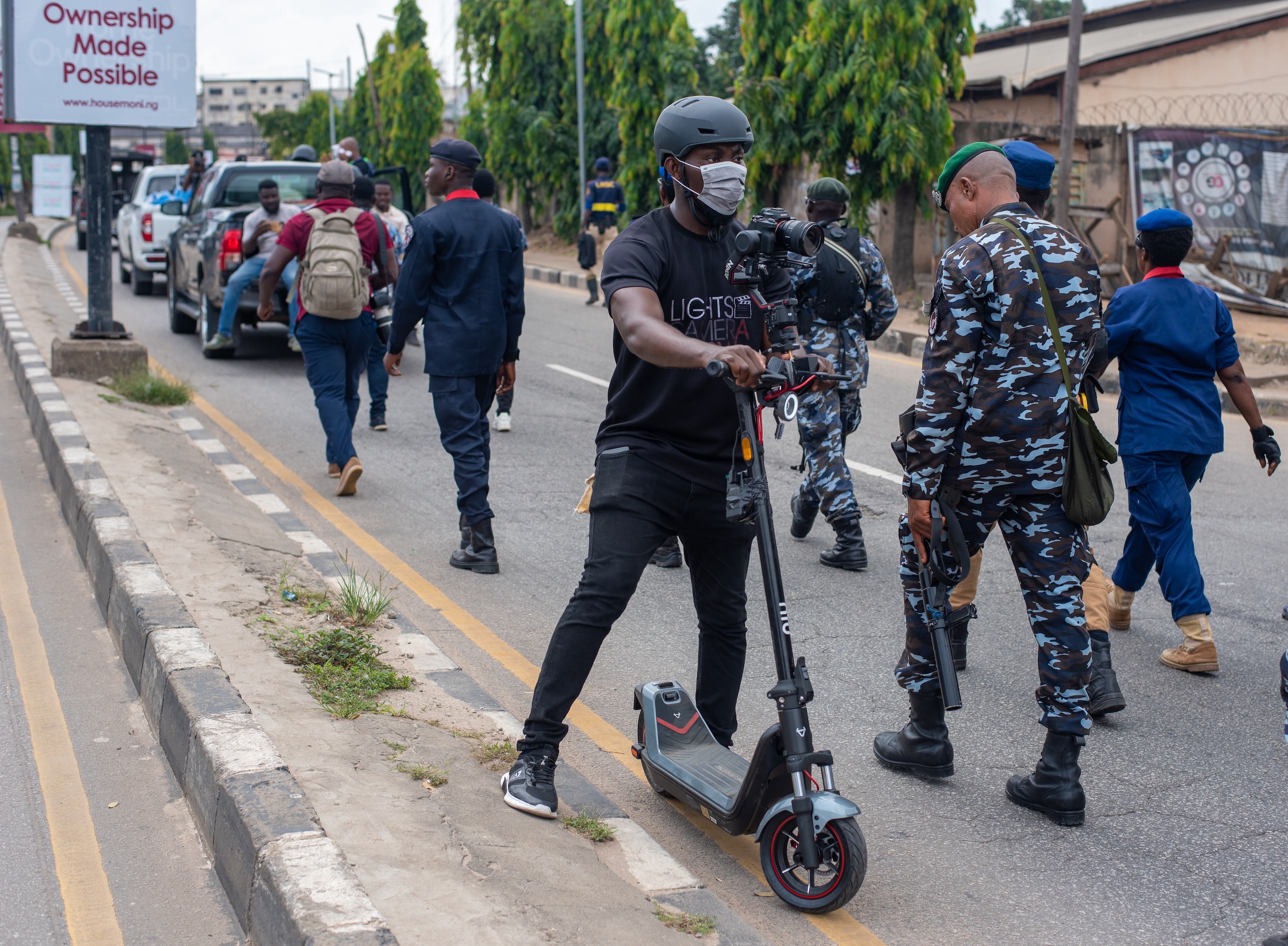
A Journalist documents a protest with his camera attached to a scooter in Lagos Nigeria, Tuesday, October 1, 2024. Nigerians are out on Independence Day to protest bad governance  By Tolu Owoeye
A Journalist documents a protest with his camera attached to a scooter in Lagos Nigeria, Tuesday, October 1, 2024. Nigerians are out on Independence Day to protest bad governance. (Photo: Tolu Owoeye)

Reporting Under Fire: The Struggle of African Journalists Facing Intimidation

African journalists who expose corruption and power now face a brutal mix of arrests, torture, digital surveillance, and lawsuits meant to drain their resources and silence them. From Ethiopia, Nigeria, Malawi, Benin, Sudan, Uganda, and Kenya to exile in Canada, reporting the truth has become an act of personal survival as much as public service.


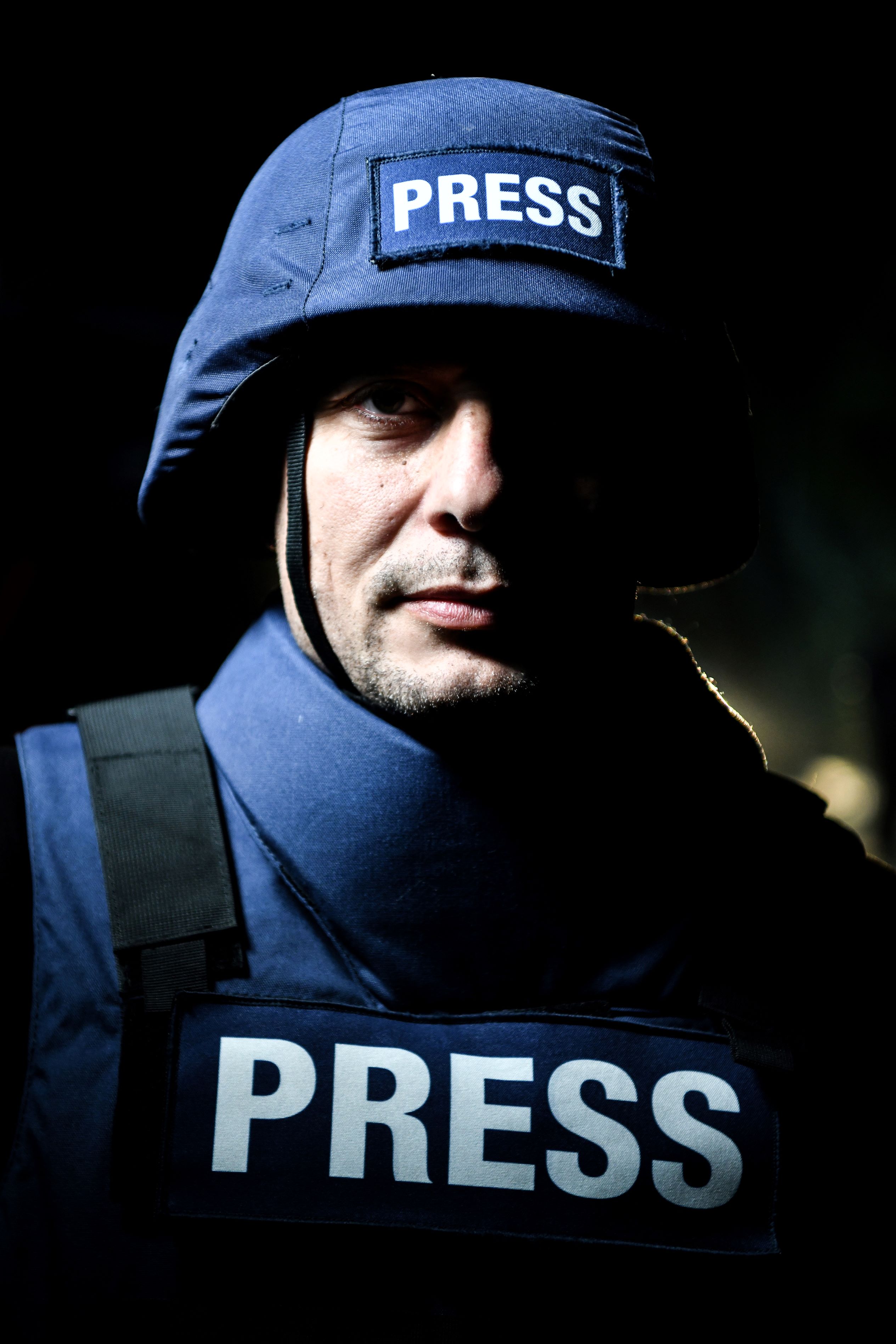
In 2019, Ermias Mulugeta, an Ethiopian investigative journalist and media trainer, embarked on a perilous investigation that exposed a high-profile drug trafficking network involving powerful figures. 

To execute this dangerous assignment, “I had to infiltrate into where the drugs were actually auctioned and distributed to other countries,” he recalls. “If they found out I was there to observe, they would have killed me.”

Mulugeta’s reporting triggered a brutal wave of intimidation. “I began receiving several calls, intimidating text messages after the investigation,” he says. Soon, he noticed the same people following him wherever he went. Amid the escalating danger, he still summoned the courage to continue exposing corruption in Ethiopia’s power circles.

His ordeal intensified in the summer of 2021 when he was arrested and beaten by men from the intelligence office in Addis Ababa. The men whisked him away to an unknown location, where he was tortured for six hours.

“They beat me like a crazy idiot. They were grabbing me, slapping me, and pointing a gun at me,” he recounts. After pleading for hours to know his offence, they told him he had defamed someone in a report. “They said I had defamed a person,” he recalls.

Despite repeatedly asking who he had allegedly defamed so he could make amends, they refused to tell him. Eventually, they took him to a police station and released him late at night, after news of his arrest had already spread widely on social media.

Mulugeta’s experience captures the peril faced by journalists across Africa, where exposing corruption or questioning authority can invite harassment, arrest, or worse. Ethiopia ranks alongside Eritrea as sub-Saharan Africa’s worst jailer of journalists, according to a research by the Committee to Protect Journalists (CPJ).

Even in relatively democratic states, laws designed to regulate cyberspace or combat “false information” have become tools of suppression. Busola Ajibola, Deputy Director of Center for Journalism Innovation and Development (CJID) – an African media think tank promoting investigative journalism, media literacy, and democratic accountability – told AJR that Nigeria’s Cybercrime Act of 2015, though amended, continues to be used to target journalists. “Between last year and now, we have tracked 17 cases where the Cybercrime Act has been used against journalists,” Ajibola notes.

Following his ordeal, Mulugeta left Ethiopia, and now lives in Canada. “In Ethiopia, when I see a police vehicle approach, I feel threatened. I don’t feel safe,” he says. “And that mentality followed me all the way to Canada.”

Across the continent, journalists share similar experiences – marked by fear, self-censorship, and state surveillance that continues to narrow the boundaries of free expression. 


When Truth Becomes a Target

In Malawi, on October 10, 2025, intimidation struck in broad daylight when a group of youths stormed the premises of the Malawi Broadcasting Corporation (MBC) in Blantyre. They forced George Kasakula, the Director-General of the public broadcaster, to deliver a live on-air apology to President Peter Mutharika, and the country’s ruling party, the Democratic Progressive Party (DPP).

“They threatened me with their presence,” Kasakula recounts. “These are masked killer men, seven of them, coming to my office, surrounding me. They forced me to do something against my will.”

His offence was a comment he made during a presidential campaign broadcast, where he suggested that the 85-year-old Mutharika was too old to govern.

The attackers’ action presented a stark illustration of how fragile editorial independence can be when political power controls state media. Reporters Without Borders has noted that political influence over the media restricts press freedom in Malawi, where reporters face threats, online intimidation, and physical assaults often from party loyalists or law enforcement officers.

The greatest danger is not the threat of arrest, but the internalisation of fear, Ajibola asserts. “Once fear sets in, self-censorship becomes the norm"

Kasakula’s ordeal is not an isolated incident, but part of a wider pattern. Across Africa, governments are increasingly weaponising intimidation to control narratives and punish critical reporting.

In Nigeria, Kehinde Adegboyega, journalist and Executive Director of the Human Rights Journalists Network Nigeria, says even mild criticism can invite surveillance or arrest. “Reporting on corruption or security attracts hostility from both government and private power,” he explains. “Political actors and security agencies use legal and informal pressures such as arrests, lawsuits, or denial of accreditation to silence critical voices, particularly around elections or corruption probes.”

The pressure, he adds, is not only legal. Online harassment and smear campaigns are common tactics to discredit reporters and discourage scrutiny.

In Benin Republic, once celebrated for its vibrant media landscape, press freedom is also under strain. Loukoumane Worou Tchehou, editor-in-chief of a major radio station, says self-censorship has become routine.

“Even advertisers and political figures try to influence our editorial choices,” he says. “Sometimes, we have to drop stories to protect our reporters.”

Tchehou recalls being summoned several times by the High Authority for Audiovisual and Communication (HAAC), Benin’s media regulator, after publishing reports on the security situation in northern Benin. He adds that a colleague at a sister station was arrested under humiliating conditions for reporting on a confirmed robbery.     

The greatest danger is not the threat of arrest, but the internalisation of fear, Ajibola asserts. “Once fear sets in, self-censorship becomes the norm,” she says.


Reporting At A Price

Leima Eljali Abubakr, a Sudanese journalist now in exile in Uganda, told UNESCO that since the outbreak of war in Sudan on April 15, 2023, journalists have faced daily life-threatening dangers including arbitrary arrests, torture, death threats, and enforced disappearances. Many have been killed in the line of duty. UNESCO also reports that nearly nine out of ten journalist killings worldwide go unpunished.

In May 2024, Nigerian police arrested Daniel Ojukwu, an investigative reporter with the Foundation for Investigative Journalism, following his report on alleged financial misconduct by a government official. He was detained for nine days under the Cybercrime Act.

In Uganda, journalist Ibrahim Miracle was brutally assaulted on February 26, 2025, by two masked officers from the country’s Joint Anti-Terrorist Task Force while reporting in Kampala. The attack left him hospitalised with severe injuries.

Figures from Reporters Without Borders (RSF) and CPJ show that at least 67 journalists were imprisoned in Africa as of late 2024, a near-record high. The trend reflects a continent-wide erosion of press freedom, where digital surveillance, disinformation laws, and physical intimidation are used as instruments of control.

The cost of reporting is now dangerously high. Many journalists live in fear, work anonymously, or rely on encrypted communication. Some abandon the profession altogether.

According to Ajibola, the intimidation African journalists face extends beyond physical attacks. She explained that many journalists and newsrooms are burdened by numerous lawsuits, forcing them to spend a lot of money defending themselves in court for reporting the truth.

“The goal of those who initiate the lawsuits is not to win. They just want to punish journalists, and financially drain, and gag them,” she says. “They fight to ensure that they are not able to continue doing accountability reporting.”

The cost of reporting is now dangerously high. Many journalists live in fear, work anonymously, or rely on encrypted communication. Some abandon the profession altogether. Yet amid the fear, solidarity networks are emerging through cross-border collaborations led by the Organised Crime and Corruption Reporting Project (OCCRP) and Global Investigative Journalism Network (GIJN), and regional journalist unions offering legal aid and digital-security training.


Resilience Amid Repression

For many journalists, survival now means leaving home. Some go into exile; others retreat into silence. Whereas a few continue to report.

From his home in Canada, Mulugeta still contributes to Ethiopian outlets, verifying information through trusted contacts on the ground. He remains determined to fulfill his duty to the Ethiopian people.

In Kenya, where democracy is relatively stronger, TV journalist Nancy Onyancha still navigates subtle pressures from political actors and advertisers. “During the GenZ protests (in Kenya), political leaders called for boycotts of media houses that aired stories about the demonstrations,” she says. “There’s constant manipulation depending on which party a media house supports.”

For women journalists, these pressures are compounded by gendered attacks online. “I’ve faced bullying over my personal life,” she adds. “Kenya still lacks clear laws on digital harassment.”

Despite these challenges, she sees progress. “More women are taking leadership roles, which gives them confidence to speak up. Media bodies here are offering some protection.”

Across Africa, networks of solidarity are growing. In Nigeria, Adegboyega’s organisation provides training and legal support. In Benin, Tchehou’s team now consults lawyers before publishing high-risk investigations. And, in Kenya, professional associations train women to respond to online abuse.

For every journalist who speaks out, dozens more retreat into silence. Yet amid the challenges, there is quiet defiance, and a shared belief that truth must outlive repression.  

“Journalism is my calling,” Mulugeta says. “I will keep reporting from where I am.”


Related Articles

Reporter’s Notebook – memoirs of an illegal journalist in South Africa 

From working shifts in a casino to interviewing a farmer mauled by a tiger - life as a struggling Zimbabwean reporter.

Derick Matsengarwodzi
Derick Matsengarwodzi Published on: 22 Nov, 2021
Nigeria - a model for a free African media?

Journalism under military governments in Africa is under threat, but journalists can learn from Nigerian media’s experience of standing up to people in power

Philip Obaji Jr
Philip Obaji Jr Published on: 18 Jul, 2022
Sudan shows us why Africans must tell their own conflict stories

Africa lacks freedom of expression because its stories are told by others

Philip Obaji Jr
Philip Obaji Jr Published on: 1 Jun, 2023
Silent Suffering: The Impact of Sexual Harassment on African Newsrooms

Sexual harassment within newsrooms and the broader journalistic ecosystem is affecting the quality and integrity of journalistic work, ultimately impacting the organisation’s integrity and revenue.

Derick Matsengarwodzi
Derick Matsengarwodzi Published on: 23 Jan, 2024
Fighting Misinformation and Disinformation to Foster Social Governance in Africa

Experts in Africa are using various digital media tools to raise awareness and combat the increasing usage of misinformation and disinformation to manipulate social governance.

Derick Matsengarwodzi
Derick Matsengarwodzi Published on: 22 May, 2024

More Articles

Shipwrecked Narratives: How to Keep Migration Stories Afloat

Migration stories don’t become real until you meet people in the journey: the carpenter carrying photos of his fantasy coffins, or the Libyan city worker burying the forgotten dead, or the Tatar woman watching her livelihood collapse at a militarised border. Following these surprising human threads is the only way journalism can cut through collective exhaustion and make readers confront a crisis they’ve been trained to ignore.

Karlos Zurutuza, a freelance journalist and a media trainer. His work has been published in The Guardian, Al Jazeera English, POLITICO, The Middle East Eye and The Independent, among others.
Karlos Zurutuza Published on: 30 Nov, 2025
What It Means to Be an Investigative Journalist Today

A few weeks ago, Carla Bruni, wife of former French president Nicolas Sarkozy, was seen removing the Mediapart logo from view. The moment became a symbol of a major victory for investigative journalism, after the platform exposed Gaddafi’s financing of Sarkozy’s election campaign, leading to his prison conviction. In this article, Edwy Plenel, founder of Mediapart and one of the most prominent figures in global investigative journalism, reflects on a central question: what does it mean to be an investigative journalist today?

Edwy Plenel
Edwy Plenel Published on: 27 Nov, 2025
A Sudanese Journalist in the Grip of the Rapid Support Forces

She was arrested, tortured, nearly raped, threatened with death, and subjected to degrading abuse. Her brother was brutally mistreated in an effort to locate her. In the end, her family had to pay a ransom to secure her release. She sought refuge abroad, but eventually returned to Sudan to continue documenting the war’s toll, particularly in El Fasher, a city now under siege. This is the harrowing account of a Sudanese journalist detained and tortured by the Rapid Support Forces.

Empty screen
Sudanese Female Journalist Published on: 3 Nov, 2025
Zapatismo and Citizen Journalism in Chiapas, Mexico

In Chiapas, independent journalists risk their lives to document resistance, preserve Indigenous memory, and challenge state and cartel violence. From Zapatista films to grassroots radio, media becomes a weapon for dignity, truth, and survival.

Ana Maria Monjardino
Ana Maria Monjardino Published on: 26 Oct, 2025
Journalists Under Occupation; Palestinian Journalists in the West Bank

Palestinian journalists in the West Bank face extreme physical danger, psychological trauma, and systemic targeting under Israeli occupation, yet continue to report with resilience, amplifying the voices of their people despite global indifference and media bias.

Synne Furnes Bjerkestrand
Synne Bjerkestrand Published on: 13 Oct, 2025
The Silent Death of Urdu Newspapers in India

With a 200-year history, Urdu newspapers in India are now facing a silent death—trapped in a cycle of decline where circulation has fallen by nearly 25%, advertising is absent, and government support is scarce. What vanishes is more than print: it is the erosion of a cultural and political lifeline that once bound Hindus, Muslims, and Sikhs in common debates and carried the voices of the marginalised into India’s public sphere.

Hanan Zaffa
Hanan Zaffar, Majid Alam Published on: 1 Oct, 2025
Why Are Young Journalists in Kashmir Quitting Before They Begin?

In Kashmir, mounting censorship, political pressure, and shrinking job prospects are forcing a generation of aspiring journalists to abandon the profession, many before they even get the chance to begin, leaving behind a media landscape stripped of dissent, debate, and independent voices.

Abrar Fayaz, Muqeet Mohammed Shah Published on: 23 Sep, 2025
Sudan’s Journalists Are Being Silenced: By Bullets, Exile, and Fear

The collapse of the media industry in Sudan has subjected journalists to physical threats, legal and professional challenges, with no functioning legal system to investigate crimes committed against the press.

Nalova Akua
Nalova Akua Published on: 17 Sep, 2025
Nepali Journalists Trapped Between “GenZ” Protest and State Crackdowns
Nepali journalists are under attack on two fronts: facing violence from protesters in the streets while also being targeted by government crackdowns, restrictive laws, and political interference that threaten press freedom.

Sumaiya Ali
Sumaiya Ali Published on: 12 Sep, 2025
I Don’t Want You to Be a Journalist, Mama”. Do Gaza’s Journalists Have the Luxury of Absence?

Does the Palestinian journalist in Gaza have the freedom to simply “step away”? How do they navigate the balance between their professional responsibilities and their family life? And to what extent does the duty to report justify the personal cost of being separated from one’s loved ones? Journalist Jenin Al-Wadiya sheds light on the deeply human details that rarely make it to the screen.

Jenin Al-Wadiya
Jenin Al-Wadiya Published on: 31 Aug, 2025
Intersections of Journalism and Social Sciences in the Field

The field is where journalism and the social sciences meet at their most dynamic edge. As the world grows more complex, journalists increasingly take on the role of sociologists, without abandoning their core mission to question power and expose uncomfortable truths. By drawing on the methods and insights of social science, journalism deepens its coverage, grounds stories in real-world contexts, and resists the temptation of surface-level narratives.

Mohammed Ahddad
Ahdad Mohamed Published on: 23 Aug, 2025
New Media Reforms in Bangladesh Introduced to Replace Hasina-Era Journalism

Bangladesh’s interim government, led by Muhammad Yunus, has launched ambitious media reforms to undo the legacy of Sheikh Hasina’s 15-year rule, which was marked by censorship, media monopolies, and the notorious Digital Security Act. However, despite promises of greater freedom, journalists remain wary, as self-censorship, restrictive laws, and public scepticism continue to cast doubt on genuine change.

Sumaiya Ali
Sumaiya Ali Published on: 17 Aug, 2025
Canadian Journalists for Justice in Palestine: A Call to Name the Killer, Not Just the Crime

How many journalists have to be killed before we name the killer? What does press freedom mean if it excludes Palestinians? In its latest strike, Israel killed an entire Al Jazeera news crew in Gaza—part of a systematic campaign to silence the last witnesses to its crimes. Canadian Journalists for Justice in Palestine (CJJP) condemns this massacre and calls on the Canadian government to end its complicity, uphold international law, and demand full accountability. This is not collateral damage. This is the targeted erasure of truth.

Samira Mohyeddin
Samira Mohyeddin Published on: 14 Aug, 2025
Monitoring of Journalistic Malpractices in Gaza Coverage

On this page, the editorial team of the Al Jazeera Journalism Review will collect news published by media institutions about the current war on Gaza that involves disinformation, bias, or professional journalistic standards and its code of ethics.

A picture of the Al Jazeera Media Institute's logo, on a white background.
Al Jazeera Journalism Review Published on: 11 Aug, 2025
Anas Al Sharif; Killed by Israel, but His Final Words Will Echo far Beyond His Death

For over a year and a half, Anas Jamal al-Sharif refused to leave northern Gaza, documenting the destruction and loss that others tried to hide. Tonight, Israel silenced his voice, but his final words, written on April 6, will echo far beyond his death.

Al Jazeera Journalism Review
Al Jazeera Journalism Review Published on: 11 Aug, 2025
The Human Story in Gaza: The Deadly Dilemma of “Who Do We Tell About?”

In the accelerating context of genocide, is the “pace” of death in Gaza outstripping journalists’ ability to capture human stories? How can they be expected to take their time crafting narratives amid hunger, displacement, and death? And to what extent can postwar documentation hold journalistic value in preserving collective memory and pursuing accountability for the perpetrators?

Mirvat Ouf
Mirvat Ouf Published on: 3 Aug, 2025
The Battle to Keep Journalists Alive in Gaza

Hungry journalists covering the story of starvation in Gaza, surviving on salt to stay alive, selling their work equipment to secure a “sack of flour” for their children, shedding the “shame” of publicly asking for food, and enduring the harshest media environment just to maintain “continuous coverage”.

Mona Khodor
Mona Khodor Published on: 26 Jul, 2025
Balancing Productivity and Privacy: How Female Journalists Use AI Chatbots

Female journalists in Jordan are harnessing AI chatbots to boost productivity, enhance digital safety, and find emotional support, but their growing reliance also raises critical concerns about privacy, ethics, and the responsible use of emerging technologies in journalism. This article explores how these tools are reshaping their workflows while navigating the challenges of trust and accountability.

Afnan Abu Yahia
Afnan Abu Yahia Published on: 20 Jul, 2025
In the War on Gaza: How Do You Tell a Human Story?

After nine months of genocidal war on Palestine, how can journalists tell human stories? Which stories should they focus on? And does the daily, continuous coverage of the war’s developments lead to a “normalisation of death”?

Yousef Fares
Yousef Fares Published on: 8 Jul, 2025
How Much AI is Too Much AI for Ethical Journalism

As artificial intelligence transforms newsrooms across South Asia, journalists grapple with the fine line between enhancement and dependency

Saurabh Sharma
Saurabh Sharma Published on: 1 Jul, 2025
How to Tell the Stories of Gaza’s Children

Where does compassion end and journalism begin? How can one engage with children ethically, and is it even morally acceptable to conduct interviews with them? Palestinian journalist Reem Al-Qatawy offers a profoundly different approach to human-interest reporting. At the Hope Institute in Gaza, she met children enduring the harrowing aftermath of losing their families. Her experience was marked by intense professional and ethical challenges.

Rima Al-Qatawi
Rima Al-Qatawi Published on: 26 Jun, 2025
How Is Western Media Framing the Famine Catastrophe in the Gaza Strip?

Can the media subject the issue of famine in Palestine to so-called professional balance even after UN agencies and the International Court of Justice have acknowledged it? Why have many Western media outlets avoided precise legal and ethical terms such as “famine” or “starvation,” opting instead for vague expressions like “food shortage” or “nutrition crisis”? Doesn’t this practice reflect a clear bias in favor of the Israeli narrative and serve to justify the policy of “systematic starvation”?

Fidaa Al-Qudra
Fidaa Al-Qudra Published on: 23 Jun, 2025
Newspapers: An Industry Adapting to Survive Through Digital Transformation

As digital transformation reshapes the media landscape, newspapers in Cameroon are navigating unprecedented challenges and opportunities. This evolution compels them to adapt their strategies to engage a new generation of readers amidst fierce online competition, decreasing government subsidies, and a decline in print sales.

Akem
Akem Nkwain Published on: 16 Jun, 2025
The Mental Toll on India’s Minority-Focused Freelance Journalists

Freelance journalists in India, particularly those reporting on marginalised communities and conflict zones like Kashmir, endure immense emotional and psychological strain, often without any institutional support. What are the hidden costs of reporting on violence, where telling the truth can come at a steep personal price?

Hanan Zaffa
Hanan Zaffar Published on: 10 Jun, 2025