
As young audiences increasingly turn to social media for news, Kashmir's journalists are adapting to algorithm-driven storytelling while grappling with the rise of influencer journalism, shifting audience habits and new ethical challenges.
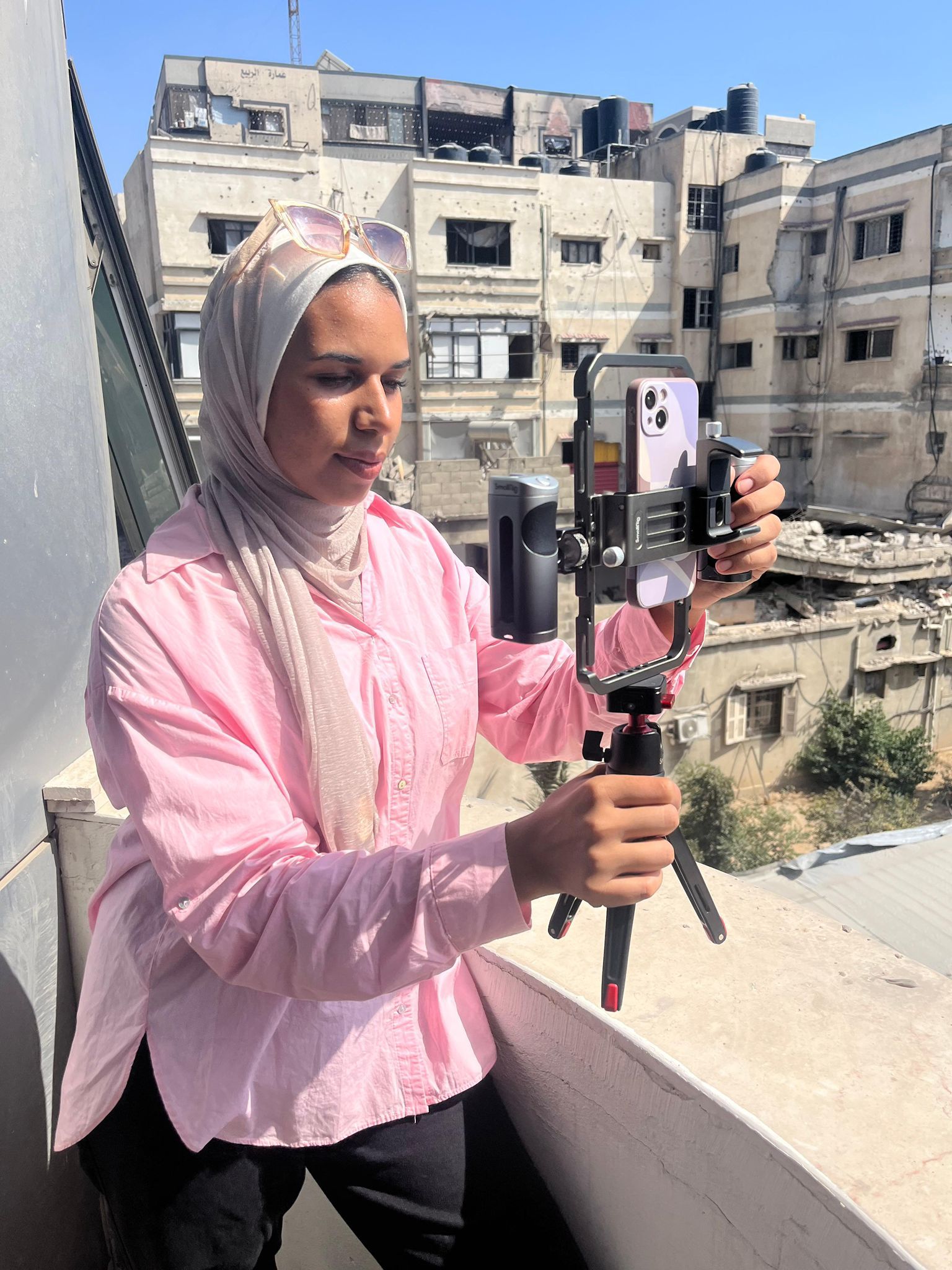
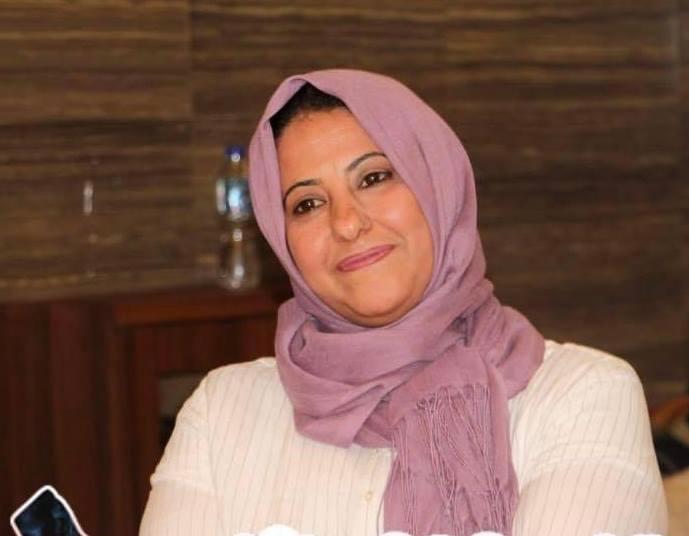
"In today's media landscape, visibility is everything," Umaima Reshi says. "If you're not online, you're nowhere." Reshi has witnessed that transformation from her newsroom. She began writing for Kashmir Life, a weekly magazine, as a student, contributing to its print magazine. Over time, her newsroom encouraged her to step in front of the camera, introducing her to digital storytelling. Today, she scripts, narrates and edits news reports for digital media, and much of her work depends on reaching audiences through social media.
For her, news consumption is part of a much larger shift that has transformed journalism in Kashmir. Platforms like YouTube Shorts, Facebook and X have changed not only where people consume news but also how journalists produce it.
"I've seen vertical videos consistently perform better than horizontal ones because people consume news while scrolling," she says. "The algorithm naturally rewards concise, engaging videos that capture attention within seconds."
That change has forced newsrooms to rethink storytelling. Reshi points to Kashmir Daily Report, a programme she scripts, narrates and edits herself, as an example.
For decades, newspapers and later news websites acted as a primary source of news consumption in Kashmir. Every morning, printed dailies landed on doorsteps carrying political developments, government announcements and local affairs. Today, that ritual has taken a different way.
Media students and aspiring journalists get compared to people who popularity simply because they have created a niche using local language and emotional appeals
Babar Rather, a Kashmir-based journalist, sees the transformation of news consumption over the last five years in Kashmir moved entirely from the doorstep to the palm of the hand.
"Social media is no longer an alternative gateway; it functions as the primary wire service for the average resident. The traditional habit of waiting for morning newspapers or scheduled broadcasts has largely collapsed, especially among younger audiences."
Instead, he says, news is increasingly consumed while users scroll through algorithm-driven feeds on Instagram, YouTube, Facebook and X.
India is home to nearly 1.02 billion internet users and 500 million social media users, making it one of the world's largest digital markets. Affordable mobile data costing about 10 cents per gigabyte and widespread smartphone adoption have fuelled an ecosystem where audiences spend an average of 3.2 hours a day on social media according to a Reuters factbox.
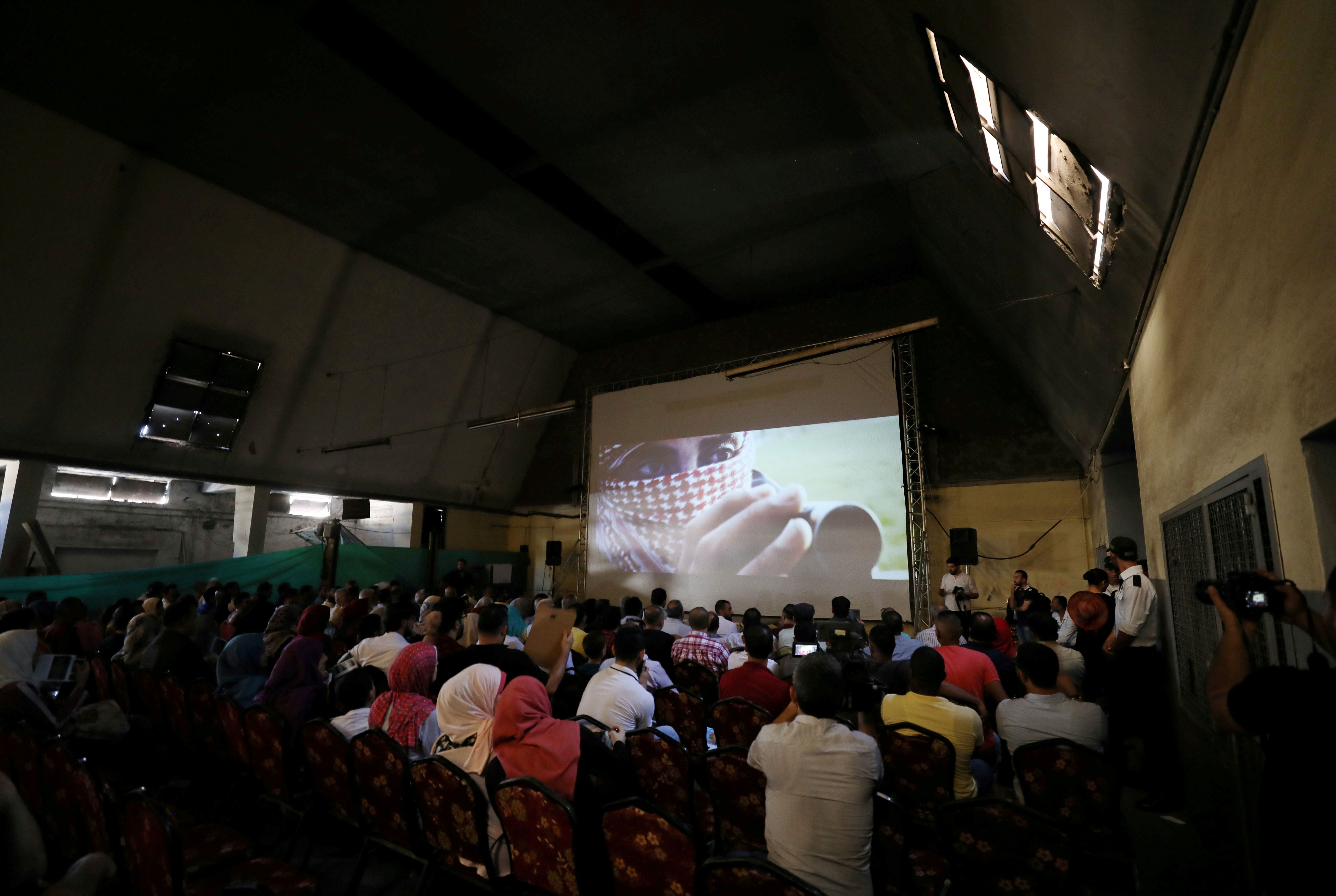
Kashmir's transition to digital journalism unfolded against the backdrop of one of the world's longest internet shutdowns. According to Access Now's #KeepItOn Report, the communications blackout imposed after August 2019 lasted more than 175 days, while Jammu and Kashmir accounted for nearly 68% of India's 121 internet shutdowns recorded that year. During this period, journalists were forced to queue at a government-run media centre in Srinagar to access limited internet and file stories.
Today, the region's media landscape looks very different. Alongside established news organisations, a new generation of independent social media creators has emerged, many operating outside traditional newsroom structures. Social media has enabled a new generation of “self-styled news creators" and “self-proclaimed journalists” who operate independently on social media with immense online followings. Many publish breaking updates, livestreams of civic issues, political commentary videos about missing persons, lost-and-found cases, and public fundraising appeals for people affected by illness, accidents or fires.
Journalism aspirants and journalism students increasingly find themselves compared with online personalities who have accumulated large followings through emotional storytelling rather than professional reporting.
Their growing popularity has triggered a broader debate within Kashmir's media ecosystem over the changing norms of journalism, with concerns centring on verification, editorial oversight, ethical reporting, and public accountability.
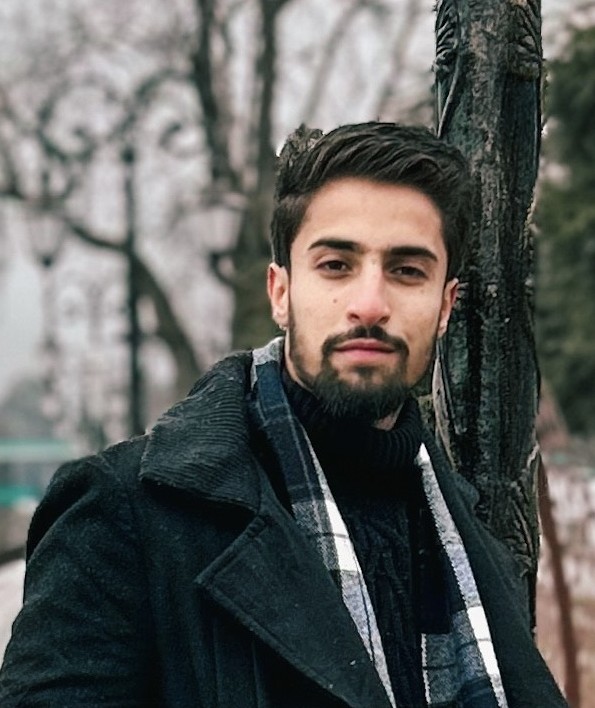
Irtiza Yousuf, a postgraduate in mass communication and journalism, says journalism aspirants and journalism students increasingly find themselves compared with online personalities who have accumulated large followings through emotional storytelling rather than professional reporting.
"Media students and aspiring journalists get compared to people whose popularity is simply because they have created a niche using local language and emotional appeals," she said. She believes many such creators pursue personal agendas.
"They use these platforms for personal gains and vendettas. Objectivity is often absent. They deliver verdicts themselves, use emotionally charged speeches and create public spectacle instead of practising journalism."
In March 2024, Mudaisr Aziz became involved in a confrontation with a representative of the Smile Foundation, an NGO collecting donations through a fundraising vehicle. During the exchange, he questioned the legitimacy of the fundraiser and demanded details about the beneficiary's bank account, while the NGO representative challenged him to produce his journalistic credentials. The incident quickly went viral, prompting widespread debate over the increasingly blurred boundaries between journalism, activism and social media performance.
Mudasir Bashir Bhat, popularly known online as Mudasir Aziz, the admin of several Facebook pages who has a large online following. Many social media users questioned Mudasir’s conduct and his journalistic practice, arguing that such confrontational videos and digital activism in the name of journalism risk undermining public trust in journalism and further damaging the profession's credibility.
Days later, a local court summoned the admin of the Facebook page in a defamation case filed by NGO smile foundation for allegedly circulating “malafide videos” against it. According to the plea, Mudasir Aziz operated several Facebook pages, including Kashmir Youth Power, News Express, Mission Kashmir and Mudasir Aziz, and was allegedly portraying himself as a journalist to defame individuals and pursue personal grievances. A court later ordered the removal of the disputed videos and restrained them.
The issue is not only who has emerged in the name of journalism. It is also who is watching them, he says. "If audiences continue to consume and share this content, they are reinforcing it. At the same time, if well-reported journalism receives little engagement, it raises questions about whether audiences still value it
For many Kashmiris, Mudasir Aziz has become the first person they turn to when a child goes missing, valuables are lost or a family needs urgent financial help. Through his widely followed Facebook pages Kashmir Youth Power (around 1.1 million followers), News Express (about 600,000 followers) and Mudasir Aziz Reporter (roughly 642,000 followers), he broadcasts appeals to trace missing people, recover lost belongings and raise funds for patients battling serious illnesses. His emotionally charged livestreams have earned him widespread public support, with many viewers praising him for addressing issues they believe receive little attention elsewhere.
Fahad Shah, a Kashmiri editor, believes the disruption of Kashmir's media landscape extends beyond journalists and digital creators to the audiences consuming the content. The way news is consumed has changed so much that
"I don't even read newspapers or websites anymore to follow news from Kashmir," he said. "What exists now is a digital circus. The boundary between activism and journalism has blurred while self-promotion and advertising increasingly define the media space."
Shah argues that audiences themselves play a central role in sustaining the new ecosystem.
"The issue is not only who has emerged in the name of journalism. It is also who is watching them, he says. "If audiences continue to consume and share this content, they are reinforcing it. At the same time, if well-reported journalism receives little engagement, it raises questions about whether audiences still value it."
Imran Parry, a media educator at a college in Kashmir, believes that the rise of independent social media creators should not be dismissed simply because they operate outside traditional newsrooms.
“In a democracy, every individual has the right to question and be part of the process of discourse shaping. The same goes for media practice so long as individuals adhere to basic principles of journalism and professional norms of conduct," he said.
In India, print publications are governed by the Press and Registration of Periodicals Act, 2023, which replaced the colonial-era Press and Registration of Books Act, 1867. Under the new law, anyone seeking to publish a newspaper or periodical must first apply online through the Press Seva Portal, reserve a unique title, appoint a publisher, and submit the required details to the Press Registrar General of India (PRGI). After verification by the designated authority, the PRGI issues a Certificate of Registration, allowing the publication to commence operations.
In a democracy, every individual has the right to question and be part of the process of discourse-shaping. The same goes for media practice so long as individuals adhere to basic principles of journalism and professional norms of conduct.
Unlike newspapers, there is no dedicated statutory registration mechanism or publicly accessible registry for digital-only news portals, and instead, publishers of online news and current affairs content are expected to comply with the Information Technology (Intermediary Guidelines and Digital Media Ethics Code) Rules, 2021, which require adherence to a Code of Ethics; digital news outlets are primarily regulated through compliance obligations rather than a comparable registration process.
The debate over ethics resurfaced recently after a video of a 12-year-old student criticising the delay in announcing summer holidays during an intense heatwave went viral across Instagram, Facebook, X and WhatsApp. He criticised the Education Minister, saying that officials were sitting in air-conditioned offices while students had to attend classes in the heat. The clip attracted millions of views but also raised questions about children's privacy and media ethics. The local Child Welfare Committee reportedly issued notices to a news portal involved in recording and publishing the interview, alleging that the child had been filmed without appropriate parental consent and directing that the videos be removed.
As Instagram and other social media platforms increasingly shape how news is produced and consumed, journalists in Kashmir find themselves adapting to a media environment where visibility often determines reach, algorithms influence distribution and audiences expect information instantly. Yet many argue that the profession's defining principles remain unchanged.
"Journalism is defined by its ethics," Reshi says. "Whether you're part of a newsroom or working independently, your responsibility is to present truthful, accurate and well-researched information. There's absolutely nothing wrong with being a content creator. But if you don't follow the ethical principles of journalism, you shouldn't call yourself a journalist."