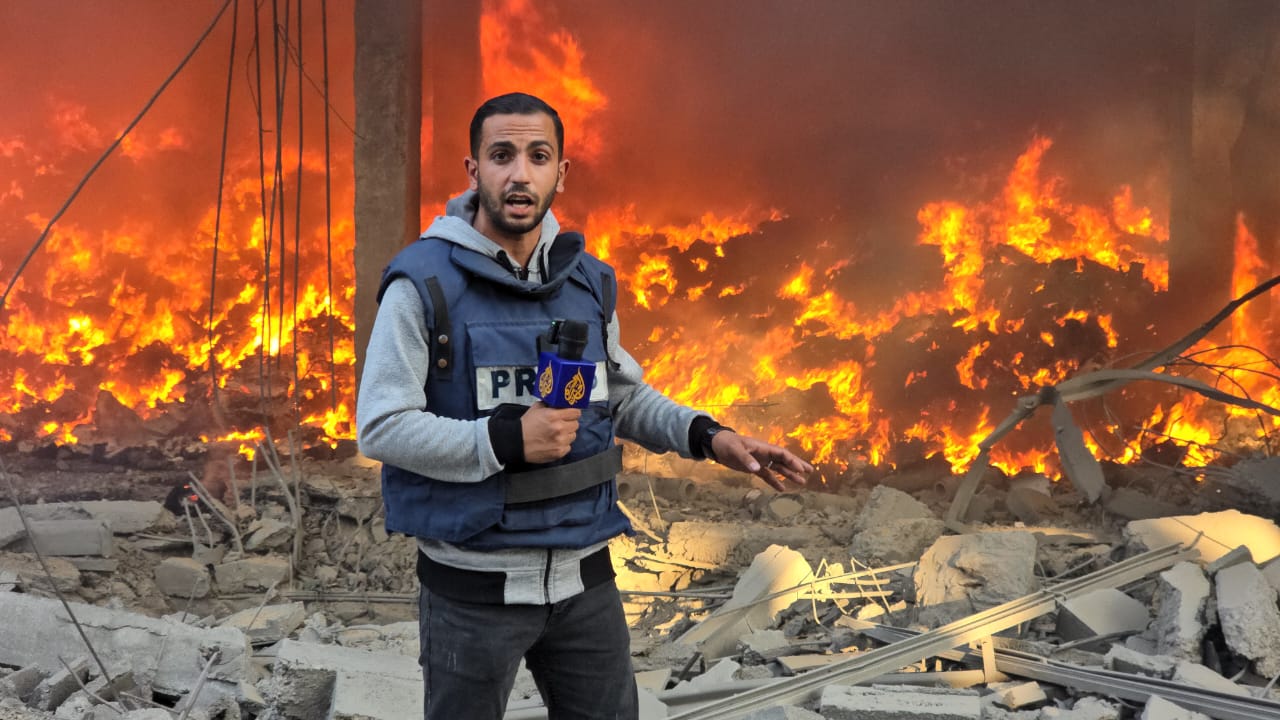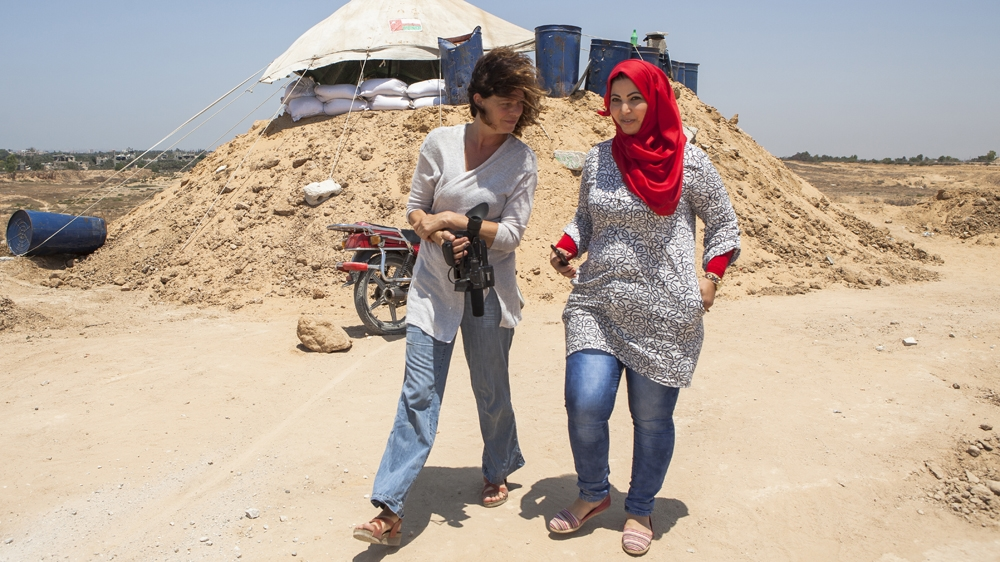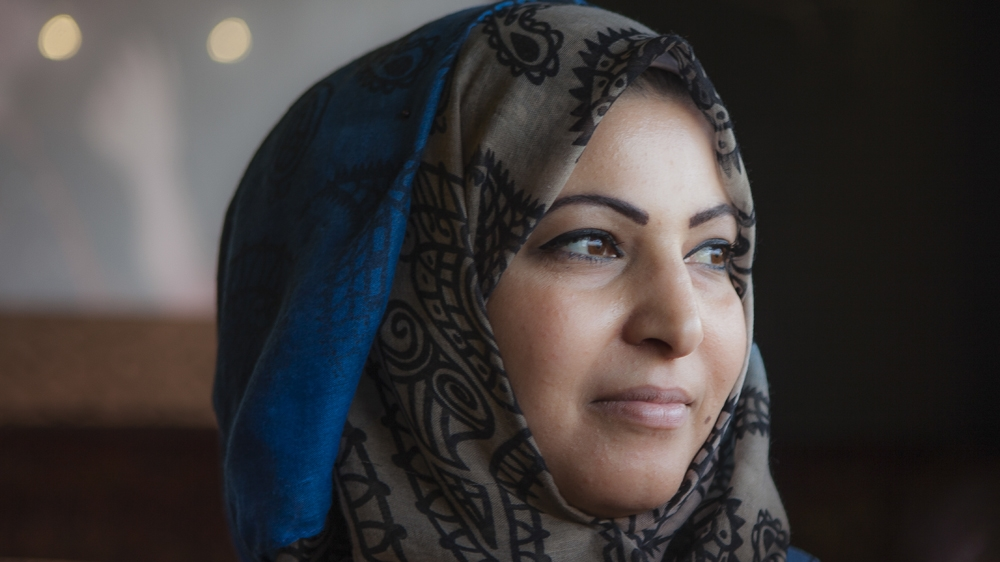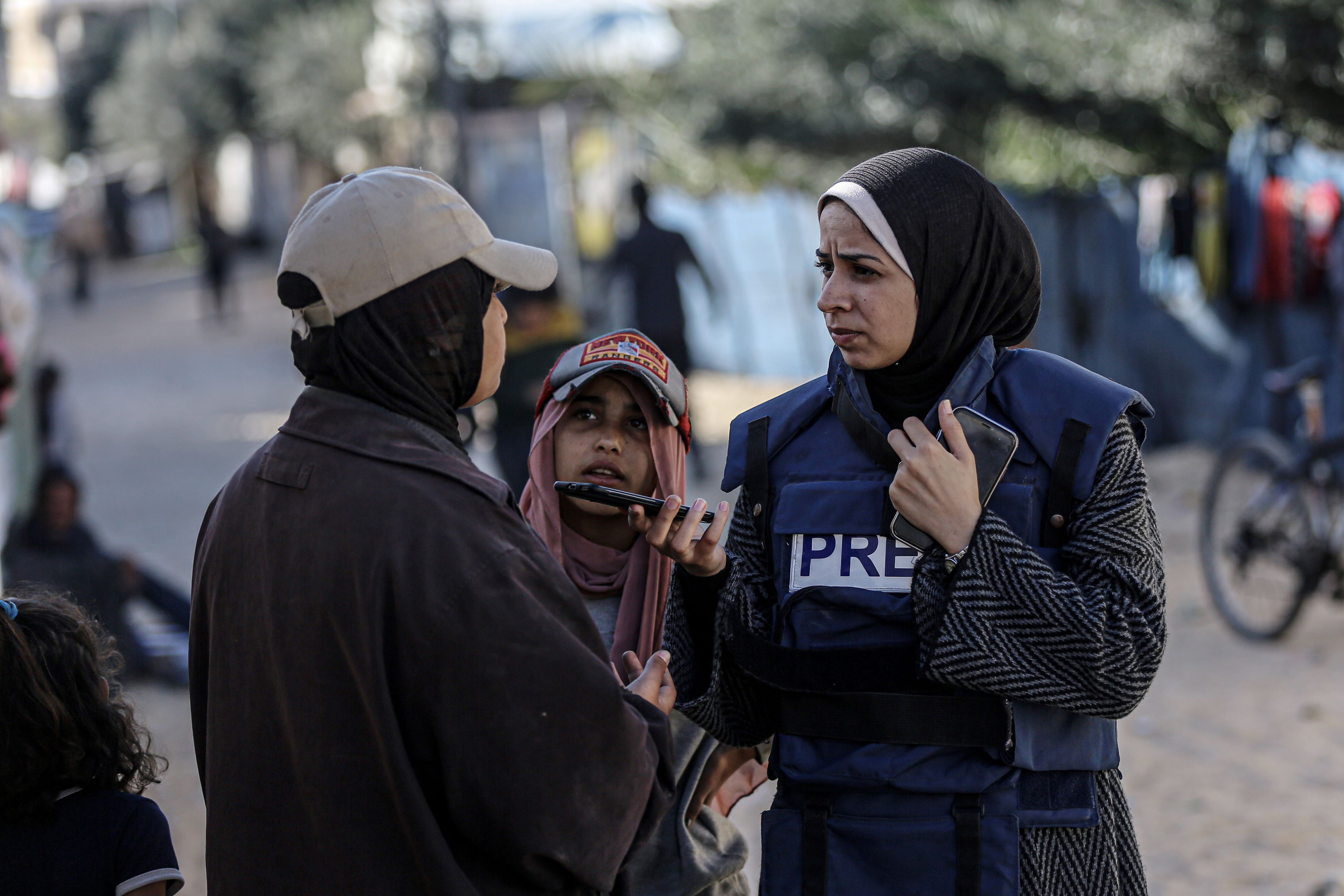
In Gaza, journalism becomes inseparable from the life it documents: reporting continues not from a distance, but from within the same fear, grief, and instability it tries to record.
I never expected my journalistic mission to turn into a struggle for survival. On the morning of October 7, 2023, I understood for the first time what it meant to be a witness before being a journalist.
Before the explosions began, our home was filled with my married sisters, who had been taking turns staying with us for several days after the death of my only brother, Yaseen (30). They came to support my parents emotionally and to help us all cope with the shock of his sudden passing, which had occurred only days earlier.
The early morning hours were filled with the sounds of ordinary life: school buses rumbling through the street, the vendor selling “awqa” (chocolate pastries), and parents escorting their children to school. The school year had begun only about a month earlier. But within moments my limbs froze; I jolted awake to terrifying bombardment and a sky thick with dust, as if it were the end of the world.
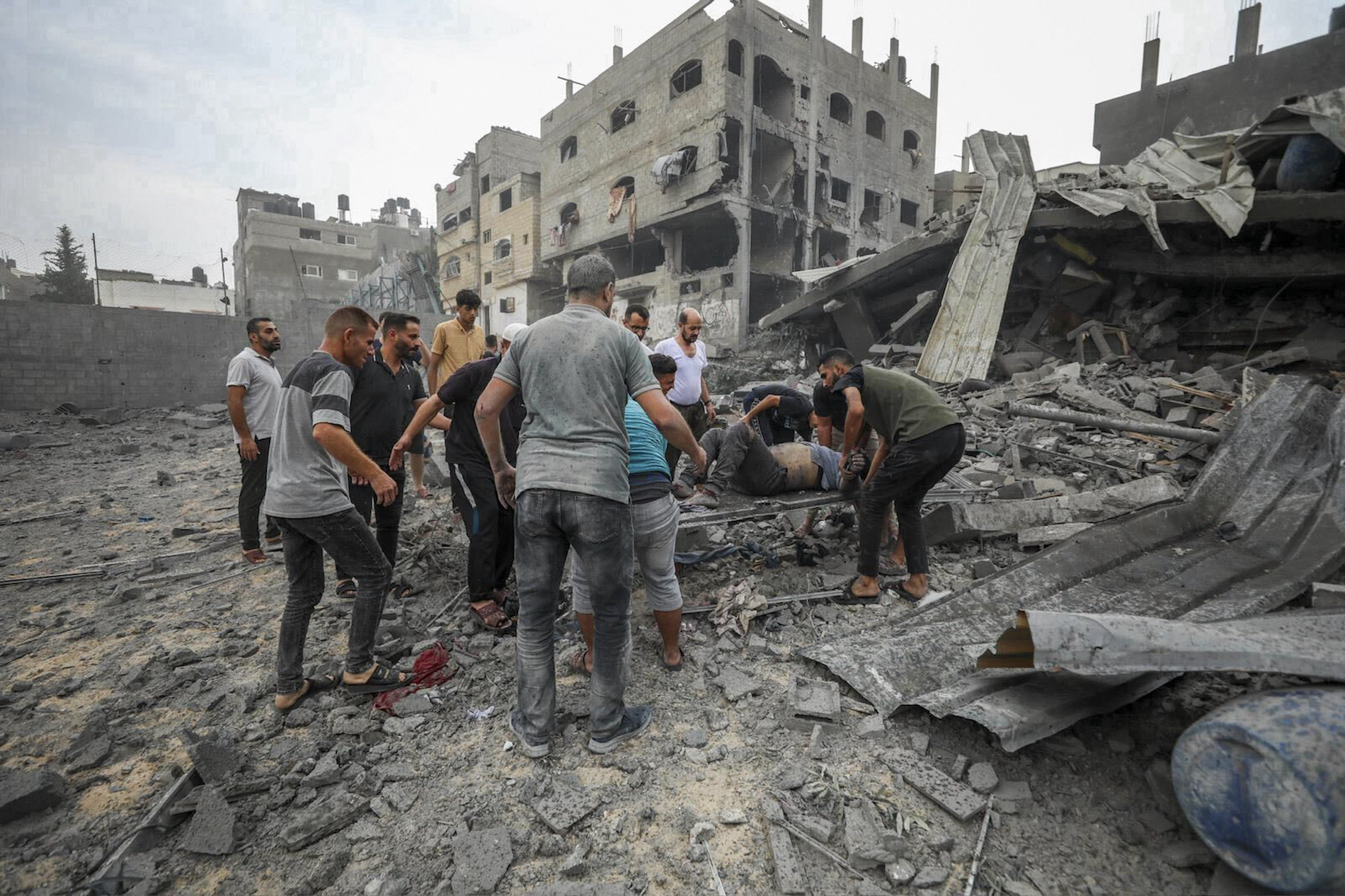
From the first day I noticed a shift in the nature of the Israeli airstrikes compared with previous wars. Despite their earlier brutality, what was happening this time was different, direct targeting of residential buildings, institutions, schools, and hospitals in a manner that defies description.
I will never forget the moment our neighbors’ house, only a few meters from ours in Al-Jalaa neighborhood in northern Gaza City, was bombed. Dust swallowed the air while I heard women screaming as they searched for their children. My thoughts froze in that moment: How would I manage to save my elderly parents? Where could I take them amid such relentless airstrikes? I do not know how I found the courage to reach the door and quickly assess the situation, searching for any possible way to protect them if the bombardment intensified.
I will never forget the moment our neighbors’ house… was bombed. Dust swallowed the air while I heard women screaming as they searched for their children.
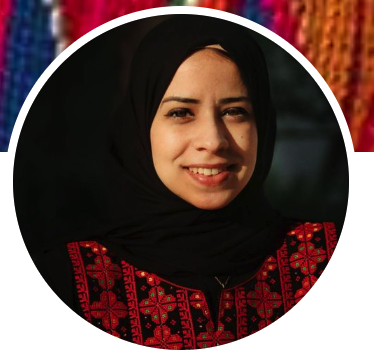
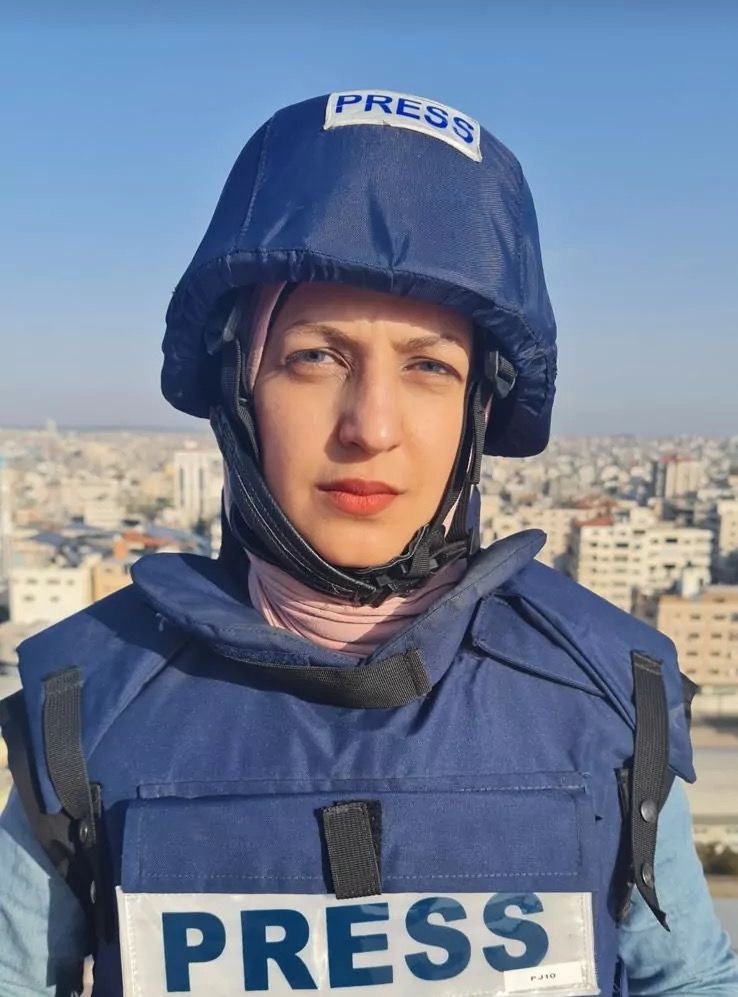
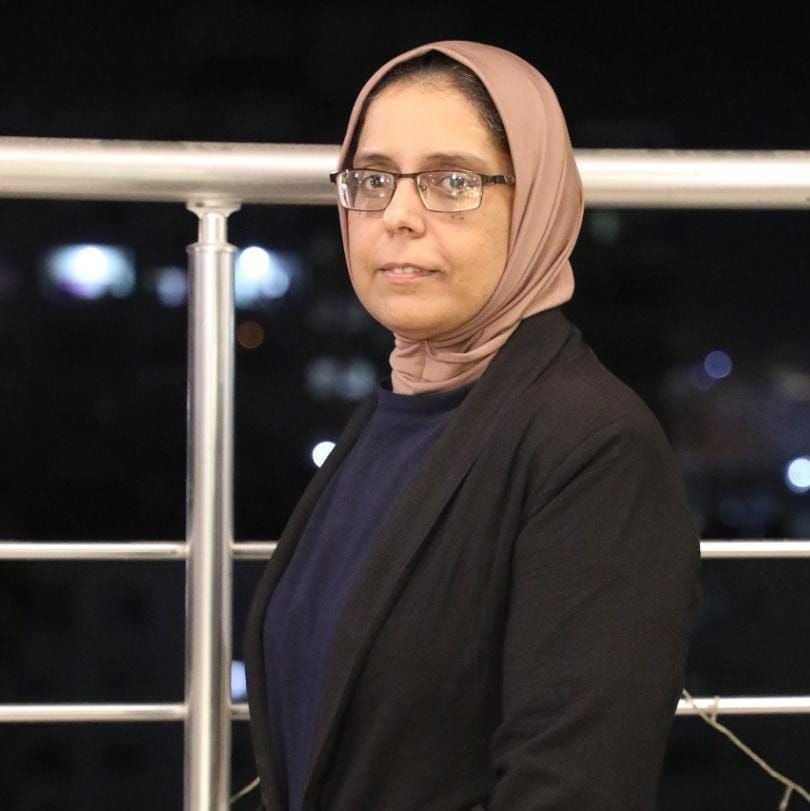
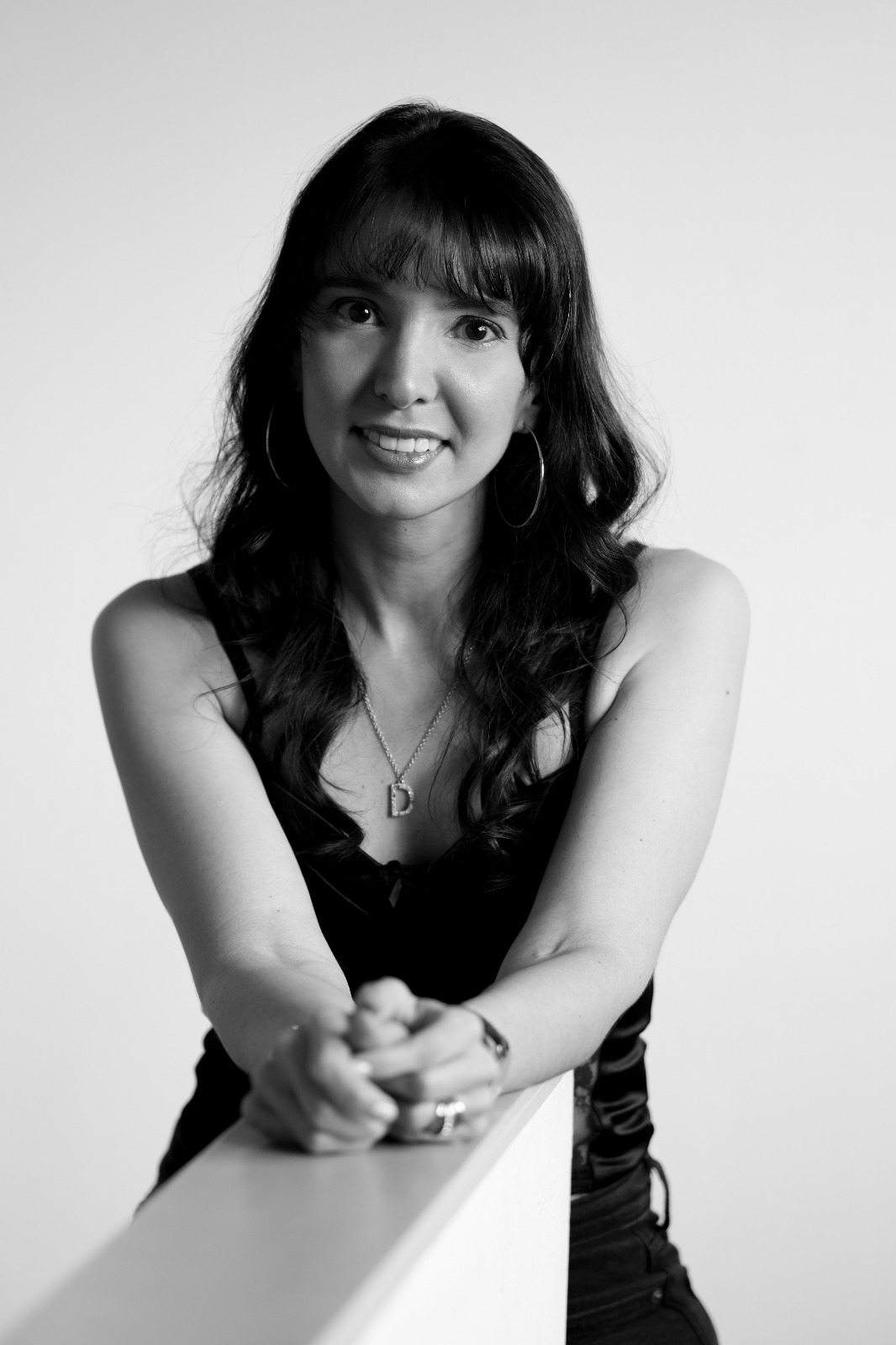
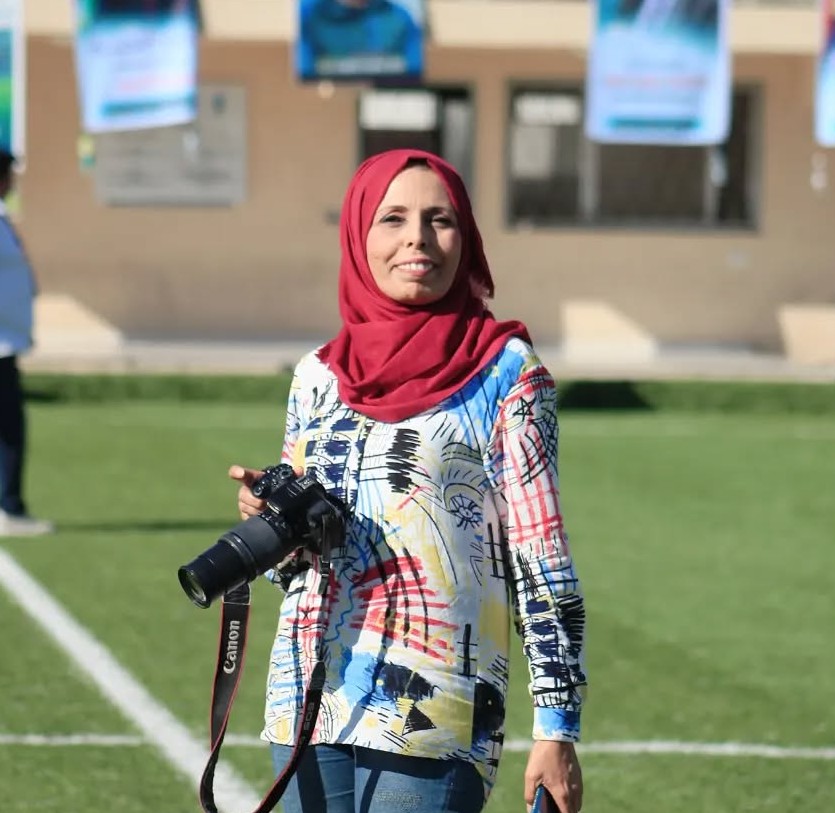
My name is Nelly Ismail Yaseen Al-Masri, a Palestinian journalist who survived the genocidal war on Gaza. I live in Gaza City. I studied Arabic language in the Faculty of Education at Al-Azhar University. I am a sports journalist specialising in sports coverage and research in Palestine. My media work has not been limited to sports journalism; I have also covered numerous social and political issues, managing to balance between them.
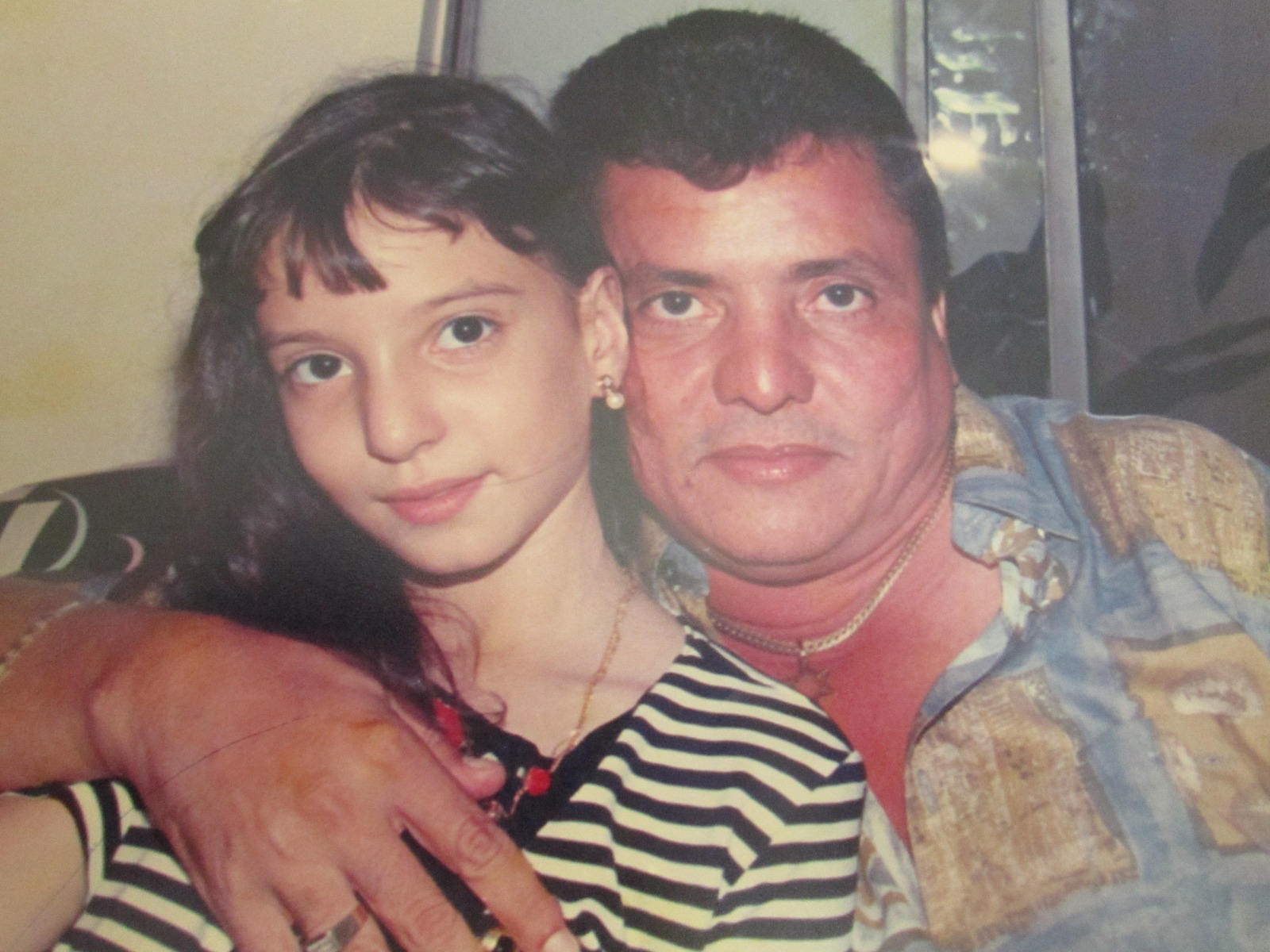
Before the war I lived with my small family. My father, Ismail Al-Masri (82), was a player for the Palestinian national football team in the 1960s and later a renowned coach who devoted his life to Palestinian sports. His influence inspired me to enter football stadiums that had long been dominated by men. My mother is a homemaker (71). I have seven sisters, all married; some live in Europe and the United States. My only brother, in the prime of his life, died just a month before the war from sudden kidney failure without prior symptoms.
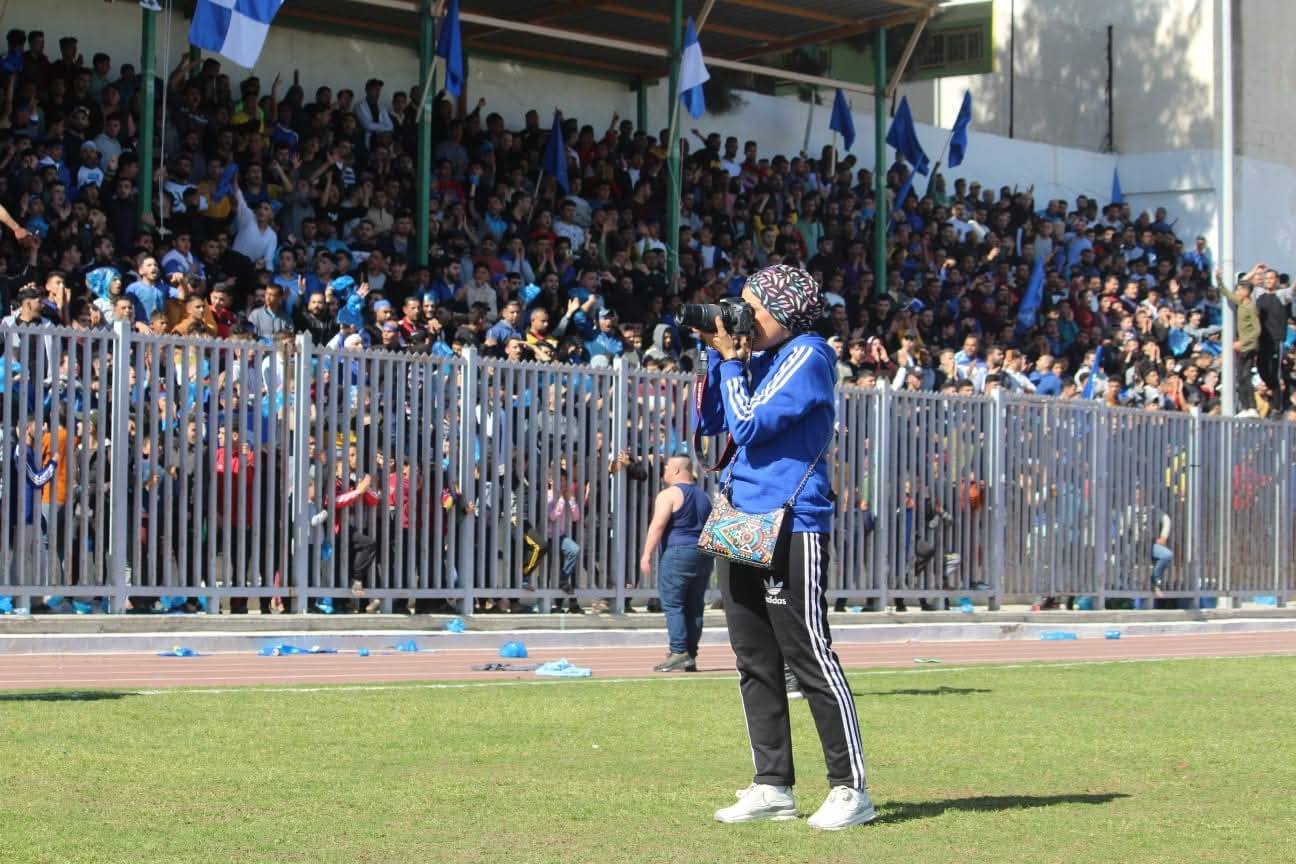
I loved my work deeply. Photographing football matches and sporting events was a beautiful world of its own. Capturing images, writing reports and stories, and witnessing events up close were among the most rewarding experiences of my life. I was proud of my achievements, winning several awards in photography, writing, and sports research, and grateful for my family’s support. At times I felt like “a champion of this world.”
I accompanied my father to football stadiums to attend league matches and sporting events until the final days before the war. He was always the stronghold that protected me, and I worked under his guidance and advice.
Alongside sports journalism, I also worked in community journalism and women’s issues. I produced in-depth reports on various topics through the Nawa Network of the Palestiniyat Foundation, the Women’s Affairs Center, the Community Media and Development Center, “Voice of Women,” and other civic institutions. I also covered key developments during previous wars while working with Al Bayan newspaper in the UAE and other Arab newspapers in Bahrain and Jordan, and I hosted sports programs on local radio stations.
Because of my specialisation in sports journalism, I also took it upon myself to document Israeli violations against Palestinian sports, athletes, and sporting facilities, following every development in this field.
I loved sports personally as well. I learned a new game, tennis, at Gaza Sports Club. My interest began when I covered a tennis tournament featuring senior athletes; the event revealed the beauty of the sport and deepened my enthusiasm for it. Eventually I found the opportunity to train at Gaza Sports Club, the oldest sports club in Palestine, founded in 1932, through the Sporting Gaza Academy. The club’s facilities include a tennis court where I began practicing.
I carved out time between my work, accompanying my brother Yaseen to the hospital for dialysis, family responsibilities at home, visits to the club, and meeting friends occasionally. At the same time I maintained training routines to improve my professional skills and keep pace with developments in the media. My days were crowded, but I managed to balance it all.
The War
I remember well the nights I spent with my father staying awake until dawn, following the news online while unprecedented airstrikes shook our home. With every strike the house trembled like an earthquake, filling us with fear and anxiety. The flashes of explosions and the sound of the most deadly missiles left us completely disoriented. There were no shelters and no safe places to hide.
I kept thinking: if the area around us were suddenly bombed, how could I get my elderly parents, both advanced in age, to a safer place? How could I protect them? My mother could run somewhat, but my father walked with the help of a cane.
During those moments my mother gathered our official documents and identification papers in a small bag. If an emergency occurred, we would take it with us so that we would not lose them. We knew that the terror of bombardment makes people lose awareness of everything around them; their thoughts focus only on saving the lives of those in the house. Yet keeping those papers was essential, they were what remained of our identity amid such overwhelming loss.
Journalism, for those who practice it… is not a path to surrender. Yet we have reached a point where we can no longer absorb more images of bloodshed. We are human.
Airstrikes continued throughout the first week. Two of my sisters and their families moved into our home to escape the bombing. My sisters abroad tried to persuade my father to move to my sister’s house in the city of Zahra, southwest of Gaza City, which was still relatively safe. After the Israeli army dropped leaflets ordering residents of Gaza City to leave, my father reluctantly agreed, and our displacement journey began alongside my sisters.
On October 13, 2023, we headed to Zahra and stayed there for five days at my sister’s home, where the situation seemed somewhat less dangerous. But on the fifth night we were shocked by a phone call from the Israeli military to one of the neighborhood residents ordering the evacuation of a complex of thirty residential buildings in preparation for bombing. The city was hosting large numbers of displaced people.
It was a difficult night. The same question returned: how would I evacuate my elderly parents? We brought a wheelchair, and some men had to carry my father away from the area. We rushed out of the building without taking any belongings, hoping to return after half an hour. I left behind both of my cameras and all my photography equipment; in that moment nothing mattered except saving my family.
Journalism, for those who practice it and fulfill their duty despite the brutality of events, is not a path to surrender. On the contrary, it becomes a motivation to continue delivering the message of the media. Yet I must admit that we reached a point where we could no longer absorb more images of bloodshed. We had reached the limits of pain. In the end we are human, yet we did not abandon our responsibilities.
We moved away and gathered with residents near the University of Palestine north of Zahra under orders from the Israeli army. Violent bombardment and “fire belts” began. Everyone, young and old, lay flat on the ground in terror at scenes too horrific to endure. I remember a woman in her fourth month of pregnancy who miscarried due to the intensity of the bombing. There was no clinic or hospital nearby; I never learned what happened to her afterward.
We remained there for a full night. The army prevented us from moving anywhere. At dawn we were forced to head to Nuseirat in central Gaza to stay with relatives. My father owned a car, slow and old, but it managed to take us there. My sister’s family used another car, and we divided ourselves between the two because our numbers were large.
We stayed for three days in a house on the fifth floor. Water was extremely scarce. Soon the area was bombed again, forcing us to leave.
We then moved to the home of an acquaintance near the entrance to Al-Bureij refugee camp overlooking Salah al-Din Street, which connects southern and northern Gaza. We stayed there for ten days. My cousin, his wife, and their children joined us, bringing our number to thirty-two people in a small sixth-floor apartment.
We had to avoid risking our lives or becoming the news ourselves. At the same time, I felt a deep responsibility to document people’s suffering, particularly those displaced to schools and other shelters
From the windows we watched columns of smoke as the ground invasion of Gaza began. Rockets repeatedly struck nearby houses. At night we gathered near the apartment door in case of emergency. Sleep became impossible. Our main concern was securing water and food under extremely difficult conditions, while communications were completely cut off, we had no idea what was happening elsewhere in Gaza.
On the tenth day we received orders to evacuate the building and neighboring homes in preparation for bombing. My father tried to go downstairs before us so that his injured leg would not slow us down. We ran outside and moved away, standing in the street with nowhere to go, dozens of us, including women and children.
Nearby there was an automated bakery. The owner offered to let us stay temporarily in the bakery’s basement since it was already evening. We accepted. The basement contained only a medium-sized mat; each of us had half a meter of space to sleep. The night was cold. We had no blankets, no water, and no food. My father remained in his wheelchair the entire time.
The next day my cousin went to friends, and one of my sisters went to her husband’s family. That left me, my father, my mother, and another sister’s family with nowhere to go. The bakery owner again allowed us to stay another night so we could search for a safe place.
My father called acquaintances and friends, he had a wide network due to his reputation in sports and the community, but he never told them he needed a place to stay because he did not want to embarrass them. Instead he asked how they were doing, and they would mention which athletes or acquaintances were staying with them. Almost everyone was already hosting displaced families.
On the second day my close friend Wafaa Akhsaywan, who had been in constant contact with me, offered to host us at her family’s home in Deir al-Balah in central Gaza. We accepted and moved there, staying until the ceasefire.
As the war intensified, my sisters eventually convinced my father to travel to Egypt until it ended, though he initially refused to leave Gaza in those circumstances. We managed to arrange coordination through the Hala company after great difficulty raising the required funds. In April 2024 my parents were able to travel to Egypt, but I was turned back from the Egyptian side without any clear reason and remained in Gaza with my sister in Deir al-Balah.
My father died in Egypt just days before the ceasefire. I had wished to bid him farewell and place one last kiss on his forehead.
After the ceasefire in January 2025, I returned to our home in Gaza City.
A Sports Journalist in Gaza
Working in journalism in Gaza is never easy. Yet my love for the profession and my belief in my ability to shoulder responsibility and contribute to the public good enabled me to endure the hardships. The Palestinian journalist operates under circumstances entirely different from those faced by journalists elsewhere.
When I began working at Radio Al-Hurriya in Gaza in 2002, Israeli incursions into the Gaza Strip were ongoing and the situation was extremely dangerous. Alongside my colleagues, I interviewed the families of those killed and produced radio stories from the field.
Although my interests leaned toward sports, few media outlets at that time covered sports; political and security issues dominated journalism. So I continued volunteering to write sports reports for daily newspapers while also working formally in a media office covering events.
A special invitation from colleagues in Qatar to attend the 2005 West Asian Championship had a profound impact on my path in sports media and strengthened my conviction that this was the field I wanted to pursue.
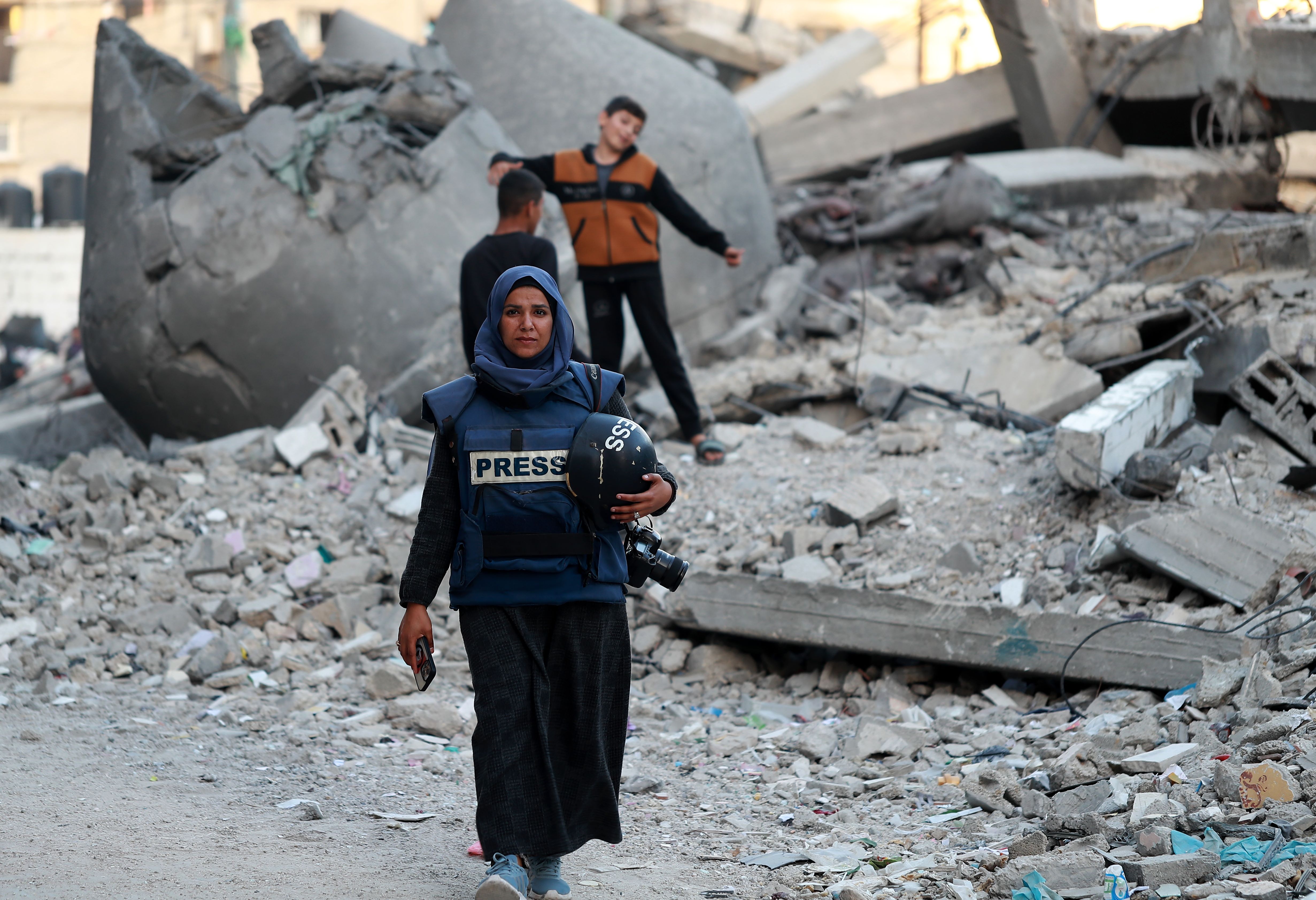
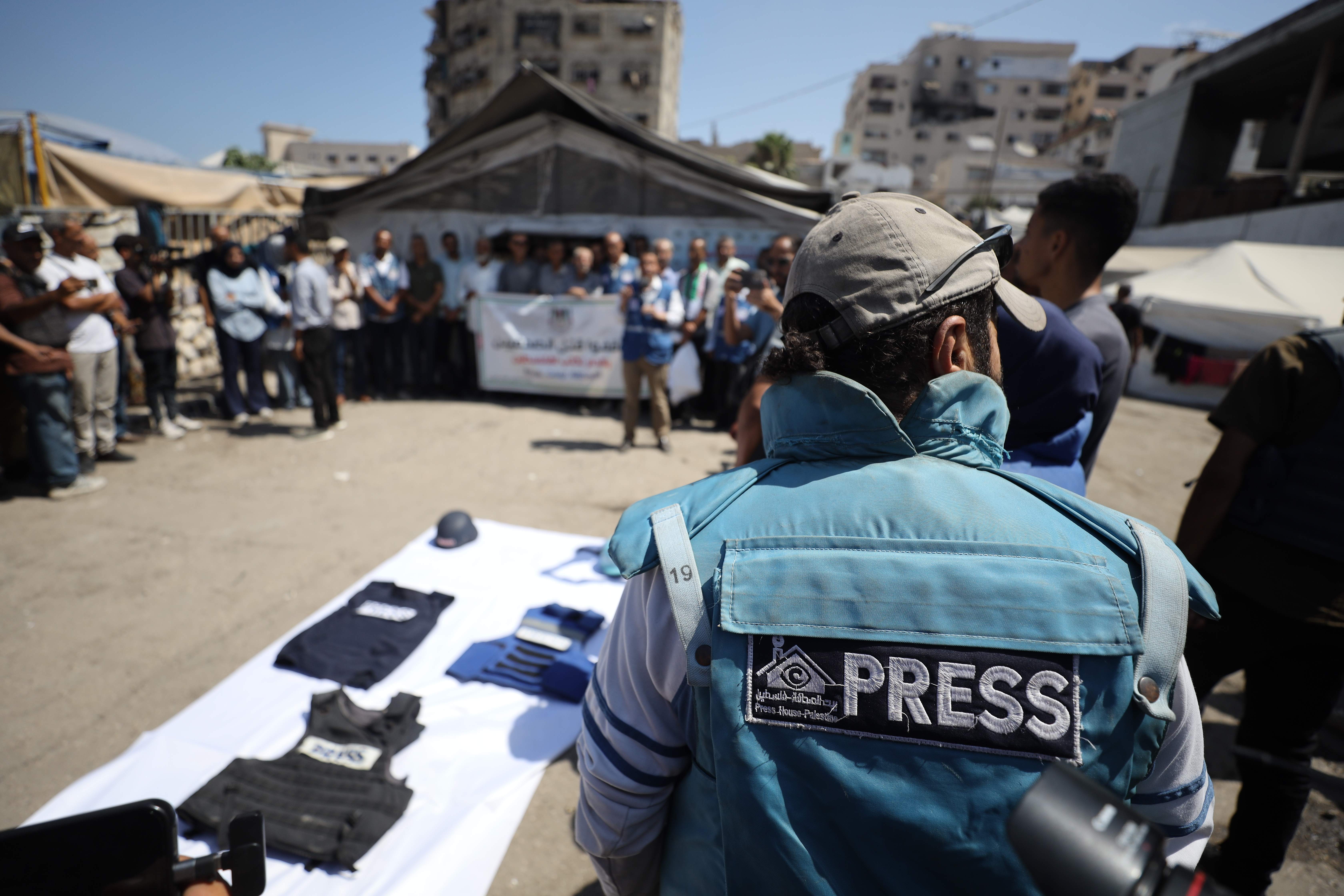
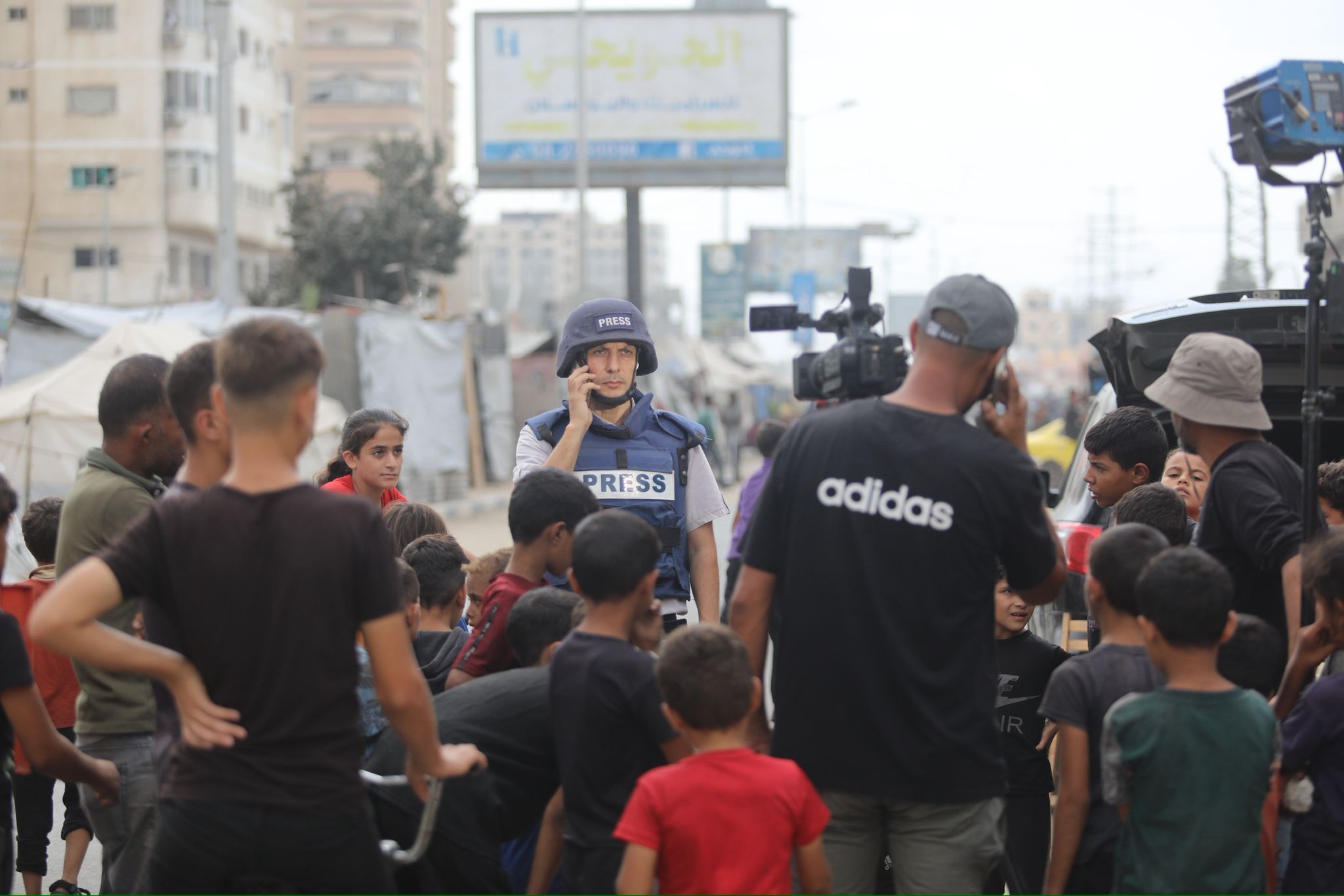
The conditions in Gaza force journalists to constantly monitor the political and security environment. Covering previous wars was extremely difficult, especially as a freelancer without basic safety equipment, no protective vests, helmets, or insurance. Yet we had to avoid risking our lives or becoming the news ourselves. At the same time I felt a deep responsibility to document people’s suffering, particularly those displaced to schools and other shelters.
During the 2014 war, while working for Al Bayan newspaper in the UAE, I was assigned to produce a report on displaced families in schools despite ongoing shelling in the area. Shortly after I finished filming and left the school, the nearby area in northern Gaza City was bombed. That day I realised that the distance between life and death can be measured in minutes.
Before the war my professional life was full of achievements, awards, recognitions, and extensive coverage of football league matches through photography and reporting. I worked in the media department of the Palestinian Football Association, later with the Women’s Committee of the Palestinian Olympic Committee, as media officer for Gaza Sports Club, and as a member of the Palestinian Chess Federation.
Shortly after I finished filming and left the school, the nearby area in northern Gaza City was bombed. That day I realised that the distance between life and death can be measured in minutes.
On October 7, the seventh round of the Premier League was scheduled to take place, and I was preparing to photograph the matches. But the war of extermination halted everything.
Alongside sports journalism I remained active in broader journalism, writing research on women’s issues and social problems through institutions in Gaza. Some of these studies were published in peer-reviewed academic journals. I also documented stories of women’s lives during the wars of 2008, 2012, 2014, and 2021, some of which appeared in the periodical Al-Ghaida and others in books about women’s stories.
During the current war I documented community stories about early marriage, the situation of people with disabilities after the destruction of their institutions, the conditions of the elderly in displacement, and the experiences of women sports journalists. My passion for journalism pushed me to use every minute of my day.
During the genocide in Gaza, however, repeated displacement initially made it impossible for me to work. I had opportunities to collaborate with television channels in Tunisia and Algeria, but I was still displaced and had no suitable clothes to appear on camera. I had fled my home wearing only house clothes and slippers during the evacuation. I also had no press vest or safety equipment. So I limited myself to writing diary entries about displacement.
In early 2024, once we had settled somewhat in Deir al-Balah, I gradually resumed fieldwork despite the danger. I wrote reports on the suffering of displaced people and documented more than ten stories of women who had lost family members and were living in tragic circumstances. I continued visiting displacement camps and public spaces to conduct interviews.
After returning to Gaza City following the January 2025 ceasefire, I continued writing reports about the social impact of the war. I also wrote ten stories about early marriage for a local institution in Gaza.
As the number of victims, including many athletes, grew and all sports institutions and clubs were destroyed, I felt a responsibility as a sports journalist to document the stories of athletes during the war. The Palestinian Journalists’ Syndicate opened an office in Deir al-Balah, which greatly facilitated my work by providing electricity, internet, and a space to operate.
To this day I remain in that tent in Deir al-Balah, carrying my stories and continuing to write them down, because writing is the one thing the bombardment could not erase.
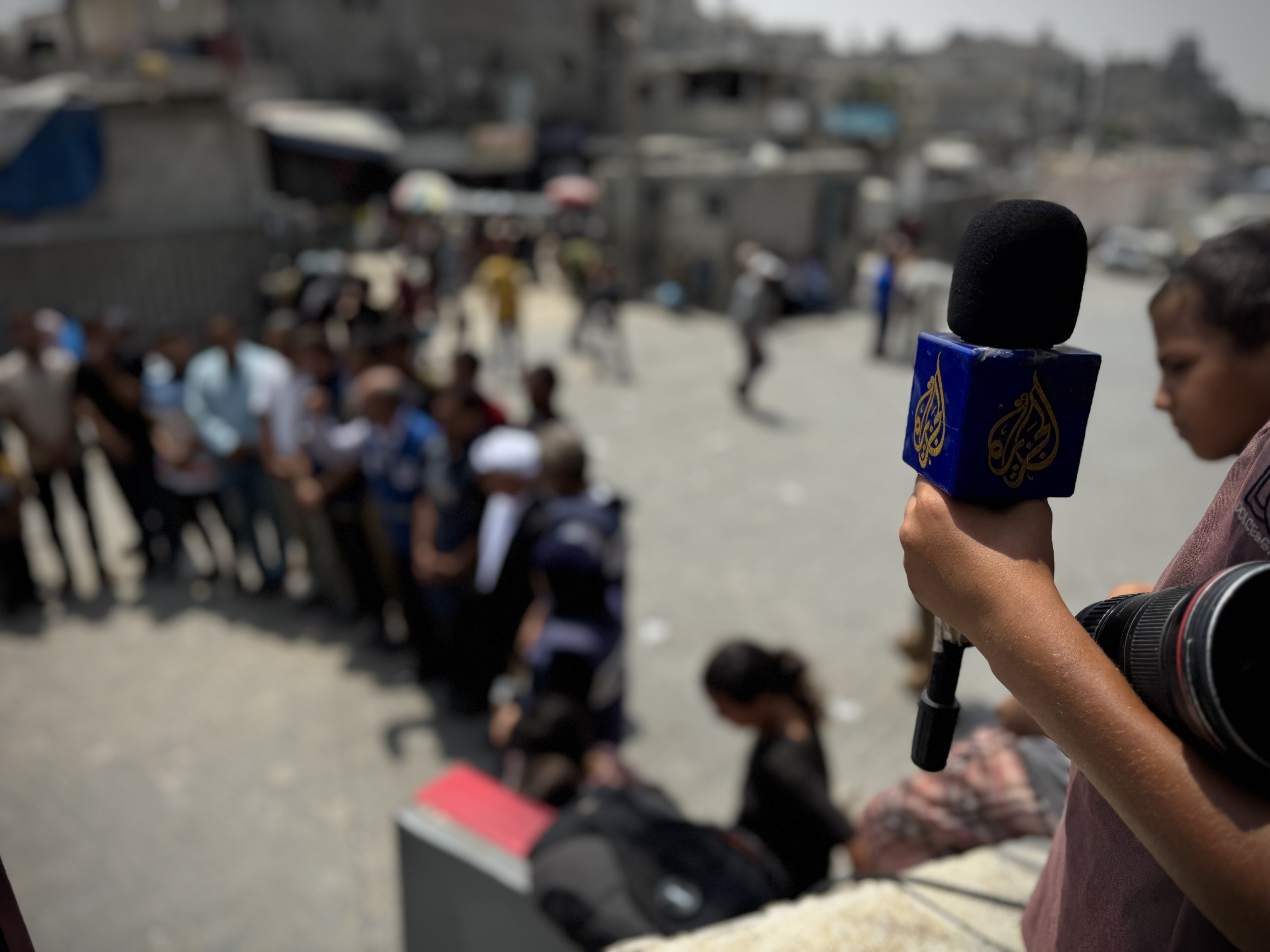
From there I began documenting athletes’ testimonies and hosting them for interviews. Each story forced me to relive the war. Athletes recounted the horrors they had endured. I plan to compile these stories into a book to be published by the end of the year. Some have already been translated into English and published on the website of the International Sports Press Association, while two stories appeared on Al Jazeera blogs. I continue documenting athletes’ experiences alongside other war-related issues.
One of the most difficult testimonies I heard came from the late Suleiman Al-Obeid, known as “the Pele of Palestine,” a former national team player. While crossing the Netzarim checkpoint east of Gaza City during displacement with his family, he told me a sentence that has never left my memory:
“I never imagined that the feet with which I used to kick the ball on green fields and score goals would one day walk across a bridge made of human flesh, people killed in airstrikes and covered with a layer of sand by the occupation.”
The details of his story were so painful that I could not write them down until two weeks later. I saw them in nightmares.
Despite the human significance of these sports stories, I often faced difficulty publishing them. Some websites published my work once or twice but later refused further submissions. Eventually I chose to publish them voluntarily through the International Sports Press Association. What mattered most to me was exposing the crimes committed against Palestinian athletes and fulfilling my responsibility toward Palestinian sports.
Journalistic work under conditions of genocide, siege, and continuous displacement is extremely exhausting. Yet our belief that we carry a responsibility toward society, much like doctors and paramedics, drives us to continue.
Perhaps the hardest part was the targeting and killing of journalists themselves. Many were people we knew personally. The loss plunged us into a profound psychological crisis. At times it felt as though we were alone in the universe, unheard despite the entire world watching the massacres unfold live on television screens.
What happened to my colleague Wael Al-Dahdouh and the losses he endured, and what our colleagues such as Heba Al-Abadla experienced while trapped with their families in Khan Younis, made it feel as though the wheel of life had stopped entirely.
The shock came shortly before the ceasefire: our house and the entire neighborhood where I lived were destroyed and leveled to the ground. To this day I remain in a tent in Deir al-Balah, carrying my stories and writing them down, because writing is the one thing the bombing has failed to erase.
The details of his story were so painful that I could not write them down until two weeks later. I saw them in nightmares
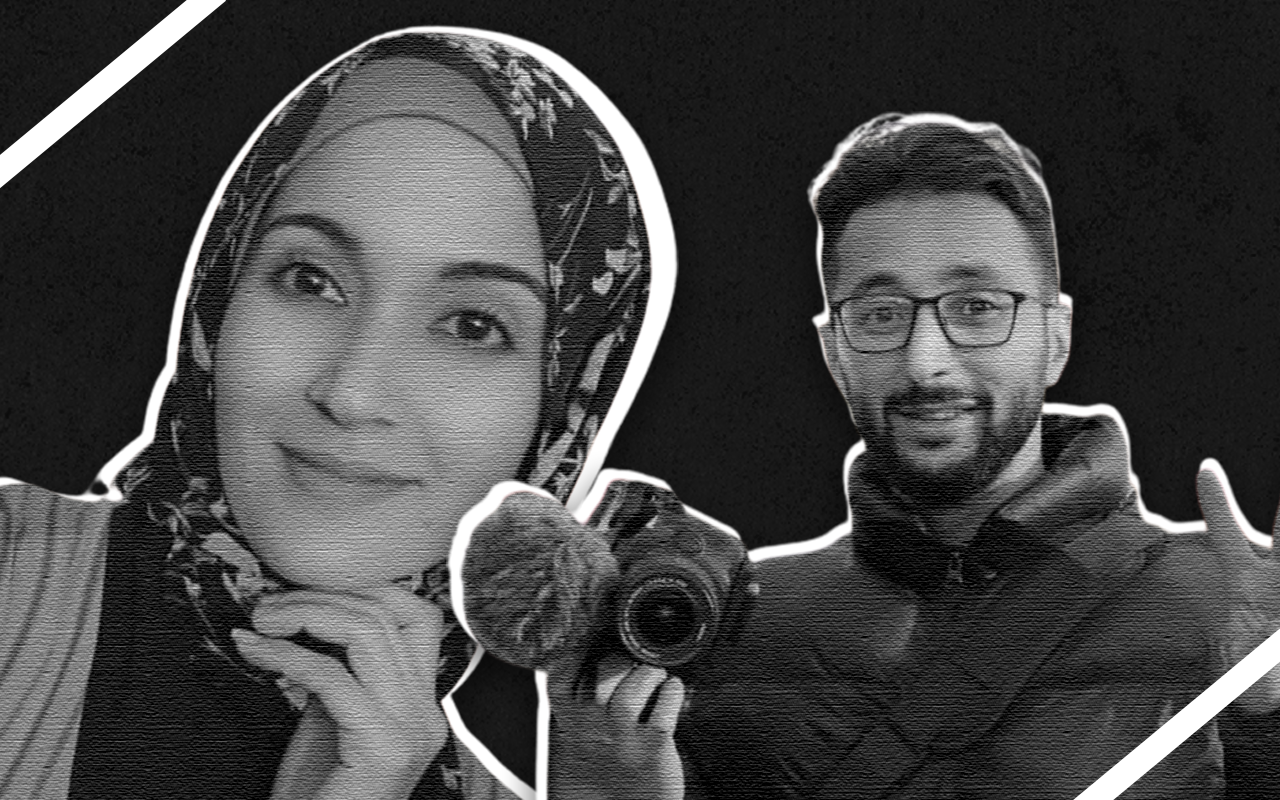
Among the losses that deeply affected me were two close friends: the visual artist Frances Al-Salmi and Malak Musleh, a member of the Palestinian national boxing team. Both were killed when Israeli forces bombed a seaside café in Gaza. I used to attend Frances’s exhibitions and follow her artwork closely. A month before her death we met by chance and promised to share coffee soon after returning to Gaza. Frances left this world before we could have that coffee.
As for Malak, I had followed her career since she joined boxing at the age of twelve. She was exceptionally talented and often assisted the coach in training other girls. I had photographed her many times and admired her performance. The news of their deaths filled me with grief and a sense of the fragility of life.
Local media did not ignore their deaths; coverage addressed the circumstances of their targeting. The killing of any colleague or friend cannot pass unnoticed, they are victims of a war of extermination who gave their lives exposing crimes committed against the Palestinian people.
As massacres intensified and the number of victims soared, horrifying phenomena emerged, among them the disappearance or dissolution of bodies beneath bombed homes. Reports of families whose remains could not be recovered left us stunned. Many of us became psychologically overwhelmed by the accumulation of tragedy, suffering from insomnia and the constant replay of violent images. In truth, many of us needed psychological care to cope with what we had witnessed.
Journalism, for those who practice it with conviction, is not a path to surrender even in the face of such brutality. Yet we have reached a point where we can no longer absorb more images of bloodshed. We are saturated with pain. We are human, but we did not abandon our duty.
Not long after the January 2025 truce, the drums of war began beating again and airstrikes resumed across Gaza. During field reporting I often found myself in real danger while documenting the stories of civilians, women, children, and families. Sometimes a place I had just left would be bombed shortly afterward. Still, I continued my work as much as possible.
In September 2025 we were displaced once again amid new threats against those remaining in Gaza. I returned to my sister in Deir al-Balah, living in a tent while hoping to return to Gaza City. The final shock came when we learned that our house and entire neighborhood had been completely destroyed days before the ceasefire.
To this day I remain in that tent in Deir al-Balah, carrying my stories and continuing to write them down, because writing is the one thing the bombardment could not erase.