
Al Jazeera Journalism Review

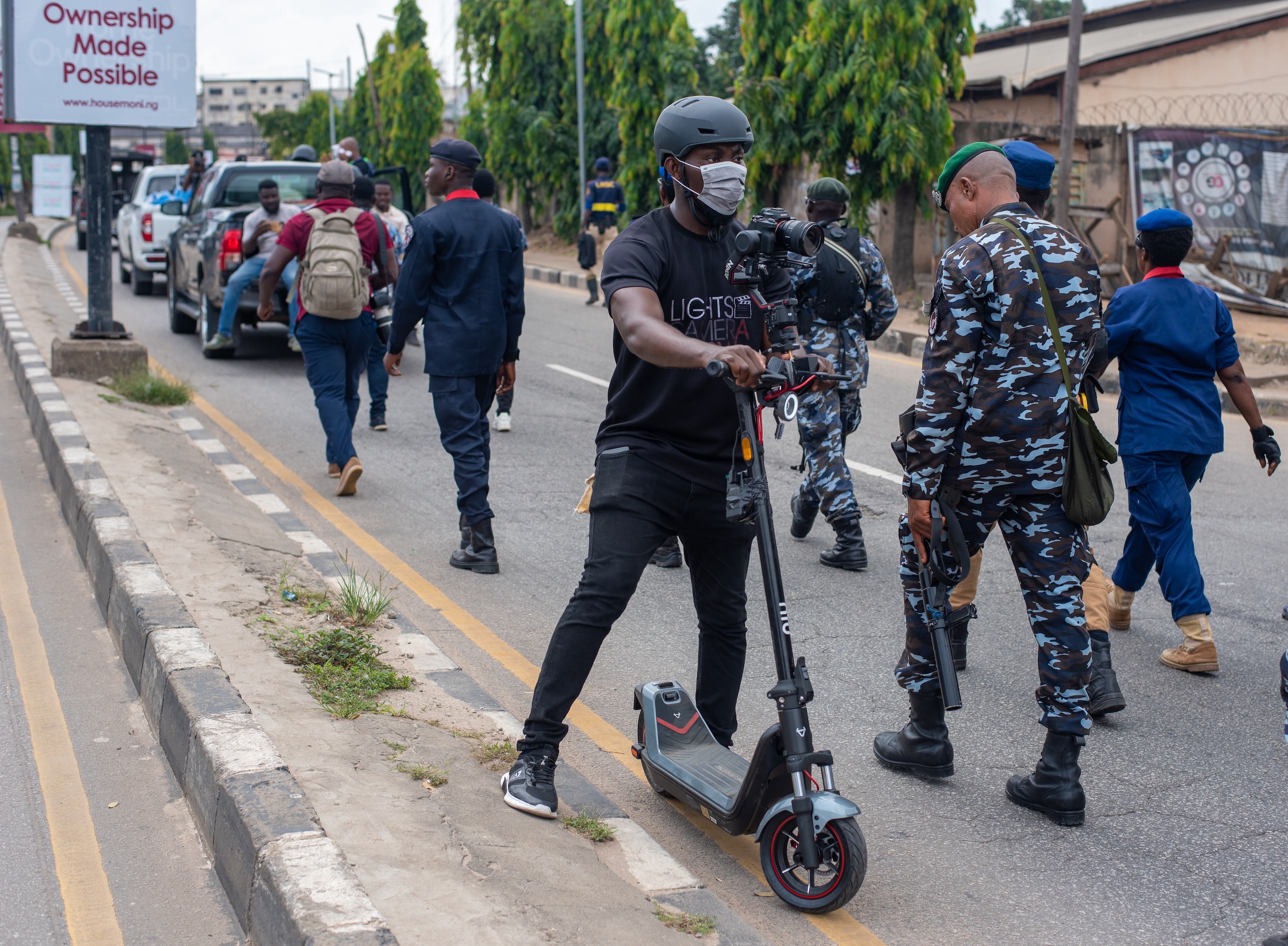
Prime Minister Narendra Modi inaugurates the India AI Impact Summit 2026 at Bharat Mandapam, bringing together global technology leaders, policymakers, and industry experts to discuss the future of innovation and regulation. The summit marks a pivotal moment in India's AI trajectory, addressing the profound shifts in digital infrastructure and the legal frameworks governing artificial intelligence.
Prime Minister Narendra Modi inaugurates the India AI Impact Summit 2026 at Bharat Mandapam, bringing together global technology leaders, policymakers, and industry experts to discuss the future of innovation and regulation. The summit highlights the growing intersection of state policy and technological transformation within the Global South. (Photo: Seshadri Sukumar/ZUMA Press Wire. New Delhi, India – Feb 17, 2026)

AI, Copyright Reform and the Fragile Reinvention of Indian Journalism

India’s proposed AI copyright framework risks turning independent journalism into a pooled data resource, undermining the subscription-based models that sustain it. At a moment of political and economic fragility, the struggle over AI licensing is ultimately a struggle over who controls, values, and profits from journalistic work.


India’s proposed blanket AI licensing regime could redefine independent journalism at a fragile moment. As generative AI tools spread across newsrooms, subscription-funded outlets risk seeing their reporting absorbed into centralised training systems, shifting journalism from a civic product to extractable data infrastructure. 

As artificial intelligence becomes an increasingly central force reshaping news production and distribution, Indian journalism finds itself confronting yet another structural transformation. Over the past decade, the country’s media landscape has already undergone profound reconfiguration. As mainstream television channels increasingly echoed the narrative of the ruling government and adversarial reporting narrowed within legacy media institutions, a parallel ecosystem of independent digital outlets quietly emerged. 

These platforms, subscription-driven, reader-funded and digitally native, restructured the media economy by decentralising distribution and lowering infrastructural barriers. They repositioned audiences as direct financial stakeholders in journalism. In doing so, they attempted to rebuild public trust in a climate of political pressure and institutional consolidation. Yet this fragile reinvention now faces a new test, not from prime-time politics, but from artificial intelligence. 

Debates around AI’s integration into journalism remain disproportionately shaped by regulatory and technological frameworks emerging from the Global North. Western technology corporations continue to function as primary centres of innovation, exporting generative AI systems as finished products to newsrooms across the Global South. Embedded within these systems are assumptions about authorship, value extraction, copyright, ownership and legality. In India, where independent digital journalism survives on narrow subscription margins, the implications are particularly acute. 
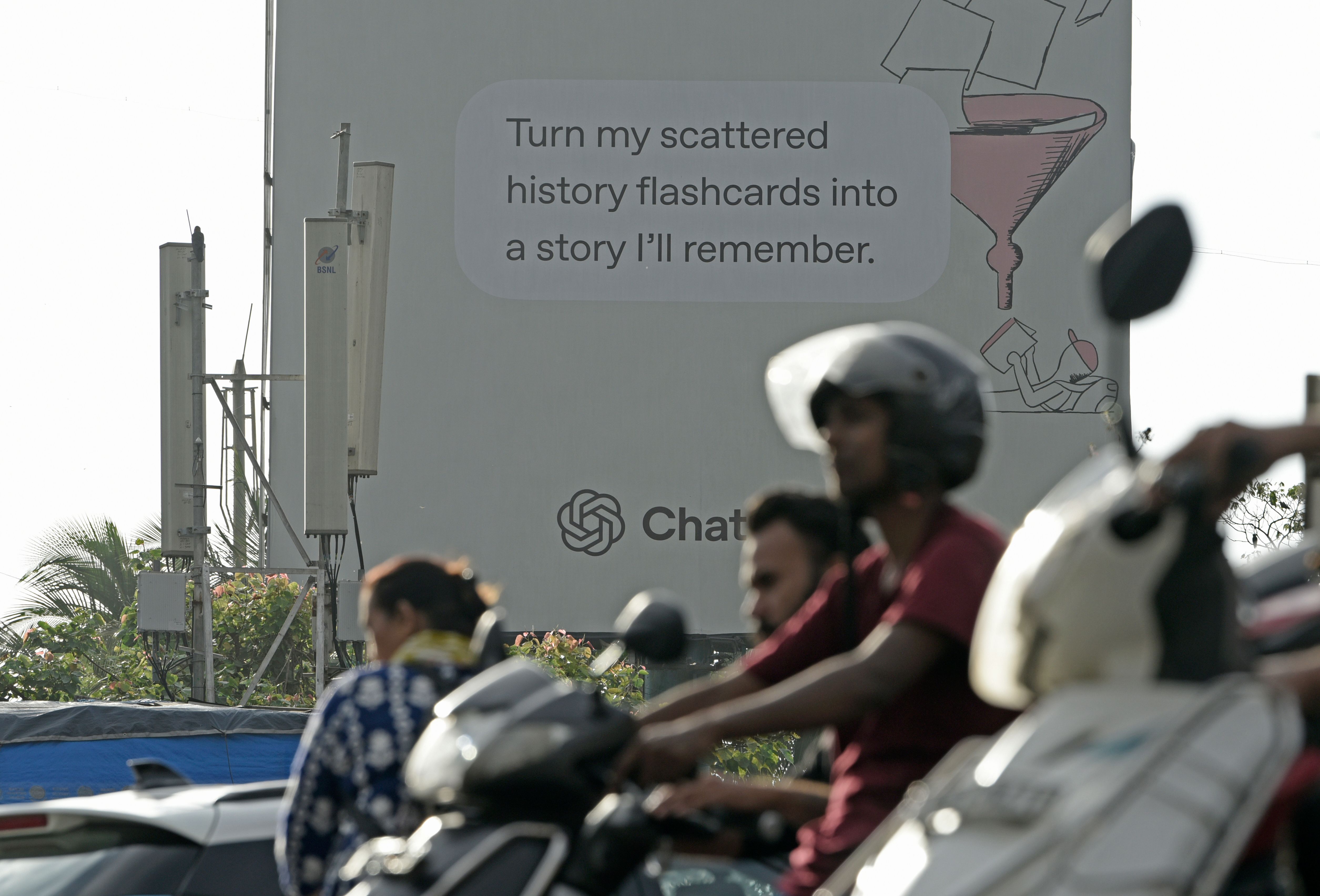
ChatGPT Branding In Mumbai, India


Enthusiasm Without Safeguards: India’s AI Moment 

Across Indian newsrooms, generative AI tools are already being integrated into everyday workflows. Journalists use AI applications to summarise lengthy documents, translate articles across languages, draft headlines and assist with research. Much of this adoption is informal and driven by individual initiative rather than institutional policy. 

Ishtayaq Rasool, an independent journalist based in New Delhi, describes the shift in research practices: earlier, reporters relied primarily on search engines. Now, much of the initial information-seeking process takes place through AI applications. The appeal, he says, lies in speed and simplicity. 

For others, AI represents accessibility rather than automation. Rakesh Verma, a journalist working in a digital newsroom, explains that coming from a Hindi-medium educational background once limited his engagement with major English newspapers. AI tools now allow him to upload images of articles and request simplified explanations in Hindi or plain English. For his newsroom, he says, the experience feels transformative. 

Such accounts reveal a genuine optimism. In a country marked by linguistic diversity and unequal educational access, AI appears to lower barriers to participation in journalism. Yet this enthusiasm coexists with structural vulnerability. 

The infrastructure of intelligence model design, training architecture and algorithmic governance remains external, controlled by global technology firms. Indian newsrooms are users, not architects. 

Most small and mid-sized digital outlets lack formal AI policies governing transparency, attribution, verification or copyright compliance. Adoption occurs in the absence of structured safeguards. 


A Fragile Media Ecosystem 

The AI debate unfolds against an already strained media environment. India ranks 151st out of 180 countries in the 2025 World Press Freedom Index. Independent journalism operates under economic pressure, legal scrutiny and, in some cases, direct threat. 

The killing of Mukesh Chandrakar illustrates this vulnerability. A journalist who left traditional media to start his own independent news portal in Chhattisgarh, Chandrakar was found dead in January 2025 in a septic tank in Bijapur district. His autopsy reportedly revealed brutal violence. Days before his death, he had reported on alleged road construction corruption involving a local contractor. 

His murder was not an isolated symbolic act, but a stark reminder of the risks faced by independent reporters operating outside large institutional umbrellas. 

Over the past decade, outlets such as The Wire, Scroll.in and NewsClick attempted to carve out spaces for adversarial reporting. Many rely heavily on subscriptions and reader contributions. Their sustainability depends on maintaining a direct financial relationship with audiences. It is this already fragile model that now confronts the implications of AI-driven copyright reform.

Publicly accessible journalistic content could become eligible for ingestion into AI training datasets under a statutory licensing regime. Consent shifts from negotiation to regulation. This reclassifies journalism. 


Blanket Licensing and the Reclassification of Journalism 

India’s ongoing discussions around revisiting the Copyright Act in light of generative AI have introduced the possibility of a hybrid licensing framework for AI training. 

Under proposals outlined in recent policy consultations, AI developers could receive a broad licence permitting the use of copyrighted content for model training. Instead of negotiating directly with individual publishers, companies would pay royalties into a centralised system. Compensation rates would be determined by a government-appointed committee and funds distributed through a collective mechanism. 

On paper, the framework offers administrative efficiency and regulatory clarity. It reduces transaction costs and formalises compensation. However, for independent digital outlets, the implications are structural. 

The proposed model does not meaningfully provide individual creators or publishers the option to opt out. 

Over the past decade, independent outlets rebuilt themselves online through subscription-supported paywalls and reader-funded investigative reporting. Their economic survival depends on the exclusivity and civic value of their work. If that same reporting becomes raw training material for AI systems capable of synthesising summaries, analysis and derivative outputs at scale, the incentive for direct subscription may weaken. 

A senior editor at one of India’s leading independent platforms, speaking on condition of anonymity, described the margins as precarious. Missing even a small number of monthly subscriptions can affect travel budgets and reporting capacity. In such a context, revenue diverted into centrally determined royalty pools with rates fixed by government-appointed committees raises concerns about valuation and bargaining power. The worry is not merely about compensation amounts. It is about who defines value. 

If journalistic labour is absorbed into training datasets without meaningful consent mechanisms, its economic identity shifts from a differentiated civic product to aggregated data infrastructure. 


Infrastructure, Visibility and Control 

Beyond economics lies a deeper issue of narrative power. AI systems trained on large datasets influence how information is synthesised, summarised and surfaced. Those who control these systems influence visibility. In a media landscape already marked by consolidation and political pressure, infrastructural control becomes inseparable from epistemic power. 

The risk is subtle but significant: journalism becomes material rather than message. AI adoption may therefore produce a two-speed transformation. Larger institutions with capital and access to infrastructure integrate AI strategically and consolidate reach. Smaller subscription-dependent platforms struggle to maintain economic viability if their core reporting is algorithmically repurposed. In such a scenario, the AI divide compounds existing fragilities within India’s media ecosystem. 

Independent outlets that emerged to challenge dominant narratives may find their reporting folded into algorithmic systems whose outputs are mediated by external corporate infrastructures. 


A Structural Crossroads 

Artificial intelligence undeniably offers tools that can enhance efficiency, accessibility and analytical capacity within newsrooms. Journalists across India are already using these systems creatively to overcome linguistic and resource constraints. Yet technological adoption without structural safeguards risks deepening asymmetries. 

Blanket licensing frameworks, if implemented without robust opt-out protections and transparent rate-setting mechanisms, could transform journalism from a protected civic function into a pooled data resource. 

For independent media that rebuilt themselves against political and economic headwinds, such a shift would not be marginal; it would be foundational. 

India’s AI policy trajectory will therefore shape not only innovation ecosystems but also the future architecture of its public sphere. The debate is not simply about royalties or regulatory compliance. It is about consent, control and the meaning of journalistic value in an algorithmically mediated age. 

At a moment when independent journalism remains both economically fragile and democratically indispensable, the structure of AI governance will determine whether this technological transition strengthens media plurality or quietly extracts from it.
Related Articles

Weaponizing the Law: SLAPPs Against Journalists and Press Freedom

SLAPPs—abusive lawsuits designed to silence journalists and activists—are surging across Southeast Asia, exploiting vague laws and weak protections to punish those who speak truth to power. As legal harassment intensifies, journalists face not only imprisonment and censorship but also emotional trauma, exile, and long-term damage to their careers.

AJR Contributor Published on: 17 Apr, 2025
Journalism and Artificial Intelligence: Who Controls the Narrative?

How did the conversation about using artificial intelligence in journalism become merely a "trend"? And can we say that much of the media discourse on AI’s potential remains broad and speculative rather than a tangible reality in newsrooms?

Mohammad Zeidan
Mohammad Zeidan Published on: 23 Feb, 2025
Analysis: Could Artificial Intelligence Replace Humans in Journalism?

Recent advances in AI are mind-blowing. But good journalism requires certain skills which, for now at least, only humans can master

Mei Shigenobu مي شيغينوبو
Mei Shigenobu Published on: 17 Jul, 2023
‘It takes courage to be a journalist in India’ - charting the collapse of press autonomy

THE LONG READ: With a rising number of journalists in India receiving ‘summons’ from the police and even finding themselves in prison just for doing their jobs, we ask - why has the profession come under so much pressure in recent years?

Abeer Khan Published on: 21 Apr, 2022
‘I reported the truth - and was taken to jail’ - the journalists in prison in India

Indian journalist Siddique Kappan has been released after more than two years in prison just for doing his job. We talked to him and others who have been arrested or imprisoned

Saurabh Sharma
Saurabh Sharma Published on: 15 Feb, 2023

More Articles

The Challenge of Reporting in Chechnya

Independent journalism no longer exists as a functioning practice inside Chechnya. What remains is a profession rebuilt in exile, forced to operate at a distance from the very place it is meant to cover.

Rushda Fathima Khan
Rushda Fathima Khan Published on: 29 Mar, 2026
Journalism in Gaza: A Struggle for Survival

In Gaza, journalism becomes inseparable from the life it documents: reporting continues not from a distance, but from within the same fear, grief, and instability it tries to record.

Nelly Al-Masri Published on: 25 Mar, 2026
From News Reporting to Documentation: Practical Lessons from Covering the War on Gaza

From the very first moment of the genocidal war waged by Israel on Gaza, Al Jazeera correspondent Hisham Zaqout has been a witness to hunger, devastation, war crimes, and the assassination of his colleagues in the field. It is a battle for survival and documentation, one that goes beyond mere coverage and daily reporting.

Hisham Zakkout Published on: 26 Jan, 2026
Polarised, Intimidated, Silenced: The Media Under Siege in Cameroon’s Election

Cameroon’s 2025 presidential election exposed a troubling paradox: a nation voting under the watchful eye of power, while its press remained silenced. From the arrest of a teenage reporter to bans on political debate and digital manipulation, freedom of expression is under siege, and journalism is on trial.

Shuimo Trust Dohyee
Shuimo Trust Dohyee, Ngweh Rita Published on: 22 Jan, 2026
Investigating the Assassination of My Own Father

As a journalist, reporting on the murder of my father meant answering questions about my own position as an objective observer.

Diana López Zuleta
Diana López Zuleta Published on: 16 Jan, 2026
Reporting Under Fire: The Struggle of African Journalists Facing Intimidation

African journalists who expose corruption and power now face a brutal mix of arrests, torture, digital surveillance, and lawsuits meant to drain their resources and silence them. From Ethiopia, Nigeria, Malawi, Benin, Sudan, Uganda, and Kenya to exile in Canada, reporting the truth has become an act of personal survival as much as public service.

Nigerian freelance Journalist John Chukwu
John Chukwu Published on: 4 Dec, 2025
Shipwrecked Narratives: How to Keep Migration Stories Afloat

Migration stories don’t become real until you meet people in the journey: the carpenter carrying photos of his fantasy coffins, or the Libyan city worker burying the forgotten dead, or the Tatar woman watching her livelihood collapse at a militarised border. Following these surprising human threads is the only way journalism can cut through collective exhaustion and make readers confront a crisis they’ve been trained to ignore.

Karlos Zurutuza, a freelance journalist and a media trainer. His work has been published in The Guardian, Al Jazeera English, POLITICO, The Middle East Eye and The Independent, among others.
Karlos Zurutuza Published on: 30 Nov, 2025
What It Means to Be an Investigative Journalist Today

A few weeks ago, Carla Bruni, wife of former French president Nicolas Sarkozy, was seen removing the Mediapart logo from view. The moment became a symbol of a major victory for investigative journalism, after the platform exposed Gaddafi’s financing of Sarkozy’s election campaign, leading to his prison conviction. In this article, Edwy Plenel, founder of Mediapart and one of the most prominent figures in global investigative journalism, reflects on a central question: what does it mean to be an investigative journalist today?

Edwy Plenel
Edwy Plenel Published on: 27 Nov, 2025
A Sudanese Journalist in the Grip of the Rapid Support Forces

She was arrested, tortured, nearly raped, threatened with death, and subjected to degrading abuse. Her brother was brutally mistreated in an effort to locate her. In the end, her family had to pay a ransom to secure her release. She sought refuge abroad, but eventually returned to Sudan to continue documenting the war’s toll, particularly in El Fasher, a city now under siege. This is the harrowing account of a Sudanese journalist detained and tortured by the Rapid Support Forces.

Empty screen
Sudanese Female Journalist Published on: 3 Nov, 2025
Zapatismo and Citizen Journalism in Chiapas, Mexico

In Chiapas, independent journalists risk their lives to document resistance, preserve Indigenous memory, and challenge state and cartel violence. From Zapatista films to grassroots radio, media becomes a weapon for dignity, truth, and survival.

Ana Maria Monjardino
Ana Maria Monjardino Published on: 26 Oct, 2025
Journalists Under Occupation; Palestinian Journalists in the West Bank

Palestinian journalists in the West Bank face extreme physical danger, psychological trauma, and systemic targeting under Israeli occupation, yet continue to report with resilience, amplifying the voices of their people despite global indifference and media bias.

Synne Furnes Bjerkestrand
Synne Bjerkestrand Published on: 13 Oct, 2025
The Silent Death of Urdu Newspapers in India

With a 200-year history, Urdu newspapers in India are now facing a silent death—trapped in a cycle of decline where circulation has fallen by nearly 25%, advertising is absent, and government support is scarce. What vanishes is more than print: it is the erosion of a cultural and political lifeline that once bound Hindus, Muslims, and Sikhs in common debates and carried the voices of the marginalised into India’s public sphere.

Hanan Zaffa
Hanan Zaffar, Majid Alam Published on: 1 Oct, 2025
Why Are Young Journalists in Kashmir Quitting Before They Begin?

In Kashmir, mounting censorship, political pressure, and shrinking job prospects are forcing a generation of aspiring journalists to abandon the profession, many before they even get the chance to begin, leaving behind a media landscape stripped of dissent, debate, and independent voices.

Abrar Fayaz, Muqeet Mohammed Shah Published on: 23 Sep, 2025
Sudan’s Journalists Are Being Silenced: By Bullets, Exile, and Fear

The collapse of the media industry in Sudan has subjected journalists to physical threats, legal and professional challenges, with no functioning legal system to investigate crimes committed against the press.

Nalova Akua
Nalova Akua Published on: 17 Sep, 2025
Nepali Journalists Trapped Between “GenZ” Protest and State Crackdowns

Nepali journalists are under attack on two fronts: facing violence from protesters in the streets while also being targeted by government crackdowns, restrictive laws, and political interference that threaten press freedom.

Sumaiya Ali
Sumaiya Ali Published on: 12 Sep, 2025
I Don’t Want You to Be a Journalist, Mama”. Do Gaza’s Journalists Have the Luxury of Absence?

Does the Palestinian journalist in Gaza have the freedom to simply “step away”? How do they navigate the balance between their professional responsibilities and their family life? And to what extent does the duty to report justify the personal cost of being separated from one’s loved ones? Journalist Jenin Al-Wadiya sheds light on the deeply human details that rarely make it to the screen.

Jenin Al-Wadiya
Jenin Al-Wadiya Published on: 31 Aug, 2025
Intersections of Journalism and Social Sciences in the Field

The field is where journalism and the social sciences meet at their most dynamic edge. As the world grows more complex, journalists increasingly take on the role of sociologists, without abandoning their core mission to question power and expose uncomfortable truths. By drawing on the methods and insights of social science, journalism deepens its coverage, grounds stories in real-world contexts, and resists the temptation of surface-level narratives.

Mohammed Ahddad
Ahdad Mohamed Published on: 23 Aug, 2025
New Media Reforms in Bangladesh Introduced to Replace Hasina-Era Journalism

Bangladesh’s interim government, led by Muhammad Yunus, has launched ambitious media reforms to undo the legacy of Sheikh Hasina’s 15-year rule, which was marked by censorship, media monopolies, and the notorious Digital Security Act. However, despite promises of greater freedom, journalists remain wary, as self-censorship, restrictive laws, and public scepticism continue to cast doubt on genuine change.

Sumaiya Ali
Sumaiya Ali Published on: 17 Aug, 2025
Canadian Journalists for Justice in Palestine: A Call to Name the Killer, Not Just the Crime

How many journalists have to be killed before we name the killer? What does press freedom mean if it excludes Palestinians? In its latest strike, Israel killed an entire Al Jazeera news crew in Gaza—part of a systematic campaign to silence the last witnesses to its crimes. Canadian Journalists for Justice in Palestine (CJJP) condemns this massacre and calls on the Canadian government to end its complicity, uphold international law, and demand full accountability. This is not collateral damage. This is the targeted erasure of truth.

Samira Mohyeddin
Samira Mohyeddin Published on: 14 Aug, 2025
Monitoring of Journalistic Malpractices in Gaza Coverage

On this page, the editorial team of the Al Jazeera Journalism Review will collect news published by media institutions about the current war on Gaza that involves disinformation, bias, or professional journalistic standards and its code of ethics.

A picture of the Al Jazeera Media Institute's logo, on a white background.
Al Jazeera Journalism Review Published on: 11 Aug, 2025
Anas Al Sharif; Killed by Israel, but His Final Words Will Echo far Beyond His Death

For over a year and a half, Anas Jamal al-Sharif refused to leave northern Gaza, documenting the destruction and loss that others tried to hide. Tonight, Israel silenced his voice, but his final words, written on April 6, will echo far beyond his death.

Al Jazeera Journalism Review
Al Jazeera Journalism Review Published on: 11 Aug, 2025
The Human Story in Gaza: The Deadly Dilemma of “Who Do We Tell About?”

In the accelerating context of genocide, is the “pace” of death in Gaza outstripping journalists’ ability to capture human stories? How can they be expected to take their time crafting narratives amid hunger, displacement, and death? And to what extent can postwar documentation hold journalistic value in preserving collective memory and pursuing accountability for the perpetrators?

Mirvat Ouf
Mirvat Ouf Published on: 3 Aug, 2025
The Battle to Keep Journalists Alive in Gaza

Hungry journalists covering the story of starvation in Gaza, surviving on salt to stay alive, selling their work equipment to secure a “sack of flour” for their children, shedding the “shame” of publicly asking for food, and enduring the harshest media environment just to maintain “continuous coverage”.

Mona Khodor
Mona Khodor Published on: 26 Jul, 2025
Balancing Productivity and Privacy: How Female Journalists Use AI Chatbots

Female journalists in Jordan are harnessing AI chatbots to boost productivity, enhance digital safety, and find emotional support, but their growing reliance also raises critical concerns about privacy, ethics, and the responsible use of emerging technologies in journalism. This article explores how these tools are reshaping their workflows while navigating the challenges of trust and accountability.

Afnan Abu Yahia
Afnan Abu Yahia Published on: 20 Jul, 2025