Al Jazeera Journalism Review

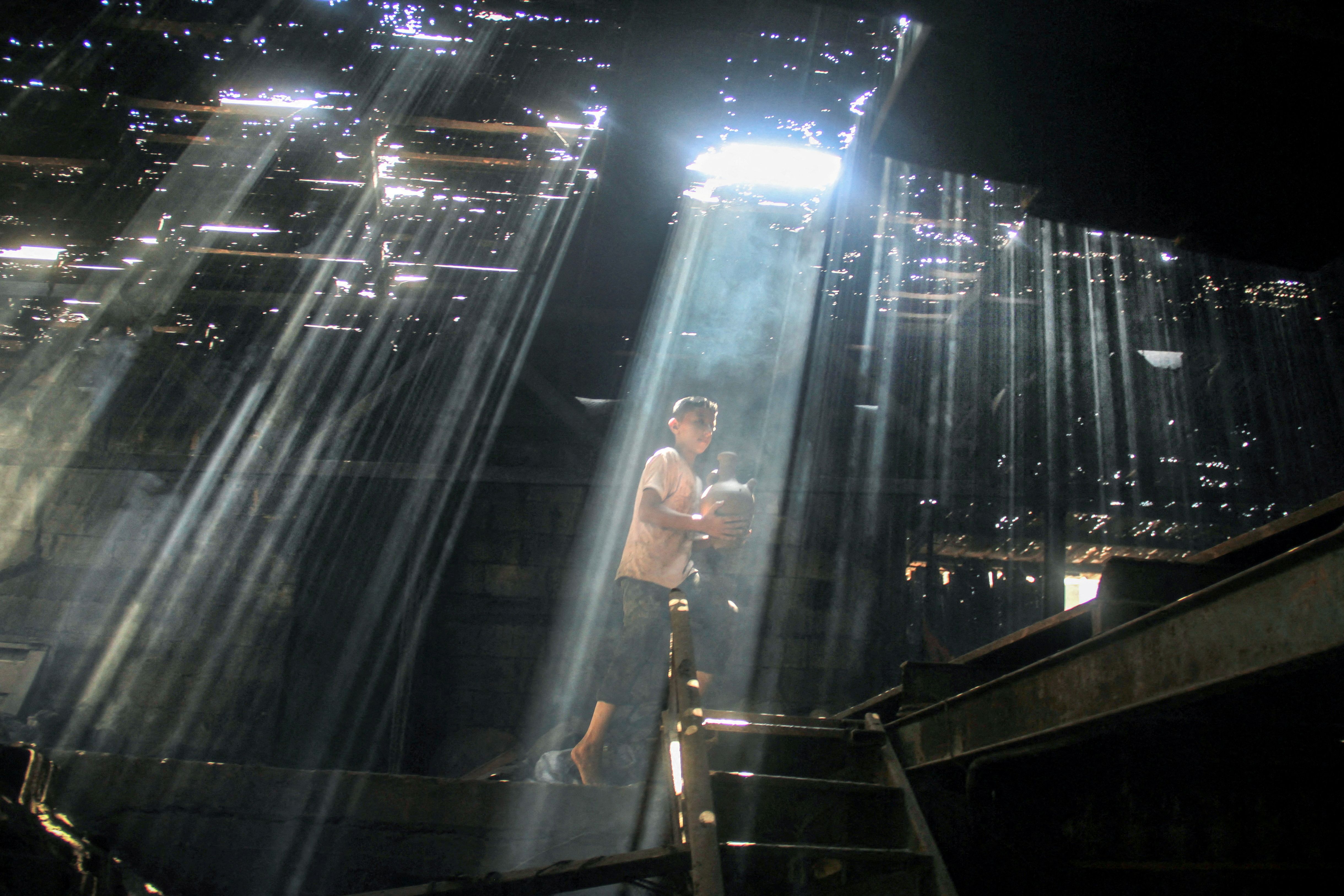
A Palestinian worker carries clay pots as the sun rays penetrate through the ceiling of a pottery workshop in Gaza City June 11, 2019. REUTERS/Mohammed Salem

Journalism After the Genocide in Gaza: One War Has Ended, and Other Wars Have Begun!

Listen to the article

The post-ceasefire reality for Gaza’s journalists reveals a challenging shift from documenting active daily bombardment to navigating an overwhelming landscape of community and structural ruin. The pressure on reporters appears set to escalate as they struggle to rebuild their own lives from absolute zero while fighting to ensure that ongoing human suffering, systemic displacement, and political marginalisation are accurately documented and held to account.


The Post-Ceasefire Dilemma and the Shift in Journalistic Responsibility

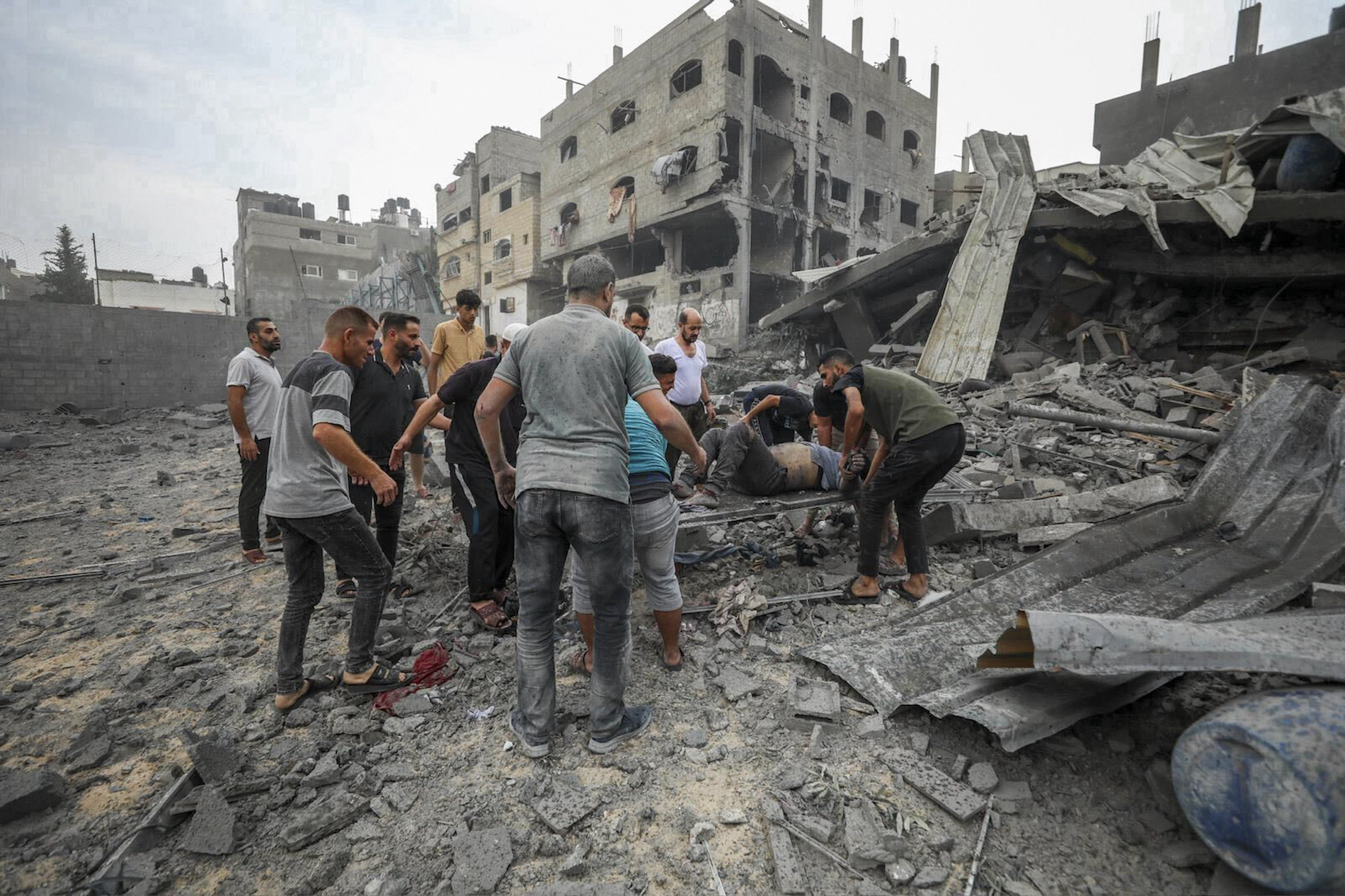
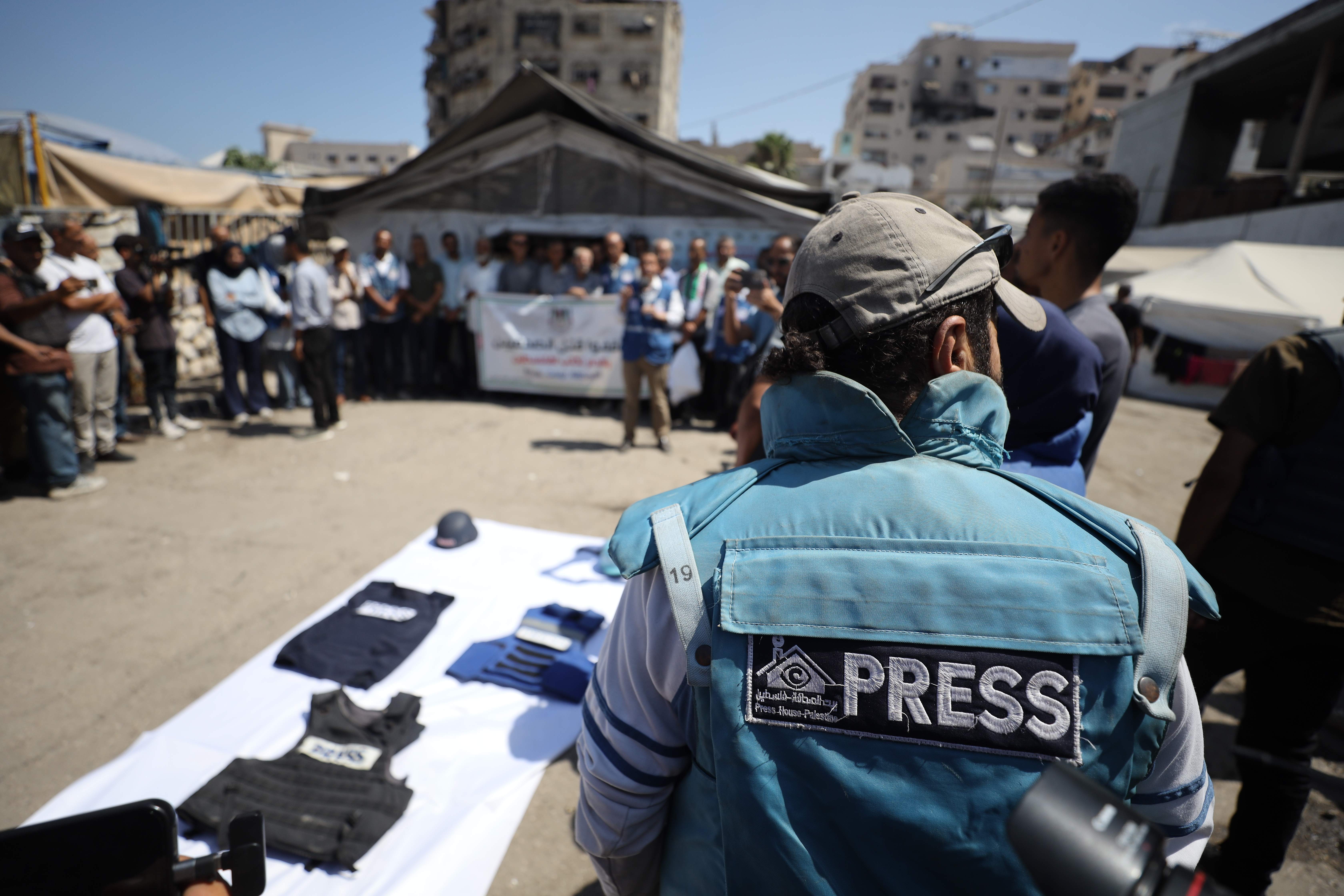
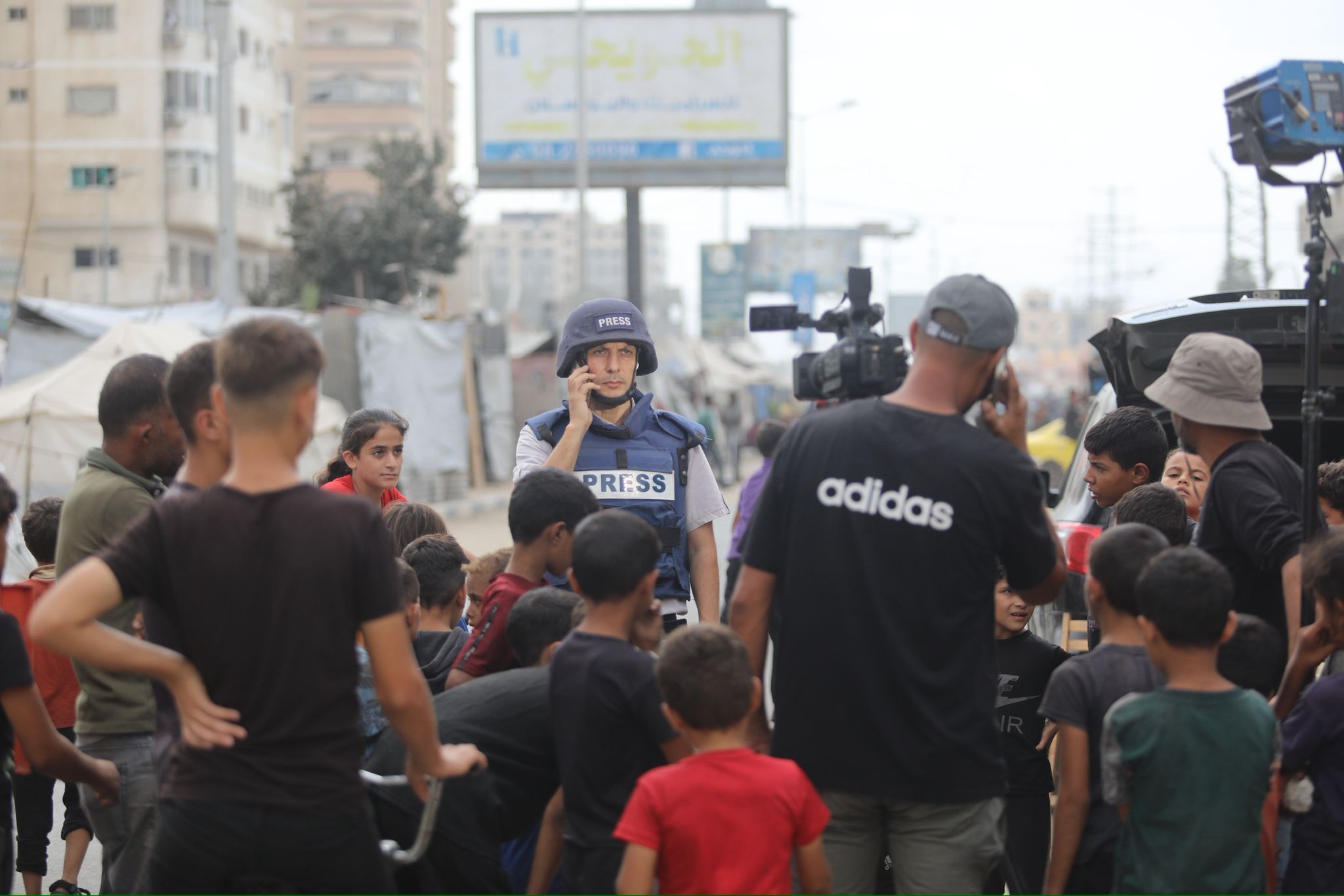
Day by day, it becomes clear to us that covering the war of genocide in its daily rhythm was easier, in terms of the journalist’s tasks and responsibilities, than organising our work in the days after the ceasefire. For 471 days, our focus was on covering the crimes of the occupation and the horrific consequences they left behind: counting the martyrs and the wounded, documenting destruction and devastation, telling stories of loss and orphanhood, and conveying the hope people carried within them that the war would stop. We were working within a closed circle of tasks, fenced in by death, the annihilation of human beings and places, and the struggle to survive it. 

Today, however, Gaza’s journalists have entered a state closer to bewilderment over priorities after the ceasefire. This is not only because we have returned to a situation in which we are required to face our personal responsibilities toward our children and families, and are now obliged to secure housing and all the necessities of life for them from below zero after having pushed these concerns to the second tier of our priorities during the war, but also because the duties and responsibilities imposed on us by the profession of journalism have become broader, more intertwined, and more complex. They require us to pause and think carefully. 

On the one hand, we are facing an enormous scale of destruction and ruin revealed by the Israeli withdrawal, as well as the daily unfolding of the harsh effects of the war of genocide. Genocide was not an empty word; it is a reality on the ground, whose severe consequences the people of Gaza are now living through every minute. We are witnessing a stage that can be described as a transition from death to the making of life out of nothing. 

Added to this are central issues connected to the war of genocide, as well as major political developments regarding the Palestinian cause in general and the future of the Gaza Strip in particular. The task of keeping up with these transformations seems deeply complicated and far-reaching. It is difficult for a journalist, in the face of all this, to arrange work priorities, a matter that requires tremendous effort and reflection. To focus on one aspect while neglecting another means effectively consigning a vital part of the scene to erasure and marginalisation. Here, I recall how true the saying now common in Gaza has become: “One war has ended, and great wars have begun!” 

After the ceasefire, Gaza’s journalists entered a state closer to bewilderment over priorities, not only because we had returned to a situation in which we were required to face our personal responsibilities toward our children and families and became obliged to secure housing and all the necessities of life for them from below zero, but also because the duties and responsibilities imposed on us by the profession of journalism have become broader, more intertwined, and more complex. 

So we are now facing a shift in the tasks and responsibilities of journalism and journalists in Gaza. Let us try together to understand the role journalism must play before the different chapters of an event that is decisive in modern history and in the future of the Palestinians. 


Navigating Overlapping Crises and the Debate Over Priorities

Let us begin with the debate that has been taking place since the first day of the ceasefire: whether coverage should focus, for example, on the street’s reaction to the ceasefire, or on attitudes toward the handover ceremonies of Israeli captives, or on the search for the place of Palestinians within the binaries of defeat and victory. 

This debate comes at a time when we are witnessing the daily suffering of people after the comprehensive destruction of every aspect of life. People are struggling with complex issues, such as the existence of more than 10,000 missing and forcibly disappeared persons; thousands of martyrs whose families are searching for their bodies beneath the rubble; cemeteries that have been wiped off the face of the earth; and one million people living on the margins of devastation, without homes, without tents, without drinkable water, and without the most basic requirements of life. 

There is also the release of Palestinian prisoners who had been sentenced, in effect, to die in their cells, and the announcement by resistance factions of the martyrdom of their leaders. Alongside all this, attention must be paid to American projects of conspiracy and liquidation, represented by schemes of uprooting and forced displacement, as well as the popular reaction to them; the major fears Gazans live with regarding the return of the war, the obstruction of reconstruction, the paralysis of civilian life in education, health, and the economy, and the shape of the expected future. 

Here, it is enough to review the coverage to understand how focusing on one specific aspect causes many other central aspects to disappear. So how is the journalist to deal with all these complex files? 


Core Guidelines for Post-War Reporting and Preserving the Narrative

Based on personal field experience, I believe the most important guidelines for determining journalists’ priorities are the following: 

First, focus on the effects of the war of genocide and on the continued resistance of Palestinians in Gaza to its consequences, as well as their insistence on remaining on their land in light of the Israeli-American proposal that has shifted the Palestinian question from settlement to liquidation. Here, the value lies in showing the destroyed neighbourhoods that residents are repopulating or trying to repair, with all the messages this carries about clinging to the land and the homeland, whatever the circumstances. 

This should be done without overlooking the meaning of the crime committed against them, and without ignoring the necessity of demanding urgent relief and the basic requirements of dignified human life. At the same time, the living and humanitarian scene must not be stripped of its political and legal dimensions, as though the devastation left behind by the war of genocide were the result of a natural disaster, rather than the result of a criminal act carried out by the army of a bloody occupation, with near-total support from Western states, foremost among them the American administration. Perhaps the human-interest story is the most suitable framework for approaching people’s suffering and following the victims in their daily lives. 

The value lies in showing the destroyed neighborhoods that residents are repopulating or trying to repair, with all the messages this carries about clinging to the land, without overlooking the meaning of the crime committed against them, and without stripping the living and humanitarian scene of its political and legal dimensions, as though the devastation left behind by the war of genocide were the result of a natural disaster rather than the result of a criminal act carried out by the army of a bloody occupation, with support from Western powers. 

Second, intensify work on creating and immortalising icons that engrave themselves into the mind, conscience, and human feeling. Peoples and civilisations come to an end when they become unable to immortalise their sacrifices and their honourable human examples. In the Gazan case, every story of the victims can be preserved in iconic spaces and circulated internationally through extensive writing and visual documentation. 

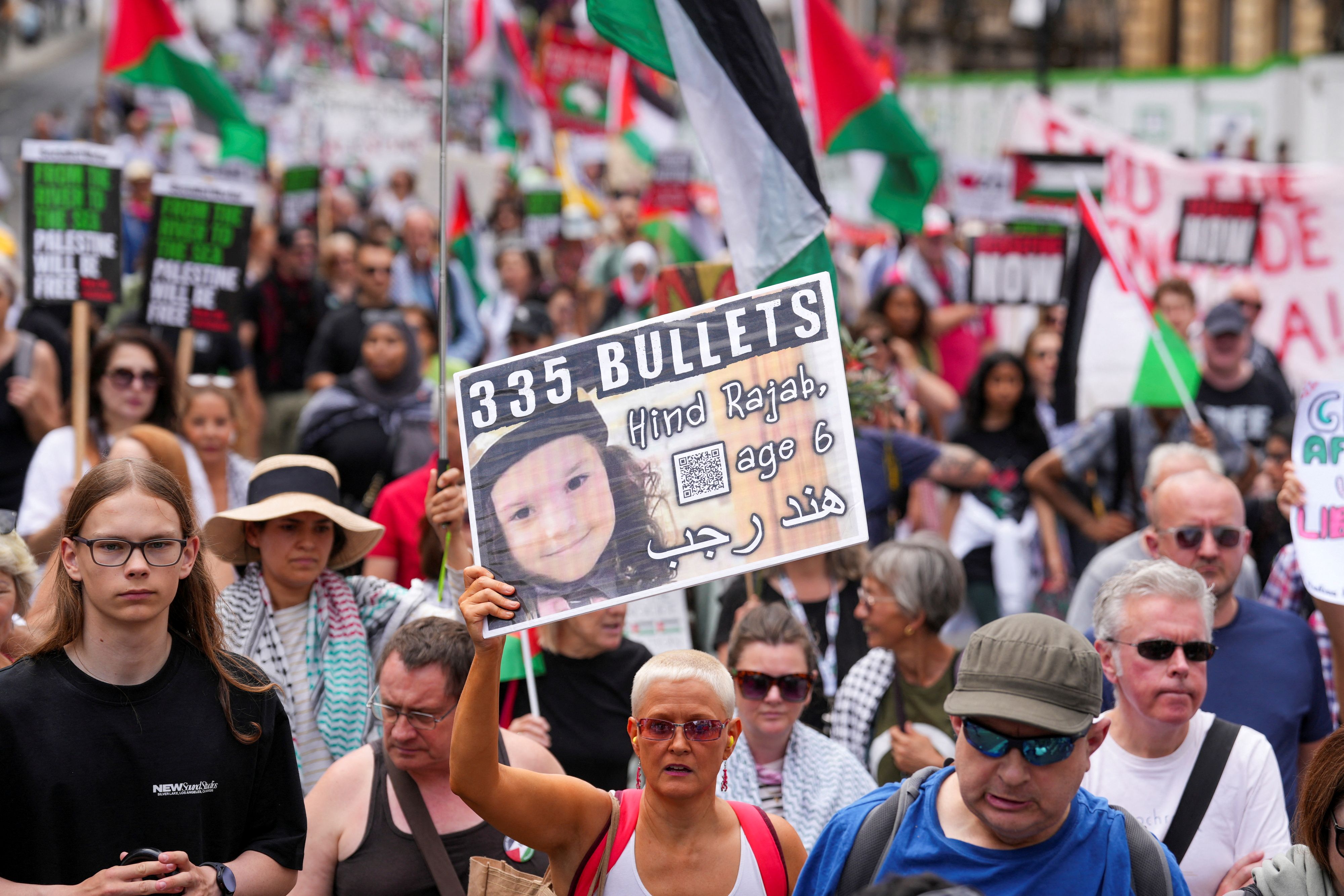
In the alleyways and in the shelter centres, there are hundreds of thousands of stories that have not yet been told. The world has remembered names such as Hind Rajab, Hamza Abu Halima, the child with Down syndrome Muhammad Bahar, Dr. Refaat Alareer, journalist Wael Al-Dahdouh, Dr. Muhammad Abu Salmiya, and Dr. Hussam Abu Safiya. Some of their names have become titles for institutions and human rights bodies that pursue criminals and demand that they be brought to justice. This would not have happened without the role and efforts of journalism. 

Third, continue to summon the bright civilisational image of Gaza before the genocide: its universities, cultural centres, public libraries, restaurants, hotels, and success stories, despite the long blockade and the policy of isolation imposed by the occupation on the Strip throughout the years that preceded the war of genocide. 

This image should be compared not only with scenes of destruction, but also with attempts to restore life and rebel against ruin: restaurants and cafés that have resumed activity and private schools and companies that have begun repairing themselves. These scenes refute the idea being promoted that Gaza is nothing more than a site for demolition and real estate investment. They strengthen the connection, interaction, belonging, and attachment to the land and to the city’s civilisational journey, a journey that preceded the genocide and will follow it. 

It is essential to intensify work on creating and immortalizing icons that engrave themselves into the mind, conscience, and human feeling. Peoples and civilizations come to an end when they become unable to immortalize their sacrifices and their honorable human examples. In the Gazan case, every story of the victims can be preserved in iconic spaces and circulated internationally through extensive writing and visual documentation. 

Fourth, present people’s daily-life demands, such as demands for education, food, housing, urgent relief, treatment for the wounded and sick, and the rehabilitation of life, under a high political ceiling. As much as possible, journalists should be careful not to stop at small details, such as the entry of cooking gas for the first time, and treat them as achievements or favours from the occupation. The requirements of a dignified life are a basic human right. The occupation must be condemned and criminalised internationally for obstructing them. Self-determination and holding fast to national rights are a sustained popular framework that must not be traded for anything. 

These are the large and complex issues that journalism and Gaza’s journalists must handle with a high sense of responsibility. Reality and experience show that journalism is the cornerstone of every beginning. We have seen how human rights institutions and international movements rely on the documents provided by the journalist stationed in the field, and how those documents have contributed to building movements, preserving Palestinian rights, and defending them. This reminds us of the centrality of journalism and the sensitivity of its role. 


Related Articles

In the War on Gaza: How Do You Tell a Human Story?

After nine months of genocidal war on Palestine, how can journalists tell human stories? Which stories should they focus on? And does the daily, continuous coverage of the war’s developments lead to a “normalisation of death”?

Yousef Fares
Yousef Fares Published on: 8 Jul, 2025
The bombs raining down on Gaza from Israel are beyond scary, beyond crazy

REPORTER'S NOTEBOOK: As Israel bombarded Gaza for the third night, I found myself closer to a missile hit than I could have imagined

Maram
Maram Humaid Published on: 11 Oct, 2023
Journalists feel the pain, but the story of Gaza must be told  

People don’t always want to hear the historical context behind horrifying events, resorting even to censorship, but the media must be free to provide it

Aidan
Aidan White Published on: 30 Oct, 2023
What Image of Gaza Will the World Remember?

Will the story of Gaza be reduced to official statements that categorise the Palestinian as a "threat"? Or to images of the victims that flood the digital space? And how can the media be transformed into a tool for reinforcing collective memory and the struggle over narratives?

Hassan Obeid
Hasan Obaid Published on: 13 Jan, 2026
Reporting under occupation in Palestine

As a Palestinian, you live and sometimes die covering the story of your own people.
A picture of the author, Awad Joumaa
Awad Joumaa Published on: 28 Feb, 2021
The devastating silencing of the ‘Voice of Palestine’

Al Jazeera English’s Senior Correspondent recalls the last time she saw Shireen Abu Akleh and what it has been like to cover the investigations into her killing by Israeli forces

Natasha Ghoneim
Natasha Ghoneim Published on: 21 Sep, 2022
October 7: The Battle for Narratives and the Forgotten Roots of Palestine

What is the difference between October 6th and October 7th? How did the media distort the historical context and mislead the public? Why did some Arab media strip the genocidal war from its roots? Is there an agenda behind highlighting the Israel-Hamas duality in news coverage?

Said El Hajji
Said El Hajji Published on: 21 Jan, 2025

More Articles

The Vanishing Foreign Desk: What U.S. Media Cuts Mean for South Asia

Recent restructuring at Voice of America and The Washington Post marks a significant withdrawal from global journalism, particularly affecting coverage in South Asia. As these major institutions cut staff and close foreign bureaus, the loss of experienced expertise threatens the visibility of critical regional issues like human rights and climate change. This shift forces a move toward narrative independence for local media, yet leaves a dangerous gap in the global conversation that smaller newsrooms struggle to fill.
Sajid Raina
Tauseef Ahmad, Sajid Raina Published on: 8 May, 2026
US-Iran Islamabad Talks: How Journalists Report from Outside Closed Doors

The "Islamabad Talks" highlight a growing contradiction in modern diplomacy where journalists are physically present but denied direct access to negotiations. The pressure on transparency appears set to intensify as reporters are forced to trade traditional eyewitnessing for outside in investigation and geopolitical speculation.

Anam Hussain
Anam Hussain Published on: 2 May, 2026
Malawi Investigates Poor Pay and Working Conditions for Junior Journalists

Malawi’s investigation into poor pay for junior journalists exposes a deeper crisis where economic hardship is eroding media independence and forcing reporters to choose between ethical integrity and survival.

Benson Kunchezera Published on: 30 Apr, 2026
Why Anonymous Sources Are Fading from Indian Journalism

A generation of reporters-built careers on confidential sources, many now write without them.

Kamran Yousuf
Kamran Yousuf Published on: 19 Apr, 2026
From Print to Pixels: How Small-Town Journalists in Bihar Are Surviving Threats and Closures

As newspapers vanish across districts like Siwan, Gaya, and Purnea, reporters turn to mobile phones, digital start-ups and community networks to keep local journalism alive.

Rehan Qayoom Mir. An independent journalist whose work has appeared in international and national outlets,
Rehan Qayoom Mir, Sajad Hameed Published on: 12 Apr, 2026
AI, Copyright Reform and the Fragile Reinvention of Indian Journalism

India’s proposed AI copyright framework risks turning independent journalism into a pooled data resource, undermining the subscription-based models that sustain it. At a moment of political and economic fragility, the struggle over AI licensing is ultimately a struggle over who controls, values, and profits from journalistic work.

Arsalan Bukhari, an independent journalist based in India
Arsalan Bukhari Published on: 31 Mar, 2026
The Challenge of Reporting in Chechnya

Independent journalism no longer exists as a functioning practice inside Chechnya. What remains is a profession rebuilt in exile, forced to operate at a distance from the very place it is meant to cover.

Rushda Fathima Khan
Rushda Fathima Khan Published on: 29 Mar, 2026
Journalism in Gaza: A Struggle for Survival

In Gaza, journalism becomes inseparable from the life it documents: reporting continues not from a distance, but from within the same fear, grief, and instability it tries to record.

Nelly Al-Masri Published on: 25 Mar, 2026
From News Reporting to Documentation: Practical Lessons from Covering the War on Gaza

From the very first moment of the genocidal war waged by Israel on Gaza, Al Jazeera correspondent Hisham Zaqout has been a witness to hunger, devastation, war crimes, and the assassination of his colleagues in the field. It is a battle for survival and documentation, one that goes beyond mere coverage and daily reporting.

Hisham Zakkout Published on: 26 Jan, 2026
Polarised, Intimidated, Silenced: The Media Under Siege in Cameroon’s Election

Cameroon’s 2025 presidential election exposed a troubling paradox: a nation voting under the watchful eye of power, while its press remained silenced. From the arrest of a teenage reporter to bans on political debate and digital manipulation, freedom of expression is under siege, and journalism is on trial.

Shuimo Trust Dohyee
Shuimo Trust Dohyee, Ngweh Rita Published on: 22 Jan, 2026
Investigating the Assassination of My Own Father

As a journalist, reporting on the murder of my father meant answering questions about my own position as an objective observer.

Diana López Zuleta
Diana López Zuleta Published on: 16 Jan, 2026
Reporting Under Fire: The Struggle of African Journalists Facing Intimidation

African journalists who expose corruption and power now face a brutal mix of arrests, torture, digital surveillance, and lawsuits meant to drain their resources and silence them. From Ethiopia, Nigeria, Malawi, Benin, Sudan, Uganda, and Kenya to exile in Canada, reporting the truth has become an act of personal survival as much as public service.

Nigerian freelance Journalist John Chukwu
John Chukwu Published on: 4 Dec, 2025
Shipwrecked Narratives: How to Keep Migration Stories Afloat

Migration stories don’t become real until you meet people in the journey: the carpenter carrying photos of his fantasy coffins, or the Libyan city worker burying the forgotten dead, or the Tatar woman watching her livelihood collapse at a militarised border. Following these surprising human threads is the only way journalism can cut through collective exhaustion and make readers confront a crisis they’ve been trained to ignore.

صحفي مستقل ومدرب إعلامي، نشرت مقالاته في الغارديان، والجزيرة الإنجليزية، وبوليتيكو، وميدل إيست آي، وذا إندبندنت، وغيرها.
Karlos Zurutuza Published on: 30 Nov, 2025
What It Means to Be an Investigative Journalist Today

A few weeks ago, Carla Bruni, wife of former French president Nicolas Sarkozy, was seen removing the Mediapart logo from view. The moment became a symbol of a major victory for investigative journalism, after the platform exposed Gaddafi’s financing of Sarkozy’s election campaign, leading to his prison conviction. In this article, Edwy Plenel, founder of Mediapart and one of the most prominent figures in global investigative journalism, reflects on a central question: what does it mean to be an investigative journalist today?

Edwy Plenel
Edwy Plenel Published on: 27 Nov, 2025
A Sudanese Journalist in the Grip of the Rapid Support Forces

She was arrested, tortured, nearly raped, threatened with death, and subjected to degrading abuse. Her brother was brutally mistreated in an effort to locate her. In the end, her family had to pay a ransom to secure her release. She sought refuge abroad, but eventually returned to Sudan to continue documenting the war’s toll, particularly in El Fasher, a city now under siege. This is the harrowing account of a Sudanese journalist detained and tortured by the Rapid Support Forces.

Empty screen
Sudanese Female Journalist Published on: 3 Nov, 2025
Zapatismo and Citizen Journalism in Chiapas, Mexico

In Chiapas, independent journalists risk their lives to document resistance, preserve Indigenous memory, and challenge state and cartel violence. From Zapatista films to grassroots radio, media becomes a weapon for dignity, truth, and survival.

Ana Maria Monjardino
Ana Maria Monjardino Published on: 26 Oct, 2025
Journalists Under Occupation; Palestinian Journalists in the West Bank

Palestinian journalists in the West Bank face extreme physical danger, psychological trauma, and systemic targeting under Israeli occupation, yet continue to report with resilience, amplifying the voices of their people despite global indifference and media bias.

Synne Furnes Bjerkestrand
Synne Bjerkestrand Published on: 13 Oct, 2025
The Silent Death of Urdu Newspapers in India

With a 200-year history, Urdu newspapers in India are now facing a silent death—trapped in a cycle of decline where circulation has fallen by nearly 25%, advertising is absent, and government support is scarce. What vanishes is more than print: it is the erosion of a cultural and political lifeline that once bound Hindus, Muslims, and Sikhs in common debates and carried the voices of the marginalised into India’s public sphere.

Hanan Zaffa
Hanan Zaffar, Majid Alam Published on: 1 Oct, 2025
Why Are Young Journalists in Kashmir Quitting Before They Begin?

In Kashmir, mounting censorship, political pressure, and shrinking job prospects are forcing a generation of aspiring journalists to abandon the profession, many before they even get the chance to begin, leaving behind a media landscape stripped of dissent, debate, and independent voices.

Abrar Fayaz, Muqeet Mohammed Shah Published on: 23 Sep, 2025
Sudan’s Journalists Are Being Silenced: By Bullets, Exile, and Fear

The collapse of the media industry in Sudan has subjected journalists to physical threats, legal and professional challenges, with no functioning legal system to investigate crimes committed against the press.

Nalova Akua
Nalova Akua Published on: 17 Sep, 2025
Nepali Journalists Trapped Between “GenZ” Protest and State Crackdowns

Nepali journalists are under attack on two fronts: facing violence from protesters in the streets while also being targeted by government crackdowns, restrictive laws, and political interference that threaten press freedom.

Sumaiya Ali
Sumaiya Ali Published on: 12 Sep, 2025
I Don’t Want You to Be a Journalist, Mama”. Do Gaza’s Journalists Have the Luxury of Absence?

Does the Palestinian journalist in Gaza have the freedom to simply “step away”? How do they navigate the balance between their professional responsibilities and their family life? And to what extent does the duty to report justify the personal cost of being separated from one’s loved ones? Journalist Jenin Al-Wadiya sheds light on the deeply human details that rarely make it to the screen.

Jenin Al-Wadiya
Jenin Al-Wadiya Published on: 31 Aug, 2025
Intersections of Journalism and Social Sciences in the Field

The field is where journalism and the social sciences meet at their most dynamic edge. As the world grows more complex, journalists increasingly take on the role of sociologists, without abandoning their core mission to question power and expose uncomfortable truths. By drawing on the methods and insights of social science, journalism deepens its coverage, grounds stories in real-world contexts, and resists the temptation of surface-level narratives.

Mohammed Ahddad
Ahdad Mohamed Published on: 23 Aug, 2025
New Media Reforms in Bangladesh Introduced to Replace Hasina-Era Journalism

Bangladesh’s interim government, led by Muhammad Yunus, has launched ambitious media reforms to undo the legacy of Sheikh Hasina’s 15-year rule, which was marked by censorship, media monopolies, and the notorious Digital Security Act. However, despite promises of greater freedom, journalists remain wary, as self-censorship, restrictive laws, and public scepticism continue to cast doubt on genuine change.

Sumaiya Ali
Sumaiya Ali Published on: 17 Aug, 2025