Al Jazeera Journalism Review

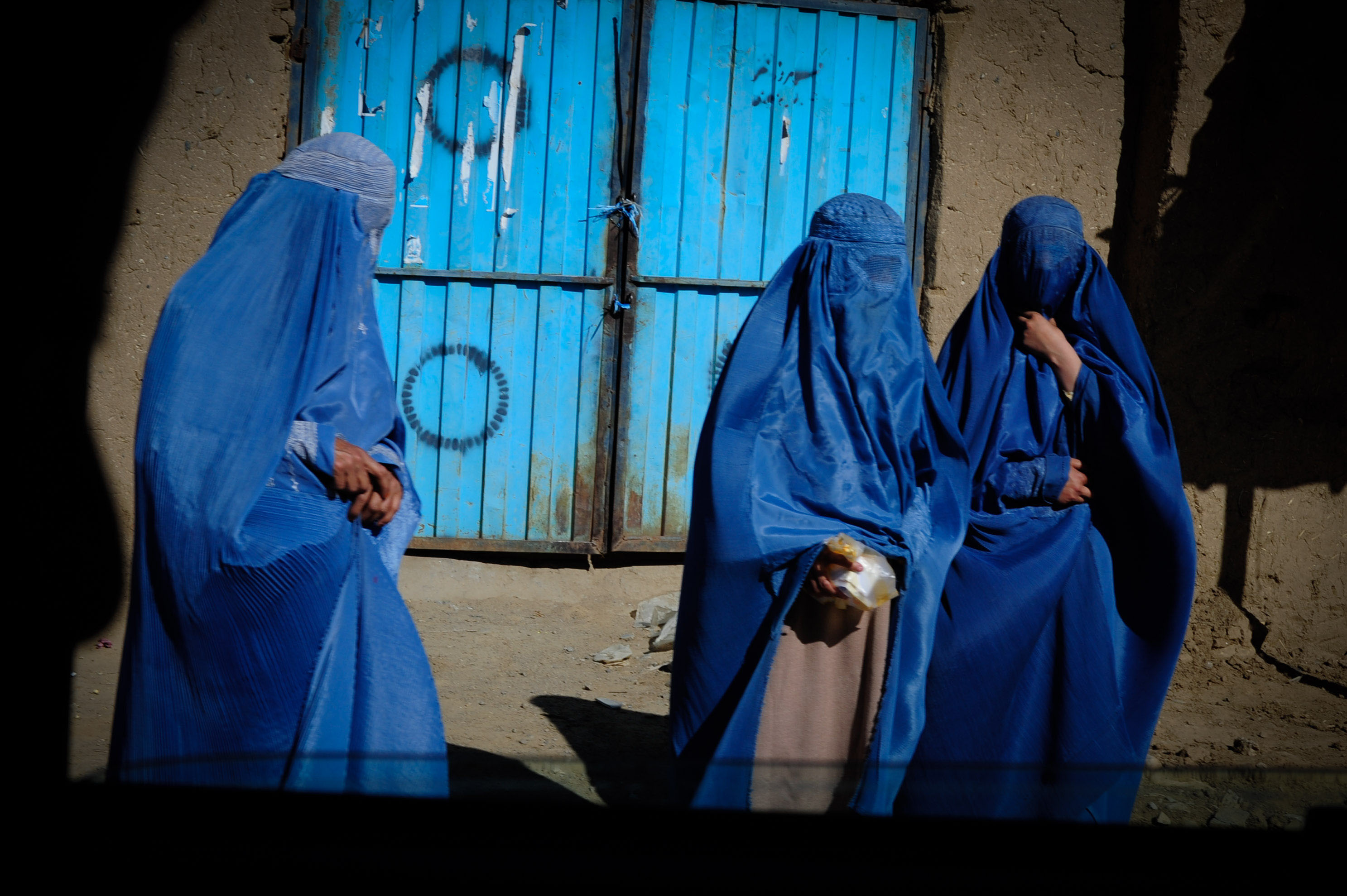
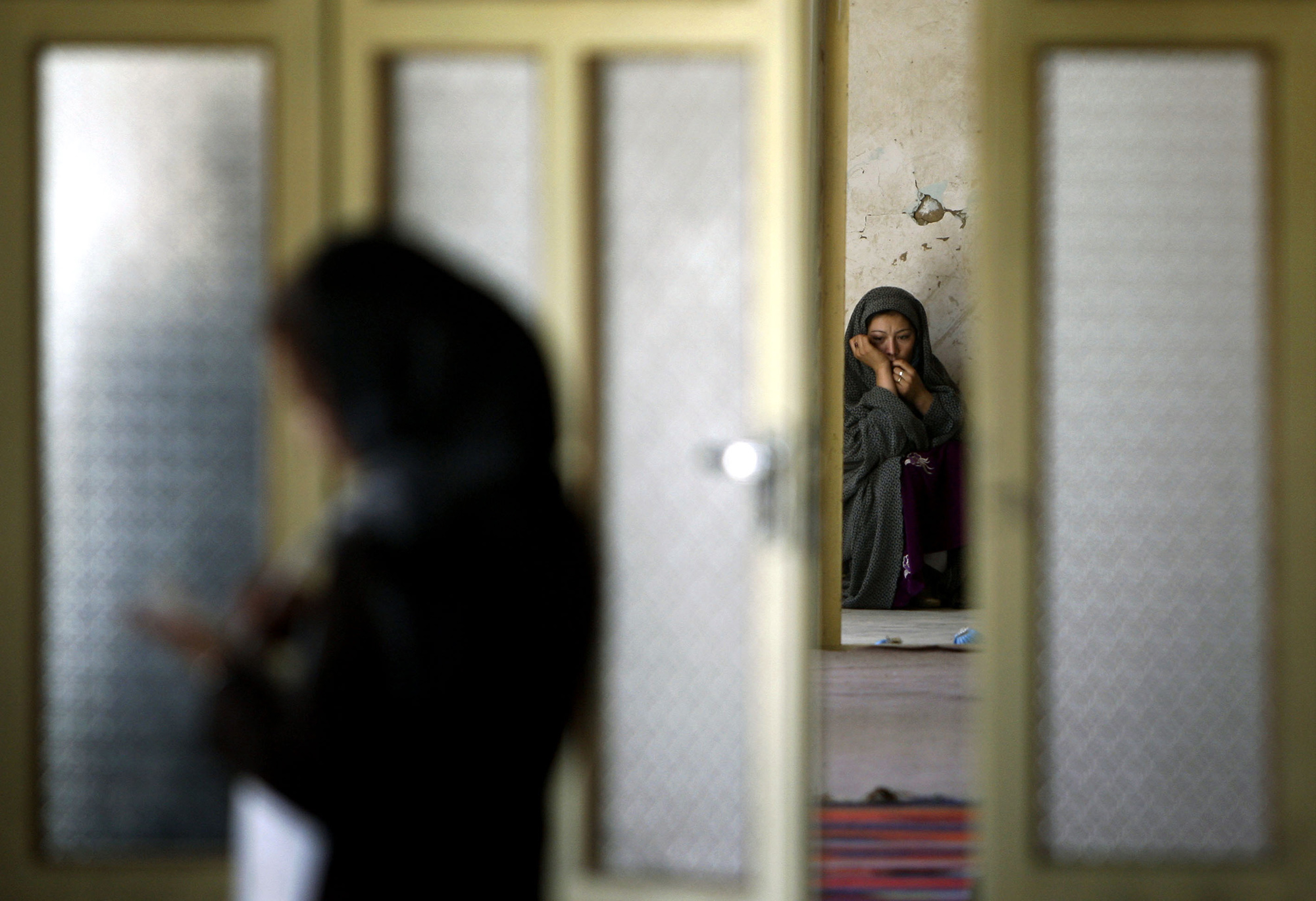
Afghan women walk down a street in Kabul. (Photo: David Honl/ZUMA Press Wire. Kabul, Afghanistan – May 2011)

Reporting on People Who Cannot Leave

The arrest of an Afghan female athlete after appearing in a Dutch documentary highlights the dangers of reporting under authoritarian rule. It underscores a growing dilemma in journalism regarding how to amplify the voices of vulnerable people without accidentally turning them into targets for the regime.


Inside a training hall in Herat province, in western Afghanistan, Khadija Amadzadah taught women how to defend themselves. An act that already carried risks under the Taliban rule. The taekwondo instructor had quietly continued training women despite growing restrictions on female athletes. 

Late last year, Khadija’s training appeared in a Dutch television documentary, Hila voorbij de Taliban (Hila Beyond the Taliban), in which journalist Hila Noorzai followed several Afghan women navigating daily life under the regime. 

Weeks after the series aired, reports began circulating that the Taliban had detained Khadija. 

The news triggered alarm among journalists and viewers alike. Had the documentary exposed her to danger? Or was the timing simply a coincidence in a country where women who defy the Taliban’s rules already face constant risk? 

As speculation grew, the filmmakers removed the series from streaming platforms while trying to determine what had happened. The episode raised questions journalists increasingly confront when reporting under authoritarian rule: what responsibility do reporters carry when the people they document remain exposed long after they leave? 

Since the Taliban returned to power in 2021 after the U.S. withdrawal and the collapse of the Republic, women and girls in Afghanistan are faced with sweeping restrictions on their rights and public participation. Girls have been barred from attending secondary schools and universities. Women have also been largely excluded from many forms of employment, including work with NGOs and, in some cases, international organisations.  

The Taliban authorities have imposed strict rules on dress and movement, requiring women to travel with a male guardian and limiting their presence in public spaces such as parks, gyms, and beauty salons. Media, civil society, and activists have also come under increasing pressure, with journalists and women’s rights advocates facing harassment, detention, or forced silence.  

As speculation about the arrest spread, people reached different conclusions about what might have happened. Afghan journalist Sabre Perzad, formerly with TOLO News in Afghanistan and now based in the Netherlands, was among the reporters who raised the alarm

In a later public statement, he wrote that Khadija’s friends and her sister had approached him with reports that she had been detained by the Taliban. “I brought this news to light without adding anything to it or giving it my own interpretation,” he said. 

Such uncertainty is common for journalists reporting from authoritarian contexts. Information often travels through relatives, intermediaries, or local contacts, and in such environments, information is often partial, delayed, and difficult to verify. Independent reporting may be restricted, and sources may fear retaliation for speaking openly. Nonetheless, journalists frequently face the dilemma of how to respond to allegations of harm before the full picture becomes clear. 

In Khadija’s case, the timing of the arrest, which came shortly after the documentary aired, naturally triggered the assumption of a possible connection. But a link does not necessarily indicate causation, particularly in a country where women who challenge Taliban rules are often faced with harassment or detention regardless of media attention. 

The filmmaker declined to be interviewed for this article, saying the production team is avoiding further media attention around Hila: Beyond the Taliban to protect the women featured in the documentary. 

To ensure her safety and that of the other women, we wish to avoid drawing further attention to their participation in the documentary, especially within Afghanistan itself, by making any new public statements,” Noorzai wrote in an email response. She added that the team had received “convincing confirmation from multiple sources that the documentary played no role in Khadija’s arrest.

Noorzai also shared an English transcript of a television interview she and the film’s director, Nicolette Bloemberg, gave to the Dutch talk show Pauw en de Wit on January 26, which addressed media reports that had linked the documentary to the arrest. 


The Limits of Verification 

Once news of Khadija’s arrest began circulating, the filmmakers tried to determine what had happened. But gathering reliable information proved difficult. “We cannot easily obtain information from Afghanistan,” director Nicolette Bloemberg said during the same interview, describing the challenges of confirming events from outside the country. According to the filmmakers, conversations with intermediaries and local sources suggested that the arrest was linked to other factors, including restrictions on women’s sports and dress, rather than the documentary itself. 

Amid the uncertainty, the filmmakers decided to remove the series from online platforms. The decision, Noorzai said, was intended to prevent further exposure of the women featured in the documentary while the situation remained unclear. “That was a precautionary measure,” she explained, noting that the team wanted to ensure that other participants could not be traced if there was any connection between the film and the arrest. 

Perzad also said he had not intended to accuse the filmmakers directly but to raise concerns based on information he received from Khadija’s family. In the same statement, he emphasised the broader risks faced by women in Afghanistan and argued that journalists must remain mindful of the potential consequences of public exposure. “Carefulness, honesty, and transparency should be the starting point for every journalist,” he wrote. 

Ethical discussions in journalism often focus on decisions made before publication: verifying facts, obtaining consent, and assessing potential harm. But the most dilemmas can emerge afterwards, when events continue to unfold, and reporters must decide how to respond.


Responsibility After Publication 

In the past, in most cases, once a story was out, the journalist's job was largely considered done. However, in today’s digital space, the responsibility extends beyond publication into what happens after a story begins to circulate. “That was a precautionary measure,” Noorzai explained.

The move was not an admission that the film caused the arrest, but a recognition that in such environments, information is often partial, delayed, and difficult to verify. The only responsible action is to minimise further exposure.  But as international reporting increasingly relies on vulnerable local voices, the "after" becomes equally critical. 

Journalists are often forced to choose between exposure and protection, without knowing which carries the greater risk. And the challenge is to ensure that the light they shine on injustice does not become a target for the oppressor. Their response reflects a broader challenge in international reporting: once a story becomes public, journalists may have limited control over how it circulates, how audiences interpret it, or how authorities respond. 

Episodes like this highlight the evolving responsibilities journalists face when reporting in restrictive environments. Stories about repression often depend on the courage of individuals willing to speak openly about their lives. 


Agency and Risk 

The central ethical debate focused on whether the filmmakers should have overridden Khadija’s wishes and blurred her face to mitigate risk. Yet Noorzai argued that removing that choice from participants could itself be problematic. When asked whether filmmakers should override a subject’s wishes to protect them, she replied: “But then I would be making that decision for her.” For the filmmakers, the women’s agency mattered. Many of them already lived publicly under Taliban restrictions and “had chosen to speak openly about their lives". 

Such decisions illustrate one of the core ethical tensions in journalism. Protecting sources can sometimes require limiting their exposure, but doing so can also silence the very voices that journalists seek to amplify. The balance between protection and independence becomes even more delicate in environments where people continue living with the consequences of exposure long after the story has been published. 

In documentary storytelling, seeing a person’s face and hearing their voice can humanise distant struggles. 

In the talk show interview that followed the controversy, journalist Hila Noorzai emphasised that many of the women she filmed wanted to appear openly. “All of these women want their faces to be seen and their voices to be heard,” she said, explaining that several participants had insisted on being recognisable on screen despite the risks. 

The case challenges the assumption that protecting sources always means limiting their visibility. While traditional safety protocols suggest protecting sources at all costs, modern reporting increasingly recognises the agency of the subject. To hide her face against her will, in the filmmakers' view, is a secondary form of silencing. 

In this case, consent did not resolve risk; it exposed its limits. This shows a growing tension in journalism: whether consent is sufficient when risk is unpredictable. In practice, these decisions are made without clear answers, and often too late. Consent, visibility, and protection do not always align, and when they don’t, journalists must decide which risk they are willing to carry. 

For journalists, the question is no longer only how to tell these stories, but how to live with what follows in places where people cannot leave. 
 

Related Articles

‘It was a black day for all women journalists’ - supporting our Afghan sisters

THE LONG READ: How women journalists in India are coming together in solidarity with female reporters and media workers in Afghanistan following the Taliban takeover.

Safina
Safina Nabi Published on: 2 Dec, 2021
When covering Afghanistan, what matters is the people

One year after the Taliban seized control of the country, the media must focus its attentions on the mounting humanitarian crisis in Afghanistan; the people are the broken heart of this story

Soraya Salam
Soraya Salam Published on: 16 Aug, 2022
International media has abandoned Afghanistan

The international community will be vital in helping Afghanistan to survive Taliban rule - but it has to start with a change of approach by Western media

Sayed Jalal
Sayed Jalal Shajjan Published on: 22 May, 2022
We were journalists in Afghanistan - I got out; he was killed

Afghan journalist Zakarya Hassani escaped from Kabul to Paris after the Taliban takeover. Later, he watched in anguish as his best friend, Alireza Ahmadi, died trying to do the same.

Zakarya Hassani
Zakarya Hassani Published on: 6 Sep, 2021
The common struggles of female journalists around the world

Female journalists from different regions speak out

Safina
Safina Nabi Published on: 1 Nov, 2022

More Articles

Journalism After the Genocide in Gaza: One War Has Ended, and Other Wars Have Begun!

The post-ceasefire reality for Gaza’s journalists reveals a challenging shift from documenting active daily bombardment to navigating an overwhelming landscape of community and structural ruin. The pressure on reporters appears set to escalate as they struggle to rebuild their own lives from absolute zero while fighting to ensure that ongoing human suffering, systemic displacement, and political marginalization are accurately documented and held to account.

Yousef Fares
Yousef Fares Published on: 17 May, 2026
The Vanishing Foreign Desk: What U.S. Media Cuts Mean for South Asia

Recent restructuring at Voice of America and The Washington Post marks a significant withdrawal from global journalism, particularly affecting coverage in South Asia. As these major institutions cut staff and close foreign bureaus, the loss of experienced expertise threatens the visibility of critical regional issues like human rights and climate change. This shift forces a move toward narrative independence for local media, yet leaves a dangerous gap in the global conversation that smaller newsrooms struggle to fill.

Sajid Raina
Tauseef Ahmad, Sajid Raina Published on: 8 May, 2026
US-Iran Islamabad Talks: How Journalists Report from Outside Closed Doors

The "Islamabad Talks" highlight a growing contradiction in modern diplomacy where journalists are physically present but denied direct access to negotiations. The pressure on transparency appears set to intensify as reporters are forced to trade traditional eyewitnessing for outside in investigation and geopolitical speculation.

Anam Hussain
Anam Hussain Published on: 2 May, 2026
Malawi Investigates Poor Pay and Working Conditions for Junior Journalists

Malawi’s investigation into poor pay for junior journalists exposes a deeper crisis where economic hardship is eroding media independence and forcing reporters to choose between ethical integrity and survival.

Benson Kunchezera Published on: 30 Apr, 2026
Why Anonymous Sources Are Fading from Indian Journalism

A generation of reporters-built careers on confidential sources, many now write without them.

Kamran Yousuf
Kamran Yousuf Published on: 19 Apr, 2026
From Print to Pixels: How Small-Town Journalists in Bihar Are Surviving Threats and Closures

As newspapers vanish across districts like Siwan, Gaya, and Purnea, reporters turn to mobile phones, digital start-ups and community networks to keep local journalism alive.

Rehan Qayoom Mir. An independent journalist whose work has appeared in international and national outlets,
Rehan Qayoom Mir, Sajad Hameed Published on: 12 Apr, 2026
AI, Copyright Reform and the Fragile Reinvention of Indian Journalism

India’s proposed AI copyright framework risks turning independent journalism into a pooled data resource, undermining the subscription-based models that sustain it. At a moment of political and economic fragility, the struggle over AI licensing is ultimately a struggle over who controls, values, and profits from journalistic work.

Arsalan Bukhari, an independent journalist based in India
Arsalan Bukhari Published on: 31 Mar, 2026
The Challenge of Reporting in Chechnya

Independent journalism no longer exists as a functioning practice inside Chechnya. What remains is a profession rebuilt in exile, forced to operate at a distance from the very place it is meant to cover.

Rushda Fathima Khan
Rushda Fathima Khan Published on: 29 Mar, 2026
Journalism in Gaza: A Struggle for Survival

In Gaza, journalism becomes inseparable from the life it documents: reporting continues not from a distance, but from within the same fear, grief, and instability it tries to record.

Nelly Al-Masri Published on: 25 Mar, 2026
From News Reporting to Documentation: Practical Lessons from Covering the War on Gaza

From the very first moment of the genocidal war waged by Israel on Gaza, Al Jazeera correspondent Hisham Zaqout has been a witness to hunger, devastation, war crimes, and the assassination of his colleagues in the field. It is a battle for survival and documentation, one that goes beyond mere coverage and daily reporting.

Hisham Zakkout Published on: 26 Jan, 2026
Polarised, Intimidated, Silenced: The Media Under Siege in Cameroon’s Election

Cameroon’s 2025 presidential election exposed a troubling paradox: a nation voting under the watchful eye of power, while its press remained silenced. From the arrest of a teenage reporter to bans on political debate and digital manipulation, freedom of expression is under siege, and journalism is on trial.

Shuimo Trust Dohyee
Shuimo Trust Dohyee, Ngweh Rita Published on: 22 Jan, 2026
Investigating the Assassination of My Own Father

As a journalist, reporting on the murder of my father meant answering questions about my own position as an objective observer.

Diana López Zuleta
Diana López Zuleta Published on: 16 Jan, 2026
Reporting Under Fire: The Struggle of African Journalists Facing Intimidation

African journalists who expose corruption and power now face a brutal mix of arrests, torture, digital surveillance, and lawsuits meant to drain their resources and silence them. From Ethiopia, Nigeria, Malawi, Benin, Sudan, Uganda, and Kenya to exile in Canada, reporting the truth has become an act of personal survival as much as public service.

Nigerian freelance Journalist John Chukwu
John Chukwu Published on: 4 Dec, 2025
Shipwrecked Narratives: How to Keep Migration Stories Afloat

Migration stories don’t become real until you meet people in the journey: the carpenter carrying photos of his fantasy coffins, or the Libyan city worker burying the forgotten dead, or the Tatar woman watching her livelihood collapse at a militarised border. Following these surprising human threads is the only way journalism can cut through collective exhaustion and make readers confront a crisis they’ve been trained to ignore.

صحفي مستقل ومدرب إعلامي، نشرت مقالاته في الغارديان، والجزيرة الإنجليزية، وبوليتيكو، وميدل إيست آي، وذا إندبندنت، وغيرها.
Karlos Zurutuza Published on: 30 Nov, 2025
What It Means to Be an Investigative Journalist Today

A few weeks ago, Carla Bruni, wife of former French president Nicolas Sarkozy, was seen removing the Mediapart logo from view. The moment became a symbol of a major victory for investigative journalism, after the platform exposed Gaddafi’s financing of Sarkozy’s election campaign, leading to his prison conviction. In this article, Edwy Plenel, founder of Mediapart and one of the most prominent figures in global investigative journalism, reflects on a central question: what does it mean to be an investigative journalist today?

Edwy Plenel
Edwy Plenel Published on: 27 Nov, 2025
A Sudanese Journalist in the Grip of the Rapid Support Forces

She was arrested, tortured, nearly raped, threatened with death, and subjected to degrading abuse. Her brother was brutally mistreated in an effort to locate her. In the end, her family had to pay a ransom to secure her release. She sought refuge abroad, but eventually returned to Sudan to continue documenting the war’s toll, particularly in El Fasher, a city now under siege. This is the harrowing account of a Sudanese journalist detained and tortured by the Rapid Support Forces.

Empty screen
Sudanese Female Journalist Published on: 3 Nov, 2025
Zapatismo and Citizen Journalism in Chiapas, Mexico

In Chiapas, independent journalists risk their lives to document resistance, preserve Indigenous memory, and challenge state and cartel violence. From Zapatista films to grassroots radio, media becomes a weapon for dignity, truth, and survival.

Ana Maria Monjardino
Ana Maria Monjardino Published on: 26 Oct, 2025
Journalists Under Occupation; Palestinian Journalists in the West Bank

Palestinian journalists in the West Bank face extreme physical danger, psychological trauma, and systemic targeting under Israeli occupation, yet continue to report with resilience, amplifying the voices of their people despite global indifference and media bias.

Synne Furnes Bjerkestrand
Synne Bjerkestrand Published on: 13 Oct, 2025
The Silent Death of Urdu Newspapers in India

With a 200-year history, Urdu newspapers in India are now facing a silent death—trapped in a cycle of decline where circulation has fallen by nearly 25%, advertising is absent, and government support is scarce. What vanishes is more than print: it is the erosion of a cultural and political lifeline that once bound Hindus, Muslims, and Sikhs in common debates and carried the voices of the marginalised into India’s public sphere.

Hanan Zaffa
Hanan Zaffar, Majid Alam Published on: 1 Oct, 2025
Why Are Young Journalists in Kashmir Quitting Before They Begin?

In Kashmir, mounting censorship, political pressure, and shrinking job prospects are forcing a generation of aspiring journalists to abandon the profession, many before they even get the chance to begin, leaving behind a media landscape stripped of dissent, debate, and independent voices.

Abrar Fayaz, Muqeet Mohammed Shah Published on: 23 Sep, 2025
Sudan’s Journalists Are Being Silenced: By Bullets, Exile, and Fear

The collapse of the media industry in Sudan has subjected journalists to physical threats, legal and professional challenges, with no functioning legal system to investigate crimes committed against the press.

Nalova Akua
Nalova Akua Published on: 17 Sep, 2025
Nepali Journalists Trapped Between “GenZ” Protest and State Crackdowns

Nepali journalists are under attack on two fronts: facing violence from protesters in the streets while also being targeted by government crackdowns, restrictive laws, and political interference that threaten press freedom.

Sumaiya Ali
Sumaiya Ali Published on: 12 Sep, 2025
I Don’t Want You to Be a Journalist, Mama”. Do Gaza’s Journalists Have the Luxury of Absence?

Does the Palestinian journalist in Gaza have the freedom to simply “step away”? How do they navigate the balance between their professional responsibilities and their family life? And to what extent does the duty to report justify the personal cost of being separated from one’s loved ones? Journalist Jenin Al-Wadiya sheds light on the deeply human details that rarely make it to the screen.

Jenin Al-Wadiya
Jenin Al-Wadiya Published on: 31 Aug, 2025
Intersections of Journalism and Social Sciences in the Field

The field is where journalism and the social sciences meet at their most dynamic edge. As the world grows more complex, journalists increasingly take on the role of sociologists, without abandoning their core mission to question power and expose uncomfortable truths. By drawing on the methods and insights of social science, journalism deepens its coverage, grounds stories in real-world contexts, and resists the temptation of surface-level narratives.

Mohammed Ahddad
Ahdad Mohamed Published on: 23 Aug, 2025