Al Jazeera Journalism Review

Asif Hamidi: Journalism Must Not Hide Crimes Behind 'Balance'

Interview conducted by: Mohammed Ahddad

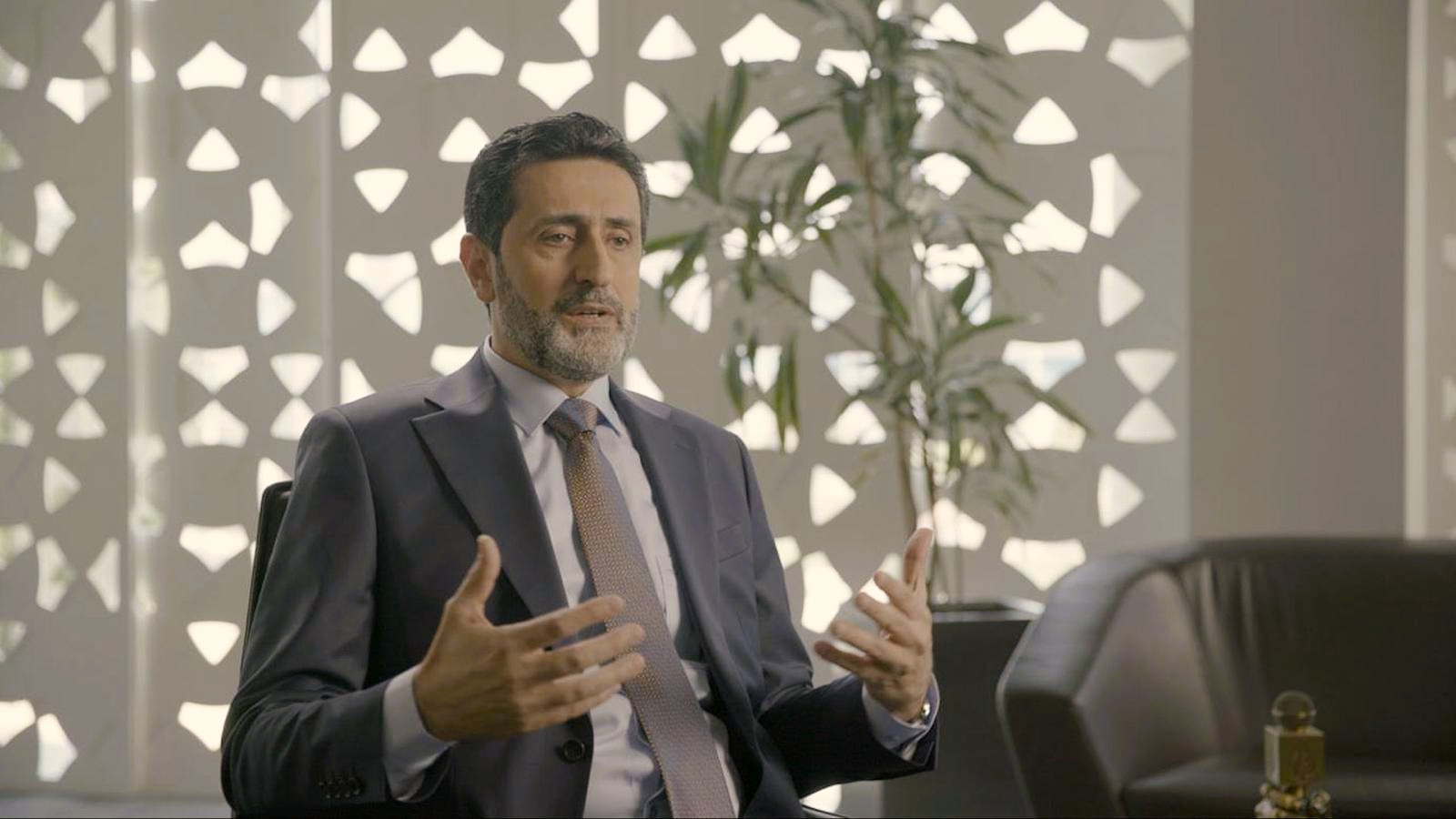
Asef Hamidi, Managing Director of Al Jazeera Arabic Channel, says the Gaza coverage was a professional duty, not activism, and that true objectivity means reporting crimes clearly rather than hiding behind false “balance”.


Q: Was Al Jazeera’s reliance on continuous live coverage of the Gaza war an editorial decision imposed by the pace of events? And did this approach contribute to the absence of human-interest reports and investigative pieces that could later constitute evidence and historical documentation of Israeli crimes?

Covering the war on Gaza is unlike any other journalistic coverage in terms of scale, duration, the horror of the scenes, or the intensity of successive events directly linked to the issue. The truth is that it was not so much an editorial choice as a professional “imperative”; because conveying the truth live, amid everything that happened, was both a professional and ethical duty. In this case, the image was more eloquent than words. Therefore, open-ended coverage was a professional necessity that no other programmes could compete with. As for investigations and investigative programmes, these come later, after evidence has been gathered and events documented. But the priority at the time was to report what was happening moment by moment.

Covering the war on Gaza is unlike any other journalistic coverage in terms of scale, duration, the horror of the scenes, or the intensity of successive events directly linked to the issue.

Q: But dedicating open-ended coverage to the war of genocide overshadowed other events that could have been given news priority, such as what is happening in Sudan. How can that be explained from a professional standpoint?

We are not in the business of ranking causes, but even the people of Sudan followed what was happening in Gaza and their hearts were with its people. The Palestinian cause is a central cause around which everyone unites. Al Jazeera is also not a single screen, but a network that includes multiple channels and platforms, Al Jazeera Mubasher, English, Documentary, and digital platforms, among others, each of which covers different files. Even so, the channel always feels that it falls short, despite its pride in what it offers, and that is a healthy thing in order to provide the best for its audience. Therefore, it cannot be said, under any circumstances, that the channel neglected other files; because the force of the event and the depth of the cause are what imposed on us the allocation of the largest share of space to the war on Gaza.

Q: The occupation killed 12 journalists and camera operators from Al Jazeera’s team, and targeting operations were often preceded by public incitement campaigns, as happened with colleague Anas al-Sharif. Yet professional safety remains the highest priority, ahead of the news story. Was this contradiction discussed inside the newsroom?

This discussion was always present. We realise that Gaza, with everything it witnessed, was an exceptional environment unlike anywhere else in the world. We must keep that in mind, as we always seek to maintain the equation of preserving the lives of our colleagues while conveying the truth; because many people discuss the subject as though we had the luxury of choice. The situation was very clear: there was no safe place in Gaza, and Israel targets journalists as a systematic practice, not as an isolated case.

The absolute priority was safety, and our conversations with our colleagues were always focused on caution, then caution, then caution for their lives and safety. When Wael al-Dahdouh was able to leave, we received him in Doha and did not ask him to continue; because his life and safety take precedence over any other priorities.

We also always stressed: safety first, and the news comes second. But what many people also miss is that our colleagues in Gaza insisted on staying, of their own complete free will, despite the danger. This is a sign of courage, resilience and steadfastness, because they felt a doubled responsibility: they are the people of the place, and no one but them could convey the picture from inside. They used to say: if we do not report what is happening, who will? Although we provided the maximum possible protective measures, there was in reality no safe place in Gaza, as I mentioned. We appreciate the courage of our correspondents in conveying the truth, and we have paid a heavy price for it. We are keen, by every possible means, to protect the lives of our journalists.

We always stressed: safety first, and the news comes second. But what many people also miss is that our colleagues in Gaza insisted on staying, of their own complete free will, despite the danger. This is a sign of courage, resilience and steadfastness, because they felt a doubled responsibility: they are the people of the place, and no one but them could convey the picture from inside.

Q: During the Arab Spring, part of the audience assessed media coverage from a political perspective, and even in the Gaza war some believe the channel moved closer to political activism at the expense of journalistic practice. How do you read this judgement?

Let me put the question the other way round: if we had not covered what happened, should we have turned off the cameras so as not to be accused of political activism? Our duty is to report the event as it is. There are American and European channels broadcasting widely that covered what is happening in Gaza extensively, so what about Al Jazeera, which is closest to the field? Was it expected to remain silent? These are old smear campaigns launched by parties harmed by the exposure of the truth, and by those whose thinking aligns with those parties. Nevertheless, I say: our work is human work and may contain some gaps; it is not angelic work. But the most important thing is that Al Jazeera adheres to its professional standards. Professionalism is the oxygen of our survival, and opinion and the other opinion are the foundation of our continuity. What governs our professional practice inside the newsroom and in the field is recourse to professional and ethical standards. This is the secret of our continuity and also the secret of the audience’s trust in us. Al Jazeera is a channel that influences public opinion, and it is natural that some voices, and I say some voices, should emerge that believe the truth is not in their interest.

If we had not covered what happened, should we have turned off the cameras so as not to be accused of political activism? Our duty is to report the event as it is. There are American and European channels broadcasting widely that covered what is happening in Gaza extensively, so what about Al Jazeera, which is closest to the field? Was it expected to remain silent? These are old smear campaigns launched by parties harmed by the exposure of the truth.

Q: In the context of covering the war of genocide, what were the most prominent moments in which you had to make difficult editorial decisions or judgements?

Media is not an exact science like physics or mathematics, but a human and creative practice resulting from human effort. That is why judgements arise that are linked to the nature of the image and the scene. For example, when some harsh scenes reached us, we would discuss inside the newsroom: should we show them as they are, or should we obscure them out of consideration for the viewer’s feelings? Some believe that blurring conceals part of the truth, while others see it as respect for the dignity of the victims and the feelings of the recipient. Over time, these discussions became clear standards that determine how shocking scenes should be shown without compromising the truth or public taste.

It is difficult for us to assess ourselves; that freedom is left to the audience, and it is an intelligent and aware audience. But we affirm that we carried out our professional duty in conveying the truth and clarifying the contexts. We are proud of what we have presented and always seek to do better. Media is a creative field with no ceiling, and there are always spaces for renewal in methods and formats.

It is difficult for us to assess ourselves; that freedom is left to the audience, and it is an intelligent and aware audience. But we affirm that we carried out our professional duty in conveying the truth and clarifying the contexts. We are proud of what we have presented and always seek to do better. Media is a creative field with no ceiling, and there are always spaces for renewal in methods and formats.

Q: Do you think audience pressure and audience biases affect the form of coverage and the editorial decision-making process?

The audience’s opinion is certainly respected, as is its taste, but we must first know who the audience is. The audience is not one single bloc, and it has diverse opinions. No media outlet can adjust the form of its coverage to satisfy one group at the expense of another. What guides our work are the professional and humanitarian standards to which Al Jazeera has been committed since its establishment. These values are what guarantee our continuity and credibility, and on their basis Al Jazeera earned the trust of its audience. As I said, the audience has different backgrounds, cultures and inclinations, and belongs to multiple generations. Al Jazeera has always stood with the human being, and will remain so. That is the essence of its message. Objectivity and fairness are among the values that we translate into our daily work. Objectivity is not neutrality; neutrality can sometimes be a form of bias. When a journalist stands silent before a clear crime, that is not neutrality, that is blatant bias. Objectivity, by contrast, is to present the truth as it is, in its full context, without falsification or selectivity. Let me give an example to make the point clearer: suppose there is a nuclear state bombing a besieged people who possess light weapons. In that case, we cannot place the two sides on the same footing in the name of neutrality. Our mission is to narrate what is happening as it is, and to give the viewer the tools to understand reality in its human, logical and political depth, not to hide the truth under the slogan of balance. Otherwise, that slogan becomes false.

Related Articles

What Image of Gaza Will the World Remember?

Will the story of Gaza be reduced to official statements that categorise the Palestinian as a "threat"? Or to images of the victims that flood the digital space? And how can the media be transformed into a tool for reinforcing collective memory and the struggle over narratives?

Hassan Obeid
Hasan Obaid Published on: 13 Jan, 2026
Journalist Testimonies on Western Media Coverage of the Gaza War: The Other Narrative

In this article, we compile testimonies from journalists who have criticised their own media institutions as documented in reports, letters, or interviews. Most spoke anonymously out of fear of repercussions—because freedom of expression appears protected only until it reaches the borders of Israel. At that point, constraints emerge, editorial policies shift, and the system of double standards is activated.

Al Jazeera Journalism Review
Al Jazeera Journalism Review Published on: 29 Mar, 2025
Journalists feel the pain, but the story of Gaza must be told  

People don’t always want to hear the historical context behind horrifying events, resorting even to censorship, but the media must be free to provide it

Aidan
Aidan White Published on: 30 Oct, 2023
Failing Gaza: Pro-Israel Bias Uncovered Behind the Lens of Western Media

Journalists at CNN and the BBC expose the inner workings of their newsrooms, a year into Israel’s war on Gaza.

A picture of the Al Jazeera Media Institute's logo, on a white background.
Al Jazeera Journalism Review Published on: 8 Oct, 2024

More Articles

“Sometimes You Work for Years Without Pay” – Cameroonian Journalists Demand Safety Nets

While many journalists demonstrate admirable resilience in producing quality journalism under precarious conditions, resilience should not be the only safety net. Journalism deserves protection, because democracy depends on it.

Akem
Akem Nkwain Published on: 11 Jul, 2026
The Stringers Behind India’s Breaking News: No Contracts, Credit or Safety

Thousands of rural Indian freelance reporters, called "stringers," face low pay, police harassment, and total abandonment by the big TV networks that rely on them. These local journalists risk their lives to film breaking news like riots and rallies, but they work without contracts, insurance, or legal help when they get into trouble. This unfair system forces poor, small-town reporters to take on all the danger alone just to keep the national 24-hour news channels running.

Hanan Zaffa
Hanan Zaffar, Majid Alam Published on: 27 Jun, 2026
Mohamed al-Khalidi and Marwa Muslim: Forgotten in Life, Vindicated in Death

The occupation killed journalists Mohamed al-Khalidi and Marwa Muslim as part of a systematic pattern of targeting the press, but throughout their careers they also faced neglect, marginalisation, and a lack of recognition. Colleague Maysoun Kahil tells their story, and asks why Palestinian journalists are so often honoured only after death, rather than supported in life.

Maysoun Kahil Published on: 17 Jun, 2026
The Double Ordeal of Freelance Journalists in Gaza

Independent journalists in Gaza face a dangerous double battle. Working without institutional protection or financial safety nets, they risk their lives to report the reality of war, overcoming severe resource shortages and systemic neglect to ensure the world hears the truth.

Noor Abu Rokba Published on: 14 Jun, 2026
Reporting on People Who Cannot Leave

The arrest of an Afghan female athlete after appearing in a Dutch documentary highlights the dangers of reporting under authoritarian rule. It underscores a growing dilemma in journalism regarding how to amplify the voices of vulnerable people without accidentally turning them into targets for the regime.

Sayed Jalal
Sayed Jalal Shajjan Published on: 4 Jun, 2026
Journalism After the Genocide in Gaza: One War Has Ended, and Other Wars Have Begun!

The post-ceasefire reality for Gaza’s journalists reveals a challenging shift from documenting active daily bombardment to navigating an overwhelming landscape of community and structural ruin. The pressure on reporters appears set to escalate as they struggle to rebuild their own lives from absolute zero while fighting to ensure that ongoing human suffering, systemic displacement, and political marginalization are accurately documented and held to account.

Yousef Fares
Yousef Fares Published on: 17 May, 2026
The Vanishing Foreign Desk: What U.S. Media Cuts Mean for South Asia

Recent restructuring at Voice of America and The Washington Post marks a significant withdrawal from global journalism, particularly affecting coverage in South Asia. As these major institutions cut staff and close foreign bureaus, the loss of experienced expertise threatens the visibility of critical regional issues like human rights and climate change. This shift forces a move toward narrative independence for local media, yet leaves a dangerous gap in the global conversation that smaller newsrooms struggle to fill.

Sajid Raina
Tauseef Ahmad, Sajid Raina Published on: 8 May, 2026
US-Iran Islamabad Talks: How Journalists Report from Outside Closed Doors

The "Islamabad Talks" highlight a growing contradiction in modern diplomacy where journalists are physically present but denied direct access to negotiations. The pressure on transparency appears set to intensify as reporters are forced to trade traditional eyewitnessing for outside in investigation and geopolitical speculation.

Anam Hussain
Anam Hussain Published on: 2 May, 2026
Malawi Investigates Poor Pay and Working Conditions for Junior Journalists

Malawi’s investigation into poor pay for junior journalists exposes a deeper crisis where economic hardship is eroding media independence and forcing reporters to choose between ethical integrity and survival.

Benson Kunchezera Published on: 30 Apr, 2026
Why Anonymous Sources Are Fading from Indian Journalism

A generation of reporters-built careers on confidential sources, many now write without them.

Kamran Yousuf
Kamran Yousuf Published on: 19 Apr, 2026
From Print to Pixels: How Small-Town Journalists in Bihar Are Surviving Threats and Closures

As newspapers vanish across districts like Siwan, Gaya, and Purnea, reporters turn to mobile phones, digital start-ups and community networks to keep local journalism alive.

Rehan Qayoom Mir. An independent journalist whose work has appeared in international and national outlets,
Rehan Qayoom Mir, Sajad Hameed Published on: 12 Apr, 2026
AI, Copyright Reform and the Fragile Reinvention of Indian Journalism

India’s proposed AI copyright framework risks turning independent journalism into a pooled data resource, undermining the subscription-based models that sustain it. At a moment of political and economic fragility, the struggle over AI licensing is ultimately a struggle over who controls, values, and profits from journalistic work.

Arsalan Bukhari, an independent journalist based in India
Arsalan Bukhari Published on: 31 Mar, 2026
The Challenge of Reporting in Chechnya

Independent journalism no longer exists as a functioning practice inside Chechnya. What remains is a profession rebuilt in exile, forced to operate at a distance from the very place it is meant to cover.

Rushda Fathima Khan
Rushda Fathima Khan Published on: 29 Mar, 2026
Journalism in Gaza: A Struggle for Survival

In Gaza, journalism becomes inseparable from the life it documents: reporting continues not from a distance, but from within the same fear, grief, and instability it tries to record.

Nelly Al-Masri Published on: 25 Mar, 2026
From News Reporting to Documentation: Practical Lessons from Covering the War on Gaza

From the very first moment of the genocidal war waged by Israel on Gaza, Al Jazeera correspondent Hisham Zaqout has been a witness to hunger, devastation, war crimes, and the assassination of his colleagues in the field. It is a battle for survival and documentation, one that goes beyond mere coverage and daily reporting.

Hisham Zakkout Published on: 26 Jan, 2026
Polarised, Intimidated, Silenced: The Media Under Siege in Cameroon’s Election

Cameroon’s 2025 presidential election exposed a troubling paradox: a nation voting under the watchful eye of power, while its press remained silenced. From the arrest of a teenage reporter to bans on political debate and digital manipulation, freedom of expression is under siege, and journalism is on trial.

Shuimo Trust Dohyee
Shuimo Trust Dohyee, Ngweh Rita Published on: 22 Jan, 2026
Investigating the Assassination of My Own Father

As a journalist, reporting on the murder of my father meant answering questions about my own position as an objective observer.

Diana López Zuleta
Diana López Zuleta Published on: 16 Jan, 2026
Reporting Under Fire: The Struggle of African Journalists Facing Intimidation

African journalists who expose corruption and power now face a brutal mix of arrests, torture, digital surveillance, and lawsuits meant to drain their resources and silence them. From Ethiopia, Nigeria, Malawi, Benin, Sudan, Uganda, and Kenya to exile in Canada, reporting the truth has become an act of personal survival as much as public service.

Nigerian freelance Journalist John Chukwu
John Chukwu Published on: 4 Dec, 2025
Shipwrecked Narratives: How to Keep Migration Stories Afloat

Migration stories don’t become real until you meet people in the journey: the carpenter carrying photos of his fantasy coffins, or the Libyan city worker burying the forgotten dead, or the Tatar woman watching her livelihood collapse at a militarised border. Following these surprising human threads is the only way journalism can cut through collective exhaustion and make readers confront a crisis they’ve been trained to ignore.

صحفي مستقل ومدرب إعلامي، نشرت مقالاته في الغارديان، والجزيرة الإنجليزية، وبوليتيكو، وميدل إيست آي، وذا إندبندنت، وغيرها.
Karlos Zurutuza Published on: 30 Nov, 2025
What It Means to Be an Investigative Journalist Today

A few weeks ago, Carla Bruni, wife of former French president Nicolas Sarkozy, was seen removing the Mediapart logo from view. The moment became a symbol of a major victory for investigative journalism, after the platform exposed Gaddafi’s financing of Sarkozy’s election campaign, leading to his prison conviction. In this article, Edwy Plenel, founder of Mediapart and one of the most prominent figures in global investigative journalism, reflects on a central question: what does it mean to be an investigative journalist today?

Edwy Plenel
Edwy Plenel Published on: 27 Nov, 2025
A Sudanese Journalist in the Grip of the Rapid Support Forces

She was arrested, tortured, nearly raped, threatened with death, and subjected to degrading abuse. Her brother was brutally mistreated in an effort to locate her. In the end, her family had to pay a ransom to secure her release. She sought refuge abroad, but eventually returned to Sudan to continue documenting the war’s toll, particularly in El Fasher, a city now under siege. This is the harrowing account of a Sudanese journalist detained and tortured by the Rapid Support Forces.
Empty screen
Sudanese Female Journalist Published on: 3 Nov, 2025
Zapatismo and Citizen Journalism in Chiapas, Mexico

In Chiapas, independent journalists risk their lives to document resistance, preserve Indigenous memory, and challenge state and cartel violence. From Zapatista films to grassroots radio, media becomes a weapon for dignity, truth, and survival.

Ana Maria Monjardino
Ana Maria Monjardino Published on: 26 Oct, 2025
Journalists Under Occupation; Palestinian Journalists in the West Bank

Palestinian journalists in the West Bank face extreme physical danger, psychological trauma, and systemic targeting under Israeli occupation, yet continue to report with resilience, amplifying the voices of their people despite global indifference and media bias.

Synne Furnes Bjerkestrand
Synne Bjerkestrand Published on: 13 Oct, 2025
The Silent Death of Urdu Newspapers in India

With a 200-year history, Urdu newspapers in India are now facing a silent death—trapped in a cycle of decline where circulation has fallen by nearly 25%, advertising is absent, and government support is scarce. What vanishes is more than print: it is the erosion of a cultural and political lifeline that once bound Hindus, Muslims, and Sikhs in common debates and carried the voices of the marginalised into India’s public sphere.

Hanan Zaffa
Hanan Zaffar, Majid Alam Published on: 1 Oct, 2025