A Palestinian journalist and mother recounts surviving Gaza’s genocide, where the press vest became a target, motherhood became terror, and staying alive did not feel like salvation.
Since 7 October 2023, everything has changed.
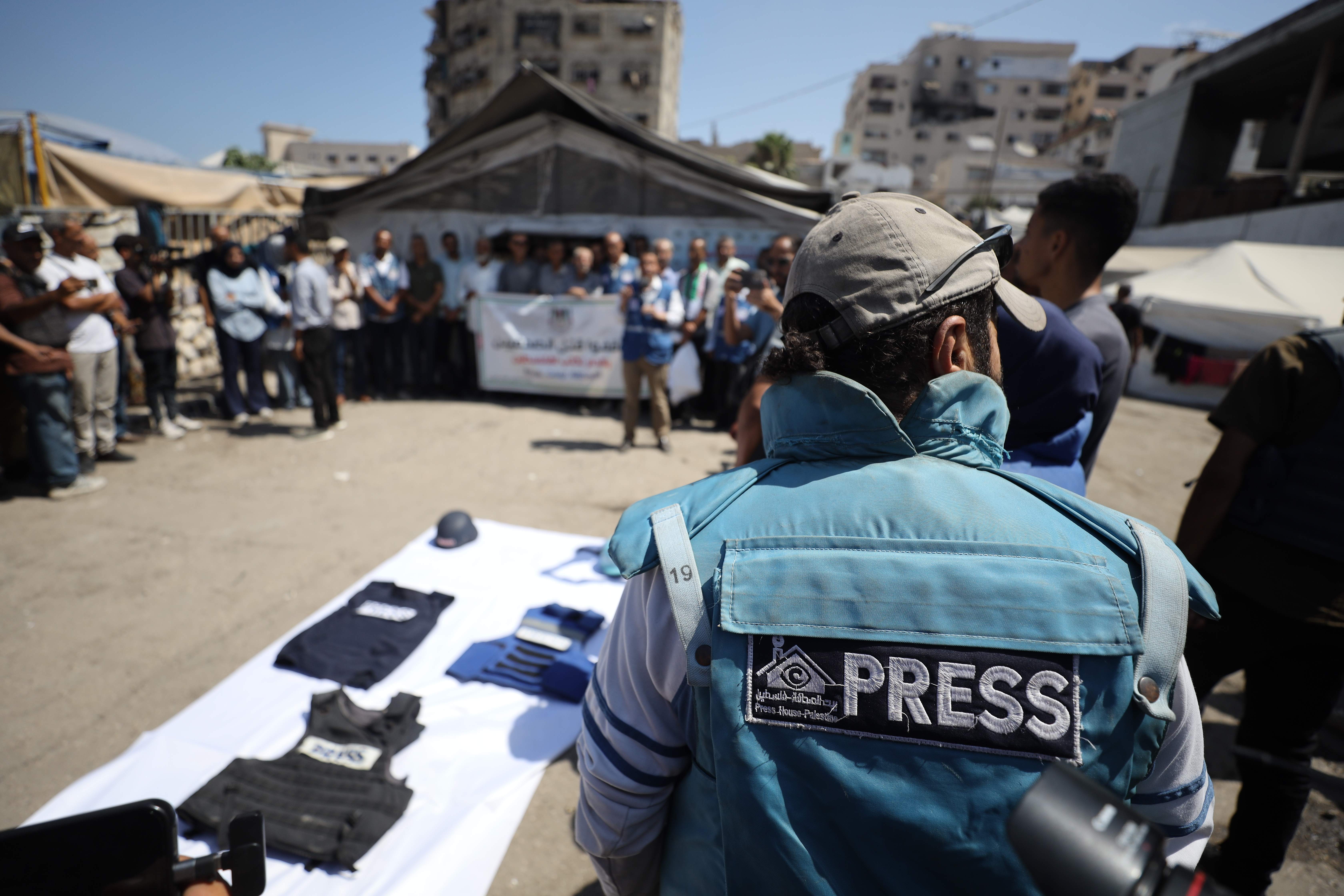
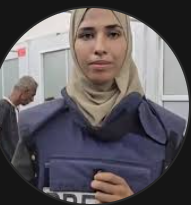
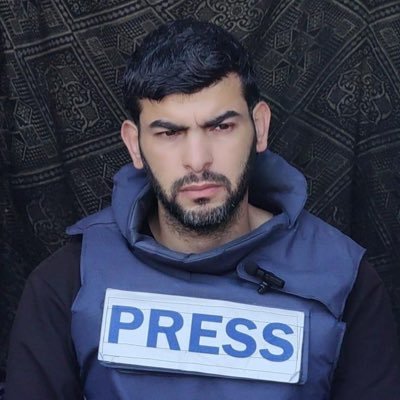
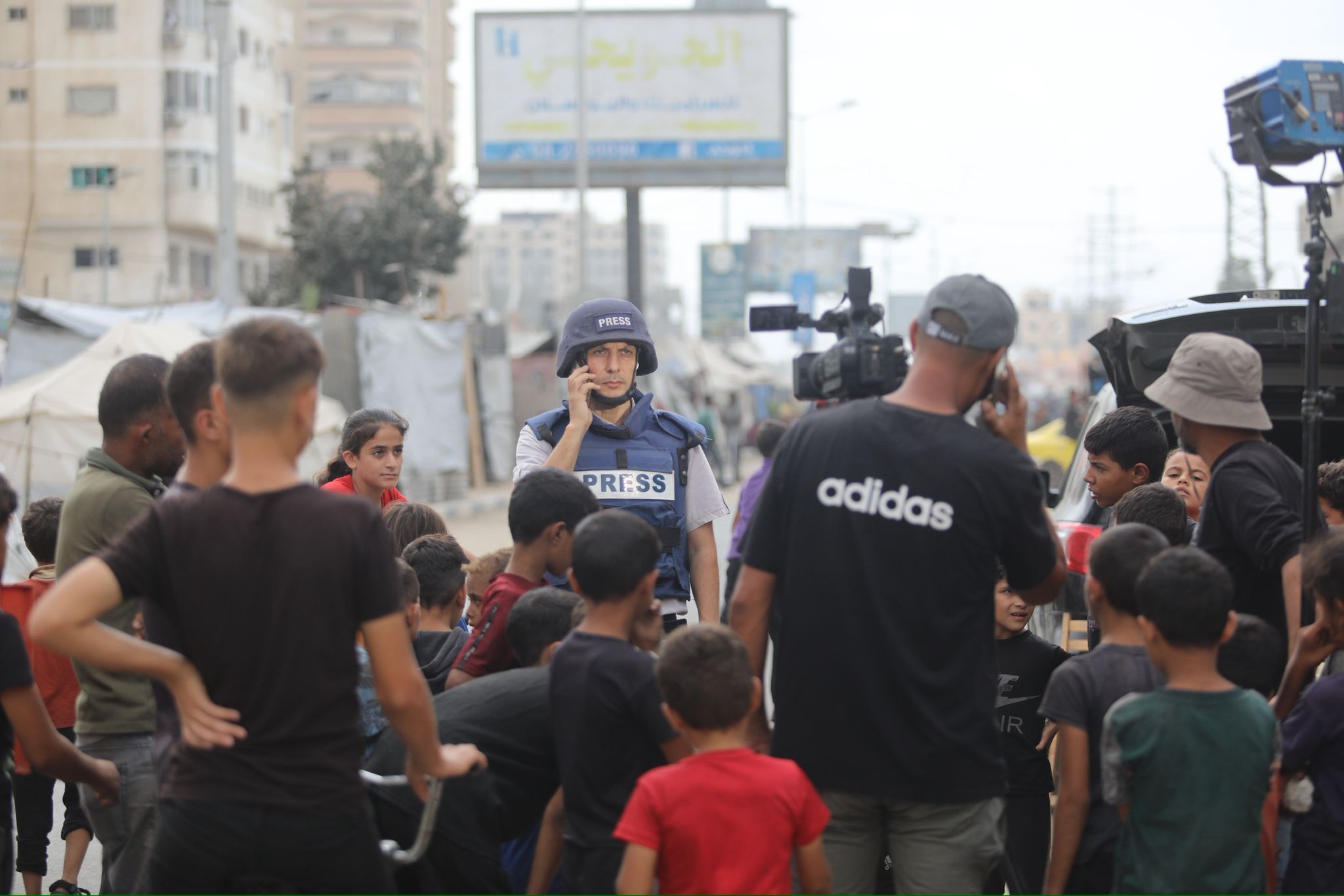
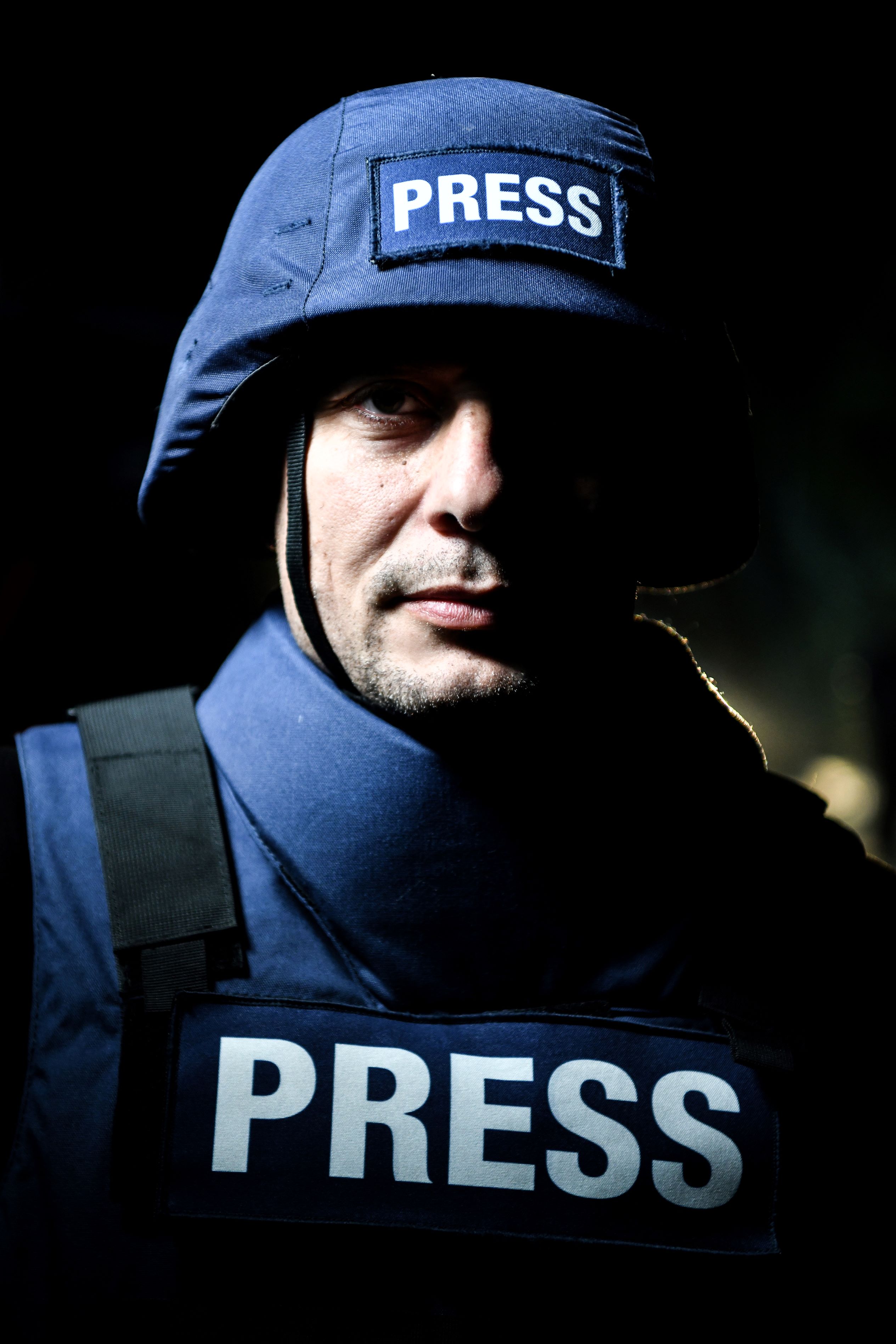
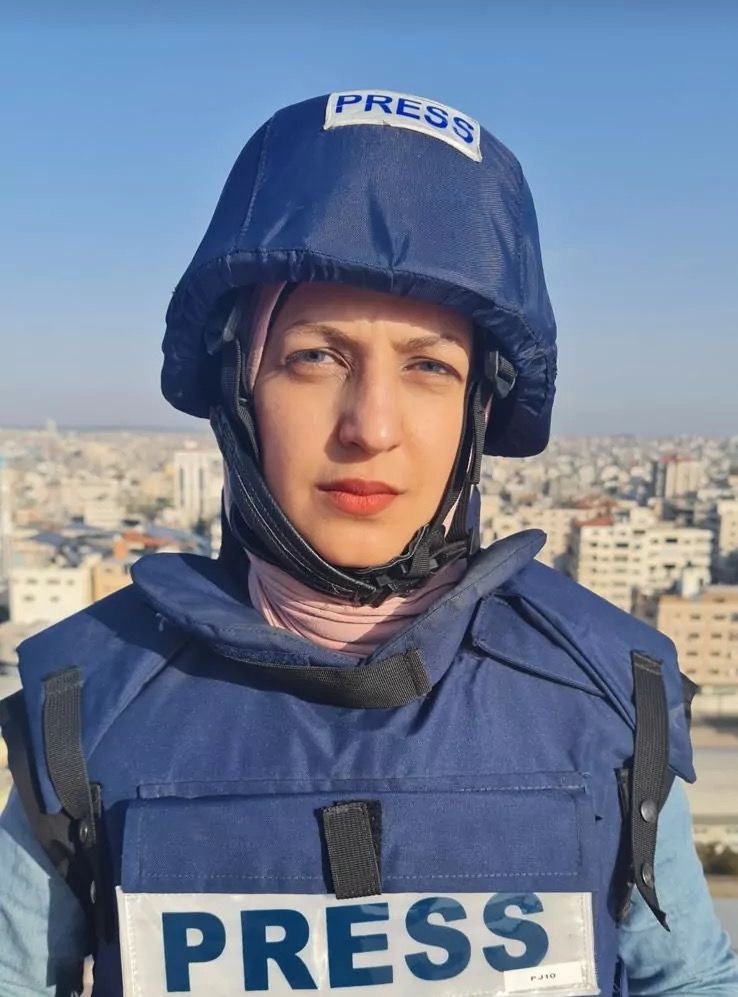
I never imagined that the word “صحافة” or “PRESS”, printed clearly on my protective vest and those of my colleagues, could turn into a grand illusion. I used to believe that the protective vest which exhausted my back and neck, along with the heavy helmet, would shield me from any direct attack, or might at least guarantee me a measure of safety. But I was completely wrong.
I used to love cleaning my journalistic equipment after every wave of escalation, keeping it polished and ready for the next round. I loved wearing it despite the pain its weight caused me. I felt proud and self-assured, and often it seemed to me that my children shared that feeling.
But everything changed in this war.
I remember that day well, and every day that followed it. Time passed with suffocating slowness. Every moment carried an unbearable weight. The suffering was not in the extreme exhaustion, or the shock, or the anxiety, or even the danger of death that followed me every day. I was able to endure all that. What I could not bear was the danger surrounding my loved ones: my husband and my children. I never allowed myself to imagine losing one of them, let alone being the cause of it. Every day, I prayed that I would not witness that moment.
I provided continuous coverage of the realities of the genocide in the Strip: homes being bombed, neighbourhoods being annihilated, thousands forcibly displaced. I spoke about hunger ravaging adults and children, about thirst, about trying to charge a battery at night for a small light to dispel the darkness of fear for my children. I wrote about the spread of disease and about injuries that tear the heart apart, especially among children.
Then suddenly I realised that I was no longer covering only other people’s stories... I had come to cover my own family’s suffering, my fear as a mother, my pain like all the mothers around me.
But my children were not “lucky” like others; because I could not be by their side. I was often overtaken by the urge to scream: I am helpless before my children! I cannot feed them, protect them, or quench their thirst! More than that, I was not there to hold them while rockets were falling around them!
But I could not stop, because I was the journalist! I should not be the story. Only this time... the story was about me and every one of us.
Every day I would go out into the field to cover events, saying goodbye to my children as though it were the last time. Every minute of the day, I prayed to God that I would return and find them alive and safe.
I survived death many times. I realised that my press vest was no longer a shield of protection, but a sign that I was a legitimate target for the Israeli army. I saw my colleagues being killed, pursued, injured and threatened. We needed a daily miracle to stay alive. Fear seized me not only for myself; my greatest fear was that I would be the cause of harm to my family. I would never have forgiven myself if they had been targeted because of me. The days were heavy... laden with fear, exhaustion, trauma, pain and grief. Whenever I was on the verge of collapse, I reminded myself that I was performing a moral duty that went beyond a job assignment.
It was not professional work that drove me to continue, but that feeling of betrayal by the world. My deep sense that we had been left alone while the whole world watched. I saw the world following the serialised burning of us in silence. I asked myself again and again: if I stop, who will speak? Who will carry people’s pain and document their stories? In return, I did not ask for much to help me do that. All I hoped for was to feel some degree of safety, to be certain that my children at home were not being targeted because of what I was doing.
I survived death many times. I realised that my press vest was no longer a shield of protection, but a sign that I was a legitimate target for the Israeli army. I saw my colleagues being killed, pursued, injured and threatened. We needed a daily miracle to stay alive. Fear seized me not only for myself; my greatest fear was that I would be the cause of harm to my family.
I have covered many wars in Gaza, but what we are living through today is not a war... it is genocide. I am a journalist, yes, but above and before that I am a mother and a woman. It was never easy to reconcile being a journalist with being a mother to terrified, threatened children who needed only their mother’s embrace to feel safe. Despite the long hours on air, I always felt that what I was doing was not enough. Work did not allow me to separate myself from my sense of terror; I was seeing children who resembled my own children suffering while the world ignored them and remained silent. It is one inescapable fate.
Standing in front of the camera exhausted me, but I felt that we had to continue documenting the genocide, and that the world had to see what was happening. I wanted them to know what it means for a child to be injured or killed under the rubble, to lose his life slowly with no ability to save him. I wanted them to know that thousands had lost everything, and that thousands of children had lost their entire families and become the sole survivors. They became alone amid all this terror that appears to have no end.
What my eight-year-old daughter Sirin feared most was becoming a “sole survivor”. She would ask me every night:
“Mama, what should I do if a rocket falls on all of you and you die, and I remain alone, or I and my little sister Jojo remain alone?”
She insisted that we sleep pressed against one another, with no gaps between us, so that if the rocket fell we would die together.
I could not share my children’s fears with the world, nor could I reveal my broken heart in front of the camera, even though we too are a story among the many stories in the reality of this genocide.
I remember a story I worked on about a girl called Sham. She was the sole survivor of a bombing that completely destroyed their home. She suffered third-degree burns covering most of her body.
But she asked for only one thing: for her mother to come back to life, or for her to die and join them. She said to me, crying: “I was sleeping in my mother’s arms... she covered me with her body to protect me...”
The words of five-year-old Jouri stayed with me and kept repeating in my mind: “I don’t want you to die and leave me, Mama.”
What my eight-year-old daughter Sirin feared most was becoming a “sole survivor”. She would ask me every night: “Mama, what should I do if a rocket falls on all of you and you die, and I remain alone, or I and my little sister Jojo remain alone?” She insisted that we sleep pressed against one another, with no gaps between us, so that if the rocket fell we would die together.
All the stories I covered were inseparable from my obsession with my family and my children. All stories in Gaza intersect with one another. We are all besieged under genocide, facing a single fate.
I wanted to scream: “I am helpless before my children! I could not hold them when the rockets fell around them.” But I could not retreat. I kept reminding myself: when you are the journalist, the story is about others, not about you. But this time the story was about everyone, about every one of us.
Every day I leave for the field, my tongue murmuring prayers: only that I return this day to find my children alive. Each time, I felt the farewell was the final farewell. It is not possible to say these heavy details on air, and I could not disclose my pain, however deep it was. But my children’s pain was the pain of all Gaza’s children.
I survived death many times. I realised early on, as did the rest of the journalists in Gaza, that the press vest was no longer a shield of protection, but a sign that we were targets for the Israeli army. I saw my colleagues being killed, injured and threatened. We needed a daily miracle to stay alive. I was afraid not only for myself but for those I loved, afraid that my presence among them would be a reason for their targeting.
We endured three months of forced movement from one area to another, moving terrified and hungry under fire. We were displaced six times. Each time we suffered the same terror and shock, and did not get used to it. We endured the same loss and the same pain, and did not get used to it. Even bread and water were not a “luxury” for which I had the time to stand in queues.
I saw and documented scenes impossible to describe. Homes levelled to the ground over their inhabitants, children pulled from beneath the rubble with bare hands. I saw mothers searching for their children without sound, without tears, without life. Those scenes became an “ordinary” pattern in the course of Gaza’s genocide, but the terror of mass death did not change. This death is terrifying and we do not want it. It was terrifying yesterday, in previous wars, at the beginning of the war, and it will remain terrifying forever.
In every coverage of a home being targeted over the heads of its residents, I imagine that I am standing on a kind of graveyard found only in Gaza, graveyards for the living and the dead together, all of them buried under the rubble. I kept all of this inside me, and I could not speak about it to anyone. I would hurry to embrace my children every evening, and search for a kiss from my husband to restore to me the feeling that I was still alive.
Amid all this destruction, grief and heartbreak, the darkness of that night in late November fell: an air strike targeted a house in Khan Younis. Bodies and the wounded poured into Nasser Medical Complex. Chaos descended, panic spread among women and children, endless scenes of wounds, injuries and blood; the distinction between the living and the dead disappeared.
But in the midst of that bloody turmoil, there was one child who captured all my attention. He was the age of my son Mohammed, who is 11 years old. That little boy got out of the ambulance alone, carrying a bag on his chest. His eyes were filled with shock and his face was covered in dust and wounds. I left everything and fixed my eyes on him and on his bag, from which blood was seeping. He noticed me, as though he had discovered the thoughts and feelings running through my mind. I saw him approach me, and he asked me with shocking calm: “Do you know what’s in this bag?” I could not answer. I felt my heart almost stop.
He put his hand on the zip to open it, so I quickly grabbed his hand and tried to stop him. I could not bear to see what my mind kept refusing to imagine seeing in that bloodied bag at that moment.
He said to me in a faint voice and with terrifying calm: “This is my brother Ahmed. He is five years old.”
Everything inside me collapsed at that moment. I wished I could faint and disappear from existence. I wanted the ground to split open and swallow me too. What is this world?! For moments, I felt as though I had indeed lost consciousness. I could no longer bear to see anything or listen to anything. I stood motionless. I do not know exactly how long that state lasted. Was it a few seconds? Was it whole minutes? I do not know.
A doctor passed beside me, so I pulled him by the hand without being conscious of what I was doing. I said to him as though giving an order: help him! And I pointed to the boy’s bag. The doctor opened the bag hurriedly, then screamed in shock: “Oh God!” The doctor asked some people to take the child to the morgue. The older brother carried his little brother and walked away... and I remained rooted to my place, unable to take my eyes off the scene. I noticed him walking towards the morgue, then he turned to me one last time. I did not see him after that, and I never knew his fate.
I could not follow him, film him, speak with him, or ask him about his name and his family. In that accursed moment, I could not summon my strength to be a journalist. What journalism? What can journalism, with all its professional standards and intensive training, do in the face of all this cruelty?
I left the hospital that night a different human being. I could not speak. I could not eat for days. I would see that boy’s face whenever I closed my eyes to sleep. I lost weight quickly within days, and I almost forgot the taste of sleep from that night onwards. I lost even the ability to smile with my children. I lost myself and no longer recognised her. I was unable to continue working. I was absent for two full days, during which I remained sitting in that room, with a terrible sense of guilt.
I blamed myself because I had not been able to document that crime and the story of that bereaved boy.
I said to myself: perhaps if I had been a little braver and had completed that story, perhaps the genocide would have stopped. Perhaps something would have changed if the world had seen the extent that the Israeli crime had reached. I did not stop blaming myself for a moment.
His eyes were filled with shock and his face was covered in dust and wounds. I left everything and fixed my eyes on him and on his bag, from which blood was seeping. I saw him approach me, and he asked me with shocking calm: “Do you know what’s in this bag?” I could not answer. I felt my heart almost stop. He put his hand on the zip to open it, so I quickly grabbed his hand and tried to stop him. I could not bear to see what my mind kept refusing to imagine seeing in that bloodied bag at that moment. He said to me in a faint voice and with terrifying calm: “This is my brother Ahmed. He is five years old.”
Only two days later, I returned to the field again. I covered the genocide as though nothing had happened. I could not explain what was inside me. I felt that something in me had broken forever. I was paralysed from within, and I could not explain that to anyone. My married life collapsed. We decided to separate after the war, or if we were able to leave this place alive.
My husband said to me: “I know you are going through something difficult, but so are we!”
I wanted to scream endlessly from the intensity of the oppression. I saw that small face whenever I looked into anyone’s face, but I could not find the right words to help me express or describe that scene. The days passed; on some of them we stole moments of calm, while most passed filled with worries that did not end and did not lift from the heart. In late December, my father was in Cairo trying to get us out of Gaza. The procedures were relatively easier for me and my children because we hold Egyptian passports, which my husband did not have; his chance of leaving and travelling was slim.
Everyone advised me: “Take your children and go. Save them and do not think of anyone but them. Your husband will be fine.” But I rejected the idea completely. That was not an option. We had pledged from the first day of the war that we would die together or survive together.
A few days later, I received a message from my father: “We have made an arrangement! Your names are on the list.” I searched... and found our names. But my husband’s name was not there. I called my father: “We will not travel. I will not leave my husband in this hell alone!” My father said: “Do not worry, they will allow him through even though he is not on the list.” That night was one of the worst nights. My husband Salah kept trying to persuade me to get the children out. “Think of them... not of me.”
Jojo, my little daughter, fell asleep crying and praying: “Dear God, let Baba come with us. I don’t want to leave him here.” The next morning, we headed to the crossing with heavy steps and broken hearts. None of us was happy about that survival. We asked ourselves: are we betraying Gaza? Will we return? Are we leaving those we love behind?
Everyone advised me: “Take your children and go. Save them and do not think of anyone but them. Your husband will be fine.” But I rejected the idea completely. That was not an option. We had pledged from the first day of the war that we would die together or survive together.
Many questions, and a feeling weighed down by guilt, sorrow and anger at this world. We carried nothing with us except two plastic bags, all that remained of our previous life in Gaza.
At eight o’clock in the evening, an officer called me and asked: “Is Salah your husband?” I answered cautiously: “Yes.”
He said: “Wait.”
Then, an hour later, he called me again and handed me our stamped passports.
We had all survived!
I left Gaza that night. I left with my husband and my four children alive and uninjured. But Gaza, and what happened there before and after that night, did not leave us.
I had hoped that we would all survive together. That Gaza would survive and that the massacre would stop quickly. I wished I could go back to that boy whose story broke me. Did he survive? Could I find him after the war? Sit with him and listen to him?
We stayed alive, but did we truly survive?
Editor’s note:
This testimony will be published in an updated edition of the book We Alone Covered the War, which documents the testimonies of Palestinian journalists covering the war of genocide.
This article was originally Published in Arabic on: 09/10/2025