
The mass release of millions of files related to Jeffrey Epstein serves as a metaphor for a wider crisis of the digital age: an overabundance of information that obscures rather than illuminates the truth. In an era where data floods replace traditional censorship, citizens risk becoming less informed, underscoring the vital role of professional journalism in filtering noise into meaningful knowledge.
Once I read a true story about a big American company accused of involvement in some dirty business. The judge would ask the company to produce a specific paper of their accounting sheets. The company lawyers knew that if the judge saw this paper, they would lose the case, but if they didn't hand it in, they would be condemned for contempt of the court, and also lose.
How did they get out of the dilemma? A few hours before the deadline for handing in the document expired, a big truck stopped in front of the courthouse. It was full of boxes with accounting documents — many thousands of pages. They carried the boxes into the courtroom and piled them up there. The required sheet was really in one of those boxes. They had fulfilled the order. Now the judge just had to find it.
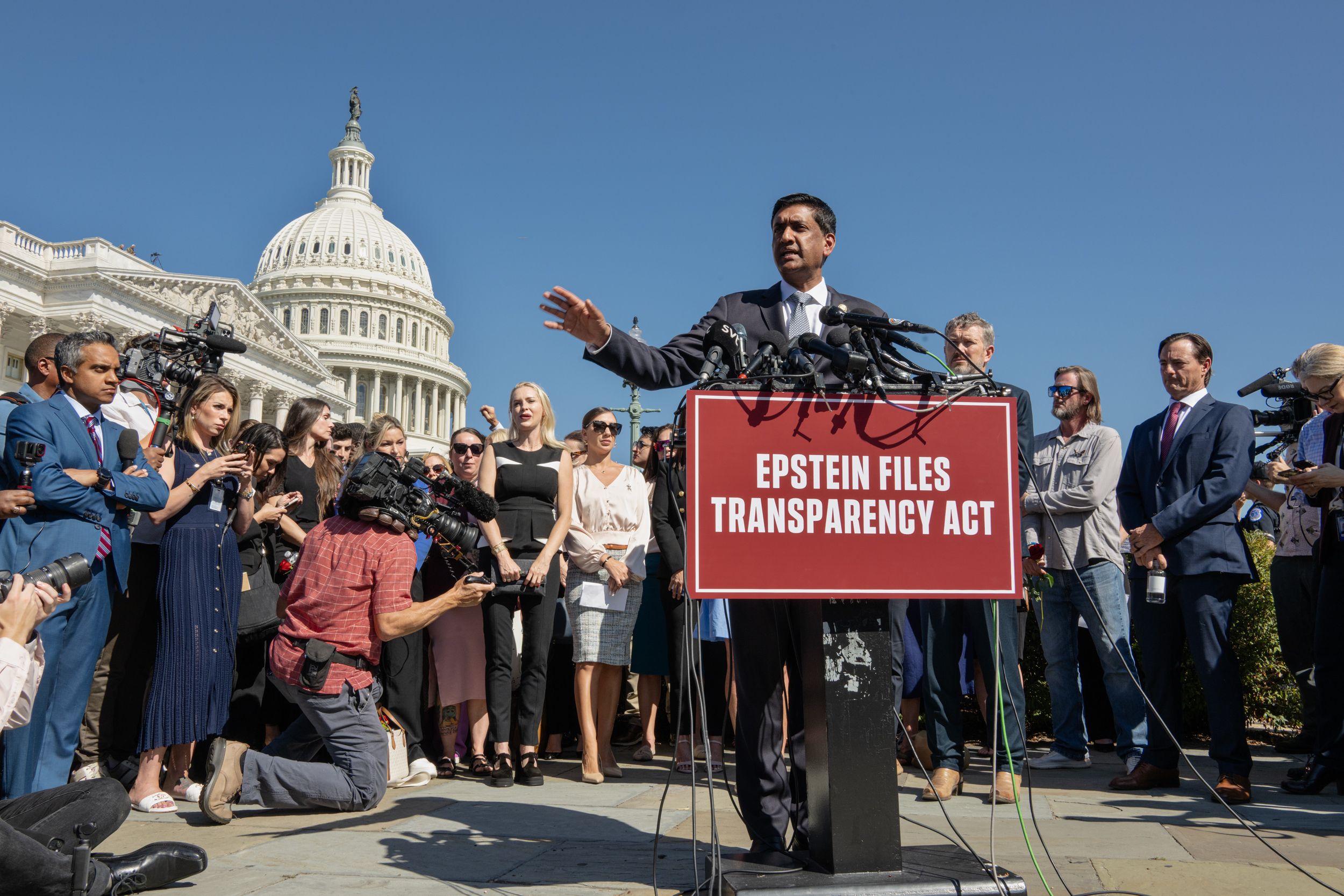
I don't remember if the dozens of assistants urgently hired to comb through the boxes were able to spot the document in time for the next hearing, or if the company had to be absolved for lack of evidence, as they expected. But I was reminded of the story when the US Department of Justice released, at the end of January, whatever material they had about the millionaire and child sex offender Jeffrey Epstein. After years of rumours about the secretive FBI investigation of Epstein's circle, which included very high-ranking politicians or aristocrats suspected now of having participated in Epstein's crimes, the US Congress ordered the Department of Justice to release the material to the public, so the media would be able to see for themselves. And they finally did. They put up a server where you can browse online most of the files they manage in their investigation. The problem: there are three million pages, 180,000 images and 2,000 videos.
Now I feel like the aforementioned judge in front of the document boxes. Will I live long enough to sift through three million pages? Fortunately, you can search this immense database by keywords, even with a short preview, which seems to make things a lot easier. But if you try and type in, for example, "Trump", you'll find some 4,700 documents. Some of them are emails relaying fake viral posts. Some are printouts from newspaper clippings that mention Trump. Some are summaries of voting polls. Some are printouts of Wikipedia articles made years after Epstein's death. I've still not come across any information about the relationship between Epstein and Trump. There might be. But you have to go and find it first.
Transparency as Overload
In some way, the release of the Epstein files is a metaphor for one of the biggest problems of our society: people have gained access to more information than ever before in history, but they are notably less well-informed than in past generations. And that is not because the quality of newspaper articles has declined. There are many newspapers out there offering excellent quality news, or at least as good as they have been in past decades. Probably often better, because thanks to the internet, journalists have better tools at hand to research data and context. Still, looking at the X-ray image of our society offered by social networks like Twitter, we can only conclude that ignorance about politics is increasing by the day.
The problem is not quality but quantity. There is too much information around.
Anybody reading nowadays news online, switching restlessly between digital versions of conventional newspapers, news aggregators, celebrity gossip, entertainment websites set up only for advertising benefits, and social networks, must feel like the judge in front of those document boxes. You know there is important, even vital, information hidden somewhere between the zillions of words and images, and you know that you should read that information in order to understand the conflicts and wars happening right now in the world around you, and also the rise and fall of companies and banking systems... because only a well-informed citizen can act responsibly and contribute to the right political choices of his or her country. That is what newspapers were invented for. But you are unable to filter the colourful noise on your screen and get through to that piece of real information. Most people don't even try any longer. They fall prey to the first headline they read and rarely research any further.
Traditionally, dictators tried to do it by applying censorship and reducing the flow of information. Nowadays, populist politicians apply the opposite tool: instead of stopping the flow of information they accelerate it up to a point where you cannot use it any more in a sensible way.
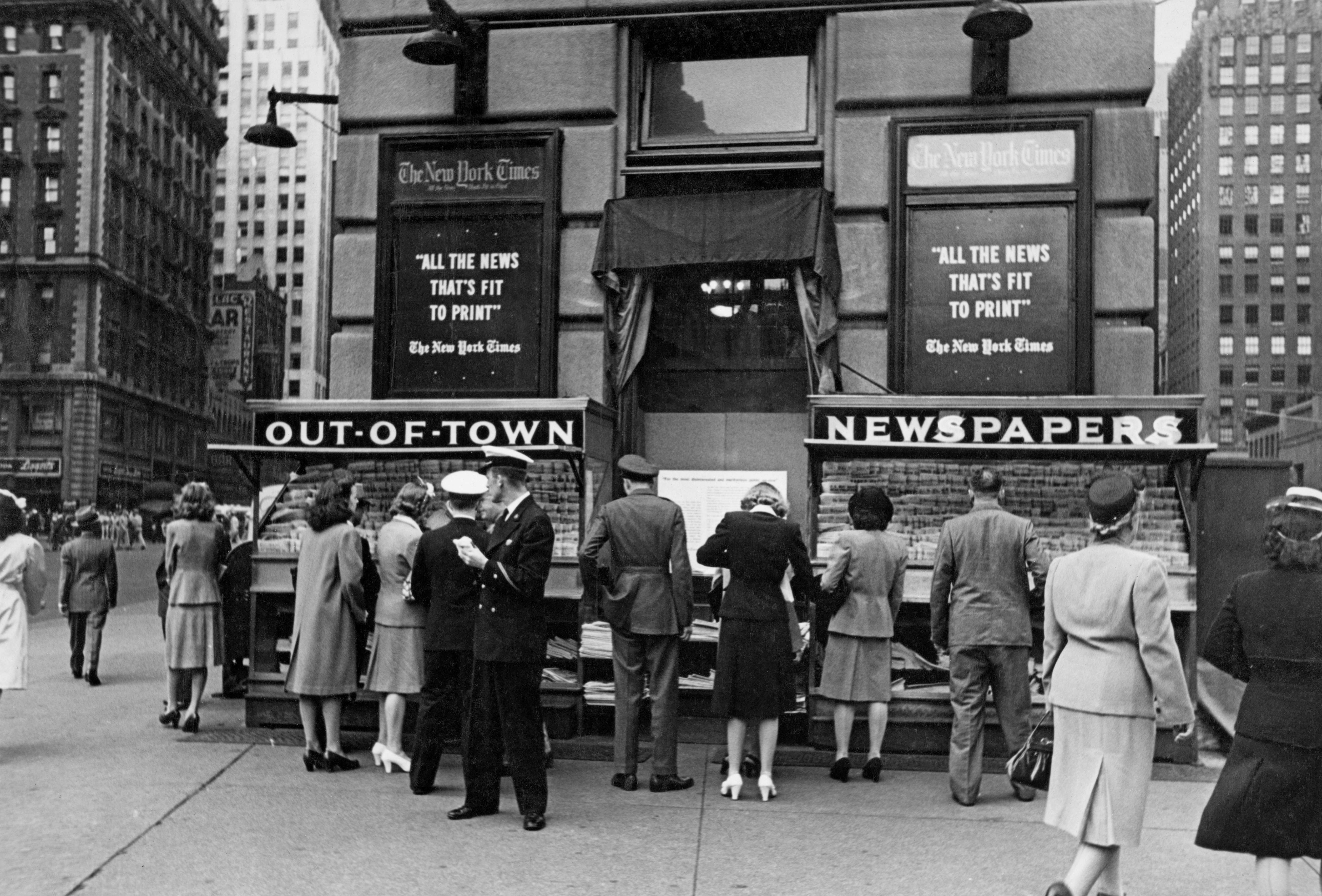
This is in part a consequence of the internet era. When news was printed on paper, there was a natural limit to the quantity of news that could be published because adding sheets to a newspaper increases the price, not only of the raw material, but also of working hours and delivery, and there is no use in printing more news than one customer can read over breakfast or coffee in one day. Of course, in all epochs there were papers full of gossip and irrelevant news, but a reader would know from the masthead of a paper which kind of news to expect. The daily BILD in Germany is an outstanding example of a very popular paper that, during the better part of the 20th century, fed trifle gossip and manipulative conservative and right-wing-leaning headlines to millions of readers, partly, but not only, from the working class. It became famous for it, so much indeed that Germany's highest court described the paper in 1981 as "a mistaken evolution of journalism". But whoever bought the paper knew more or less what to expect, and people searching for sound information would opt for other dailies; there was no shortage of print media with high-quality journalism.
The Business of Too Much
There is no shortage nowadays either. But we can't find them any more among the ever-increasing offers. This is, of course, a commercial phenomenon in the first place. It is quite cheap to produce appealing headlines that promise interesting news but then just offer warmed-up trivialities. Readers will feel disappointed, but as these online news sites are for free, just financed by advertising, they might come back anyhow. As long as you don't pay, you don't see the need to make a decision about not reading a paper. So, clicks keep coming in, and the business is profitable.
Paradoxically, the ease of accessing news, often also quality news, for free has downgraded the general media landscape by reducing the demands of readers and easing the business model of selling a product nobody is satisfied with, but nobody stops consuming.
Thus, the offer of free news has produced a profound change in the mindset of the whole society. Formerly, even working-class people used to spend a small amount on paying for their daily newspaper; nowadays, even better-situated middle-class intellectuals prefer to browse for free, confident that they'll be able to get enough information without paying a subscription for those articles behind a paywall. And there are, in fact, several quality outlets completely for free (some ask only for voluntary donations). But unless you are really focused on your task of getting informed, chances are you'll have spent all your available news-reading time before getting through to these papers. The offer is just too wide.
Make the test: get into the website of the Department of Justice and start browsing the Epstein files, and try not to get tangled up in trivial stuff you have no need at all to read. It will be difficult, I'm afraid. Fortunately, reporters from five of the biggest media outlets in the USA are working together to review the files, and hopefully over the next weeks or months we will get bits of interesting information. If this hope comes true, it will be because there are experienced journalists accomplishing the professional task of sifting through the information and offering you the parts you really need to know. That is what journalism has always been for. And precisely because of its capacity to select information, newspapers were called "the fourth power", after government, parliament and judiciary.
It is not surprising that authoritarian politicians prefer to weaken that power. Traditionally, dictators tried to do it by applying censorship and reducing the flow of information. Nowadays, populist politicians apply the opposite tool: instead of stopping the flow of information, they accelerate it up to a point where you cannot use it any more in a sensible way.
With the Epstein files, this even looks like a conscious strategy. Because somebody in the Department of Justice has already read every single one of these three million documents. We know that, because certain names and most e-mail-addresses have been carefully blacked out in an exercise of old-style censorship. They could have offered the public a broad categorisation of the material, at least separating e-mails from newspaper clippings. They didn't. Giving us all the information in a heap of digital sheets is an effective strategy for keeping us away from that information as long as possible.
Luckily, there are still journalists around. We need them more than ever.