
Al Jazeera Journalism Review

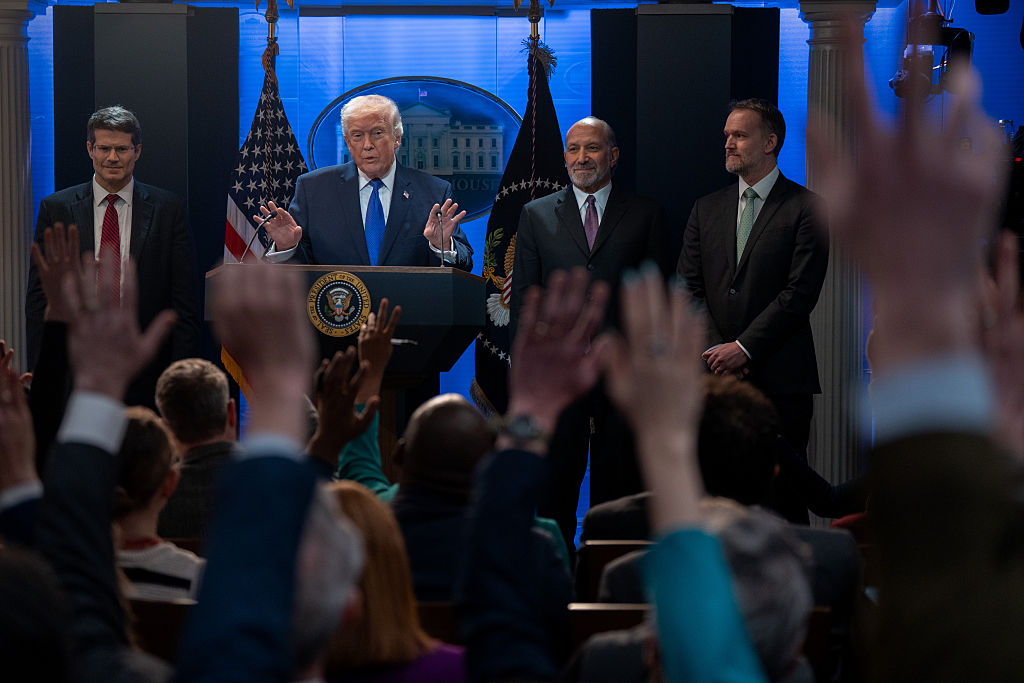
Washington DC: Press Conference For Epstein Survivors, District of Columbia, USA Congressman, Ro Khanna speaks at a press conference outside the Capitol on Wednesday with the alleged victims of disgraced financier and sex trafficker Jeffrey Epstein in an effort to get the full files released, in Washington D.C. on September 3, 2025.
Press Conference For Epstein Survivors, District of Columbia, USA
Congressman, Ro Khanna speaks at a press conference outside the Capitol on Wednesday with the alleged victims of disgraced financier and sex trafficker Jeffrey Epstein in an effort to get the full files released, in Washington D.C. on September 3, 2025. (Photo: Laura Brett/ZUMA Press Wire - Washington, D.C., United States of America

The Epstein Files and the Art of Drowning the Truth

The mass release of millions of files related to Jeffrey Epstein serves as a metaphor for a wider crisis of the digital age: an overabundance of information that obscures rather than illuminates the truth. In an era where data floods replace traditional censorship, citizens risk becoming less informed, underscoring the vital role of professional journalism in filtering noise into meaningful knowledge.


Once I read a true story about a big American company accused of involvement in some dirty business. The judge would ask the company to produce a specific paper of their accounting sheets. The company lawyers knew that if the judge saw this paper, they would lose the case, but if they didn't hand it in, they would be condemned for contempt of the court, and also lose.

How did they get out of the dilemma? A few hours before the deadline for handing in the document expired, a big truck stopped in front of the courthouse. It was full of boxes with accounting documents — many thousands of pages. They carried the boxes into the courtroom and piled them up there. The required sheet was really in one of those boxes. They had fulfilled the order. Now the judge just had to find it.

I don't remember if the dozens of assistants urgently hired to comb through the boxes were able to spot the document in time for the next hearing, or if the company had to be absolved for lack of evidence, as they expected. But I was reminded of the story when the US Department of Justice released, at the end of January, whatever material they had about the millionaire and child sex offender Jeffrey Epstein. After years of rumours about the secretive FBI investigation of Epstein's circle, which included very high-ranking politicians or aristocrats suspected now of having participated in Epstein's crimes, the US Congress ordered the Department of Justice to release the material to the public, so the media would be able to see for themselves. And they finally did. They put up a server where you can browse online most of the files they manage in their investigation. The problem: there are three million pages, 180,000 images and 2,000 videos.

Now I feel like the aforementioned judge in front of the document boxes. Will I live long enough to sift through three million pages? Fortunately, you can search this immense database by keywords, even with a short preview, which seems to make things a lot easier. But if you try and type in, for example, "Trump", you'll find some 4,700 documents. Some of them are emails relaying fake viral posts. Some are printouts from newspaper clippings that mention Trump. Some are summaries of voting polls. Some are printouts of Wikipedia articles made years after Epstein's death. I've still not come across any information about the relationship between Epstein and Trump. There might be. But you have to go and find it first.


Transparency as Overload

In some way, the release of the Epstein files is a metaphor for one of the biggest problems of our society: people have gained access to more information than ever before in history, but they are notably less well-informed than in past generations. And that is not because the quality of newspaper articles has declined. There are many newspapers out there offering excellent quality news, or at least as good as they have been in past decades. Probably often better, because thanks to the internet, journalists have better tools at hand to research data and context. Still, looking at the X-ray image of our society offered by social networks like Twitter, we can only conclude that ignorance about politics is increasing by the day.

The problem is not quality but quantity. There is too much information around.

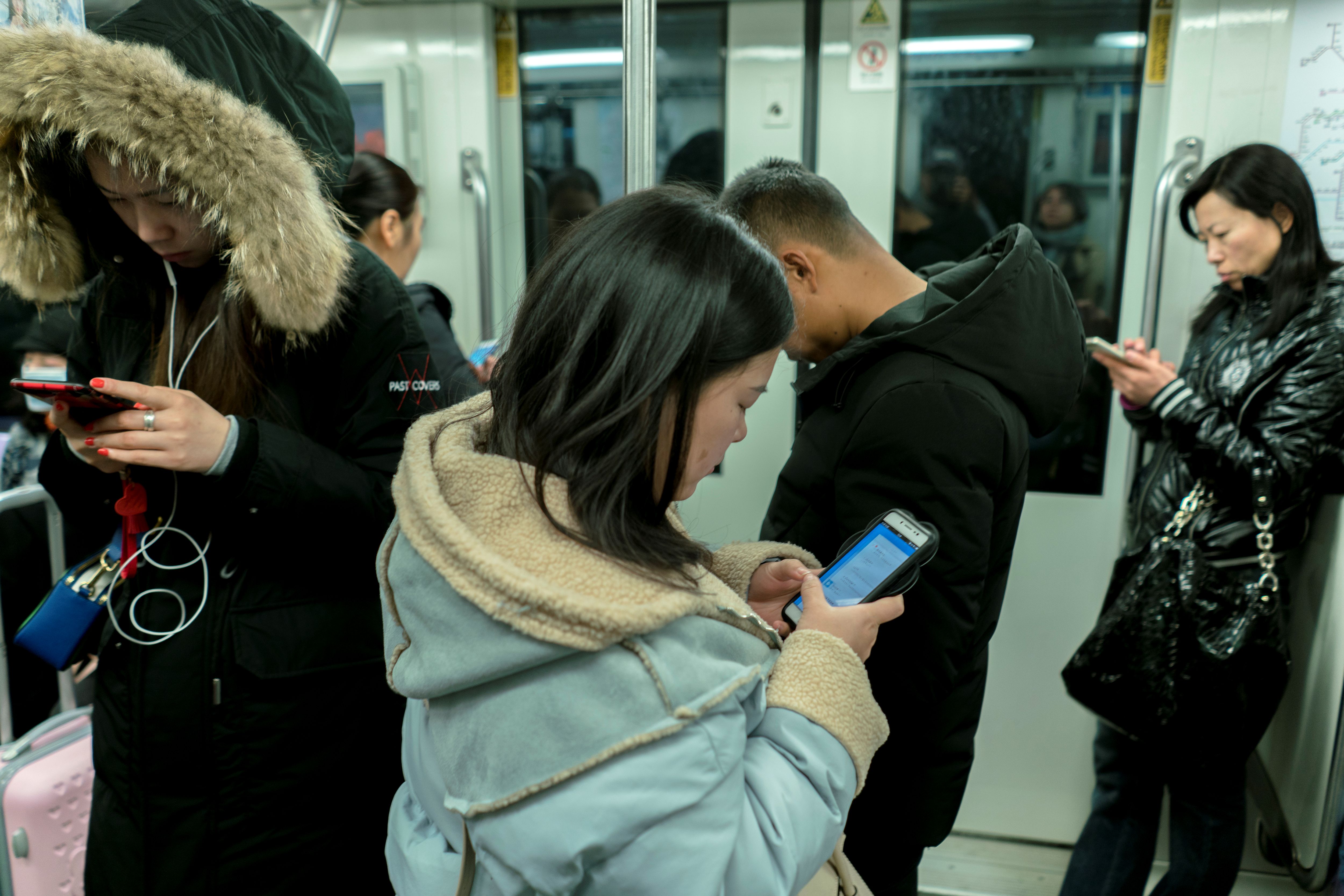
Anybody reading nowadays news online, switching restlessly between digital versions of conventional newspapers, news aggregators, celebrity gossip, entertainment websites set up only for advertising benefits, and social networks, must feel like the judge in front of those document boxes. You know there is important, even vital, information hidden somewhere between the zillions of words and images, and you know that you should read that information in order to understand the conflicts and wars happening right now in the world around you, and also the rise and fall of companies and banking systems... because only a well-informed citizen can act responsibly and contribute to the right political choices of his or her country. That is what newspapers were invented for. But you are unable to filter the colourful noise on your screen and get through to that piece of real information. Most people don't even try any longer. They fall prey to the first headline they read and rarely research any further.

Traditionally, dictators tried to do it by applying censorship and reducing the flow of information. Nowadays, populist politicians apply the opposite tool: instead of stopping the flow of information they accelerate it up to a point where you cannot use it any more in a sensible way.

This is in part a consequence of the internet era. When news was printed on paper, there was a natural limit to the quantity of news that could be published because adding sheets to a newspaper increases the price, not only of the raw material, but also of working hours and delivery, and there is no use in printing more news than one customer can read over breakfast or coffee in one day. Of course, in all epochs there were papers full of gossip and irrelevant news, but a reader would know from the masthead of a paper which kind of news to expect. The daily BILD in Germany is an outstanding example of a very popular paper that, during the better part of the 20th century, fed trifle gossip and manipulative conservative and right-wing-leaning headlines to millions of readers, partly, but not only, from the working class. It became famous for it, so much indeed that Germany's highest court described the paper in 1981 as "a mistaken evolution of journalism". But whoever bought the paper knew more or less what to expect, and people searching for sound information would opt for other dailies; there was no shortage of print media with high-quality journalism.


The Business of Too Much

There is no shortage nowadays either. But we can't find them any more among the ever-increasing offers. This is, of course, a commercial phenomenon in the first place. It is quite cheap to produce appealing headlines that promise interesting news but then just offer warmed-up trivialities. Readers will feel disappointed, but as these online news sites are for free, just financed by advertising, they might come back anyhow. As long as you don't pay, you don't see the need to make a decision about not reading a paper. So, clicks keep coming in, and the business is profitable.

Paradoxically, the ease of accessing news, often also quality news, for free has downgraded the general media landscape by reducing the demands of readers and easing the business model of selling a product nobody is satisfied with, but nobody stops consuming.

Thus, the offer of free news has produced a profound change in the mindset of the whole society. Formerly, even working-class people used to spend a small amount on paying for their daily newspaper; nowadays, even better-situated middle-class intellectuals prefer to browse for free, confident that they'll be able to get enough information without paying a subscription for those articles behind a paywall. And there are, in fact, several quality outlets completely for free (some ask only for voluntary donations). But unless you are really focused on your task of getting informed, chances are you'll have spent all your available news-reading time before getting through to these papers. The offer is just too wide.

Make the test: get into the website of the Department of Justice and start browsing the Epstein files, and try not to get tangled up in trivial stuff you have no need at all to read. It will be difficult, I'm afraid. Fortunately, reporters from five of the biggest media outlets in the USA are working together to review the files, and hopefully over the next weeks or months we will get bits of interesting information. If this hope comes true, it will be because there are experienced journalists accomplishing the professional task of sifting through the information and offering you the parts you really need to know. That is what journalism has always been for. And precisely because of its capacity to select information, newspapers were called "the fourth power", after government, parliament and judiciary.

It is not surprising that authoritarian politicians prefer to weaken that power. Traditionally, dictators tried to do it by applying censorship and reducing the flow of information. Nowadays, populist politicians apply the opposite tool: instead of stopping the flow of information, they accelerate it up to a point where you cannot use it any more in a sensible way.

With the Epstein files, this even looks like a conscious strategy. Because somebody in the Department of Justice has already read every single one of these three million documents. We know that, because certain names and most e-mail-addresses have been carefully blacked out in an exercise of old-style censorship. They could have offered the public a broad categorisation of the material, at least separating e-mails from newspaper clippings. They didn't. Giving us all the information in a heap of digital sheets is an effective strategy for keeping us away from that information as long as possible.

Luckily, there are still journalists around. We need them more than ever.

Related Articles

Censorship, Militarisation, and Dismantlement: How Public Media Became a Political Battlefield in Latin America

Public media in Latin America, such as Brazil's EBC and Argentina's Télam, are being undermined through militarisation and dismantlement, threatening their role as public institutions. These actions jeopardise media independence and weaken their ability to serve the public interest, posing a serious risk to democracy.

Rita Freire Published on: 19 Dec, 2024
Analysis: Media Disinformation and UK Far-Right Riots

Analysis on the impact of media disinformation on public opinion, particularly during UK riots incited by far-right groups. A look at how sensationalist media can directly influence audience behavior, as per the Hypodermic Needle Theory, leading to normalized discrimination and violence. The need for responsible journalism is emphasized to prevent such harmful effects.

Anam Hussain
Anam Hussain Published on: 8 Aug, 2024
How do journalists work under information blockades?

THE LONG READ: Internet blockades are used by governments to stifle dissent, unrest and even the reporting of war. We take an in-depth look at this phenomenon and highlight ways journalists can carry on working regardless

Adil Akhoon
Adil Amin Akhoon, Saliq Parvaiz Published on: 7 Jul, 2022
Will Meta Become a Platform for Disinformation and Conspiracy Theories?

Meta’s decision to abandon third-party fact-checking in favor of Community Notes aligns with Donald Trump’s long-standing criticisms of media scrutiny, raising concerns that the platform will fuel disinformation, conspiracy theories, and political polarization. With support from Elon Musk’s X, major social media platforms now lean toward a "Trumpian" stance, potentially weakening global fact-checking efforts and reshaping the online information landscape.

Arwa Kooli
Arwa Kooli Published on: 5 Feb, 2025
'Both sides’ journalism does not always show us the truth

Journalists are bound to tell the truth, not give platforms to positions which are demonstrably wrong in a misguided attempt to be ‘impartial’.

Sakhr2
Sakhr Al-Makhadhi Published on: 17 Jan, 2022
Investigative Journalism in the Digital Age

Data-driven journalism is an increasingly integral part of investigative reporting. We look at the ways to put it to best use. 

A picture of the Al Jazeera Media Institute's logo, on a white background.
Al Jazeera Journalism Review Published on: 21 Dec, 2021

More Articles

Reporting the Spectacle: Myanmar’s Manufactured Elections

Myanmar’s recent elections posed a profound challenge for journalists, who were forced to navigate between exposing a sham process and inadvertently legitimising it. With media repression intensifying, reporting became an act of resistance against the junta’s effort to control information and silence independent voices.

Annie Zaman
Annie Zaman Published on: 7 Feb, 2026
Public Hostility Toward Legacy Media in Bangladesh

The December 2025 arson attacks on Prothom Alo and The Daily Star marked a turning point for journalism in Bangladesh. As public anger replaces state control as the primary threat, reporters are reassessing personal safety, editorial judgement, and professional credibility in a political transition where journalism itself is increasingly treated as an enemy.

Arsalan Bukhari, an independent journalist based in India
Arsalan Bukhari Published on: 4 Feb, 2026
Migration Issues and the Framing Dilemma in Western Media

How does the Western press shape the migration narrative? Which journalistic frames dominate its coverage? And is reporting on anti-immigration protests neutral or ideologically charged? This analysis examines how segments of Western media echo far-right rhetoric, reinforcing xenophobic discourse through selective framing, language, and imagery.

Salma Saqr
Salma Saqr Published on: 31 Jan, 2026
From News Reporting to Documentation: Practical Lessons from Covering the War on Gaza

From the very first moment of the genocidal war waged by Israel on Gaza, Al Jazeera correspondent Hisham Zaqout has been a witness to hunger, devastation, war crimes, and the assassination of his colleagues in the field. It is a battle for survival and documentation, one that goes beyond mere coverage and daily reporting.

Hisham Zakkout Published on: 26 Jan, 2026
Investigating the Assassination of My Own Father

As a journalist, reporting on the murder of my father meant answering questions about my own position as an objective observer.

Diana López Zuleta
Diana López Zuleta Published on: 16 Jan, 2026
What Image of Gaza Will the World Remember?

Will the story of Gaza be reduced to official statements that categorise the Palestinian as a "threat"? Or to images of the victims that flood the digital space? And how can the media be transformed into a tool for reinforcing collective memory and the struggle over narratives?

Hassan Obeid
Hasan Obaid Published on: 13 Jan, 2026
Bridging the AI Divide in Arab Newsrooms

AI is reshaping Arab journalism in ways that entrench power rather than distribute it, as under-resourced MENA newsrooms are pushed deeper into dependency and marginalisation, while wealthy, tech-aligned media actors consolidate narrative control through infrastructure they alone can afford and govern.

Sara Ait Khorsa
Sara Ait Khorsa Published on: 10 Jan, 2026
Generative AI in Journalism and Journalism Education: Promise, Peril, and the Global North–South Divide

Generative AI is transforming journalism and journalism education, but this article shows that its benefits are unevenly distributed, often reinforcing Global North–South inequalities while simultaneously boosting efficiency, undermining critical thinking, and deepening precarity in newsrooms and classrooms.

Carolyne Lunga
Carolyne Lunga Published on: 2 Jan, 2026
Intifada 2.0: Palestinian Digital Journalism from Uprising to Genocide

From underground newsletters during the Intifadas to livestreams from Gaza, Palestinian journalism has evolved into a decentralised digital practice of witnessing under occupation. This article examines how citizen journalists, fixers and freelancers have not only filled gaps left by international media, but fundamentally transformed how Palestine is reported, remembered and understood.

Zina Q.
Zina Q. Published on: 24 Dec, 2025
How Can Journalism Make the Climate Crisis a People’s Issue?

Between the import of Western concepts and terminology that often fail to reflect the Arab context, and the denial of the climate crisis, or the inability to communicate it in clear, accessible terms, journalism plays a vital role in informing the public and revealing how climate change directly affects the fabric of daily life in the Arab world.

Bana Salama
Bana Salama Published on: 19 Dec, 2025
Inside Vietnam’s Disinformation Machine and the Journalists Exposing It from Exile

Vietnam’s tightly controlled media environment relies on narrative distortion, selective omission, and propaganda to manage politically sensitive news. Exiled journalists and overseas outlets have become essential in exposing these practices, documenting forced confessions and smear campaigns, and preserving access to information that would otherwise remain hidden.

AJR Contributor Published on: 15 Dec, 2025
What It Means to Be an Investigative Journalist Today

A few weeks ago, Carla Bruni, wife of former French president Nicolas Sarkozy, was seen removing the Mediapart logo from view. The moment became a symbol of a major victory for investigative journalism, after the platform exposed Gaddafi’s financing of Sarkozy’s election campaign, leading to his prison conviction. In this article, Edwy Plenel, founder of Mediapart and one of the most prominent figures in global investigative journalism, reflects on a central question: what does it mean to be an investigative journalist today?

Edwy Plenel
Edwy Plenel Published on: 27 Nov, 2025
In-Depth and Longform Journalism in the AI Era: Revival or Obsolescence?

Can artificial intelligence tools help promote and expand the reach of longform journalism, still followed by a significant audience, or will they accelerate its decline? This article examines the leading AI tools reshaping the media landscape and explores the emerging opportunities they present for longform journalism, particularly in areas such as search and content discovery.

. سعيد ولفقير. كاتب وصحافي مغربي. ساهم واشتغل مع عددٍ من المنصات العربية منذ أواخر عام 2014.Said Oulfakir. Moroccan writer and journalist. He has contributed to and worked with a number of Arab media platforms since late 2014.
Said Oulfakir Published on: 24 Nov, 2025
Leaked BBC Memo: What Does the Crisis Reveal?

How Should We Interpret the Leak of the “BBC Memo” on Editorial Standards? Can we truly believe that the section concerning U.S. President Donald Trump was the sole reason behind the wave of resignations at the top of the British broadcaster? Or is it more accurately seen as part of a broader attempt to seize control over editorial decision-making? And to what extent can the pressure on newsrooms be attributed to the influence of the Zionist lobby?

 Mohammed Abuarqoub. Journalist, trainer, and researcher specializing in media affairs. He holds a PhD in Communication Philosophy from Regent University in the United States.محمد أبو عرقوب صحفي ومدرّب وباحث متخصص في شؤون الإعلام، حاصل على درجة الدكتوراه في فلسفة الاتّصال من جامعة ريجينت بالولايات المتحدة الأمريكية.
Mohammed Abuarqoub Published on: 20 Nov, 2025
Crisis of Credibility: How the Anglo-American Journalism Model Failed the World

Despite an unprecedented global flood of information, journalism remains strikingly impotent in confronting systemic crises—largely because the dominant Anglo-American model, shaped by commercial imperatives and capitalist allegiances, is structurally incapable of pursuing truth over power or effecting meaningful change. This critique calls for dismantling journalism’s subordination to market logic and imagining alternative models rooted in political, literary, and truth-driven commitments beyond the confines of capitalist production.

Imran Muzaffar
Imran Muzaffar, Aliya Bashir, Syed Aadil Hussain Published on: 14 Nov, 2025
Why Has Arab Cultural Journalism Weakened in the Third Millennium?

The crisis of cultural journalism in the Arab world reflects a deeper decline in the broader cultural and moral project, as well as the collapse of education and the erosion of human development. Yet this overarching diagnosis cannot excuse the lack of professional training and the poor standards of cultural content production within newsrooms.

Fakhri Saleh
Fakhri Saleh Published on: 10 Nov, 2025
Podcasters, content creators and influencers are not journalists. Are they?

Are podcasters, content creators, and influencers really journalists, or has the word 'journalist' been stretched so thin that it now covers anyone holding a microphone and an opinion? If there is a difference, where does it sit? Is it in method, mission, accountability, or something else? And in a media landscape built on noise, how do we separate a journalist from someone who produces content for clicks, followers or sponsors

Derick Matsengarwodzi
Derick Matsengarwodzi Published on: 7 Nov, 2025
The Power to Write History: How Journalism Shapes Collective Memory and Forgetting

What societies remember, and what they forget, is shaped not only by historians but by journalism. From wars to natural disasters, the news does not simply record events; it decides which fragments endure in collective memory, and which fade into silence.

Daniel Harper
Daniel Harper Published on: 30 Oct, 2025
Journalism in Spain: Why Omitting Ethnicity May Be Doing More Harm Than Good

In Spain, a well-intentioned media practice of omitting suspects’ ethnic backgrounds in crime reporting is now backfiring, fuelling misinformation, empowering far-right narratives, and eroding public trust in journalism.

Ilya إيليا توبر 
Ilya U Topper Published on: 10 Sep, 2025
Interview with Zina Q. : Digital Cartography as a Tool of Erasure in Gaza

Amid Israel’s war on Gaza, Zina Q. uncovers how Google Maps and satellite imagery are being manipulated; homes relabelled as “haunted,” map updates delayed, and evidence of destruction obscured, revealing digital cartography itself as a weapon of war. By exposing these distortions and linking them to conflicts from Sudan to Ukraine, she demonstrates how control over maps and AI surveillance influences not only what the world sees, but also what it remembers.

Al Jazeera Journalism Review
Al Jazeera Journalism Review Published on: 6 Sep, 2025
Canadian Journalists for Justice in Palestine: A Call to Name the Killer, Not Just the Crime

How many journalists have to be killed before we name the killer? What does press freedom mean if it excludes Palestinians? In its latest strike, Israel killed an entire Al Jazeera news crew in Gaza—part of a systematic campaign to silence the last witnesses to its crimes. Canadian Journalists for Justice in Palestine (CJJP) condemns this massacre and calls on the Canadian government to end its complicity, uphold international law, and demand full accountability. This is not collateral damage. This is the targeted erasure of truth.
Samira Mohyeddin
Samira Mohyeddin Published on: 14 Aug, 2025
Protecting Palestinian Journalists Should be First Priority - Above Western Media Access

Why demand entry for foreign reporters when Palestinian journalists are already risking—and losing—their lives to tell the truth? Real solidarity means saving journalists' lives, amplifying their voices, and naming the genocide they expose daily.

Synne Furnes Bjerkestrand
Synne Bjerkestrand, Kristian Lindhardt Published on: 10 Aug, 2025
The Washington Post: When Language Becomes a Veil for Pro-Israel Bias

How did The Washington Post's coverage differ between Israel’s bombing of Gaza hospitals and Iran’s strike on an Israeli hospital? Why does the paper attempt to frame Palestinian victims within a “complex operational context”? And when does language become a tool of bias toward the Israeli narrative?

Said Al-Azri
Said Al-Azri Published on: 6 Aug, 2025
In the War on Gaza: How Do You Tell a Human Story?

After nine months of genocidal war on Palestine, how can journalists tell human stories? Which stories should they focus on? And does the daily, continuous coverage of the war’s developments lead to a “normalisation of death”?

Yousef Fares
Yousef Fares Published on: 8 Jul, 2025