Al Jazeera Journalism Review

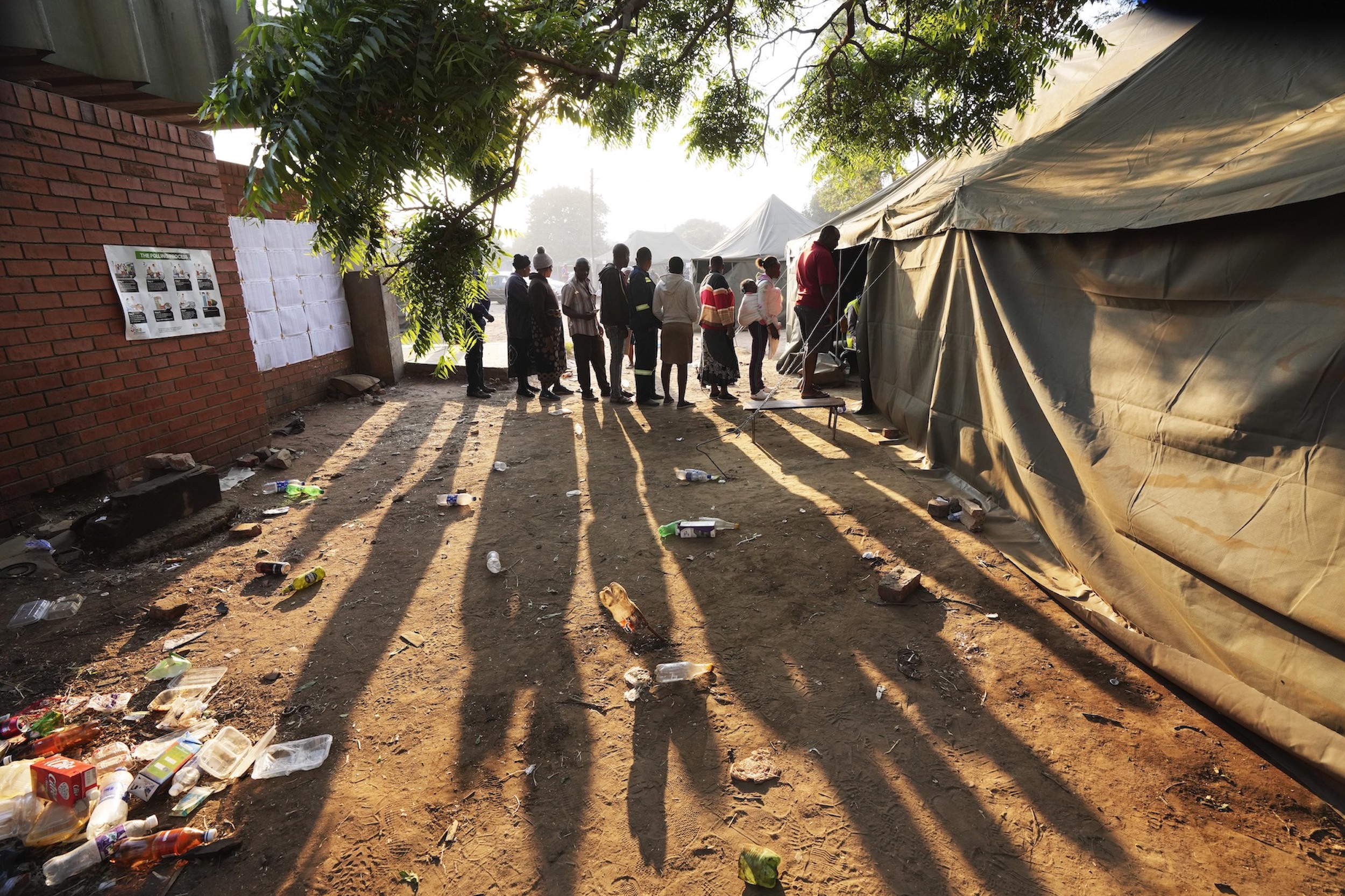
Zimbabweans vote for Zimbabwe National Elections, Shamva  Election inspectors at a polling station at the Shamva Mine Primary School in Mashonaland East during the 2018 National Elections on July 30, 2018. This is the first national election since former President Robert Mugabe stepped down as President of Zimbabwe on November 21, 2017 after a military take over 6 days prior that ended 37 years of rule.  By: Jemal Countess  Date created: Jul 30 2018
Zimbabweans vote for Zimbabwe National Elections, Shamva

Election inspectors at a polling station at the Shamva Mine Primary School in Mashonaland East during the 2018 National Elections on July 30, 2018. This is the first national election since former President Robert Mugabe stepped down as President of Zimbabwe on November 21, 2017 after a military take over 6 days prior that ended 37 years of rule. (Photo: Jemal Countess)

Kukurigo: Revolutionising news in Zimbabwe's WhatsApp era

The emergence of Kukurigo during Zimbabwe’s 2018 elections marked a turning point for digital journalism, transforming WhatsApp from a hub for misinformation into a vital platform for verified news. By leveraging the app’s low data costs, this grassroots initiative bridged the information gap for under-resourced communities, establishing a new model for media credibility and public service within an unstable political landscape.


HARARE, Zimbabwe – In the lead-up to Zimbabwe's general elections in July 2018, six million citizens were active on WhatsApp. But a glaring gap existed in credible news delivery on this platform. Traditional media outlets were failing to reach under-resourced communities, and the perception of WhatsApp as a legitimate journalism space was minimal. This is where Kukurigo emerged, a grassroots initiative that recognised the potential of WhatsApp as a conduit for verified news.

In Zimbabwe’s Shona language, Kukurigo is the sound made by cocks in the early hours of the day, to mark the dawn of a new day. The emergence of Kukurigo as a credible news source was indeed a new day.


The Proliferation of Fake News in the ‘Mad Season’

Elections are indeed a mad season, especially in a country like Zimbabwe, which has an insatiable thirst for information, yet under an environment where the democratic space is closed and opposition political figures do not enjoy good press in state media. This leaves people looking for alternative news sources.

Social media in 2018 became a big source of news as the election was a closely fought between the ruling Zanu-PF party led by President Emmerson Mnangagwa and his youthful rival Nelson Chamisa of the Movement Democratic Change (MDC) Alliance.

The mood in the country was that of hope following the removal of long-serving president Robert Mugabe through a military coup. Mnangagwa was presented as a reformist and those who had been in the opposition trenches for decades saw these elections as an opportunity to take over state power.

The euphoria surrounding the elections spilled over into the wider public, creating fertile ground for misinformation. In the charged atmosphere, many people readily shared stories that aligned with their preferred outcomes, often without scrutiny, illustrating the powerful pull of confirmation bias.


Kukurigo was founded by two journalists, Farayi Machamire and Edmund Kudzayi, who saw an opportunity during the 2018 elections using their journalist ethics and training to give people correct information on a platform that is not traditionally for authentic news.

Machamire used to work for an independent daily newspaper, the Daily News. Much earlier before he joined the paper, the Daily News had earlier rose to national prominence at the turn of the millennium by giving favourable coverage to a new hugely popular opposition party, the Movement for Democratic Change, led by the late Morgan Tsvangirai.

On the other hand, Kudzayi, armed with a strong background in investigative journalism, used to be the editor of the state-run weekly newspaper, a pro-government broadsheet called The Sunday Mail. The two represented the best of both worlds.

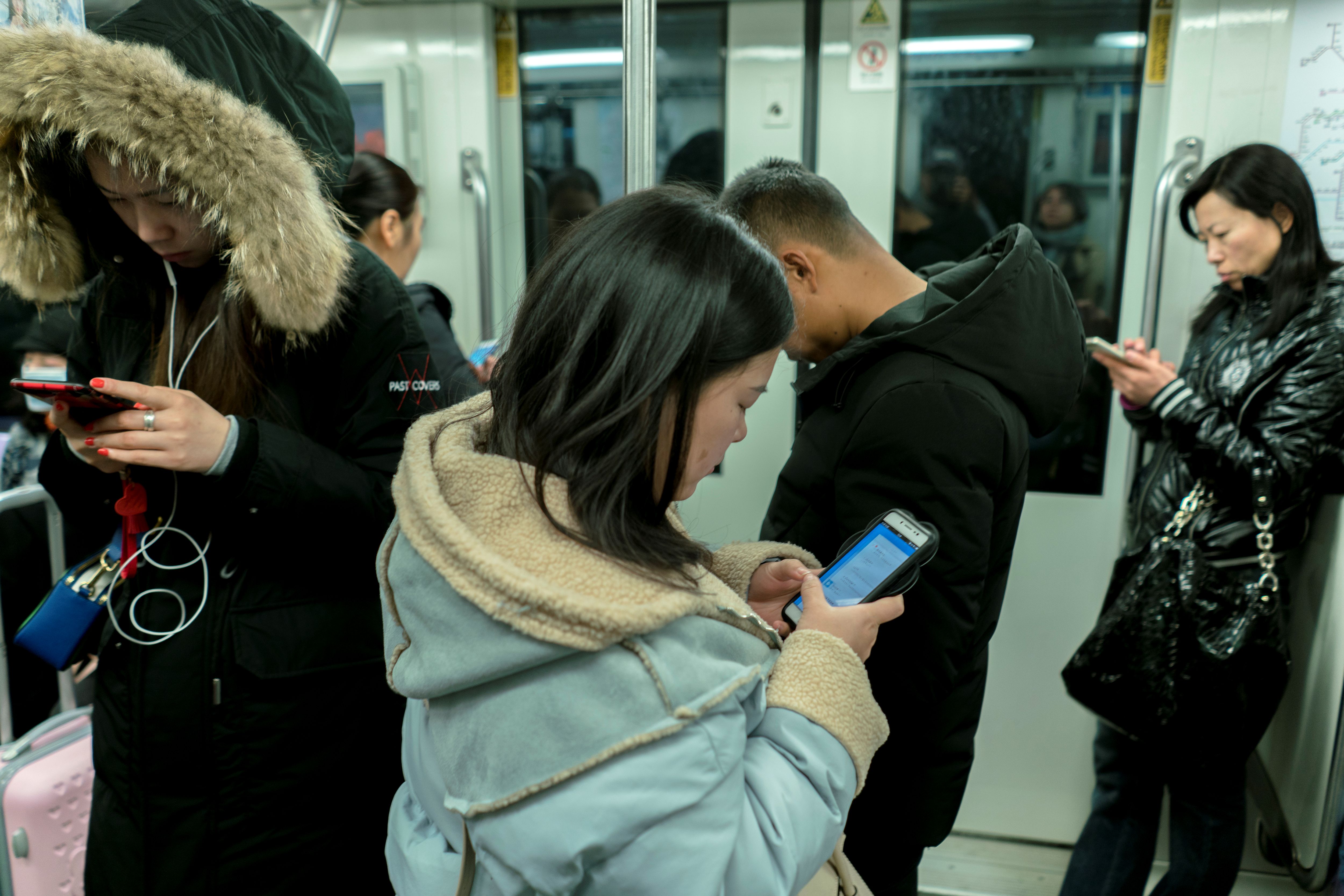
WhatsApp, with its accessibility, inclusivity, and intimate environment, offered the perfect platform for fostering real-time engagement and cultivating a strong sense of belonging. This was particularly evident in Zimbabwe, where WhatsApp boasts an impressive penetration rate of over 46 percent, indicating that half of the country’s population of 15 million people actively uses the platform.

For years, WhatsApp has been the heartbeat of communication in Zimbabwe. It’s where news breaks, rumours spread, and family chats collide with politics. During elections, that disorder intensifies doctored results, fake party statements, and manipulated images flood group chats faster than any newspaper can print corrections.

To many, WhatsApp was where gossip went viral, not where facts were verified. It was little wonder why many dismissed us as ‘just WhatsApp admins’. We overcame that through radical consistency. Consistency breeds trust.

"When we launched Kukurigo in July 2018, it was an experiment,” says Machamire. “We wanted to deliver real-time election updates directly to people’s phones at a time when traditional media was too slow, too expensive, or simply out of reach. When users stayed engaged beyond the vote, we turned Kukurigo into a full-fledged news service rather than a temporary election project.

"With more than five million Zimbabweans already on WhatsApp, we chose not to fight misinformation from the outside but to build a credible newsroom inside the platform where the national conversation was already happening. What began as one person sharing election updates soon grew into Zimbabwe’s largest WhatsApp-based news network, now reaching more than 420 000 daily readers through controlled, admin-only broadcast groups.”

In the early days there was scepticism about Kukurigo as an alternative credible news channel but the men behind Kukurigo soldiered on. "In 2018, the idea that journalism could exist on WhatsApp sounded absurd,” continues Machamire.

Every message we sent was verified, sourced, and crafted with the awareness that one false text could destroy our entire platform. On WhatsApp, trust is currency, and once you lose it, you’re finished. Over time, people noticed that our updates on court rulings, election results, current affairs and policy changes were always factual. Even sceptics began forwarding our posts not because of branding, but because of credibility."


Giving Credible News to the Economically Disadvantaged Members of Society

Zimbabwe experiences low levels of data penetration, with most people unable to afford the internet to be able to access the digital space. Many resort to buying WhatsApp bundles that have been created by local mobile network operators (MNO's) to service the underprivileged sections of the population.

Those who can only afford WhatsApp bundles have no access to micro-blogging sites such as Facebook, X and YouTube, among others. Machamire Explains: "WhatsApp is an encrypted, closed platform, it doesn’t offer the dashboards or metrics that websites provide. And in Zimbabwe, where many communities still struggle with basic connectivity and high data costs, the people we most wanted to reach are often the least visible in official internet statistics."

To address this, Kukurigo had to develop its own metrics using both scientific and unscientific methods to determine if its news was reaching the intended audience.

"The most powerful proof of impact came when we saw a message we had written resurface days later in a completely different network," Machamire says. "Over time, our analytics became a feedback loop built on voice notes and testimonies rather than graphs. From the start, our verification was human rather than digital."

We often saw screenshots of our stories re-captioned and shared in community and church groups we had never created ourselves.


Our readers come from every corner of society – teachers, nurses, shop owners, small business operators, pastors, community leaders, members of parliament, and corporate executives, all drawn by the same need for quick, credible updates. Our phones still often blow up when we are late with routine posts. Even though the service is free, our readers feel we owe them, perhaps the clearest testament to the trust and expectation we’ve built."

Tawanda Machangara, an airtime vendor in Harare's township of Dzivarasekwa, says he has relied on news from Kukurigo for the last five years.

"I sell airtime but the irony of it is that I cannot afford to buy internet bundles. I can only afford to buy WhatsApp bundles so that I can communicate with my family. Our profits on every one-dollar airtime recharge is about eight cents therefore you need to push volumes to be able to sustain your family. Therefore, buying unlimited internet bundles, which cost as much as 13 dollars, is a luxury I cannot afford. But I am grateful to Kukurigo as they are my go-to source of news for the past five years. They keep me abreast with what is happening locally, regionally and internationally.”


Gathering News, Publishing, Monetisation and Challenges

Kukurigo functions as a lean but structured digital newsroom, working with correspondents and citizen contributors across provinces who feed verified updates into their editorial desk. Kukurigo also curates news from other publications and disseminates it to their various WhatsApp groups.

"We curate essential stories from credible outlets and redistribute them with full attribution,” says Machamire. “Credible information is a public good, and if a reliable report exists elsewhere, we want our audience to see it too.”

Machamire credits the investigative journalism background of his colleague, Kudzayi, for establishing a distinct identity for Kukurigo. Regarding this influence, he remarks:

Edmund's investigative discipline became our backbone. He brought structure, ethical rigour, and an insistence on verifying every claim.That influence built a culture where accuracy always outweighs speed. We don’t rush to break news; we rush to confirm it


"We’ve broken numerous exclusives. Our access often comes from trust. People share verified documents with us first because they know we’ll handle them responsibly, without sensationalism or political spin."

Kukurigo publishes between four and six bulletins a day, depending on the news cycle. Each one ranges from quick alerts and updates to current affairs and analysis, but nothing exceeds 750 words. Every post is crafted to be accessible for low-data users.

Over the years, Kukurigo has evolved from plain text bulletins into a WhatsApp-first newsroom with tagged news briefs, interactive newsletters, videos, and PDFs that are all optimized for low-data use. Each format is created to fit the realities of our audience: limited connectivity, small screens, and a high demand for trustworthy information. Like any trailblazer, Kukurigo has faced challenges in turning the WhatsApp medium into a proper news source because of the way the platform is inherently built.

"WhatsApp’s limitations, such as restrictions on bulk messaging, limited analytics, and aggressive spam filters, make scaling difficult, although the recent formulation of WhatsApp channels has opened up the space. Politically, running an independent newsroom in a polarized environment requires care. Financially, sustaining free, high-quality content without institutional backing is demanding. Yet despite those obstacles, Kukurigo’s audience has grown organically to over 420,000 daily readers, which is a testament to the trust and credibility we have built."
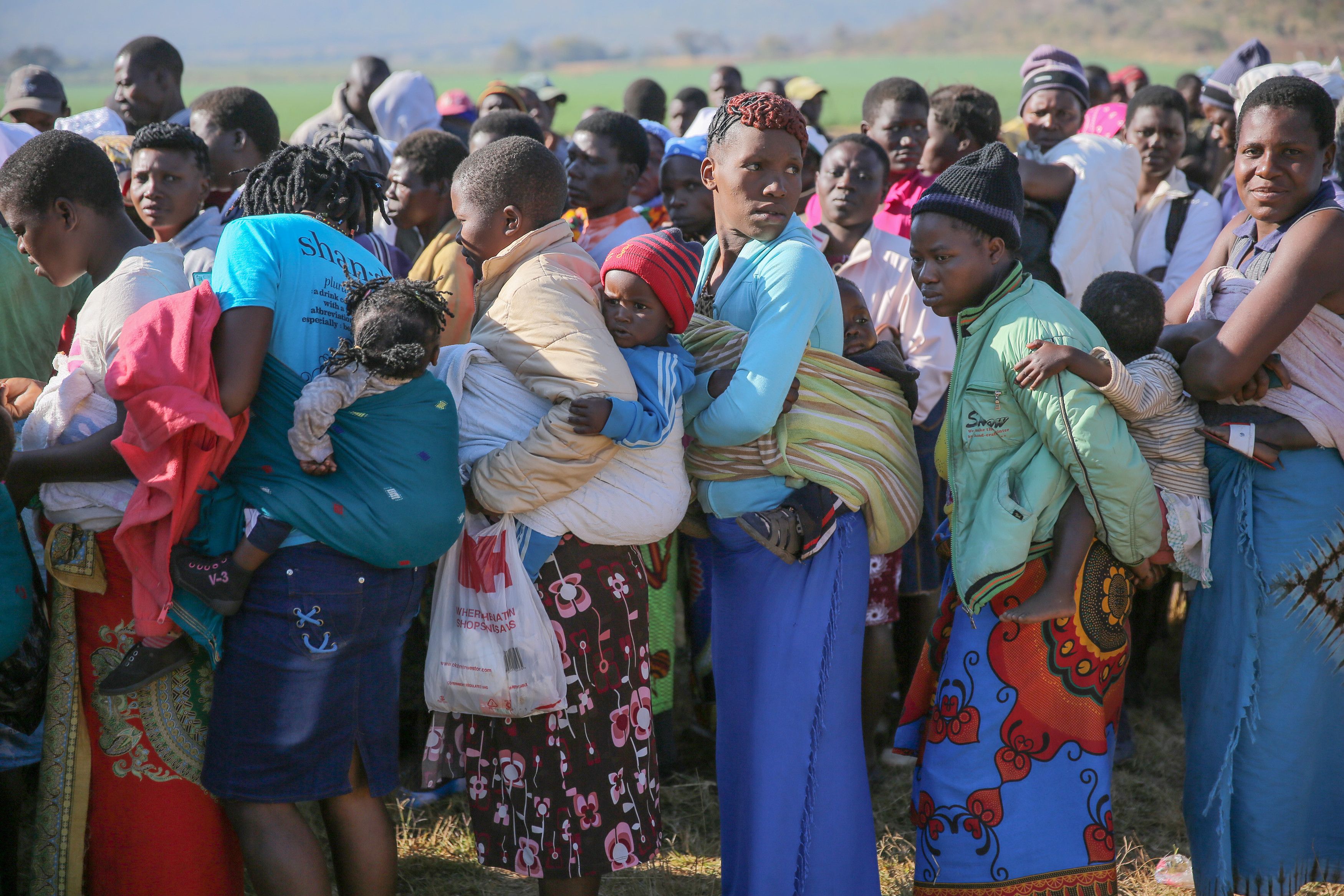
 

Zimbabweans vote for Zimbabwe National Elections, Shamva  Voters stand in line at a polling station at the Magoba Farm in Mashonaland Central during the 2018 National Elections on July 30, 2018. This is the first national election since former President Robert Mugabe stepped down as President of Zimbabwe on November 21, 2017 after a military take over 6 days prior that ended 37 years of rule.  By: Jemal Countess  Date created: Jul 30 2018
Voters stand in line at a polling station at the Magoba Farm in Mashonaland Central during the 2018 National Elections on July 30, 2018. This is the first national election since former President Robert Mugabe stepped down as President of Zimbabwe on November 21, 2017 after a military take over 6 days prior that ended 37 years of rule.

With many big media organisations across the world are cutting jobs, scaling and monetising Kukurigo becomes key to its future. "We’ve sustained Kukurigo through modest advertising, and personal investment. Operating lean has forced us to be inventive,” adds Machamire.

What motivates Machamire and Kudzayi to keep going without big monetary returns?

"Impact is the short answer,” replies Machamire. “The longer answer is that in a country where access to credible information often determines what opportunities people see, or don’t see, journalism becomes a form of public service. Every time someone from a township, farm, or rural business centre messages to say, ‘finally understood that policy, that court ruling, that election result because of your update’. It reminds us why we started.

Accurate information changes decisions, livelihoods, and sometimes the temperature of a community in a tense moment. For me, that’s what keeps this work going, even when it’s exhausting.

Machamire, because of his work with Kukurigo, is currently based in the United States as a Hubert H. Humphrey Fellow at the Walter Cronkite School of Journalism and Mass Communication at Arizona State University. The Humphrey Program is a U.S. Department of State initiative that brings mid-career professionals from around the world to the US for a year of academic work, leadership development, and professional placements focused on public service.

After his fellowship in the US, Machamire is already looking ahead to the future.

"Our next chapter is about depth and sustainability, expanding hyperlocal coverage, strengthening multimedia storytelling, and improving efficiency,” he says. “Zimbabwe’s media ecosystem is operating at maybe five percent of its capacity. We want to help unlock the remaining 95 percent, one verified WhatsApp message at a time"


Related Articles

What Zimbabwe’s news rooms must learn from global media closures

A flourishing media needs more than just capital and a few good ideas - it needs innovation  

Derick Matsengarwodzi
Derick Matsengarwodzi Published on: 13 Jul, 2023
Why are Zimbabwe’s elections always surrounded by media controversy?

Election season in Zimbabwe has long been shrouded in controversy, with intimidation of opposition activists and journalists, combined with disorganisation at the ballots creating a perfect storm for chaos. This year was no different

Derick Matsengarwodzi
Derick Matsengarwodzi Published on: 25 Sep, 2023
What does Zimbabwe’s new ‘Patriot Bill’ mean for journalists?  

As Zimbabwe heads into elections this week, a new law dubbed the ‘Patriot Bill’ will further criminalise journalism

Derick Matsengarwodzi
Derick Matsengarwodzi Published on: 21 Aug, 2023
Has the media enabled a new age of scientific misinformation?

Social media and complex AI newsroom tools have produced a toxic environment in which dangerous misinformation is flourishing

Safina
Safina Nabi Published on: 23 Jan, 2023
Fighting Misinformation and Disinformation to Foster Social Governance in Africa

Experts in Africa are using various digital media tools to raise awareness and combat the increasing usage of misinformation and disinformation to manipulate social governance.

Derick Matsengarwodzi
Derick Matsengarwodzi Published on: 22 May, 2024
How Does Misinformation Undermine Public Trust in Journalism?

Reports reveal a growing loss of trust in the media, driven by the extent of misinformation that undermines professional journalism's ability to influence public discourse. The platforms of misinformation, now supported by states and private entities during conflicts and wars, threaten to strip the profession of its core roles of accountability and oversight.

Muhammad AlKhamaiseh Published on: 13 Nov, 2024

More Articles

The Epstein Files and the Art of Drowning the Truth

The mass release of millions of files related to Jeffrey Epstein serves as a metaphor for a wider crisis of the digital age: an overabundance of information that obscures rather than illuminates the truth. In an era where data floods replace traditional censorship, citizens risk becoming less informed, underscoring the vital role of professional journalism in filtering noise into meaningful knowledge.

Ilya إيليا توبر 
Ilya U Topper Published on: 12 Feb, 2026
Reporting the Spectacle: Myanmar’s Manufactured Elections

Myanmar’s recent elections posed a profound challenge for journalists, who were forced to navigate between exposing a sham process and inadvertently legitimising it. With media repression intensifying, reporting became an act of resistance against the junta’s effort to control information and silence independent voices.

Annie Zaman
Annie Zaman Published on: 7 Feb, 2026
Public Hostility Toward Legacy Media in Bangladesh

The December 2025 arson attacks on Prothom Alo and The Daily Star marked a turning point for journalism in Bangladesh. As public anger replaces state control as the primary threat, reporters are reassessing personal safety, editorial judgement, and professional credibility in a political transition where journalism itself is increasingly treated as an enemy.

Arsalan Bukhari, an independent journalist based in India
Arsalan Bukhari Published on: 4 Feb, 2026
Migration Issues and the Framing Dilemma in Western Media

How does the Western press shape the migration narrative? Which journalistic frames dominate its coverage? And is reporting on anti-immigration protests neutral or ideologically charged? This analysis examines how segments of Western media echo far-right rhetoric, reinforcing xenophobic discourse through selective framing, language, and imagery.

Salma Saqr
Salma Saqr Published on: 31 Jan, 2026
From News Reporting to Documentation: Practical Lessons from Covering the War on Gaza

From the very first moment of the genocidal war waged by Israel on Gaza, Al Jazeera correspondent Hisham Zaqout has been a witness to hunger, devastation, war crimes, and the assassination of his colleagues in the field. It is a battle for survival and documentation, one that goes beyond mere coverage and daily reporting.

Hisham Zakkout Published on: 26 Jan, 2026
Investigating the Assassination of My Own Father

As a journalist, reporting on the murder of my father meant answering questions about my own position as an objective observer.

Diana López Zuleta
Diana López Zuleta Published on: 16 Jan, 2026
What Image of Gaza Will the World Remember?

Will the story of Gaza be reduced to official statements that categorise the Palestinian as a "threat"? Or to images of the victims that flood the digital space? And how can the media be transformed into a tool for reinforcing collective memory and the struggle over narratives?

Hassan Obeid
Hasan Obaid Published on: 13 Jan, 2026
Bridging the AI Divide in Arab Newsrooms

AI is reshaping Arab journalism in ways that entrench power rather than distribute it, as under-resourced MENA newsrooms are pushed deeper into dependency and marginalisation, while wealthy, tech-aligned media actors consolidate narrative control through infrastructure they alone can afford and govern.

Sara Ait Khorsa
Sara Ait Khorsa Published on: 10 Jan, 2026
Generative AI in Journalism and Journalism Education: Promise, Peril, and the Global North–South Divide

Generative AI is transforming journalism and journalism education, but this article shows that its benefits are unevenly distributed, often reinforcing Global North–South inequalities while simultaneously boosting efficiency, undermining critical thinking, and deepening precarity in newsrooms and classrooms.

Carolyne Lunga
Carolyne Lunga Published on: 2 Jan, 2026
Intifada 2.0: Palestinian Digital Journalism from Uprising to Genocide

From underground newsletters during the Intifadas to livestreams from Gaza, Palestinian journalism has evolved into a decentralised digital practice of witnessing under occupation. This article examines how citizen journalists, fixers and freelancers have not only filled gaps left by international media, but fundamentally transformed how Palestine is reported, remembered and understood.

Zina Q.
Zina Q. Published on: 24 Dec, 2025
How Can Journalism Make the Climate Crisis a People’s Issue?

Between the import of Western concepts and terminology that often fail to reflect the Arab context, and the denial of the climate crisis, or the inability to communicate it in clear, accessible terms, journalism plays a vital role in informing the public and revealing how climate change directly affects the fabric of daily life in the Arab world.

Bana Salama
Bana Salama Published on: 19 Dec, 2025
Inside Vietnam’s Disinformation Machine and the Journalists Exposing It from Exile

Vietnam’s tightly controlled media environment relies on narrative distortion, selective omission, and propaganda to manage politically sensitive news. Exiled journalists and overseas outlets have become essential in exposing these practices, documenting forced confessions and smear campaigns, and preserving access to information that would otherwise remain hidden.

AJR Contributor Published on: 15 Dec, 2025
What It Means to Be an Investigative Journalist Today

A few weeks ago, Carla Bruni, wife of former French president Nicolas Sarkozy, was seen removing the Mediapart logo from view. The moment became a symbol of a major victory for investigative journalism, after the platform exposed Gaddafi’s financing of Sarkozy’s election campaign, leading to his prison conviction. In this article, Edwy Plenel, founder of Mediapart and one of the most prominent figures in global investigative journalism, reflects on a central question: what does it mean to be an investigative journalist today?

Edwy Plenel
Edwy Plenel Published on: 27 Nov, 2025
In-Depth and Longform Journalism in the AI Era: Revival or Obsolescence?

Can artificial intelligence tools help promote and expand the reach of longform journalism, still followed by a significant audience, or will they accelerate its decline? This article examines the leading AI tools reshaping the media landscape and explores the emerging opportunities they present for longform journalism, particularly in areas such as search and content discovery.

. سعيد ولفقير. كاتب وصحافي مغربي. ساهم واشتغل مع عددٍ من المنصات العربية منذ أواخر عام 2014.Said Oulfakir. Moroccan writer and journalist. He has contributed to and worked with a number of Arab media platforms since late 2014.
Said Oulfakir Published on: 24 Nov, 2025
Leaked BBC Memo: What Does the Crisis Reveal?

How Should We Interpret the Leak of the “BBC Memo” on Editorial Standards? Can we truly believe that the section concerning U.S. President Donald Trump was the sole reason behind the wave of resignations at the top of the British broadcaster? Or is it more accurately seen as part of a broader attempt to seize control over editorial decision-making? And to what extent can the pressure on newsrooms be attributed to the influence of the Zionist lobby?

 Mohammed Abuarqoub. Journalist, trainer, and researcher specializing in media affairs. He holds a PhD in Communication Philosophy from Regent University in the United States.محمد أبو عرقوب صحفي ومدرّب وباحث متخصص في شؤون الإعلام، حاصل على درجة الدكتوراه في فلسفة الاتّصال من جامعة ريجينت بالولايات المتحدة الأمريكية.
Mohammed Abuarqoub Published on: 20 Nov, 2025
Crisis of Credibility: How the Anglo-American Journalism Model Failed the World

Despite an unprecedented global flood of information, journalism remains strikingly impotent in confronting systemic crises—largely because the dominant Anglo-American model, shaped by commercial imperatives and capitalist allegiances, is structurally incapable of pursuing truth over power or effecting meaningful change. This critique calls for dismantling journalism’s subordination to market logic and imagining alternative models rooted in political, literary, and truth-driven commitments beyond the confines of capitalist production.

Imran Muzaffar
Imran Muzaffar, Aliya Bashir, Syed Aadil Hussain Published on: 14 Nov, 2025
Why Has Arab Cultural Journalism Weakened in the Third Millennium?

The crisis of cultural journalism in the Arab world reflects a deeper decline in the broader cultural and moral project, as well as the collapse of education and the erosion of human development. Yet this overarching diagnosis cannot excuse the lack of professional training and the poor standards of cultural content production within newsrooms.

Fakhri Saleh
Fakhri Saleh Published on: 10 Nov, 2025
Podcasters, content creators and influencers are not journalists. Are they?

Are podcasters, content creators, and influencers really journalists, or has the word 'journalist' been stretched so thin that it now covers anyone holding a microphone and an opinion? If there is a difference, where does it sit? Is it in method, mission, accountability, or something else? And in a media landscape built on noise, how do we separate a journalist from someone who produces content for clicks, followers or sponsors

Derick Matsengarwodzi
Derick Matsengarwodzi Published on: 7 Nov, 2025
The Power to Write History: How Journalism Shapes Collective Memory and Forgetting

What societies remember, and what they forget, is shaped not only by historians but by journalism. From wars to natural disasters, the news does not simply record events; it decides which fragments endure in collective memory, and which fade into silence.

Daniel Harper
Daniel Harper Published on: 30 Oct, 2025
Journalism in Spain: Why Omitting Ethnicity May Be Doing More Harm Than Good

In Spain, a well-intentioned media practice of omitting suspects’ ethnic backgrounds in crime reporting is now backfiring, fuelling misinformation, empowering far-right narratives, and eroding public trust in journalism.

Ilya إيليا توبر 
Ilya U Topper Published on: 10 Sep, 2025
Interview with Zina Q. : Digital Cartography as a Tool of Erasure in Gaza

Amid Israel’s war on Gaza, Zina Q. uncovers how Google Maps and satellite imagery are being manipulated; homes relabelled as “haunted,” map updates delayed, and evidence of destruction obscured, revealing digital cartography itself as a weapon of war. By exposing these distortions and linking them to conflicts from Sudan to Ukraine, she demonstrates how control over maps and AI surveillance influences not only what the world sees, but also what it remembers.

Al Jazeera Journalism Review
Al Jazeera Journalism Review Published on: 6 Sep, 2025
Canadian Journalists for Justice in Palestine: A Call to Name the Killer, Not Just the Crime

How many journalists have to be killed before we name the killer? What does press freedom mean if it excludes Palestinians? In its latest strike, Israel killed an entire Al Jazeera news crew in Gaza—part of a systematic campaign to silence the last witnesses to its crimes. Canadian Journalists for Justice in Palestine (CJJP) condemns this massacre and calls on the Canadian government to end its complicity, uphold international law, and demand full accountability. This is not collateral damage. This is the targeted erasure of truth.

Samira Mohyeddin
Samira Mohyeddin Published on: 14 Aug, 2025
Protecting Palestinian Journalists Should be First Priority - Above Western Media Access

Why demand entry for foreign reporters when Palestinian journalists are already risking—and losing—their lives to tell the truth? Real solidarity means saving journalists' lives, amplifying their voices, and naming the genocide they expose daily.

Synne Furnes Bjerkestrand
Synne Bjerkestrand, Kristian Lindhardt Published on: 10 Aug, 2025
The Washington Post: When Language Becomes a Veil for Pro-Israel Bias

How did The Washington Post's coverage differ between Israel’s bombing of Gaza hospitals and Iran’s strike on an Israeli hospital? Why does the paper attempt to frame Palestinian victims within a “complex operational context”? And when does language become a tool of bias toward the Israeli narrative?

Said Al-Azri
Said Al-Azri Published on: 6 Aug, 2025