Al Jazeera Journalism Review

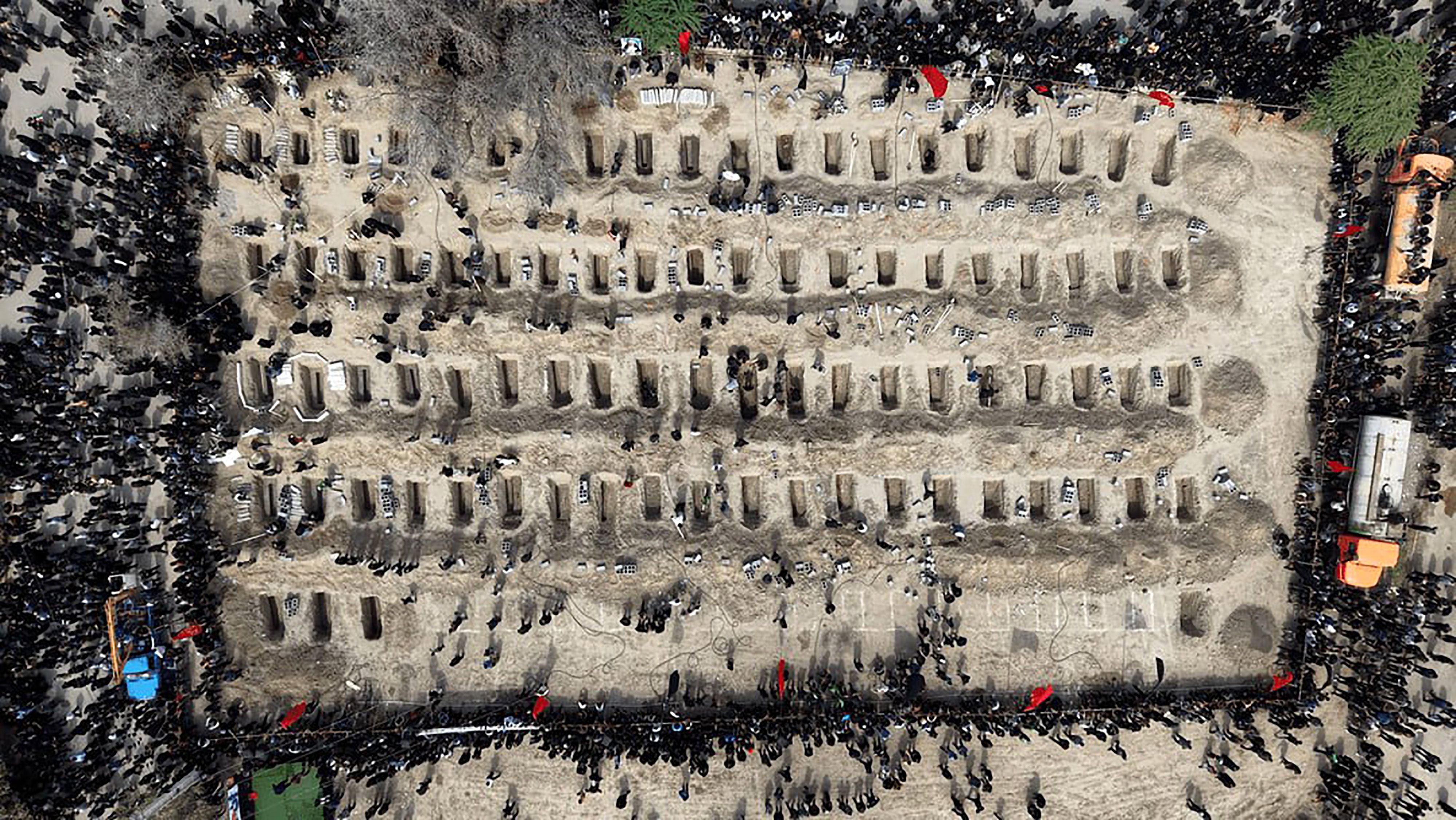
Mourners dig graves during a mass funeral for children killed in a U.S.-Israeli airstrike on a primary school in Minab, Hormozgan Province. The bombardment resulted in the deaths of more than 175 female students, drawing hundreds of grieving community members to the site to memorialize the victims. The tragedy has intensified local and international outcry regarding the escalating conflict involving the United States, Israel, and Iran. (Photo: Iranian Red Crescent. Tehran, Iran – Mar 04, 2026)
Mourners dig graves during a mass funeral for children killed in a U.S.-Israeli airstrike on a primary school in Minab, Hormozgan Province. The bombardment resulted in the deaths of more than 175 female students, drawing hundreds of grieving community members to the site to memorialize the victims. The tragedy has intensified local and international outcry regarding the escalating conflict involving the United States, Israel, and Iran. (Photo: Iranian Foreign Media Department via AP. Tehran, Iran – Mar 04, 2026)

Missiles Made of Words: How Western Media Narratives Shape the Iran–Israel–US Conflict

Western media coverage of the Iran–Israel–US conflict often functions as a weapon of war, using selective language that frames US and Israeli strikes as “self-defence” while depicting Iranian actions as "provocation". This linguistic framing normalises civilian casualties and helps manufacture public consent for military aggression by dehumanising certain populations.


On 28 February 2026, the United States and Israel launched coordinated air and missile strikes against Iran, targeting military installations, nuclear facilities, and strategic command centres in Tehran and other cities. One of the initial targeted strikes killed Iran’s Supreme Leader Ayatollah Ali Khamenei, who had led the country since 1989. 

In response to joint strikes by the US and Israel, Iran has responded by launching waves of ballistic missiles and drone attacks against Israel and US-allied states in the Gulf. These strikes have targeted American military bases, naval installations, air-defence systems, energy infrastructure, ports, and strategic facilities across the region.

At a time when the world appears to stand on the brink of what many describe as a possible Third World War, the escalating tensions in the Middle East involving Iran, Israel, and the United States demonstrate that wars are not fought only on battlefields. They are also fought over in another arena: they are fought over through the framing of words, choice of language, and vocabulary. In today’s media ecosystem, the question of what news people read is increasingly shaped not just by the information it provides, but also by the vocabulary it uses to present that information. Language, in other words, has become a weapon of war, which can be as consequential as military strategy itself.

Across much of Western media coverage, particularly in outlets such as CNN, The New York Times and The Washington Post, the vocabulary used to describe military actions often shifts depending on who carries them out. When the United States or Israel launches strikes, their actions are frequently framed as "self-defence", “retaliation”, “deterrence”, or even as an effort to protect “freedom” and “stability”. When countries such as Iran or Venezuela respond militarily, however, their actions are far more likely to be described as “escalation”, “provocation”, or a “threat to regional security”.

On 28 February 2026, The Washington Post shared a news report about the joint U.S.–Israeli strike on Iran that killed the country’s Supreme Leader and several senior officials under the headline “In surprise daytime attack, U.S. and Israel take out Iranian leadership.” The choice of wording and language like "bold daytime attack”, "eliminated", and “toppling down of foreign leaders” used in the report frames the military strike in terms that emphasise the strategic precision, boldness, and effectiveness of the U.S. and Israeli forces, thereby portraying the strike as an act of calculated military success, bravery and courage.

U.S. Air Force B-2 Spirit Strategic Bomber, Knob Noster, Mo, United States
U.S. Air Force B-2 Spirit Strategic Bomber, Knob Noster, Mo, United States 


On 2 March 2026, CNN published an analysis by Oren Liebermann titled “Hezbollah just restarted the fight that Israel was waiting to finish.” The headline frames Hezbollah as the actor responsible for reopening the conflict while positioning Israel as responding to aggression. By foregrounding “Hezbollah just restarted” and suggesting Israel was “waiting to finish", the wording implicitly casts Israel in a reactive, defensive role rather than as an initiating force.

On 28 February 2026, early in the morning, the US and Israel launched a wave of air and missile strikes on Iran. A missile struck near the Shajareh Tayyebeh girls’ elementary school in the city of Minab, Hormozgan Province, in southern Iran. The explosion occurred during school hours, when students were inside classrooms. Around 160–170 people were killed, most of them schoolgirls aged roughly 7–12.

A review of dozens of Western news reports showed that coverage frequently relied on qualifiers such as "near", “adjacent to a military base", “near base", “military target likely", and “appears to show a U.S. Tomahawk missile hitting a base next to an Iranian school". This wording consistently emphasised the proximity of a military facility, implying that the intended target may have been the base rather than the school itself.

A video later surfaced showing a US Tomahawk missile flying toward the targeted school. Despite this, the vocabulary used in much of the coverage framed the incident as a possible accident within the context of a military operation. By foregrounding the presumed military target and using language that stressed proximity rather than direct impact on a civilian site, the reporting subtly shifted responsibility away from the attackers and portrayed the deaths of the schoolchildren as an unintended consequence of the strike.


Whose Lives Are Mourned and Whose Are Not?

The philosopher Judith Butler offers a powerful framework for understanding how language shapes the moral landscape of war. In her book Frames of War: When Is Life Grievable?, Butler argues that violence is never presented to the public in a neutral form. Instead, it is mediated through interpretive “frames” created by political discourse, media institutions and dominant systems of knowledge. These frames shape how audiences understand suffering, responsibility and legitimacy during wartime. In other words, they determine how violence is made visible and how it is interpreted. Butler argues that public discourse often decides whose lives are recognised as fully human and whose lives are treated as distant, abstract or expendable. Some deaths appear tragic and morally shocking, while others are treated as expected outcomes of geopolitical conflict. Through these processes, certain lives become publicly “grievable”, while others remain outside the boundaries of collective mourning. 

In this sense, modern conflicts are fought not only on battlegrounds but also within systems of representation. The struggle over narrative becomes part of the struggle over power itself. Military actions may determine the immediate outcome of battles, but the language through which those actions are interpreted ultimately shapes how the world understands them.

History offers many examples of how language has helped construct the legitimacy of war. The vocabulary used to describe conflicts has often shaped not only how events are understood but also how they are morally justified. From the framing of the “war on terror” to earlier narratives surrounding Western interventions in the Middle East, political discourse and media coverage have repeatedly relied on particular terms that position some actors as defenders of order and others as sources of instability. Through repetition, such language gradually becomes naturalised, shaping the way audiences interpret violence and responsibility.


The Politics of Language 

In contemporary conflict reporting on the US, Israel, and Iran, language plays a decisive role in shaping how violence and responsibility are perceived. When certain populations are repeatedly portrayed through narratives of "extremism", "instability", or "threat", their vulnerability becomes harder for audiences to recognise. Violence inflicted upon them can then be framed as a matter of security policy rather than human tragedy. In such contexts, the suffering of those populations may still be reported, but it rarely carries the same emotional or moral weight as the suffering of others.

Headlines in Western media frequently emphasise Israel’s attempts to counter Iranian influence or prevent security threats from emerging near its borders. When Iran signals retaliation or responds through allied groups in the region, coverage often shifts toward warnings of escalating regional instability. In both cases, the same cycle of action and reaction unfolds, yet the framing of each step in that cycle shapes how audiences interpret responsibility and legitimacy.
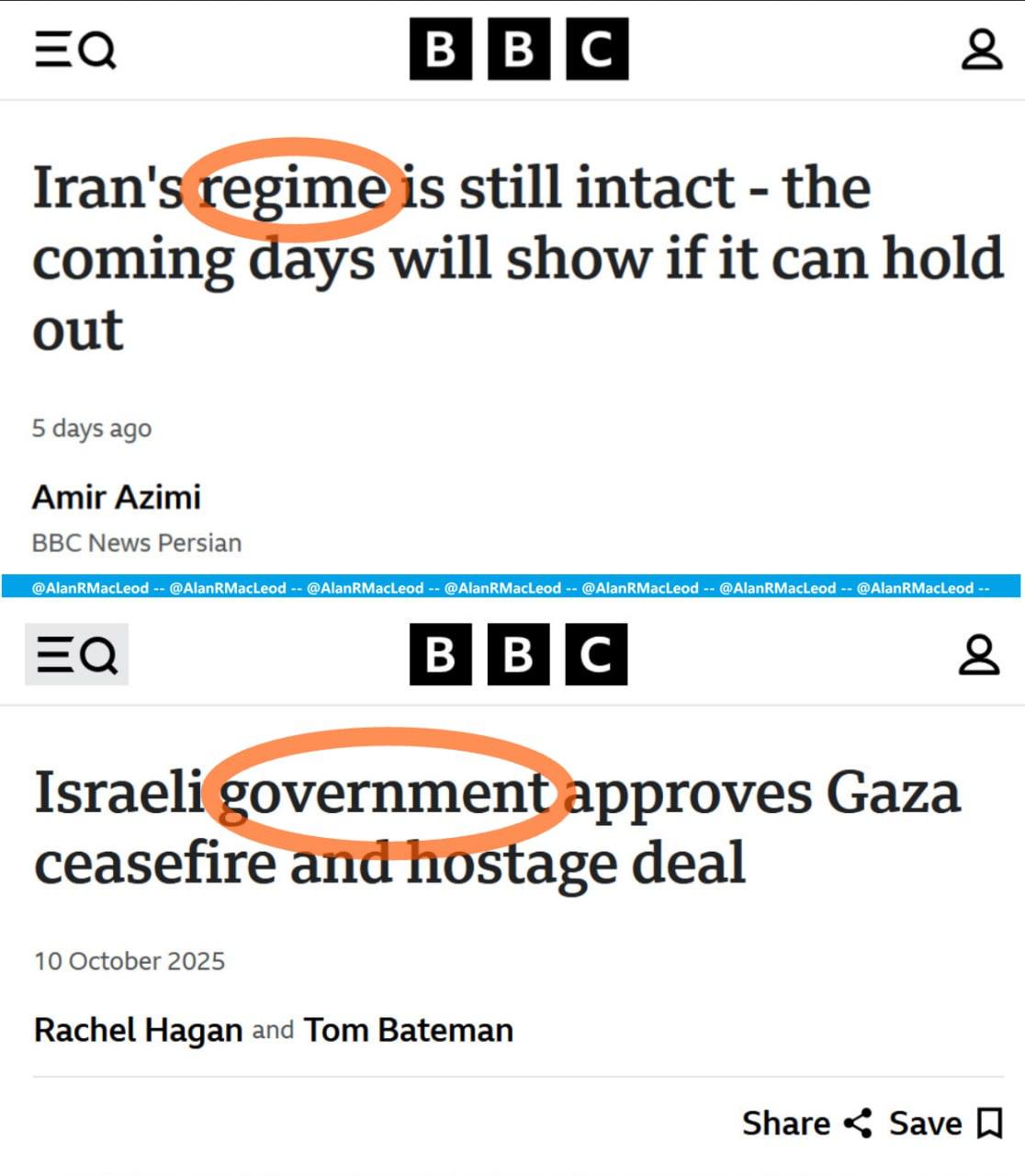
BBC bias in using term regime and government on Iran and Israel
Source: Alan MacLeod X account 

In coverage of Iran’s political succession, several major Western outlets quickly adopted descriptors carrying strong ideological implications. A Bloomberg report titled “Iran's New Supreme Leader Fights Trump, Israel and Anger at Home” referred to Iran’s new leader as “Khamenei’s hardline son". Reuters similarly framed the transition through economic anxiety in pieces such as "Saudi Arabia cuts oil output, IEA considers stocks release", reporting that oil prices surged as Iran selected a “hardline leader". The Washington Post's report described the succession as extending “hardline rule", while The New York Times's report introduced the new leader as a “mysterious figure". None of these terms are neutral descriptors. Words such as "hardline", "defiant", or “mysterious” subtly position political developments within a vocabulary of confrontation and unpredictability before readers even reach the body of the article.

This dynamic also echoes a longer intellectual history of how the Middle East has been represented in Western knowledge systems. Edward Said’s concept of Orientalism described how the region was historically portrayed as “irrational”, “volatile” and “fundamentally different” from a supposedly rational and orderly West. Even today, conflicts involving Middle Eastern actors are often interpreted through frameworks that privilege Western interpretations of security and rationality

Related Articles

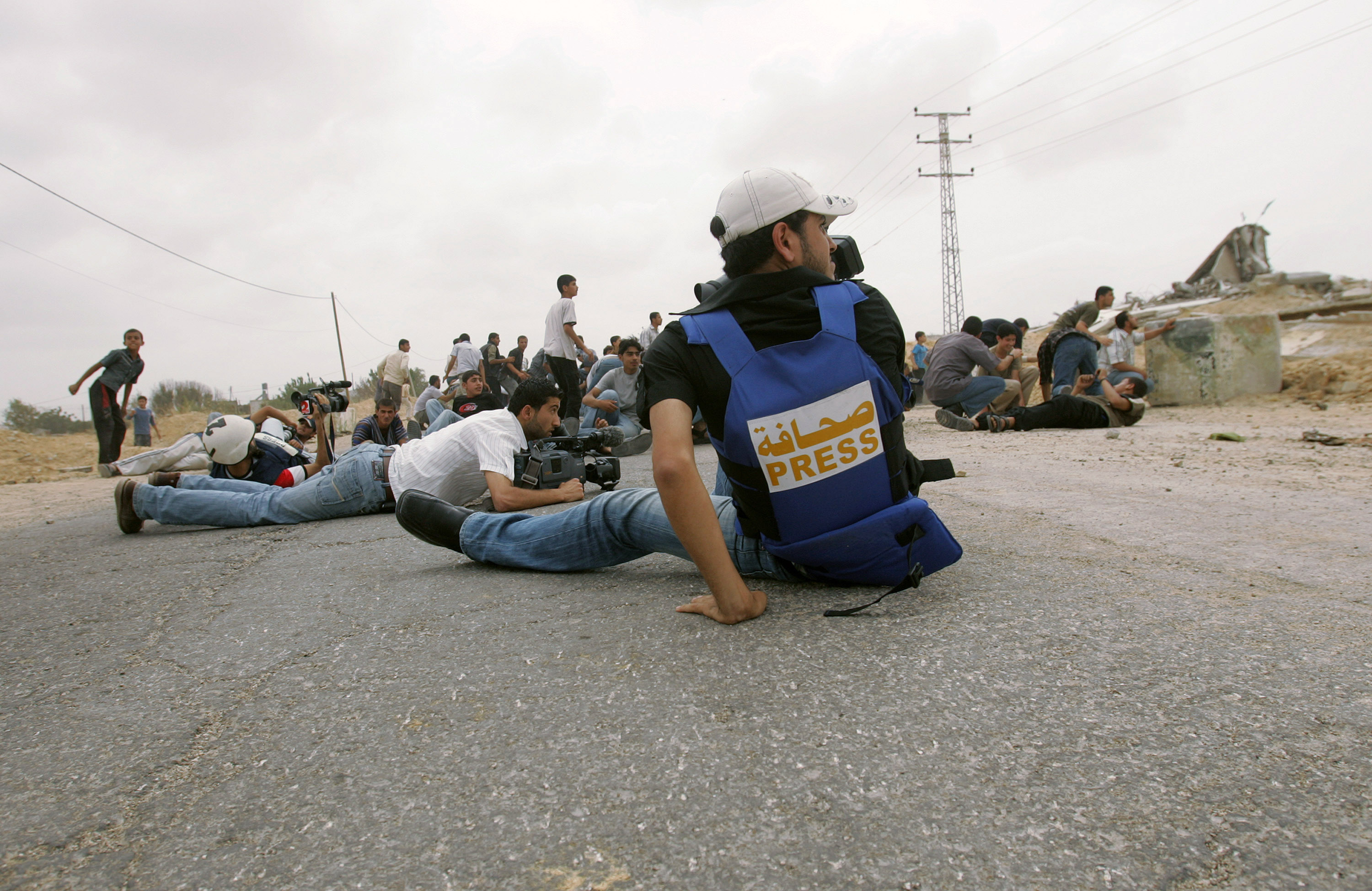
Why Journalists are Speaking out Against Western Media Bias in Reporting on Israel-Palestine

The article highlights how over 1,500 journalists are speaking out against Western media's biased coverage of the Israel-Palestine conflict, criticizing its dehumanizing language, lack of context, and disproportionate focus on Israeli narratives at the expense of Palestinian voices and journalistic integrity.

Belle de Jong journalist
Belle de Jong Published on: 26 Feb, 2024
MSNBC Deletes Interview with Journalist Criticising Western Media’s Bias Towards Israeli Narrative

MSNBC deleted an interview with journalist Jeremy Scahill after he criticised American media’s biased portrayal of Israeli actions in Gaza, condemning the framing of civilian casualties as "self-defence." Scahill argued that any discussion of Gaza’s leaders must address the broader context of occupation and longstanding injustices faced by Palestinians.

A picture of the Al Jazeera Media Institute's logo, on a white background.
Al Jazeera Journalism Review Published on: 27 Oct, 2024
In coverage of Palestine, biases and irresponsible journalism emerge

In the coverage of events in Jerusalem and Gaza, mainstream media outlets are failing to report on the situation fairly.

A picture of the author, William Christou.
William Christou Published on: 13 May, 2021
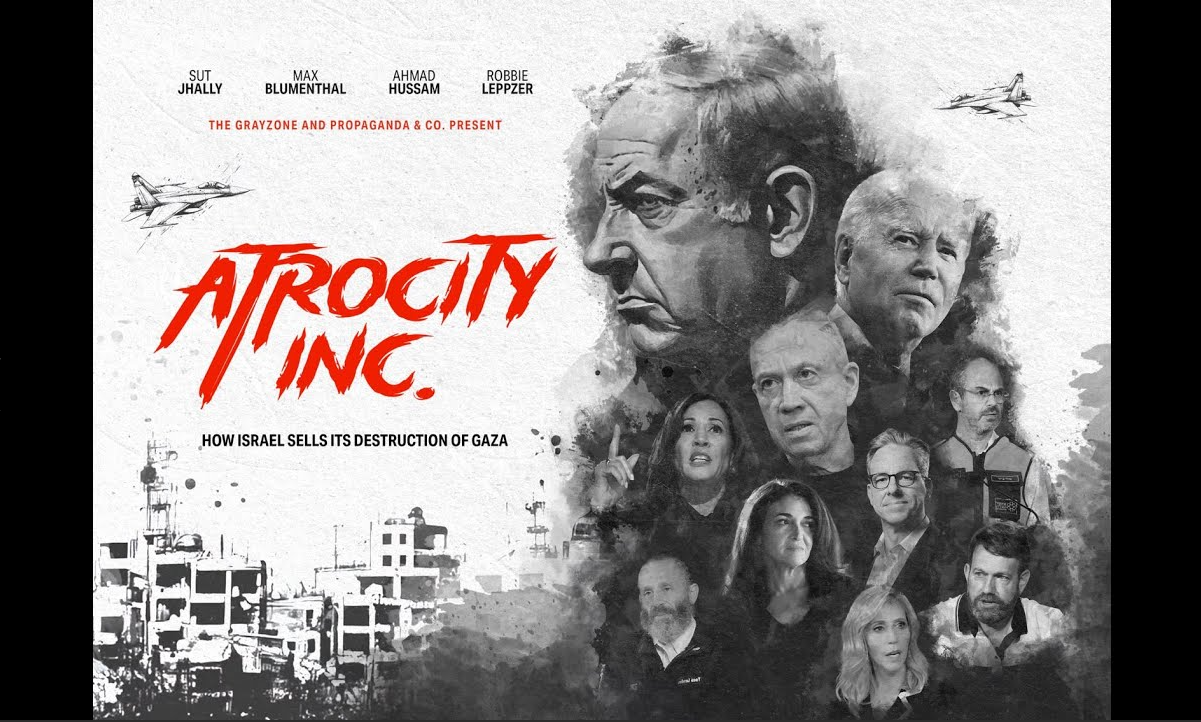
Atrocity Inc.: What Max Blumenthal's New Documentary Reveals About Western Media's Complicity in Israeli Propaganda

A digest of Max Blumenthal's new documentary, Atrocity Inc., in which he uncovers how the Israeli PR machinery and propaganda efforts were carefully and intentionally designed to manufacture consent for a campaign of mass death against Palestinians. It reveals how the Western media, especially in the United States, supported Israel's misinformation war.

A picture of the Al Jazeera Media Institute's logo, on a white background.
Al Jazeera Journalism Review Published on: 13 Oct, 2024

More Articles

How the Ethiopian Civil War Unleashed a Lethal Media Crackdown

There has been a widening crackdown on the media in Ethiopia since war erupted between the central government and Tigray’s regional authorities in 2020, and the pressure appears set to intensify as the country prepares for general elections in June.

Nalova Akua
Nalova Akua Published on: 9 Mar, 2026
Are Netanyahu's and Trump’s Speeches Shaping Western Media Framing?

As political speeches framed the 2026 U.S.–Israeli attack on Iran, segments of Western media echoed their language and narratives, illustrating how strategic rhetoric and news framing can shape public opinion and legitimise military action.

Shaimaa Al-Eisai
Shaimaa Al-Eisai Published on: 6 Mar, 2026
Journalism in Gaza… A Race Against the Train of Genocide

In the following account, Amira Nassar presents a narrative filled with intricate detail, intimate exchanges, and an unyielding struggle over the meaning of writing amid slaughter and starvation. Part of The Journalism Review’s documentary project recording the testimonies of journalists in Palestine and the Gaza Strip during the ongoing genocide, it stands as a testament against oblivion and the machinery of extermination.

Amira Nassar
Amira Nassar Published on: 27 Feb, 2026
Kukurigo: Revolutionising news in Zimbabwe's WhatsApp era

The emergence of Kukurigo during Zimbabwe’s 2018 elections marked a turning point for digital journalism, transforming WhatsApp from a hub for misinformation into a vital platform for verified news. By leveraging the app’s low data costs, this grassroots initiative bridged the information gap for under-resourced communities, establishing a new model for media credibility and public service within an unstable political landscape.

Enock Muchinjo
Enock Muchinjo Published on: 19 Feb, 2026
The Epstein Files and the Art of Drowning the Truth

The mass release of millions of files related to Jeffrey Epstein serves as a metaphor for a wider crisis of the digital age: an overabundance of information that obscures rather than illuminates the truth. In an era where data floods replace traditional censorship, citizens risk becoming less informed, underscoring the vital role of professional journalism in filtering noise into meaningful knowledge.

Ilya إيليا توبر 
Ilya U Topper Published on: 12 Feb, 2026
Reporting the Spectacle: Myanmar’s Manufactured Elections

Myanmar’s recent elections posed a profound challenge for journalists, who were forced to navigate between exposing a sham process and inadvertently legitimising it. With media repression intensifying, reporting became an act of resistance against the junta’s effort to control information and silence independent voices.

Annie Zaman
Annie Zaman Published on: 7 Feb, 2026
Public Hostility Toward Legacy Media in Bangladesh
The December 2025 arson attacks on Prothom Alo and The Daily Star marked a turning point for journalism in Bangladesh. As public anger replaces state control as the primary threat, reporters are reassessing personal safety, editorial judgement, and professional credibility in a political transition where journalism itself is increasingly treated as an enemy.
Arsalan Bukhari, an independent journalist based in India
Arsalan Bukhari Published on: 4 Feb, 2026
Migration Issues and the Framing Dilemma in Western Media

How does the Western press shape the migration narrative? Which journalistic frames dominate its coverage? And is reporting on anti-immigration protests neutral or ideologically charged? This analysis examines how segments of Western media echo far-right rhetoric, reinforcing xenophobic discourse through selective framing, language, and imagery.

Salma Saqr
Salma Saqr Published on: 31 Jan, 2026
From News Reporting to Documentation: Practical Lessons from Covering the War on Gaza

From the very first moment of the genocidal war waged by Israel on Gaza, Al Jazeera correspondent Hisham Zaqout has been a witness to hunger, devastation, war crimes, and the assassination of his colleagues in the field. It is a battle for survival and documentation, one that goes beyond mere coverage and daily reporting.

Hisham Zakkout Published on: 26 Jan, 2026
Investigating the Assassination of My Own Father

As a journalist, reporting on the murder of my father meant answering questions about my own position as an objective observer.

Diana López Zuleta
Diana López Zuleta Published on: 16 Jan, 2026
What Image of Gaza Will the World Remember?

Will the story of Gaza be reduced to official statements that categorise the Palestinian as a "threat"? Or to images of the victims that flood the digital space? And how can the media be transformed into a tool for reinforcing collective memory and the struggle over narratives?

Hassan Obeid
Hasan Obaid Published on: 13 Jan, 2026
Bridging the AI Divide in Arab Newsrooms

AI is reshaping Arab journalism in ways that entrench power rather than distribute it, as under-resourced MENA newsrooms are pushed deeper into dependency and marginalisation, while wealthy, tech-aligned media actors consolidate narrative control through infrastructure they alone can afford and govern.

Sara Ait Khorsa
Sara Ait Khorsa Published on: 10 Jan, 2026
Generative AI in Journalism and Journalism Education: Promise, Peril, and the Global North–South Divide

Generative AI is transforming journalism and journalism education, but this article shows that its benefits are unevenly distributed, often reinforcing Global North–South inequalities while simultaneously boosting efficiency, undermining critical thinking, and deepening precarity in newsrooms and classrooms.

Carolyne Lunga
Carolyne Lunga Published on: 2 Jan, 2026
Intifada 2.0: Palestinian Digital Journalism from Uprising to Genocide

From underground newsletters during the Intifadas to livestreams from Gaza, Palestinian journalism has evolved into a decentralised digital practice of witnessing under occupation. This article examines how citizen journalists, fixers and freelancers have not only filled gaps left by international media, but fundamentally transformed how Palestine is reported, remembered and understood.

Zina Q.
Zina Q. Published on: 24 Dec, 2025
How Can Journalism Make the Climate Crisis a People’s Issue?

Between the import of Western concepts and terminology that often fail to reflect the Arab context, and the denial of the climate crisis, or the inability to communicate it in clear, accessible terms, journalism plays a vital role in informing the public and revealing how climate change directly affects the fabric of daily life in the Arab world.

Bana Salama
Bana Salama Published on: 19 Dec, 2025
Inside Vietnam’s Disinformation Machine and the Journalists Exposing It from Exile

Vietnam’s tightly controlled media environment relies on narrative distortion, selective omission, and propaganda to manage politically sensitive news. Exiled journalists and overseas outlets have become essential in exposing these practices, documenting forced confessions and smear campaigns, and preserving access to information that would otherwise remain hidden.

AJR Contributor Published on: 15 Dec, 2025
What It Means to Be an Investigative Journalist Today

A few weeks ago, Carla Bruni, wife of former French president Nicolas Sarkozy, was seen removing the Mediapart logo from view. The moment became a symbol of a major victory for investigative journalism, after the platform exposed Gaddafi’s financing of Sarkozy’s election campaign, leading to his prison conviction. In this article, Edwy Plenel, founder of Mediapart and one of the most prominent figures in global investigative journalism, reflects on a central question: what does it mean to be an investigative journalist today?

Edwy Plenel
Edwy Plenel Published on: 27 Nov, 2025
In-Depth and Longform Journalism in the AI Era: Revival or Obsolescence?

Can artificial intelligence tools help promote and expand the reach of longform journalism, still followed by a significant audience, or will they accelerate its decline? This article examines the leading AI tools reshaping the media landscape and explores the emerging opportunities they present for longform journalism, particularly in areas such as search and content discovery.

. سعيد ولفقير. كاتب وصحافي مغربي. ساهم واشتغل مع عددٍ من المنصات العربية منذ أواخر عام 2014.Said Oulfakir. Moroccan writer and journalist. He has contributed to and worked with a number of Arab media platforms since late 2014.
Said Oulfakir Published on: 24 Nov, 2025
Leaked BBC Memo: What Does the Crisis Reveal?

How Should We Interpret the Leak of the “BBC Memo” on Editorial Standards? Can we truly believe that the section concerning U.S. President Donald Trump was the sole reason behind the wave of resignations at the top of the British broadcaster? Or is it more accurately seen as part of a broader attempt to seize control over editorial decision-making? And to what extent can the pressure on newsrooms be attributed to the influence of the Zionist lobby?

 Mohammed Abuarqoub. Journalist, trainer, and researcher specializing in media affairs. He holds a PhD in Communication Philosophy from Regent University in the United States.محمد أبو عرقوب صحفي ومدرّب وباحث متخصص في شؤون الإعلام، حاصل على درجة الدكتوراه في فلسفة الاتّصال من جامعة ريجينت بالولايات المتحدة الأمريكية.
Mohammed Abuarqoub Published on: 20 Nov, 2025
Crisis of Credibility: How the Anglo-American Journalism Model Failed the World

Despite an unprecedented global flood of information, journalism remains strikingly impotent in confronting systemic crises—largely because the dominant Anglo-American model, shaped by commercial imperatives and capitalist allegiances, is structurally incapable of pursuing truth over power or effecting meaningful change. This critique calls for dismantling journalism’s subordination to market logic and imagining alternative models rooted in political, literary, and truth-driven commitments beyond the confines of capitalist production.

Imran Muzaffar
Imran Muzaffar, Aliya Bashir, Syed Aadil Hussain Published on: 14 Nov, 2025
Why Has Arab Cultural Journalism Weakened in the Third Millennium?

The crisis of cultural journalism in the Arab world reflects a deeper decline in the broader cultural and moral project, as well as the collapse of education and the erosion of human development. Yet this overarching diagnosis cannot excuse the lack of professional training and the poor standards of cultural content production within newsrooms.

Fakhri Saleh
Fakhri Saleh Published on: 10 Nov, 2025
Podcasters, content creators and influencers are not journalists. Are they?

Are podcasters, content creators, and influencers really journalists, or has the word 'journalist' been stretched so thin that it now covers anyone holding a microphone and an opinion? If there is a difference, where does it sit? Is it in method, mission, accountability, or something else? And in a media landscape built on noise, how do we separate a journalist from someone who produces content for clicks, followers or sponsors

Derick Matsengarwodzi
Derick Matsengarwodzi Published on: 7 Nov, 2025
The Power to Write History: How Journalism Shapes Collective Memory and Forgetting

What societies remember, and what they forget, is shaped not only by historians but by journalism. From wars to natural disasters, the news does not simply record events; it decides which fragments endure in collective memory, and which fade into silence.

Daniel Harper
Daniel Harper Published on: 30 Oct, 2025
Journalism in Spain: Why Omitting Ethnicity May Be Doing More Harm Than Good

In Spain, a well-intentioned media practice of omitting suspects’ ethnic backgrounds in crime reporting is now backfiring, fuelling misinformation, empowering far-right narratives, and eroding public trust in journalism.

Ilya إيليا توبر 
Ilya U Topper Published on: 10 Sep, 2025