
AI is reshaping Arab journalism in ways that entrench power rather than distribute it, as under-resourced MENA newsrooms are pushed deeper into dependency and marginalisation, while wealthy, tech-aligned media actors consolidate narrative control through infrastructure they alone can afford and govern.
As AI becomes an increasingly central force in reshaping news production and distribution, this volatile technology compels journalists to rethink their practices, tasks, and routines in new ways. Yet, the debates around the role of AI in the media ecosystem remain largely informed by the perspectives of journalists and developers in the Global North, who set the agendas of AI journalism, while the Western tech companies continue to function as traditional centres of innovation that always disseminate and diffuse new technologies to less-developed regions on the global peripheries.
In contrast, local newsrooms in low-income countries in the MENA region, like many other regions in the global majority, are often under-resourced and are not only falling behind and unable to engage effectively with this transformation but are frequently excluded from these conversations altogether, and their peripheral perspectives are either ignored, overlooked or manipulated when setting the agendas of the AI journalism transformation.
Enthusiasm Without Infrastructure: The Paradox of AI Adoption in the MENA Newsrooms
Interestingly, media studies research continues to evolve in understanding how AI systems are both perceived and experienced by journalists in low-income countries in the Global South. Notably, there is a lack of empirical data or comprehensive analysis that captures how journalists in MENA newsrooms interact with and conceive these AI tools and how their behaviour and attitudes toward AI reflect broader societal and cultural engagements with the region’s transition to AI-driven forms of journalism [1].
Some surveys conducted by international media organisations and think tanks may provide a glimpse of how AI is beginning to influence newsrooms’ practices in low-income areas of the MENA region. Yet, they also expose a troubling paradox: while journalists show strong enthusiasm for adopting AI technologies, their efforts are constrained by a persistent digital divide rooted in limited technical skills, scarce economic resources, and inadequate digital infrastructure.
Drawing on a survey of more than 200 journalists across over 70 countries in the Global South, a new report from the Thomson Reuters Foundation (TRF) reveals a strong willingness among journalists to explore generative AI. With 80% already experimenting with these tools in their daily tasks and integrating them into their workflows, the report highlights a notable trend, as only 13% of newsrooms have established a formal AI policy, leaving the use of such systems largely unregulated and lacking structural governance that addresses ethical and practical considerations.
Similarly, a survey conducted by Polis, a think tank at the London School of Economics (LSE), found that 75% of journalists in the Global South use AI tools in some capacity for news gathering, production, and distribution. This highlights a stark reality: AI adoption is often driven by individual initiatives from journalists who use tools like ChatGPT and other chatbots to streamline time-consuming tasks. However, these practices typically occur in the absence of comprehensive institutional frameworks, structured AI training, or robust ethical and regulatory safeguards.
Chatbots...Disruptors or Levers of AI Democratisation in Newsrooms?
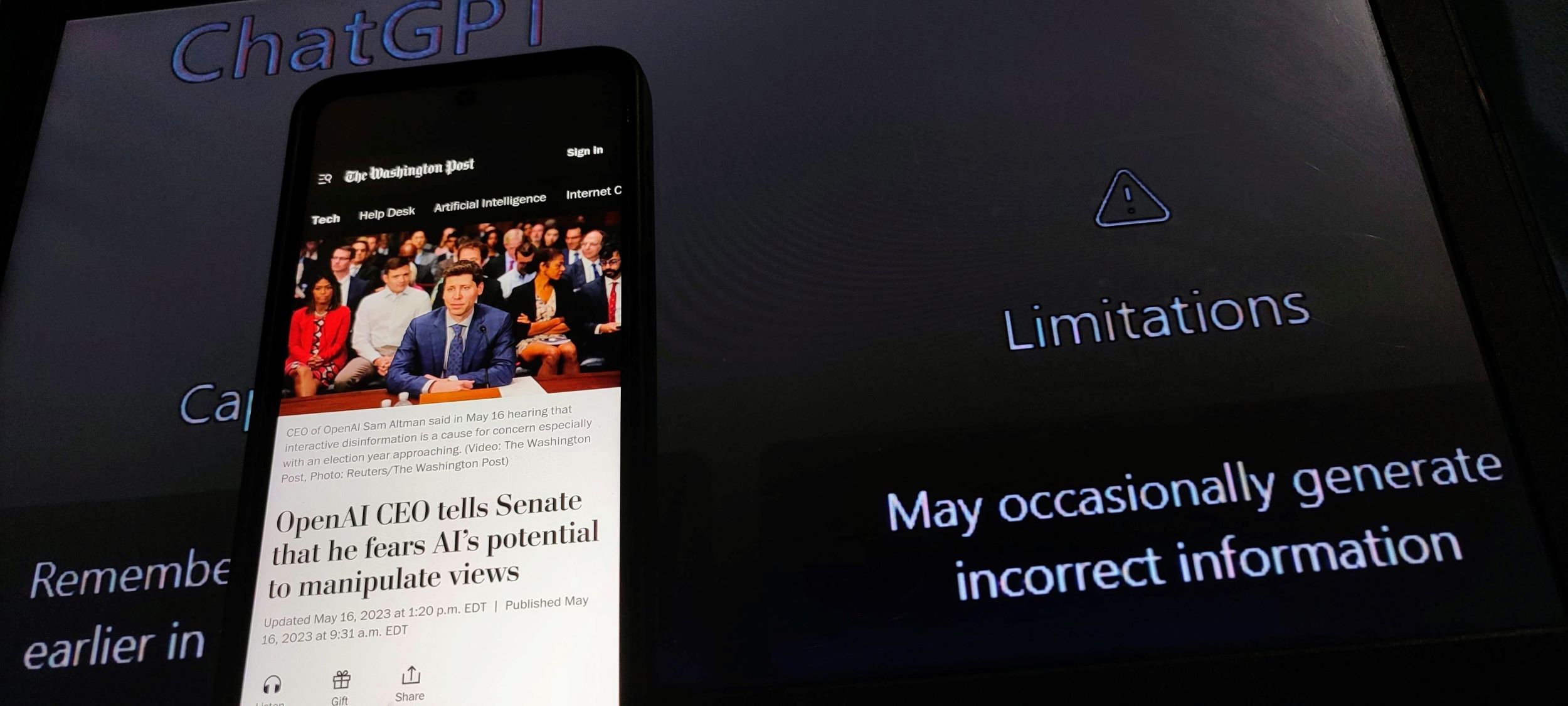
Although tools such as ChatGPT and DeepSeek are developed in different contexts and exported as finished products to the MENA region, their free accessibility has, in some ways, contributed to the democratisation of AI in the Arab media organisations. By lowering financial and infrastructural barriers, these chatbots have enabled newsrooms facing deep structural inequalities to start engaging with these cutting-edge technologies despite the absence of a clear strategy to integrate these new tools in the news production and distribution chains [2].
The aforementioned Polis survey draws our attention to a growing sense of optimism among respondents from the Global South, who view GenAI as a reliable means to bridge regional disparities in AI adoption while also offering an accessible way to begin and navigate their AI journalism journey.
However, a pressing question remains: to what extent can ChatGPT be considered a transformative tool that empowers low-income newsrooms in the MENA region to participate meaningfully in the AI-driven evolution of journalism, given the challenges they face in formally integrating these AI tools into their production workflows? Conversely, in what ways might such systems render journalists in these contexts more vulnerable?
AI Journalism as a Tool of Control: Infrastructure Determines the Narrative
To critically reflect on these questions, it will be valuable to demystify the power dynamics that underpin this AI journalism transformation. In her study on AI and inequality in the region, Risk [3] emphasises that the variation in socioeconomic
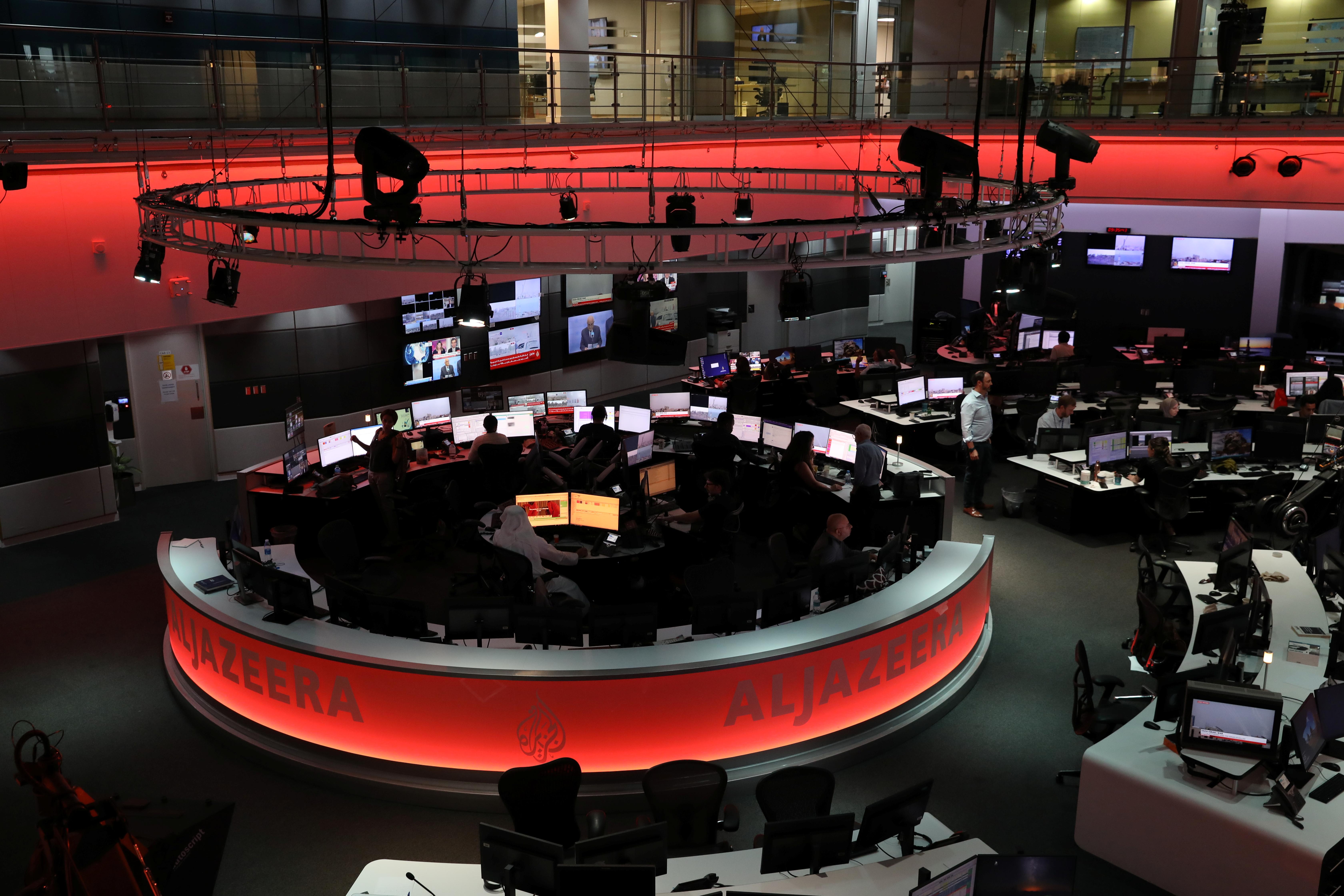
conditions between the diverse and heterogeneous countries in the MENA leads to differing levels of technological development. For instance, the Gulf Cooperation Council (GCC) states, among the wealthiest countries globally, benefit from strong digital infrastructures and exceptionally high internet penetration rates, averaging 91.7% across the region. These conditions provide a solid foundation for the transformation toward AI-driven journalism, enabling news organisations to adopt and experiment with GenAI technologies at a rapid pace. Media outlets in the GCC also have the capacity to formally integrate AI tools, most of which are developed and exported by big Tech companies that continue to have the upper hand in dictating how the technology is implemented in the journalistic industry. Al Jazeera network, for example, has adopted AI across multiple stages of news gathering, production, and distribution. The network has embedded AI into its fact-checking processes and implemented AI-assisted workflows to enhance efficiency and accuracy, while also investing in staff training to build the skills necessary for effective use of these tools. Similarly, the UAE is positioning itself as a regional and global hub for AI innovation. Media outlets such as Sky News Arabia and WAM (Emirates News Agency) have already embraced AI-based systems to personalise content, streamline editorial tasks, and optimise distribution workflows.
These AI systems have enabled newsrooms that harness their potential to dramatically transform the production and distribution processes. By creating personalised and interactive content, generating in-depth reports, employing data mining and gathering techniques for investigative stories, gaining deeper insights into user engagement and preferences, media organisations that effectively integrate AI tools can now exert greater control over news flows [4].
Interestingly, many media scholars [5] draw attention to the fact that those who own AI tools also control the processes of meaning-making, thereby perpetuating hegemonic forms of knowledge production through these systems that oppressed alternative perspectives. In other words, under-resourced newsrooms are epistemically marginalised, as their ways of interpreting and framing the news will remain underrepresented and often overlooked within a media ecosystem where the AI tools, platforms and algorithmic systems maintain the role of the news gatekeepers and distributers.
In this sense, the lack of equitable and fair access to emerging technologies and affordability of digital infrastructure have remarkably created a new hierarchy of media power across the region. Moreover, this divide is being systematically deepened by the growing use of artificial intelligence, which places under-resourced newsrooms at an even greater disadvantage, facing increasing challenges in modernising the production and distribution of their content, amplifying their narratives, and achieving visibility in the digital sphere.
Remarkably, the AI infrastructural power has translated into narrative dominance, undermining the ability of low-income, indigenous, independent, and underrepresented community newsrooms to disseminate their media narratives and shape the agenda of public discourse. In this sense, the very existence of the public sphere, as a deliberative and rational space for communication and exchange grounded in the equal participation of all segments of society, as conceptualized by Habermas, is profoundly jeopardised.
Therefore, AI tools function as mechanisms of control by mediating visibility, so those who own AI systems can secure the visibility and reach a broad audience. Meanwhile as aptly articulated by Garajarmili [6], the opaque algorithms play a gatekeeping role in determining what constitutes the mainstream news and how the public narratives are constructed, this dynamic sidelines the under-resourced media outlets, limiting the ability of their narratives to take centre stage.
The AI divide, in this sense, is deeply intertwined with underlying economic disparities that hinder its equitable adoption in local newsrooms, many of which remain deprived of reliable internet access and adequate digital infrastructure.
This two-speed transformation underscores how AI risks widening the gap between well-funded media giants and under-resourced local outlets within the MENA region, thereby exacerbating existing disparities and concentrating the power of crafting and disseminating narratives in the hands of those who can access and deploy such technologies. In this sense, the ongoing AI-driven transformation compounds the multiple crises already confronting fragile media ecosystems in the region, adding further layers of vulnerability on several fronts.
Footnotes:
1: Harb, Z., & Arafat, R. (2024). The adoption of artificial intelligence technologies in Arab newsrooms: potentials and challenges. Emerging Media. https://doi.org/10.1177/27523543241291068
2: Omar Abdullah Al-Zoubi and Normahfuzah Ahmad, Ahmad, O. a. a. a. N., & Ahmad, O. a. a. a. N. (2024, December 4). Contemporary tasks for Jordanian journalists in the era of artificial Intelligence. Arab Media & Society. https://www.arabmediasociety.com/contemporary-tasks-for-jordanian-journalists-in-the-era-of-artificial-intelligence/
3: Rizk, N. (2020). Artificial Intelligence and Inequality in the Middle East. The Oxford Handbook of Ethics of AI, 624–649. https://doi.org/10.1093/oxfordhb/9780190067397.013.40
4: Sonni, A. F., Hafied, H., Irwanto, I., & Latuheru, R. (2024). Digital Newsroom Transformation: A Systematic Review of the Impact of Artificial Intelligence on Journalistic Practices, News Narratives, and Ethical Challenges. Journalism and Media, 5(4), 1554-1570. https://doi.org/10.3390/journalmedia5040097
5: Zhang, Y. (2024). The critical role of the digital divide in news content production innovation. International Journal of Multimedia Computing, 5(1). https://doi.org/10.38007/ijmc.2024.050103
6: Algorithmic Gatekeeping and Democratic Communication: Who Decides What the Public Sees? (2025). European Journal of Communication and Media Studies, 4(3), 1-10. https://doi.org/10.24018/ejmedia.2025.4.3.54