Al Jazeera Journalism Review

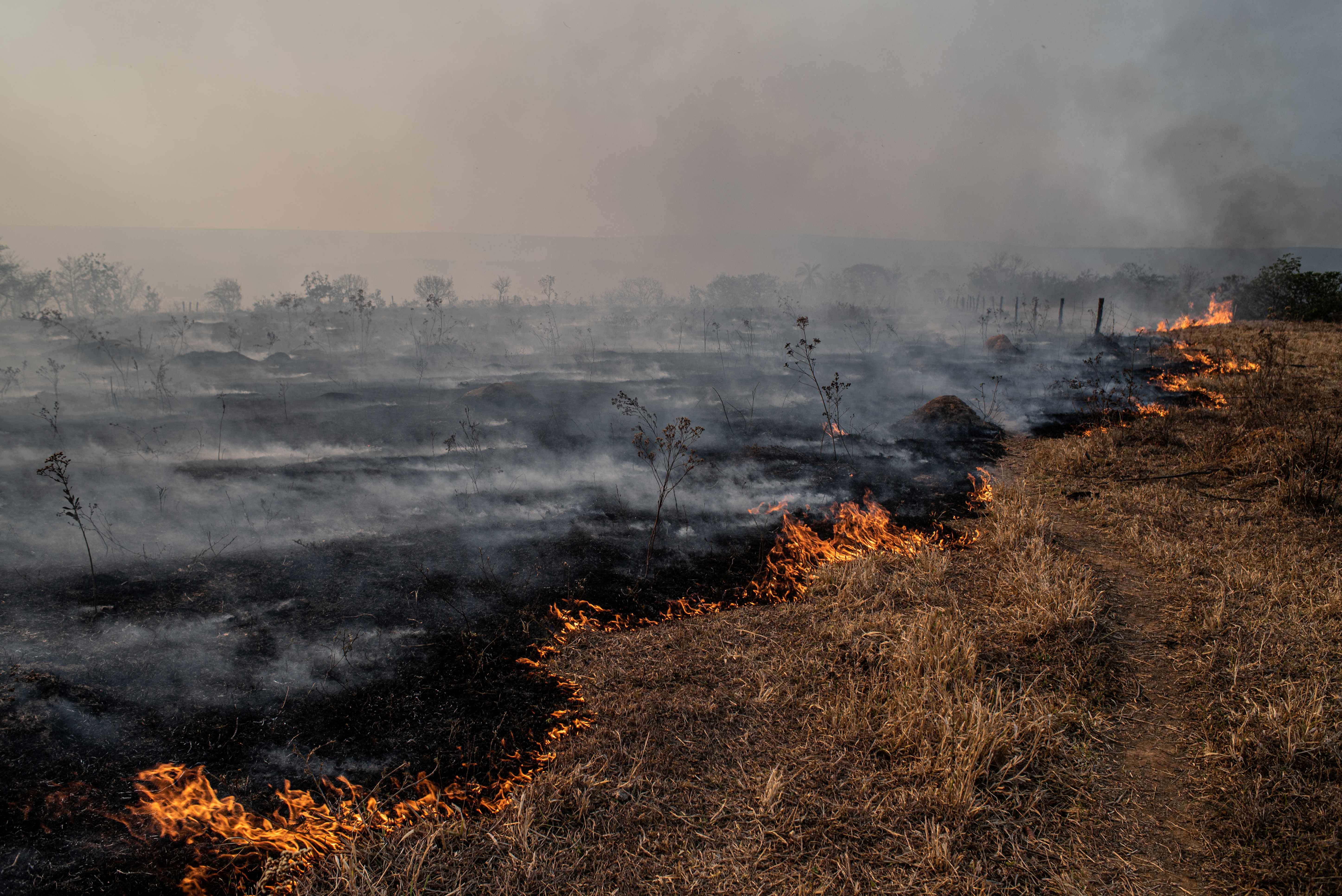
Fire burns vegetation of Brazilian savanna as a suspected consequence of global warming. Photo: Lucas Ninno

How Can Journalism Make the Climate Crisis a People’s Issue?

Between the import of Western concepts and terminology that often fail to reflect the Arab context, and the denial of the climate crisis, or the inability to communicate it in clear, accessible terms, journalism plays a vital role in informing the public and revealing how climate change directly affects the fabric of daily life in the Arab world.


Between official news about climate conferences and international agreements, overly optimistic government plans, and journalistic coverage either mired in pessimism or technical jargon, many may feel that climate change is a complex and inevitable issue, at once abstract and disconnected from everyday life.

On the other hand, talking about the climate crisis may seem like a luxury amidst the wars and political and economic crises afflicting many Arab countries, an issue only rich and stable nations can afford to worry about. Moreover, some question the dominant narratives about climate change in the region, especially since much of the information comes from international organizations and Western sources that may carry unclear agendas or present perspectives that fail to reflect local realities and the priorities of the region’s peoples.

Yet, as one of the regions most affected by climate change, the Arab world faces escalating threats to food security, energy security, public health, and socioeconomic stability. The effects of global warming are becoming more apparent by the day, from the Gulf to the Maghreb, with increasingly frequent and severe heatwaves, prolonged droughts, rising sea levels, wildfires, floods, and sandstorms. The most vulnerable groups facing these shifts are small-scale farmers, herders, agricultural laborers, fishers, and low-income families.

Talking about the climate crisis may seem like a luxury amidst the wars and political and economic crises afflicting many Arab countries, an issue only rich and stable nations can afford to worry about. Moreover, some question the dominant narratives about climate change in the region, especially since much of the information comes from international organizations and Western sources that may carry unclear agendas or present perspectives that fail to reflect local realities and the priorities of the region’s peoples.

Amid growing risks and diverging views and priorities, how can journalism fulfill its role in fact-checking, analysing climate policies, holding institutions accountable, amplifying marginalized voices, framing issues, and translating abstract concepts into tangible realities?

It may seem obvious that headlines play a central role, they are the first thing to grab the audience’s attention and influence their decision to engage with or skip the content. But headlines do more than attract attention; they help shape the framework through which audiences understand issues and guide their perceptions, including of climate change.

A review of prominent climate change headlines in the region reveals a clear pattern: many tend to either adopt a pessimistic tone, emphasizing extreme environmental disasters and portraying future events as inevitable and imminent, such as “Heat Out of Control: A Climate Catastrophe Awaits Earth by 2200”, which can cause readers to lose interest, even when the information is accurate; or they rely on complex scientific terminology unfamiliar to many, such as “greenhouse gases” and “carbon capture,” or reference abstract phenomena that feel disconnected from people’s lives, like “Arctic ice melt” and “ocean warming,” as seen in a headline like “Ocean Warming Disrupts Vital Carbon Storage Processes.”

In contrast, headlines that link climate phenomena to their direct impact on people’s daily lives are often clearer and more engaging for the public. Examples include: “Winter Grain Production in Lebanon Down 38.4% Due to War and Climate,” or “Drought, Desertification, and Migration Threaten the Disappearance of Morocco’s Oases.”

Meanwhile, coverage of climate conferences and “green” initiatives is frequently presented with formal, high-level language that implies everything is unfolding according to a well-crafted plan. This technocratic framing makes the crisis appear to be a distant, administrative matter, detached from everyday realities, evident in headlines like “Jordan Confronts Climate Change with 86 Growth Projects” or “The Green Middle East: What Is the Saudi Carbon Neutrality Initiative Aiming For?” Such headlines often overlook pressing issues such as drying dams, crop failures, and the increasing strain on water and energy resources.

A review of climate-related headlines reveals that most tend to either adopt a pessimistic tone, emphasizing severe environmental disasters and portraying future extreme events as inevitable and imminent, such as "A Climate Catastrophe Awaits Earth by 2200", which can cause readers to disengage, even if the report is accurate; or they rely on scientific jargon that may be inaccessible to many, like "greenhouse gases" or "carbon capture", or on abstract concepts that feel removed from people’s everyday lives.

The climate crisis is not merely a matter of theories, international reports, or complex terminology, it is a lived, daily reality. It manifests in rising food prices and fraud within food industries due to declining production, frequent power outages as air conditioning demand surges, and increasing cases of drought-related illnesses, heatstroke, and food poisoning, particularly among the elderly and children, during prolonged heatwaves. It is present in the growing number of hospital admissions linked to respiratory illnesses and dust-triggered allergies, in the displacement of communities losing their livelihoods, in the declining quality of water and sanitation services caused by reduced rainfall, and in the increased reliance on pesticides amid worsening pest infestations, among many other examples.

Although such stories, from food inflation to power cuts, receive broad media coverage, they are often presented in isolation from the broader context of climate change. Yet their direct connection to everyday life makes them powerful entry points for introducing the issue in a way that is more relatable and accessible to the public. A headline like “Why Did My Electricity Bill Go Up?” is likely to generate far more engagement than a generic one such as “Heatwave Threats,” because readers are seeking explanations that reflect their lived experiences.

This approach applies not only to headlines but also to the substance of coverage itself. When content remains too general or overly technical, discussing topics such as “the challenge of adapting to climate” or “building sustainable cities” without breaking down their implications in the reader’s specific context, the gap between climate journalism and its audience widens.

By contrast, climate-related topics can be addressed through a range of formats tailored to the nature of the story and the target audience. One particularly effective approach is narrative storytelling that draws on real-life experiences of people confronting the impacts of climate change. When paired with scientific data, such stories can help build a clearer understanding of the broader picture and foster deeper audience engagement.

Although stories about rising food prices and power outages receive widespread coverage, they are often presented without reference to the context of climate change. Yet their direct connection to everyday life makes them an effective entry point for raising the issue in a way that is more relatable and clear to the public. A headline like "Why Did the Electricity Bill Go Up?" is likely to resonate far more than a general one like "The Threat of Heatwaves."
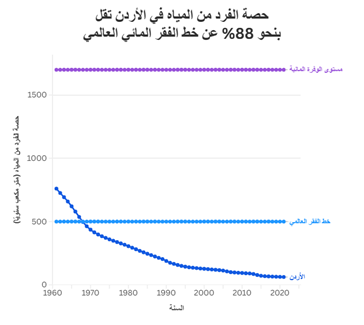


حصة الفرد من المياه في الأردن
Source: Our World in Data www.ourworldindata.org

​​​

Notably, while journalists may sometimes feel compelled to offer solutions when covering complex issues like the climate crisis, some studies have shown that audiences may reject the issue altogether if the proposed solutions do not align with their political beliefs. Rushing to present fixes can overshadow a deeper understanding of the problem itself; its roots, dimensions, and context. This highlights the importance of assessing when and how to introduce solutions based on the specific narrative and audience.

In covering climate change in the Arab region, journalists face not only a knowledge-based challenge but also the critical task of building trust with audiences in a context where the issue is often framed through a “Western lens.” This lens tends to emphasize narratives about “green projects” and “sustainability” that are tied to political agendas advancing the interests of dominant powers. Such framing often normalizes environmental exploitation and the continued extraction of natural resources at the expense of local communities.

This trust gap is further exacerbated by the enduring influence of industrialized nations and global actors that have historically played a central role in deepening the climate crisis. Public skepticism grows when these same powers promote solutions that place a disproportionate share of adaptation costs on countries and communities least responsible for greenhouse gas emissions. The situation is worsened by an increasing reliance on loans from international institutions, marketed as “climate finance”, which often add financial burdens rather than provide the kind of equitable support needed to advance true climate justice.

In covering climate change in the Arab region, journalists face not only a knowledge-based challenge but also the critical task of building trust with audiences in a context where the issue is often framed through a “Western lens.”

Beyond the political dimension, the reliance on information as it is presented by Western sources contributes to a growing epistemic and methodological trust gap between climate reporting and Arab audiences. Many of the concepts used in global climate discourse do not apply to the Arab region in the same way. For example, livestock farming is often cited internationally as a major contributor to greenhouse gas emissions. However, this framing fails to accurately reflect the nature of livestock production in most Arab countries, where practices differ significantly from the industrial-scale systems that underpin international estimates, despite the environmental challenges the region still faces.

In this context, journalists in the region bear a dual responsibility: to develop a critical awareness that allows them to produce knowledge rooted in the realities and priorities of their societies, and to engage thoughtfully and cautiously with imported narratives, terminology, and policy frameworks. This includes rigorous fact-checking, scrutinizing sources, and holding decision-makers and resource managers accountable.

By cultivating a deep understanding of climate issues, clearly articulating risks, unpacking dominant narratives, and presenting information in formats that resonate with local audiences, journalists in the Arab world can play a decisive role in transforming climate change from a distant or peripheral topic into a core public concern. In doing so, they help lay the foundation for a more informed and resilient society, while advancing meaningful climate justice that protects the region’s communities and natural resources.


Campbell, T. H., and A. C. Kay. "Solution Aversion: On the Relation Between Ideology and Motivated Disbelief." Journal of Personality and Social Psychology 107, no. 5 (2014): 809–824. https://doi.org/10.1037/a0037963.

 

Related Articles

Climate journalism is growing up

Environmental coverage is moving on from panic-inducing warnings about global warming to the more constructive, solutions-based approach of climate journalism

Abeer Khan Published on: 27 Feb, 2023
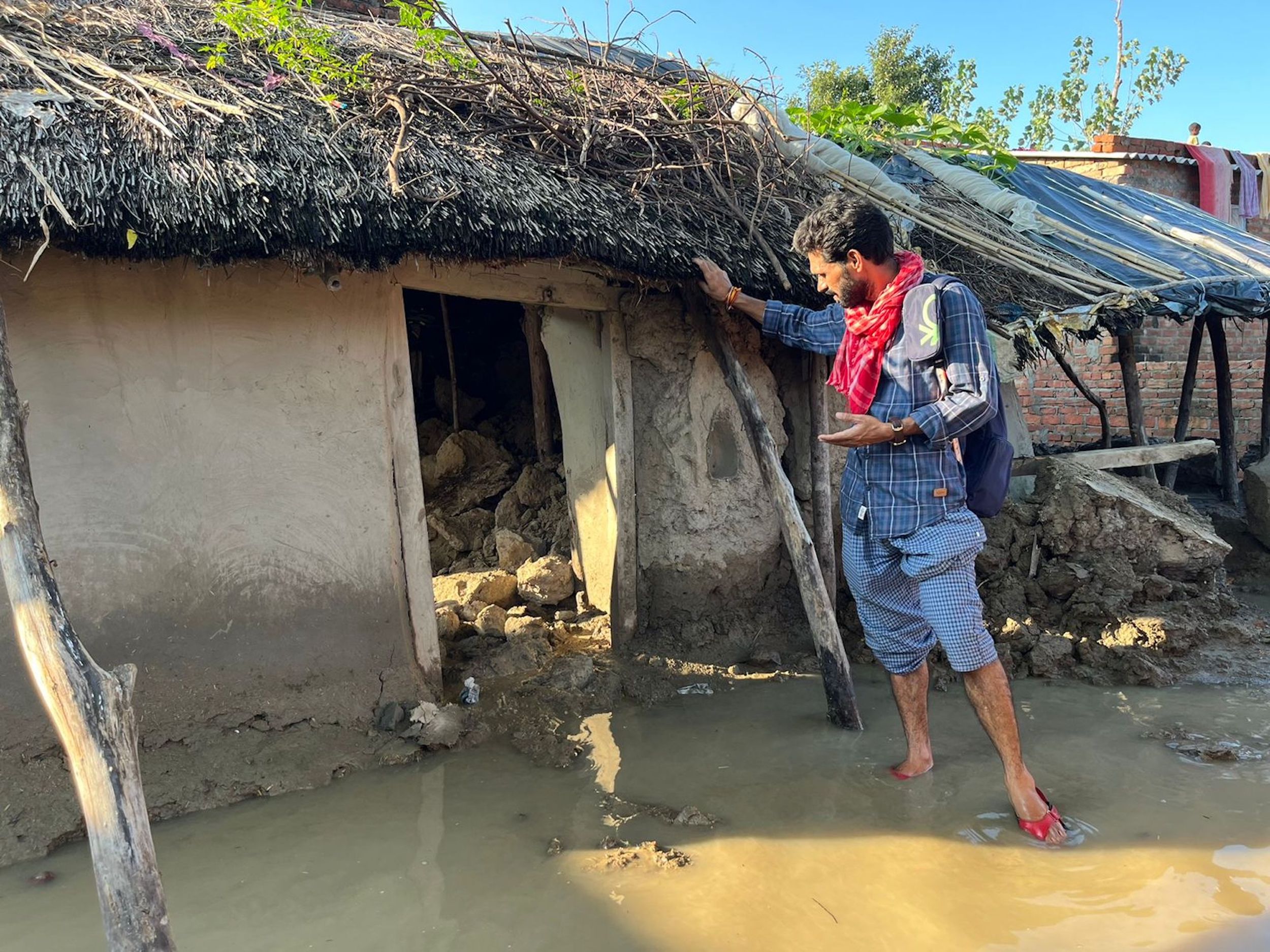
‘I had no idea how to report on this’ - local journalists tackling climate change stories

Local journalists are key to informing the public about the devastating dangers of climate change but, in India, a lack of knowledge, training and access to expert sources is holding them back

Saurabh Sharma
Saurabh Sharma Published on: 13 Sep, 2023
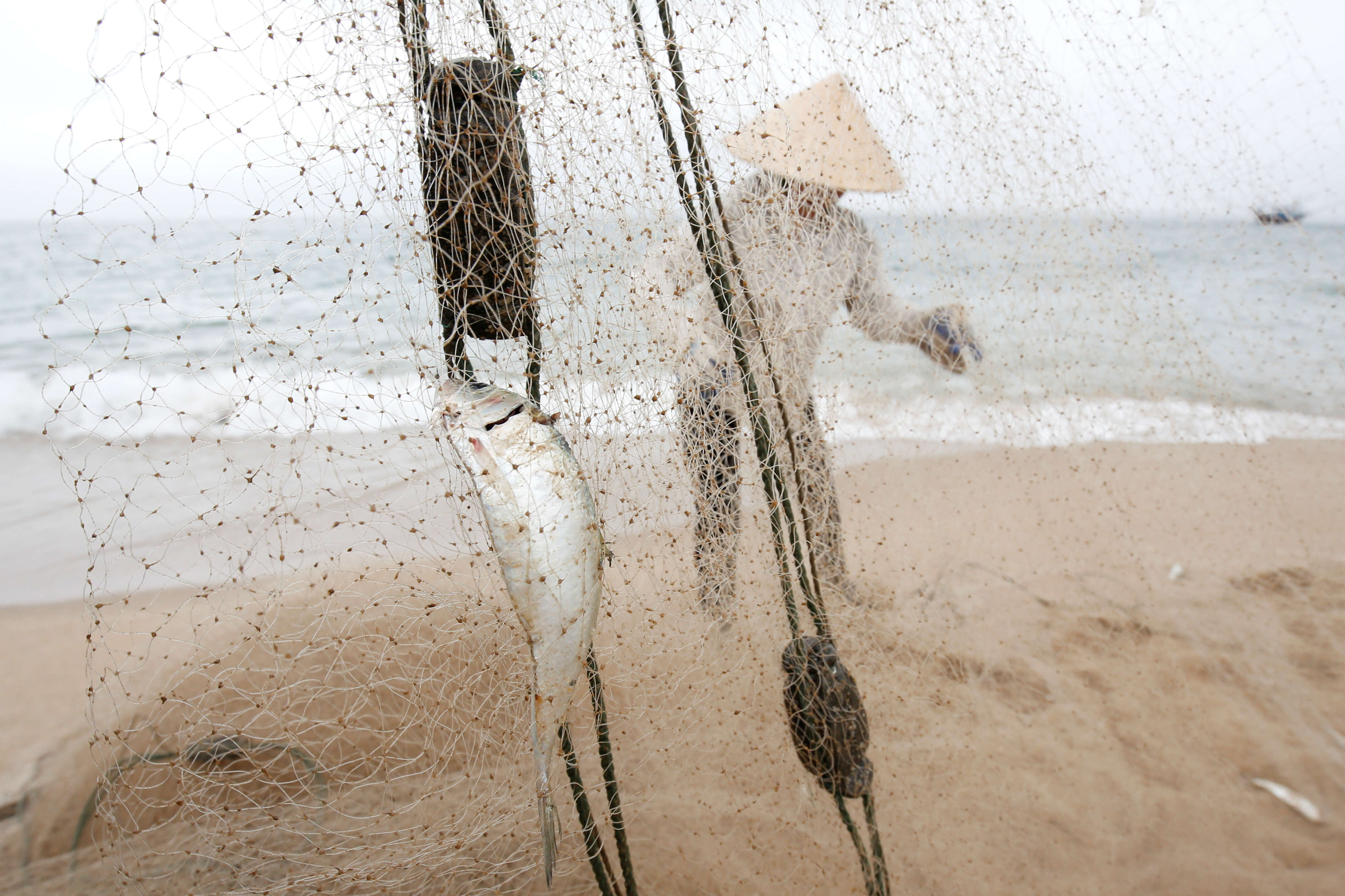
Climate Journalism in Vietnam's Censored Landscape

In Vietnam, climate journalists face challenges due to censorship and restrictions on press freedom, making it difficult to report environmental issues accurately. Despite these obstacles, there are still journalists working to cover climate stories creatively and effectively, highlighting the importance of climate journalism in addressing environmental concerns.

AJR Contributor Published on: 26 Jun, 2024

Is Pakistan’s Media Ignoring Climate Change?

Pakistan's media, despite its wide reach, largely neglects climate change in favor of political and economic issues, leaving the public under-informed about the causes and consequences of climate-related disasters. As a result, many Pakistanis remain unaware of the growing threats posed by climate change, which has devastating effects on the country's economy and population, as seen in the catastrophic floods of 2022.

Faras Ghani Published on: 3 Dec, 2024

More Articles

Intifada 2.0: Palestinian Digital Journalism from Uprising to Genocide

From underground newsletters during the Intifadas to livestreams from Gaza, Palestinian journalism has evolved into a decentralised digital practice of witnessing under occupation. This article examines how citizen journalists, fixers and freelancers have not only filled gaps left by international media, but fundamentally transformed how Palestine is reported, remembered and understood.

Zina Q.
Zina Q. Published on: 24 Dec, 2025
Inside Vietnam’s Disinformation Machine and the Journalists Exposing It from Exile

Vietnam’s tightly controlled media environment relies on narrative distortion, selective omission, and propaganda to manage politically sensitive news. Exiled journalists and overseas outlets have become essential in exposing these practices, documenting forced confessions and smear campaigns, and preserving access to information that would otherwise remain hidden.

AJR Contributor Published on: 15 Dec, 2025
What It Means to Be an Investigative Journalist Today

A few weeks ago, Carla Bruni, wife of former French president Nicolas Sarkozy, was seen removing the Mediapart logo from view. The moment became a symbol of a major victory for investigative journalism, after the platform exposed Gaddafi’s financing of Sarkozy’s election campaign, leading to his prison conviction. In this article, Edwy Plenel, founder of Mediapart and one of the most prominent figures in global investigative journalism, reflects on a central question: what does it mean to be an investigative journalist today?

Edwy Plenel
Edwy Plenel Published on: 27 Nov, 2025
In-Depth and Longform Journalism in the AI Era: Revival or Obsolescence?

Can artificial intelligence tools help promote and expand the reach of longform journalism, still followed by a significant audience, or will they accelerate its decline? This article examines the leading AI tools reshaping the media landscape and explores the emerging opportunities they present for longform journalism, particularly in areas such as search and content discovery.

. سعيد ولفقير. كاتب وصحافي مغربي. ساهم واشتغل مع عددٍ من المنصات العربية منذ أواخر عام 2014.Said Oulfakir. Moroccan writer and journalist. He has contributed to and worked with a number of Arab media platforms since late 2014.
Said Oulfakir Published on: 24 Nov, 2025
Leaked BBC Memo: What Does the Crisis Reveal?

How Should We Interpret the Leak of the “BBC Memo” on Editorial Standards? Can we truly believe that the section concerning U.S. President Donald Trump was the sole reason behind the wave of resignations at the top of the British broadcaster? Or is it more accurately seen as part of a broader attempt to seize control over editorial decision-making? And to what extent can the pressure on newsrooms be attributed to the influence of the Zionist lobby?

 Mohammed Abuarqoub. Journalist, trainer, and researcher specializing in media affairs. He holds a PhD in Communication Philosophy from Regent University in the United States.محمد أبو عرقوب صحفي ومدرّب وباحث متخصص في شؤون الإعلام، حاصل على درجة الدكتوراه في فلسفة الاتّصال من جامعة ريجينت بالولايات المتحدة الأمريكية.
Mohammed Abuarqoub Published on: 20 Nov, 2025
Crisis of Credibility: How the Anglo-American Journalism Model Failed the World

Despite an unprecedented global flood of information, journalism remains strikingly impotent in confronting systemic crises—largely because the dominant Anglo-American model, shaped by commercial imperatives and capitalist allegiances, is structurally incapable of pursuing truth over power or effecting meaningful change. This critique calls for dismantling journalism’s subordination to market logic and imagining alternative models rooted in political, literary, and truth-driven commitments beyond the confines of capitalist production.

Imran Muzaffar
Imran Muzaffar, Aliya Bashir, Syed Aadil Hussain Published on: 14 Nov, 2025
Why Has Arab Cultural Journalism Weakened in the Third Millennium?

The crisis of cultural journalism in the Arab world reflects a deeper decline in the broader cultural and moral project, as well as the collapse of education and the erosion of human development. Yet this overarching diagnosis cannot excuse the lack of professional training and the poor standards of cultural content production within newsrooms.

Fakhri Saleh
Fakhri Saleh Published on: 10 Nov, 2025
Podcasters, content creators and influencers are not journalists. Are they?

Are podcasters, content creators, and influencers really journalists, or has the word 'journalist' been stretched so thin that it now covers anyone holding a microphone and an opinion? If there is a difference, where does it sit? Is it in method, mission, accountability, or something else? And in a media landscape built on noise, how do we separate a journalist from someone who produces content for clicks, followers or sponsors

Derick Matsengarwodzi
Derick Matsengarwodzi Published on: 7 Nov, 2025
The Power to Write History: How Journalism Shapes Collective Memory and Forgetting

What societies remember, and what they forget, is shaped not only by historians but by journalism. From wars to natural disasters, the news does not simply record events; it decides which fragments endure in collective memory, and which fade into silence.

Daniel Harper
Daniel Harper Published on: 30 Oct, 2025
Journalism in Spain: Why Omitting Ethnicity May Be Doing More Harm Than Good

In Spain, a well-intentioned media practice of omitting suspects’ ethnic backgrounds in crime reporting is now backfiring, fuelling misinformation, empowering far-right narratives, and eroding public trust in journalism.

Ilya إيليا توبر 
Ilya U Topper Published on: 10 Sep, 2025
Interview with Zina Q. : Digital Cartography as a Tool of Erasure in Gaza

Amid Israel’s war on Gaza, Zina Q. uncovers how Google Maps and satellite imagery are being manipulated; homes relabelled as “haunted,” map updates delayed, and evidence of destruction obscured, revealing digital cartography itself as a weapon of war. By exposing these distortions and linking them to conflicts from Sudan to Ukraine, she demonstrates how control over maps and AI surveillance influences not only what the world sees, but also what it remembers.

Al Jazeera Journalism Review
Al Jazeera Journalism Review Published on: 6 Sep, 2025
Canadian Journalists for Justice in Palestine: A Call to Name the Killer, Not Just the Crime

How many journalists have to be killed before we name the killer? What does press freedom mean if it excludes Palestinians? In its latest strike, Israel killed an entire Al Jazeera news crew in Gaza—part of a systematic campaign to silence the last witnesses to its crimes. Canadian Journalists for Justice in Palestine (CJJP) condemns this massacre and calls on the Canadian government to end its complicity, uphold international law, and demand full accountability. This is not collateral damage. This is the targeted erasure of truth.

Samira Mohyeddin
Samira Mohyeddin Published on: 14 Aug, 2025
Protecting Palestinian Journalists Should be First Priority - Above Western Media Access

Why demand entry for foreign reporters when Palestinian journalists are already risking—and losing—their lives to tell the truth? Real solidarity means saving journalists' lives, amplifying their voices, and naming the genocide they expose daily.

Synne Furnes Bjerkestrand
Synne Bjerkestrand, Kristian Lindhardt Published on: 10 Aug, 2025
The Washington Post: When Language Becomes a Veil for Pro-Israel Bias

How did The Washington Post's coverage differ between Israel’s bombing of Gaza hospitals and Iran’s strike on an Israeli hospital? Why does the paper attempt to frame Palestinian victims within a “complex operational context”? And when does language become a tool of bias toward the Israeli narrative?

Said Al-Azri
Said Al-Azri Published on: 6 Aug, 2025
In the War on Gaza: How Do You Tell a Human Story?

After nine months of genocidal war on Palestine, how can journalists tell human stories? Which stories should they focus on? And does the daily, continuous coverage of the war’s developments lead to a “normalisation of death”?

Yousef Fares
Yousef Fares Published on: 8 Jul, 2025
How Much AI is Too Much AI for Ethical Journalism

As artificial intelligence transforms newsrooms across South Asia, journalists grapple with the fine line between enhancement and dependency

Saurabh Sharma
Saurabh Sharma Published on: 1 Jul, 2025
How to Tell the Stories of Gaza’s Children

Where does compassion end and journalism begin? How can one engage with children ethically, and is it even morally acceptable to conduct interviews with them? Palestinian journalist Reem Al-Qatawy offers a profoundly different approach to human-interest reporting. At the Hope Institute in Gaza, she met children enduring the harrowing aftermath of losing their families. Her experience was marked by intense professional and ethical challenges.

Rima Al-Qatawi
Rima Al-Qatawi Published on: 26 Jun, 2025
Do Foreign Journalists Matter in Covering Genocide? A Look into Bosnia, Rwanda, and Gaza

How did foreign journalists cover the killings in both Bosnia-Herzegovina and Rwanda? Did they contribute to conveying the truth and making an impact? Would the entry of foreign journalists into the Gaza Strip change the reality of the ongoing genocide? And would their coverage of the famine and massacres add to the daily coverage of local journalists? Why is the local press's coverage of wars seen as deficient compared to Western journalism, even though they incur greater losses and casualties?

Saber Halima
Saber Halima Published on: 20 Jun, 2025
How Palestine Is Forcing Journalists to Reexamine Objectivity and Decolonize

This article argues that the Palestinian context exposes the colonial roots of traditional journalism and calls for a decolonial approach that centers marginalized voices, promotes collaborative reporting, and demands structural change within newsrooms to uphold journalistic integrity.

Sanne Breimer
Sanne Breimer Published on: 12 Jun, 2025
The Role of Social Science Tools in Enhancing Journalism

When French sociologist Pierre Bourdieu was asked about the contribution of the suburbs to elections, he replied that decades of colonialism and complex problems cannot be summarised in 10 minutes. The value of social sciences in supporting journalism is demonstrated when they address issues of society, power, and identity for the sake of better journalism.

Rehab Zaheri
Rehab Zaheri Published on: 6 Jun, 2025
Digital Dependency: Unpacking Tech Philanthropy’s Grip on Local News in the MENA

AI-driven journalism initiatives in the Middle East, often backed by philanthropic media development projects, are reshaping local newsrooms under the influence of global tech giants. These efforts, while marketed as support, risk deepening power asymmetries, fostering digital dependency, and reactivating colonial patterns of control through algorithmic systems and donor-driven agendas.

Sara Ait Khorsa
Sara Ait Khorsa Published on: 3 Jun, 2025
Journalism Colleges in Somalia: A Battle for Survival

Journalism colleges in Somalia are struggling to survive due to outdated curricula, lack of practical training, insufficient funding, and a shortage of qualified educators, leading to declining student enrollment and interest. Despite efforts by institutions like Mogadishu University and Hormuud University to revive journalism education, these challenges persist, threatening the future of journalism in the country.

Al-Shafi Abtidon
Al-Shafi Abtidon Published on: 30 May, 2025
Philippine Activists Fight Archive Erasure and Revive Dictatorship-Era Memories

In the Philippines, archivists fight to preserve evidence of the country’s bloodied past, in hope that it will provide lessons for the future.

Tristan James Biglete
Tristan James Biglete Published on: 27 May, 2025
News Fatigue and Avoidance: How Media Overload is Reshaping Audience Engagement

A study conducted on 12,000 American adults revealed that two-thirds feel “exhausted” by the overwhelming volume of news they receive. Why is the public feeling drained by the news? Are audiences actively avoiding it, and at what psychological cost? Most importantly, how can the media rebuild trust and reconnect with its audience?

Othman Kabashi
Othman Kabashi Published on: 25 May, 2025