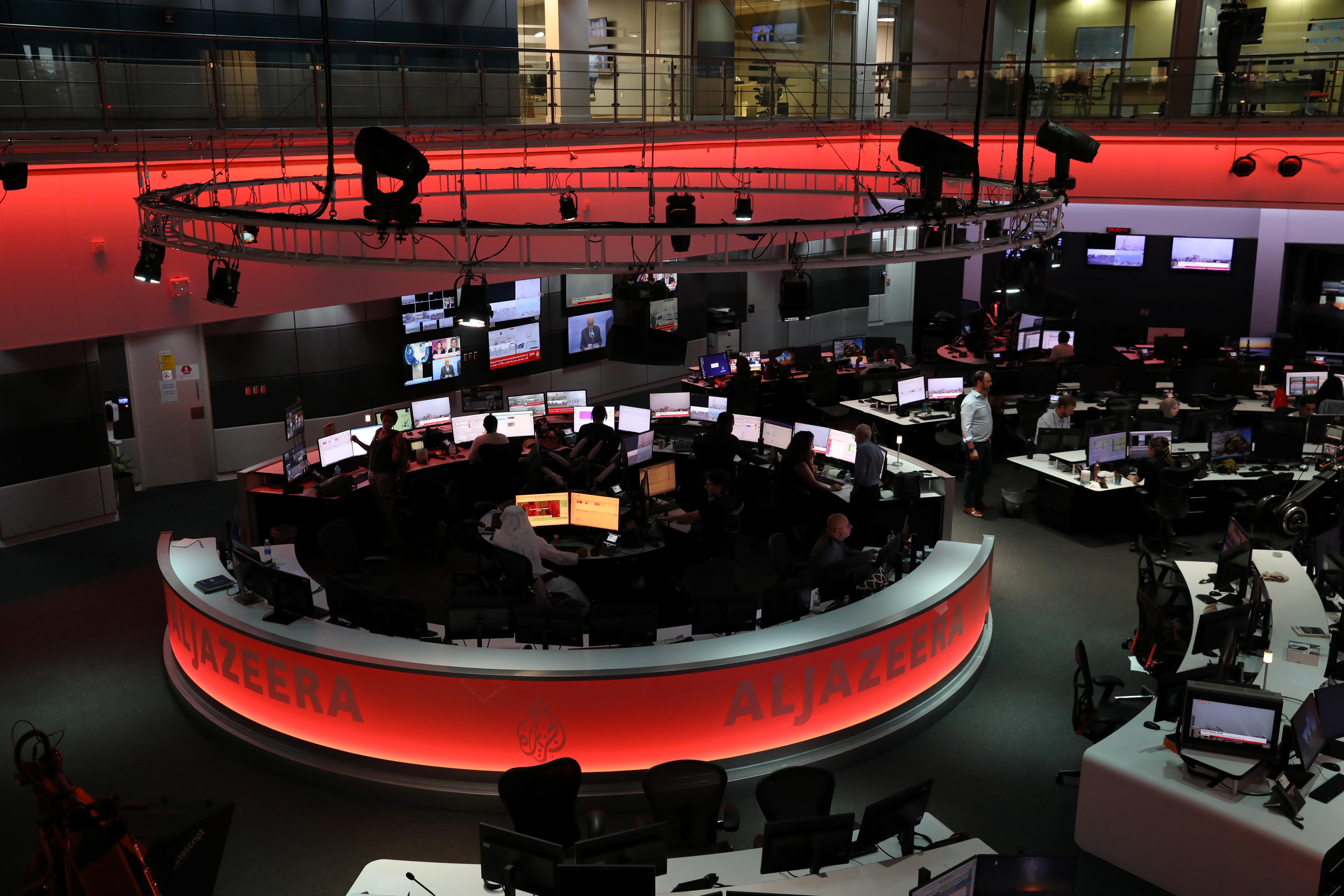

Arab newsrooms cannot rebuild audience trust simply by chasing platforms and investing in AI while their journalism fails to reflect people’s lives, address their concerns and hold power to account.
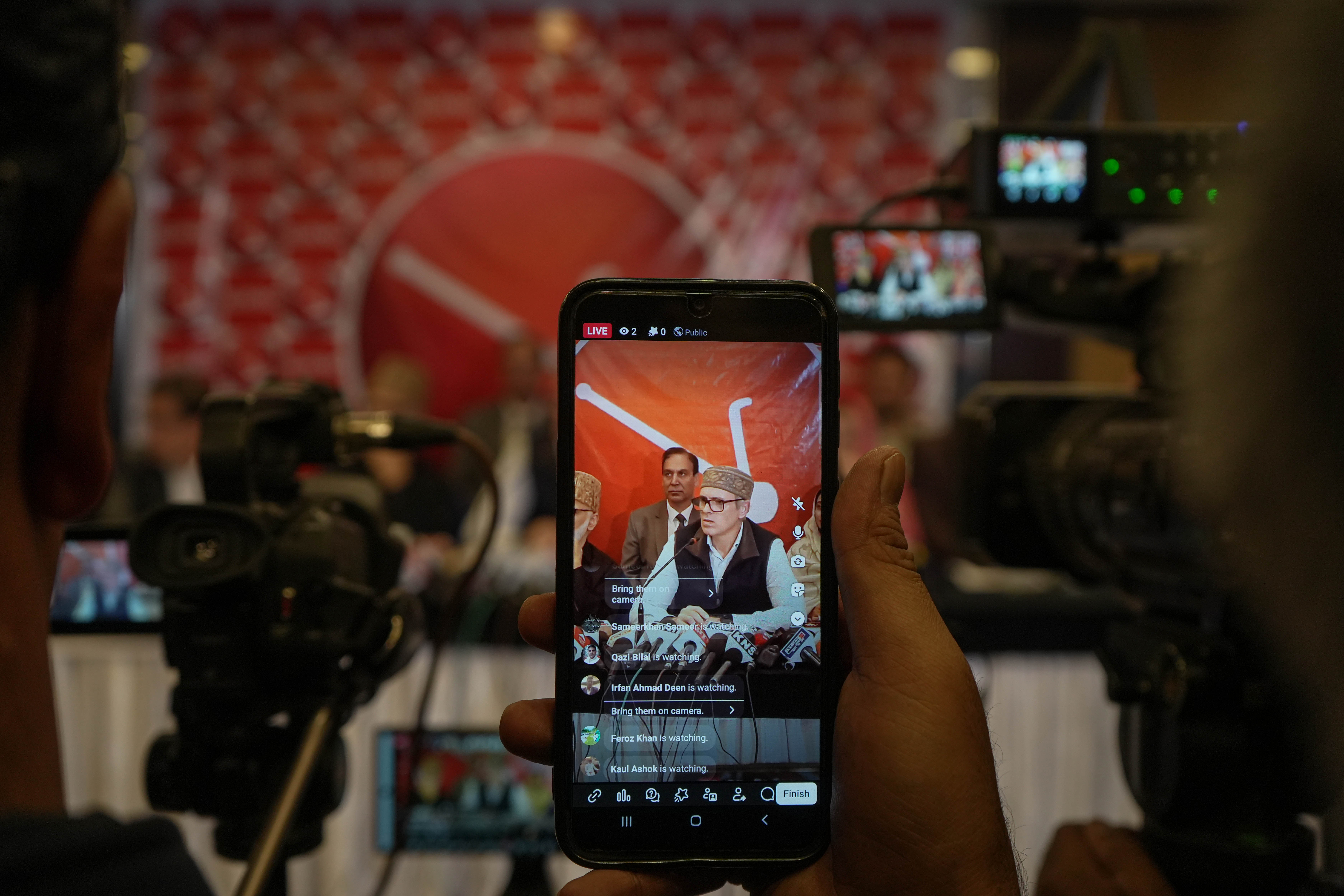
Where is the Arab audience? The answer is shaking newsrooms across the region, sparking panic, unsettled uncertainty, and at times quiet confusion. Yet, at first glance, the answer seems straightforward: the audience has increasingly moved away from legacy media, which for decades controlled much of news distribution. They now encounter news through social platforms and, increasingly, AI interfaces, changing media-audience relationships: how media information reaches the audience and how they interact with it. Simply put, newsrooms are now scrambling to track audiences across these new digital realms.
The Audience Has Moved to Other Destinations
Numbers seem to justify this growing sense of panic. Over the past 15 years, the Reuters Institute’s annual Digital News Report has documented this significant shift in global news consumption, and MENA is no exception. In its 2026 report, for the first time in 48 global media markets, social and video platforms have outdistanced legacy media and become the main source of news.
In Morocco, for instance, 59% of the audience, particularly young people, increasingly encounter news on social media platforms. In other words, the missing audience has not simply disappeared; it has dispersed across platforms and moved farther from journalism’s direct reach.
Concurrently, the rise of these algorithmic intermediaries between newsrooms and their audience is only part of the story; the report has scratched the surface to shed light on a potentially new disruptive dynamic:
AI chatbots introduce another intermediary: users can receive news summaries without visiting the publisher’s website, potentially weakening the direct relationship between newsrooms and audiences.
This new pattern in news consumption appears to be growing in popularity; the 7% of the audience who said in 2025 that they use AI chatbots to access news has jumped to 10% in 2026. Journalism's capacity to rebuild its relationship with its audience will be shaped by actors outside newsrooms, and Publishers therefore risk losing opportunities to build direct relationships with their audiences.
Well-resourced and resource-constrained newsrooms alike across the region tried to follow audiences onto those platforms, recrafting their journalism to align with algorithmic logics or even layering their content with digital aesthetics
What If the Problem Is Not Technological?
Answering where audiences are hiding seems far more complex than simply locating them on platforms and in AI interfaces. A closer look reveals underlying dynamics behind these shifting patterns in news consumption, prompting us to question the premise itself and to ask how executives in Arab newsrooms seek solutions and where Arab media organisations should invest strategically.
Well-resourced and resource-constrained newsrooms alike across the region tried to follow audiences onto those platforms, recrafting their journalism to align with algorithmic logics or even layering their content with digital aesthetics, as Al-Ghazzi and Al Najjar (2024) contend, to lure audiences and capture fleeting attention. However, their capacity to do so remains profoundly unequal. As Harb and Arafat (2024) observe in their study on AI implementation in newsrooms, the well-resourced newsrooms across the region are competing fiercely to invest in and incorporate these technological tools in production and distribution processes, while the resource-constrained newsrooms are left to depend on philanthropic aid or individual journalists experimenting with readily available AI tools to solve problems and respond to these technological imperatives. Yet both face the same question: is the gap they need to bridge technological or editorial?
In their research on pan-Arab news media, Al-Ghazzi and Al Najjar (2024) propose reframing the question, suggesting that Arab newsrooms are losing their audience because they misunderstand it. Drawing on their interviews and focus groups with audience members and journalists from the region, their findings have aptly captured this tension: while audience apathy is often framed as a technological problem, the underlying cause is primarily a content problem, and what is claimed to be a digital transformation should rather be reconsidered as an editorial innovation. According to Al-Ghazzi and Al Najjar (2024), this digital transformation is largely driven by top-down, techno-centred logic that shapes newsroom culture, practices, and routines, while giving less attention journalists’ perspectives and audiences’ needs and preferences.
The Audience Is Not Necessarily Disengaged
Algorithms can expand news organisationns’ reach, and AI can help measure audience engagement and speed up content production. But as mainstream journalism loses relevance, winning audiences back requires more than technology. Data from the Reuters Digital News Report covering MENA region point to a deeper problem: eroding trust in journalism.
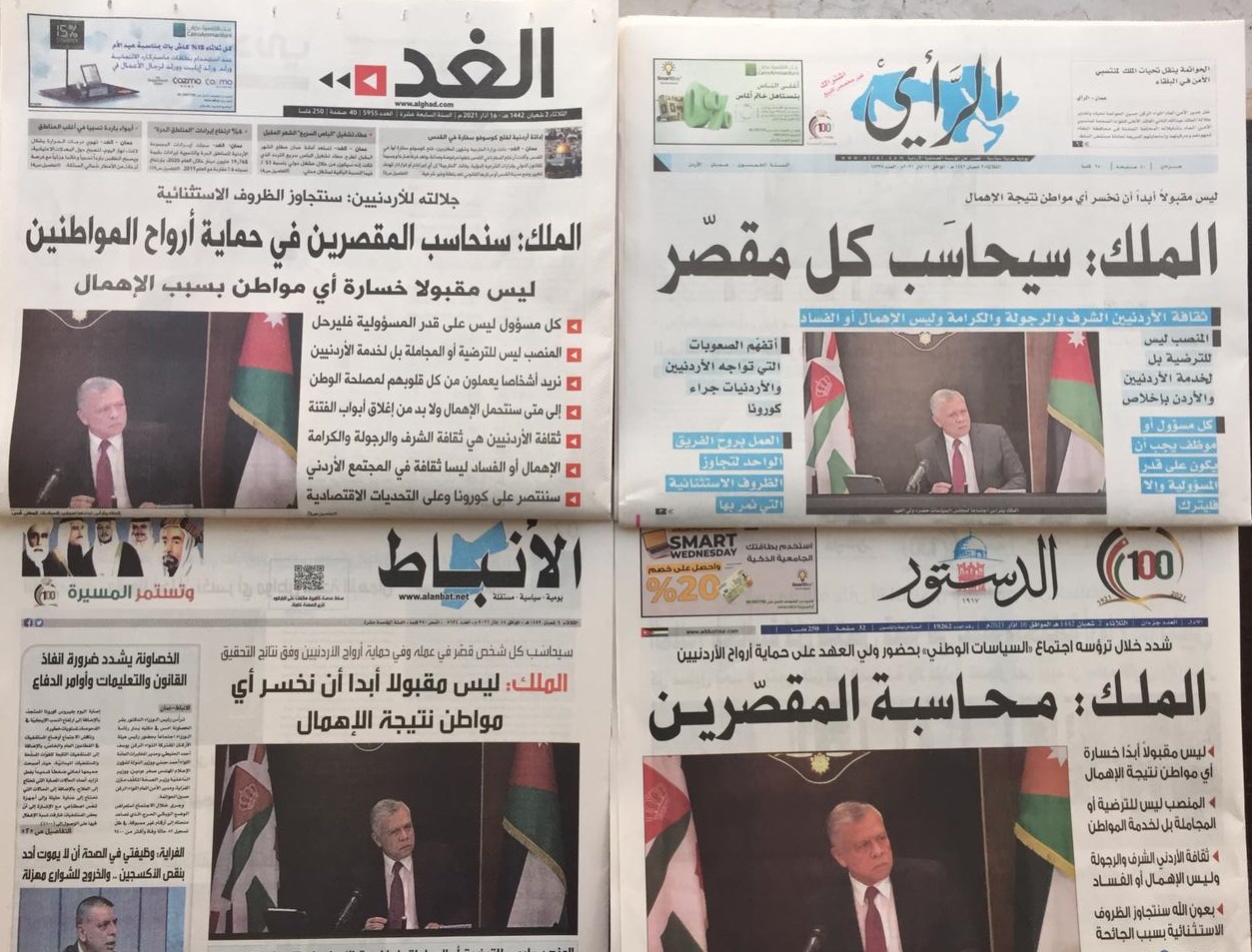
In Morocco, for instance, the data offer a revealing case. Despite internet penetration reaching around 90%, the high connectivity did not translate to a robust relationship with journalism. Moroccans actively bypass public media, which continue to avoid sensitive political topics and reinforce the state’s narrative, and instead turn to platforms where they interact mainly with bloggers, influencers, and other alternatives that compete for and earn their trust. In this respect, audiences become highly selective. The widespread assumption that young audiences are increasingly disengaged from political news is hard to sustain when you consider Morocco’s Gen Z 212 protests, which began as discussions among young people in digital spaces before spreading to the Moroccan streets. While mainstream media appears to be caught by surprise, its young audience has constructed their narratives and circulated them elsewhere, far beyond its screens.
This digital transformation is largely driven by top-down, techno-centred logic that shapes newsroom culture, practices, and routines, while giving less attention journalists’ perspectives and audiences’ needs and preferences.
Young audiences are not rejecting political news or disengaging from the unfolding political events; they are simply uncomfortable with the journalism that is offered to them and have their own way of understanding the political reality around them. Their disengagement is less from politics and more from journalistic practices that fail to reflect their realities. This frustration with the legacy media’s silence, coercion, and self-censorship that cannot be understood through metrics of engagement and reach.
This should serve as a wake-up call for the newsroom’s leaders. The stakes are beyond journalism traffic and audience engagement; digital innovation matters when it enables journalism to fulfil its public service role and hold power to account.
This becomes particularly consequential in a context like the MENA region, where the democratic institutions and values remain fragile and unsettled. As algorithmic proxies weaken the relationship between credible, independent journalism and its audience, new actors have entered the frame and sit between journalists and their audiences: AI chatbots.
Trust Has Not Disappeared; It Has Become Negotiated
Audience trust is becoming increasingly hybrid, fragmented, and distributed. As the political reality in the region becomes more contested and sensitive, audiences tend to rely on a wide repertoire of information sources, combining mainstream media, platforms, and messaging apps. For instance, Lebanon’s 2019 protests provide another significant example. In their study, Melki and Kozman (2021) noted that 88.7% of respondents reported “sometimes” or “often” trusted television for protest news, 69.4% trusted WhatsApp and 60.5% trusted Facebook, compared with only 27.5% for newspapers. So, trust is carefully distributed across different media actors.
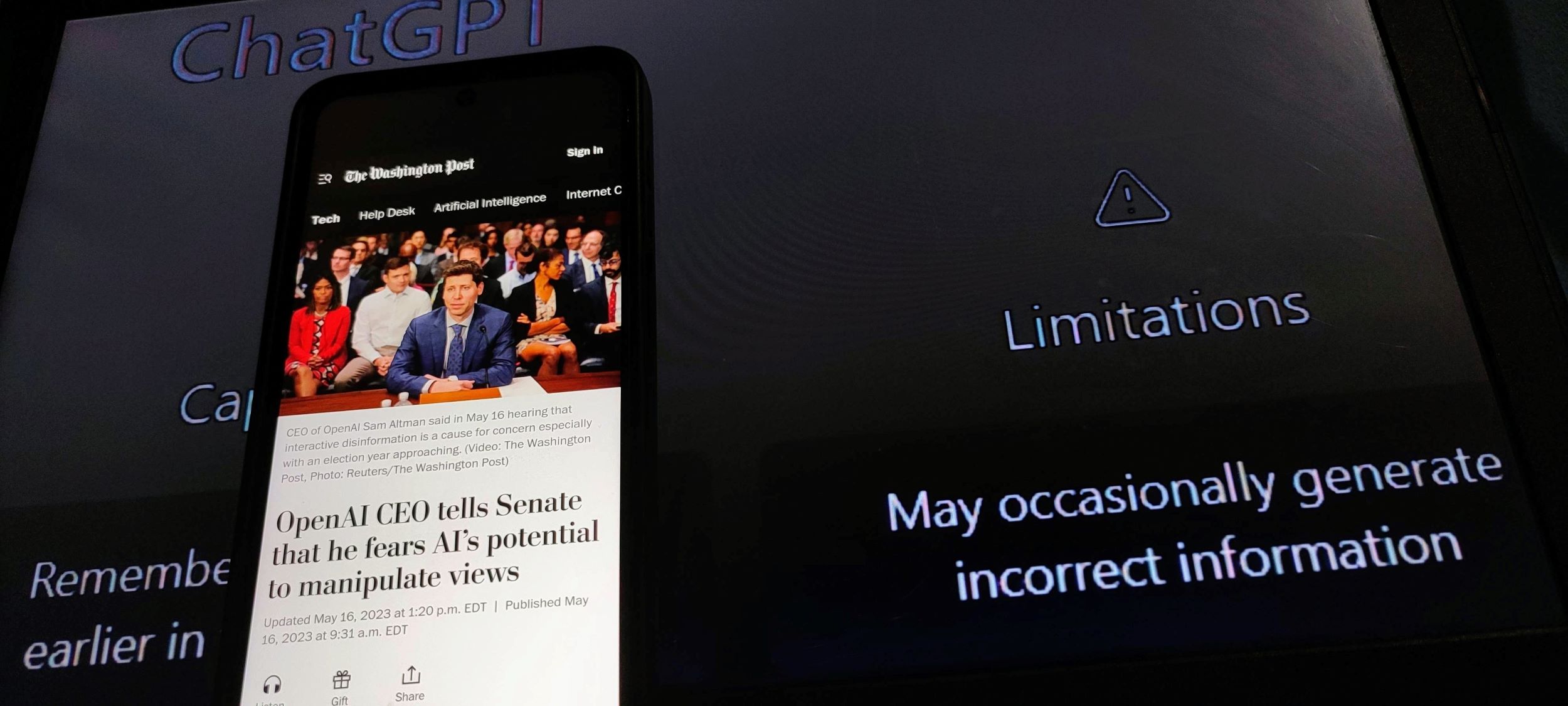
More recently, this hybridity expands to include another intermediary. A 2025 YouGov survey of more than 1000 UAE residents found that 62% trust AI-generated news as much as or more than human-generated news, including 33% who trust AI-generated news more. Consequently, these findings suggest that for UAE audiences, a trusted source of information is not necessarily limited to journalism. Now it coexists with AI interfaces. The BBC study, Audience Use and Perceptions of AI Assistants for News, concludes that many audiences assume the accuracy of AI-generated news summaries while blaming news providers and publishers, whose content underpins those answers, for any errors these AI systems produce.
So, in a highly contested media landscape like the MENA region, where legacy media is heavily state-controlled, AI chatbots could offer audiences an alternative way to bypass these old gatekeepers. Yet this creates a new trap: by escaping legacy media control, audiences end up trusting AI systems vulnerable to political influence, surveillance, and control.
The proliferation of techno-centric understandings of the audience in Arab newsrooms, mainly shaped by state-funded conceptions of media priorities and predefined perceptions of the 'imagined audience'.
When the Imagined Audience Becomes Algorithmic
Newsrooms historically have settled on constructing certain knowledge and assumptions about their audience. Jacob Nelson describes this as an 'imagined audience', noting that journalists' perceptions of who they are talking to frame how they produce their journalism and craft their messages. Today, much of what newsrooms know about their audience comes from social media metrics and AI systems. However, this knowledge is shaped by an algorithmic representation of audience questions, and it remains unclear how accurate, neutral, and free from system-made choices this depiction is.
This problem takes on particular significance in Arab newsrooms; Al-Ghazzi and Al Najjar (2024) draw our attention to the proliferation of techno-centric understandings of the audience in Arab newsrooms, mainly shaped by state-funded conceptions of media priorities and predefined perceptions of the 'imagined audience'. Authoritarian settings pose additional challenges, as audiences themselves exercise caution and self-censorship out of fear of surveillance. So, what kind of audience becomes visible to newsrooms through these AI-driven systems when the behaviour being measured is itself constrained by what audiences can express and disclose and when AI-powered tools to measure that behaviour are embedded infrastructures controlled by tech companies, creating other layers of complexity where newsrooms are not only relying on tech giants to reach audiences but also to know them?
Therefore, AI systems and platforms cannot fill this epistemic gap on their own. How can Arab newsrooms mend this distance? How can they develop a genuine understanding of their audience? Which pathway can enable them to listen to the communities they serve, even when these communities retreat into silence out of fear or distrust?
Reclaiming journalism and audience together entails dismantling the 'hamster wheel' – the metaphor for journalism as an industry caught in relentless cycles of over- and fast production.
Give the Audience a Reason to Return: From Platform-First to Story and Audience-First
The findings of the Future Newsrooms study, conducted collaboratively by FT Strategies and the World Association of News Publishers (WAN-IFRA), drawing on a large survey of media leaders, signal a useful glimpse into how these media executives acknowledge that there is a genuine need to reconfigure the way we practise journalism by moving the audience to the beginning of the content production process and dedicating more time to interaction with them in the pre-, during, and post-production phases. However, the study reveals a structural organisational failure to change newsrooms' practices. While 64% of newsrooms still develop stories for a legacy distribution channel and adapt them later for other platforms, just 21% start their production process with framing audience needs and preferences.
Reclaiming journalism and audience together entails dismantling what Lewis et al. (2026), in their book Journalism in the Age of AI, call the 'hamster wheel' – the metaphor for journalism as an industry caught in relentless cycles of over- and fast production. As the ground beneath journalists’ feet continues to shift, AI systems add another turn to this wheel.
To survive this structural shift in audience behaviours, the Future Newsrooms study has clearly suggested that journalists need to break free from both the ‘’platform-first’’ trap and the ‘’clicks-first’’ approach; journalistic relevance does not lie in joining the ‘’hamster wheel‘’ to maximise content production using AI systems. As Naja Nielsen, Digital Director of BBC News, underscores in her interview with FT Strategies, the digital-first strategy needs to be reoriented to understand and solve the core problems for newsrooms’ audiences and to enrich journalism through fact-checking, verification, and investigative stories. To give the audiences a reason to return and rebuild sustainable audience trust does not mean relegating editorial judgement to AI-powered audience metrics, as Nielsen concludes, 'The story has to decide the publishing strategy,' and only the story grounded in people’s needs and public values can repair the fractured relationship between newsrooms and their audiences.
Reference:
Al-Ghazzi, O. and Al-Najjar, A. (2024). The problem of top-down techno-centrism in pan-Arab news media. LSE Middle East Centre Paper Series No. 86. London: London School of Economics and Political Science. Available from LSE
BBC (2025). Audience use and perceptions of AI assistants for news. BBC. Available at: BBC report PDF.
FT Strategies (2025) ‘Any media company now has to be digital: Naja Nielsen on transforming BBC News’. FT Strategies. FT Strategies interview with Naja Nielsen
FT Strategies, WAN-IFRA and Arc XP (2026) Future Newsrooms Study 2026. FT Strategies. Future Newsrooms Study
Harb, Z. and Arafat, R. (2024) ‘The adoption of artificial intelligence technologies in Arab newsrooms: Potentials and challenges’, Emerging Media, 2(3), pp. 371–381. doi: 10.1177/27523543241291068
Lewis, S.C., Zamith, R. and Dodds, T. (2026) Journalism in the Age of AI: From Acceleration to Reimagination. Cambridge: Polity Press.
Melki, J. and Kozman, C. (2021) ‘Selective exposure during uprisings: Examining the public’s news consumption and sharing tendencies during the 2019 Lebanon protests’, The International Journal of Press/Politics, 26(4), pp. 907–928. doi: 10.1177/1940161220972892. SAGE journal article
Nelson, J.L. (2021) Imagined Audiences: How Journalists Perceive and Pursue the Public. New York: Oxford University Press. Oxford Academic
Reuters Institute for the Study of Journalism (2026a) Digital News Report 2026. Oxford: Reuters Institute for the Study of Journalism, University of Oxford. Digital News Report 2026
Reuters Institute for the Study of Journalism (2026b) ‘Morocco’, Digital News Report 2026. Oxford: Reuters Institute for the Study of Journalism, University of Oxford. Morocco country profile
YouGov (2025) Trust or Concern? Gen AI in Media: UAE Report. YouGov, 19 May. YouGov UAE report