التهويل هو الوباء

التهويل هو الوباء

ترجمه من الإسبانيّة: بهاء الدين السيوف 

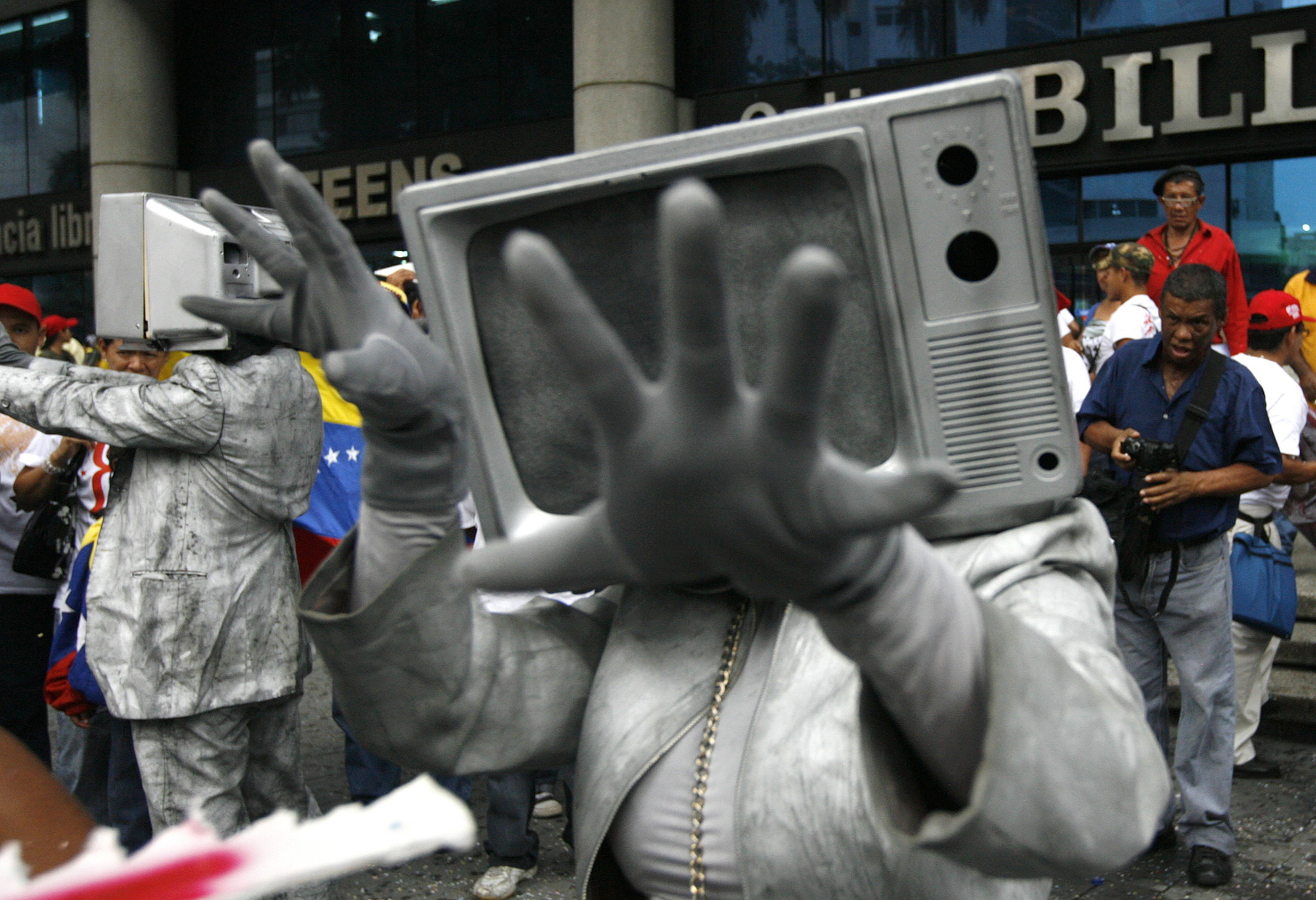
في تسعينيّات القرن الماضي وخلال حروب البلقان، اشتهر بعض الصحفيين وهم ينقلون أخبارهم بطريقة استعراضية، تمثلت في ارتدائهم بزات عسكرية، لم يكن المضحك في الأمر ظهورهم على الشاشة بالخوذ والجزمات العسكرية والسترات الواقية، ولا بحذرهم البادي أثناء تغطيتهم للنزاعات المسلحة، بل كان ذلك في نقلهم للأحداث من أماكن بعيدة عن جبهات القتال وعن أي مناطق خطرة، مشاهد كهذه تكررت خلال حرب الخليج الأولى، وشيئا فشيئا صرنا ندرك أن الاستعراض يفرض نفسه على الرواية الصحيحة للوقائع.

ما يجري هذه الأسابيع خلال التغطية الإعلامية لانتشار فيروس كورونا يذكرنا بتلك المواقف: صحفيون يتوجهون لجماهيرهم بأقنعة للوجه ومعاطف أحيانا، بل إنهم يستخدمون مايكروفونات مغطاة بالبلاستيك، لن تحتاج أن ترفع من صوت التلفزيون شيئا كي تدرك أن القيامة تحوم فوق رأسك، لِمَ يلبسون كل هذا إن لم يكن الأمر كذلك؟ واحد من الاستثناءات القليلة التي نراها هنا في إسبانيا، لورينزو ميلا، الصحفي في التلفزيون الرسمي، الذي فضل الحديث عن الموضوع من شمال إيطاليا دون أن يغطي وجهه، مبديا أسفه الشديد لأن "التهويل ينتشر بشكل أوسع من البيانات".

كانت الحفاوة التي حظي بها الصحفي على شبكات التواصل الاجتماعي هائلة، لكن أعداد المدنيين الذين وقعوا ضحايا لتلك الهستيريا المرافقة للوباء كانت أكبر بكثير.

لسوء الحظ تخلى عدد كبير من مؤسساتنا الصحفية عن الاضطلاع بدوره الاجتماعي، وعلى العكس من ذلك، راحت وسائل الإعلام تصُب غضبها على الصحافة الصفراء وروابط العناوين التي تشد الانتباه "كليك بيت". قليلون جدا هم الذين تعاملوا مع الأمر بوضوح ومصداقية، وأتاحوا المجال للخبراء وحدهم كي يتصدروا المشهد في توعية المواطنين ودراسة الإحصائيات الرسمية ومقارنتها. 

وهكذا، كان هناك من كرّسوا أنفسهم للتنبؤ بكل أنواع الكوارث الوشيكة؛ من تهديدات بإغلاق الحدود وعزل السكان إلى إلغاء وسائط النقل، وهناك من عمل كفزّاعة لكل أسباب انتقال العدوى؛ من لدغات البعوض أو تداول العملات والفواتير، ومنهم من تصدَّر الحديث عن وصفات علاجية غريبة؛ من غسل اليدين ببَول الأطفال أو تجفيف اليدين بمجفف الشعر أو حتى تعاطي الكوكايين، وهنالك من اكتفى بعكس ردود أفعال المواطنين الذي يعيشون حالة الهلع باستنفادهم لمخزون الأقنعة في البلاد والصابون المطهِّر، وكذلك استنفاد الأغذية تحسُّبا لتعرض البلاد إلى الحصار.

من مدونته الخاصة على النسخة الرقمية لصحيفة "إل باييس" الإسبانية، ذكر الصحفي المعتدل إينياكي غابيلون أن ما نحن بصدده هو عبارة عن فيروس لا يمكنه التطور في كل الحالات، وأن حالات الوفاة بسببه لم تصل إلى ثلاثة بالمئة في الصين، بينما بلغت سبعة إلى عشرة من الواحد بالمئة خارجها، كما قال إن الفيروس يؤثر على الأشخاص الذين يعانون من أمراض سابقة وكبار السن، منبها إلى أن هناك ستة آلاف شخص يموتون بالإنفلونزا الموسمية سنويا في إسبانيا وحدها، دون الحاجة إلى رفع حالة التأهب أو نشر اللقاحات المختلفة إلى هذا الحد: "طبيعتنا المولعة بالإحصاء هي من أثار الأمر بهذا الشكل".

لا تتحمل صحف الأزمات أو القنوات المغمورة المسؤولية الأخلاقية في مثل هذه الأزمات، لكنها تقع على عاتق المصادر التي نعتبرها موثوقة والتي تتمتع بالمصداقية العالية، فقد وقع الكثير منها في فخ استثمار الفوضى، مخصصين مساحة إعلامية واسعة للحديث عن آخر مستجدات انتشار الوباء وآثاره، في الوقت الذي خصص فيه آخرون المساحات ذاتها للتحذير من التهويل المبالغ فيه بشأن الفيروس، والعمل على مقارنة الإحصائيات الرسمية وتكذيب الأخبار الزائفة التي تتسرب إلى كل مكان، البعض كذلك تمكن من تشكيل حلقات إعلامية يتكلم من خلالها مع موفديه إلى كل مناطق انتشار العدوى بحيث يخصص خمس دقائق لكل مراسل، بهدف إيصال رسالة تطمين إلى المواطنين.

ليس بمقدورك بيع السلعتين في الوقت ذاته؛ الإخطار والتطمين، الموت الأكيد والغياب التام للخطر، كل العاملين في الصحافة يدركون أن الأهمية التي يوليها الصحفي أي مسألة فإن بالإمكان قياسها بمقدار الوقت الذي يخصصه للحديث عنها، وإن الحديث الأخير المفرط حول الكورونا -إن لم يكن إفراده برؤوس الكلام- لا يسهم إلا في تضخيم المسألة.

تتلاشى في هذه المواقف كذلك المسؤولية التي ينبغي أن تتولاها السلطات الرسمية، كما رأينا في مهرجان البندقية أو ملتقى الهاتف النقال العالمي في برشلونة، فقد سارعت السلطات إلى تعليق هذه الفعاليات الاحتفالية ذات الحضور الواسع، إن تأثير الخوف في هذه الحالات ينطوي على لفت الانتباه؛ بما أن الجميع يتحدث عن الموضوع ذاته، فإن من الأفضل عدم المجازفة، هكذا قد يفكر البعض، ليس يهم الآن إن كانت أقنعة الوجه في البندقية قد صممت للوقاية من الأوبئة الأشد فتكا، أو إذا كانت احتمالية انتشار الفيروس في منتديات التكنولوجيا هي ذاتها في سوق للخضراوات، لكن الرعب يمتلك دائما القدرة على أن يغذي نفسه، لذا فإن كل إلغاء لاحتفالية ما هو سبب آخر للقلق.

إن مثل هذه الحالات تقدم لنا إمكانية دراسة كيفية تلوث الصحافة بمواضيع معينة. يشكل الصينيون اليوم قوة عظمى كما يتمتعون بتعاطف غريب من قبل الإسبان، ولا شك أن النكات التي تتناول متاجر الحلي الآسيوية أو الحيوانات التي يأكلها الصينيون تعمل في كثير من الأحيان على التخفيف من حدة تأثير انتشار الوباء، مَن كان سيعرف ما سيحدث لو بدأ التركيز الأساسي لانتشار الفيروس في بلدان لا تتمتع بتلك السمعة الطيبة؟ مثل الجزائر أو إسرائيل أو إيران، هل كانوا سيطالبون بإغلاق الحدود؟ وهل كان سيتعرض مواطنو هذه الدول وكل من تبدو عليه ملامح الشرق أوسطيين للازدراء من بقية الشعوب؟

في النهاية، لا تزال الشائعات وأنصاف الحقائق والتكهنات بأشكالها تتفشى بشكل أكبر بكثير من الحقيقة المنشودة، فلا يكاد يمر يوم دون أن نسمع عن وصول الفيروس إلى وجهة جديدة، آخر ما تبادر إلى سمعي كان أنه بعد إلغاء مهرجان البندقية لهذا العام فإن من الممكن أن يكون التالي هو أسبوع الآلام المقدس في إشبيلية، بما أن باب المراهنة مفتوح، فنحن الذين لسنا بذلك الورع لنشارك في مثل هذه المناسبات، بل نعاني منها الأمرين لما يتخللها من اكتظاظ للشوارع والساحات، ندرك أننا لن نبلغ ذاك المنال: "ولن نعيش لنرى ذلك".
More Articles

The Epstein Files and the Art of Drowning the Truth

The mass release of millions of files related to Jeffrey Epstein serves as a metaphor for a wider crisis of the digital age: an overabundance of information that obscures rather than illuminates the truth. In an era where data floods replace traditional censorship, citizens risk becoming less informed, underscoring the vital role of professional journalism in filtering noise into meaningful knowledge.
Ilya إيليا توبر 
Ilya U Topper Published on: 12 Feb, 2026
Reporting the Spectacle: Myanmar’s Manufactured Elections

Myanmar’s recent elections posed a profound challenge for journalists, who were forced to navigate between exposing a sham process and inadvertently legitimising it. With media repression intensifying, reporting became an act of resistance against the junta’s effort to control information and silence independent voices.

Annie Zaman
Annie Zaman Published on: 7 Feb, 2026
Public Hostility Toward Legacy Media in Bangladesh

The December 2025 arson attacks on Prothom Alo and The Daily Star marked a turning point for journalism in Bangladesh. As public anger replaces state control as the primary threat, reporters are reassessing personal safety, editorial judgement, and professional credibility in a political transition where journalism itself is increasingly treated as an enemy.

Arsalan Bukhari, an independent journalist based in India
Arsalan Bukhari Published on: 4 Feb, 2026
Migration Issues and the Framing Dilemma in Western Media

How does the Western press shape the migration narrative? Which journalistic frames dominate its coverage? And is reporting on anti-immigration protests neutral or ideologically charged? This analysis examines how segments of Western media echo far-right rhetoric, reinforcing xenophobic discourse through selective framing, language, and imagery.

Salma Saqr
Salma Saqr Published on: 31 Jan, 2026
From News Reporting to Documentation: Practical Lessons from Covering the War on Gaza

From the very first moment of the genocidal war waged by Israel on Gaza, Al Jazeera correspondent Hisham Zaqout has been a witness to hunger, devastation, war crimes, and the assassination of his colleagues in the field. It is a battle for survival and documentation, one that goes beyond mere coverage and daily reporting.

Hisham Zakkout Published on: 26 Jan, 2026
Investigating the Assassination of My Own Father

As a journalist, reporting on the murder of my father meant answering questions about my own position as an objective observer.

Diana López Zuleta
Diana López Zuleta Published on: 16 Jan, 2026
What Image of Gaza Will the World Remember?

Will the story of Gaza be reduced to official statements that categorise the Palestinian as a "threat"? Or to images of the victims that flood the digital space? And how can the media be transformed into a tool for reinforcing collective memory and the struggle over narratives?

Hassan Obeid
Hasan Obaid Published on: 13 Jan, 2026
Bridging the AI Divide in Arab Newsrooms

AI is reshaping Arab journalism in ways that entrench power rather than distribute it, as under-resourced MENA newsrooms are pushed deeper into dependency and marginalisation, while wealthy, tech-aligned media actors consolidate narrative control through infrastructure they alone can afford and govern.

Sara Ait Khorsa
Sara Ait Khorsa Published on: 10 Jan, 2026
Generative AI in Journalism and Journalism Education: Promise, Peril, and the Global North–South Divide

Generative AI is transforming journalism and journalism education, but this article shows that its benefits are unevenly distributed, often reinforcing Global North–South inequalities while simultaneously boosting efficiency, undermining critical thinking, and deepening precarity in newsrooms and classrooms.

Carolyne Lunga
Carolyne Lunga Published on: 2 Jan, 2026
Intifada 2.0: Palestinian Digital Journalism from Uprising to Genocide

From underground newsletters during the Intifadas to livestreams from Gaza, Palestinian journalism has evolved into a decentralised digital practice of witnessing under occupation. This article examines how citizen journalists, fixers and freelancers have not only filled gaps left by international media, but fundamentally transformed how Palestine is reported, remembered and understood.

Zina Q.
Zina Q. Published on: 24 Dec, 2025
How Can Journalism Make the Climate Crisis a People’s Issue?

Between the import of Western concepts and terminology that often fail to reflect the Arab context, and the denial of the climate crisis, or the inability to communicate it in clear, accessible terms, journalism plays a vital role in informing the public and revealing how climate change directly affects the fabric of daily life in the Arab world.

Bana Salama
Bana Salama Published on: 19 Dec, 2025
Inside Vietnam’s Disinformation Machine and the Journalists Exposing It from Exile

Vietnam’s tightly controlled media environment relies on narrative distortion, selective omission, and propaganda to manage politically sensitive news. Exiled journalists and overseas outlets have become essential in exposing these practices, documenting forced confessions and smear campaigns, and preserving access to information that would otherwise remain hidden.

AJR Contributor Published on: 15 Dec, 2025
What It Means to Be an Investigative Journalist Today

A few weeks ago, Carla Bruni, wife of former French president Nicolas Sarkozy, was seen removing the Mediapart logo from view. The moment became a symbol of a major victory for investigative journalism, after the platform exposed Gaddafi’s financing of Sarkozy’s election campaign, leading to his prison conviction. In this article, Edwy Plenel, founder of Mediapart and one of the most prominent figures in global investigative journalism, reflects on a central question: what does it mean to be an investigative journalist today?

Edwy Plenel
Edwy Plenel Published on: 27 Nov, 2025
In-Depth and Longform Journalism in the AI Era: Revival or Obsolescence?

Can artificial intelligence tools help promote and expand the reach of longform journalism, still followed by a significant audience, or will they accelerate its decline? This article examines the leading AI tools reshaping the media landscape and explores the emerging opportunities they present for longform journalism, particularly in areas such as search and content discovery.

. سعيد ولفقير. كاتب وصحافي مغربي. ساهم واشتغل مع عددٍ من المنصات العربية منذ أواخر عام 2014.Said Oulfakir. Moroccan writer and journalist. He has contributed to and worked with a number of Arab media platforms since late 2014.
Said Oulfakir Published on: 24 Nov, 2025
Leaked BBC Memo: What Does the Crisis Reveal?

How Should We Interpret the Leak of the “BBC Memo” on Editorial Standards? Can we truly believe that the section concerning U.S. President Donald Trump was the sole reason behind the wave of resignations at the top of the British broadcaster? Or is it more accurately seen as part of a broader attempt to seize control over editorial decision-making? And to what extent can the pressure on newsrooms be attributed to the influence of the Zionist lobby?

 Mohammed Abuarqoub. Journalist, trainer, and researcher specializing in media affairs. He holds a PhD in Communication Philosophy from Regent University in the United States.محمد أبو عرقوب صحفي ومدرّب وباحث متخصص في شؤون الإعلام، حاصل على درجة الدكتوراه في فلسفة الاتّصال من جامعة ريجينت بالولايات المتحدة الأمريكية.
Mohammed Abuarqoub Published on: 20 Nov, 2025
Crisis of Credibility: How the Anglo-American Journalism Model Failed the World

Despite an unprecedented global flood of information, journalism remains strikingly impotent in confronting systemic crises—largely because the dominant Anglo-American model, shaped by commercial imperatives and capitalist allegiances, is structurally incapable of pursuing truth over power or effecting meaningful change. This critique calls for dismantling journalism’s subordination to market logic and imagining alternative models rooted in political, literary, and truth-driven commitments beyond the confines of capitalist production.

Imran Muzaffar
Imran Muzaffar, Aliya Bashir, Syed Aadil Hussain Published on: 14 Nov, 2025
Why Has Arab Cultural Journalism Weakened in the Third Millennium?

The crisis of cultural journalism in the Arab world reflects a deeper decline in the broader cultural and moral project, as well as the collapse of education and the erosion of human development. Yet this overarching diagnosis cannot excuse the lack of professional training and the poor standards of cultural content production within newsrooms.

Fakhri Saleh
Fakhri Saleh Published on: 10 Nov, 2025
Podcasters, content creators and influencers are not journalists. Are they?

Are podcasters, content creators, and influencers really journalists, or has the word 'journalist' been stretched so thin that it now covers anyone holding a microphone and an opinion? If there is a difference, where does it sit? Is it in method, mission, accountability, or something else? And in a media landscape built on noise, how do we separate a journalist from someone who produces content for clicks, followers or sponsors

Derick Matsengarwodzi
Derick Matsengarwodzi Published on: 7 Nov, 2025
The Power to Write History: How Journalism Shapes Collective Memory and Forgetting

What societies remember, and what they forget, is shaped not only by historians but by journalism. From wars to natural disasters, the news does not simply record events; it decides which fragments endure in collective memory, and which fade into silence.

Daniel Harper
Daniel Harper Published on: 30 Oct, 2025
Journalism in Spain: Why Omitting Ethnicity May Be Doing More Harm Than Good

In Spain, a well-intentioned media practice of omitting suspects’ ethnic backgrounds in crime reporting is now backfiring, fuelling misinformation, empowering far-right narratives, and eroding public trust in journalism.

Ilya إيليا توبر 
Ilya U Topper Published on: 10 Sep, 2025
Interview with Zina Q. : Digital Cartography as a Tool of Erasure in Gaza

Amid Israel’s war on Gaza, Zina Q. uncovers how Google Maps and satellite imagery are being manipulated; homes relabelled as “haunted,” map updates delayed, and evidence of destruction obscured, revealing digital cartography itself as a weapon of war. By exposing these distortions and linking them to conflicts from Sudan to Ukraine, she demonstrates how control over maps and AI surveillance influences not only what the world sees, but also what it remembers.

Al Jazeera Journalism Review
Al Jazeera Journalism Review Published on: 6 Sep, 2025
Canadian Journalists for Justice in Palestine: A Call to Name the Killer, Not Just the Crime

How many journalists have to be killed before we name the killer? What does press freedom mean if it excludes Palestinians? In its latest strike, Israel killed an entire Al Jazeera news crew in Gaza—part of a systematic campaign to silence the last witnesses to its crimes. Canadian Journalists for Justice in Palestine (CJJP) condemns this massacre and calls on the Canadian government to end its complicity, uphold international law, and demand full accountability. This is not collateral damage. This is the targeted erasure of truth.

Samira Mohyeddin
Samira Mohyeddin Published on: 14 Aug, 2025
Protecting Palestinian Journalists Should be First Priority - Above Western Media Access

Why demand entry for foreign reporters when Palestinian journalists are already risking—and losing—their lives to tell the truth? Real solidarity means saving journalists' lives, amplifying their voices, and naming the genocide they expose daily.

Synne Furnes Bjerkestrand
Synne Bjerkestrand, Kristian Lindhardt Published on: 10 Aug, 2025
The Washington Post: When Language Becomes a Veil for Pro-Israel Bias

How did The Washington Post's coverage differ between Israel’s bombing of Gaza hospitals and Iran’s strike on an Israeli hospital? Why does the paper attempt to frame Palestinian victims within a “complex operational context”? And when does language become a tool of bias toward the Israeli narrative?

Said Al-Azri
Said Al-Azri Published on: 6 Aug, 2025