Al Jazeera Journalism Review

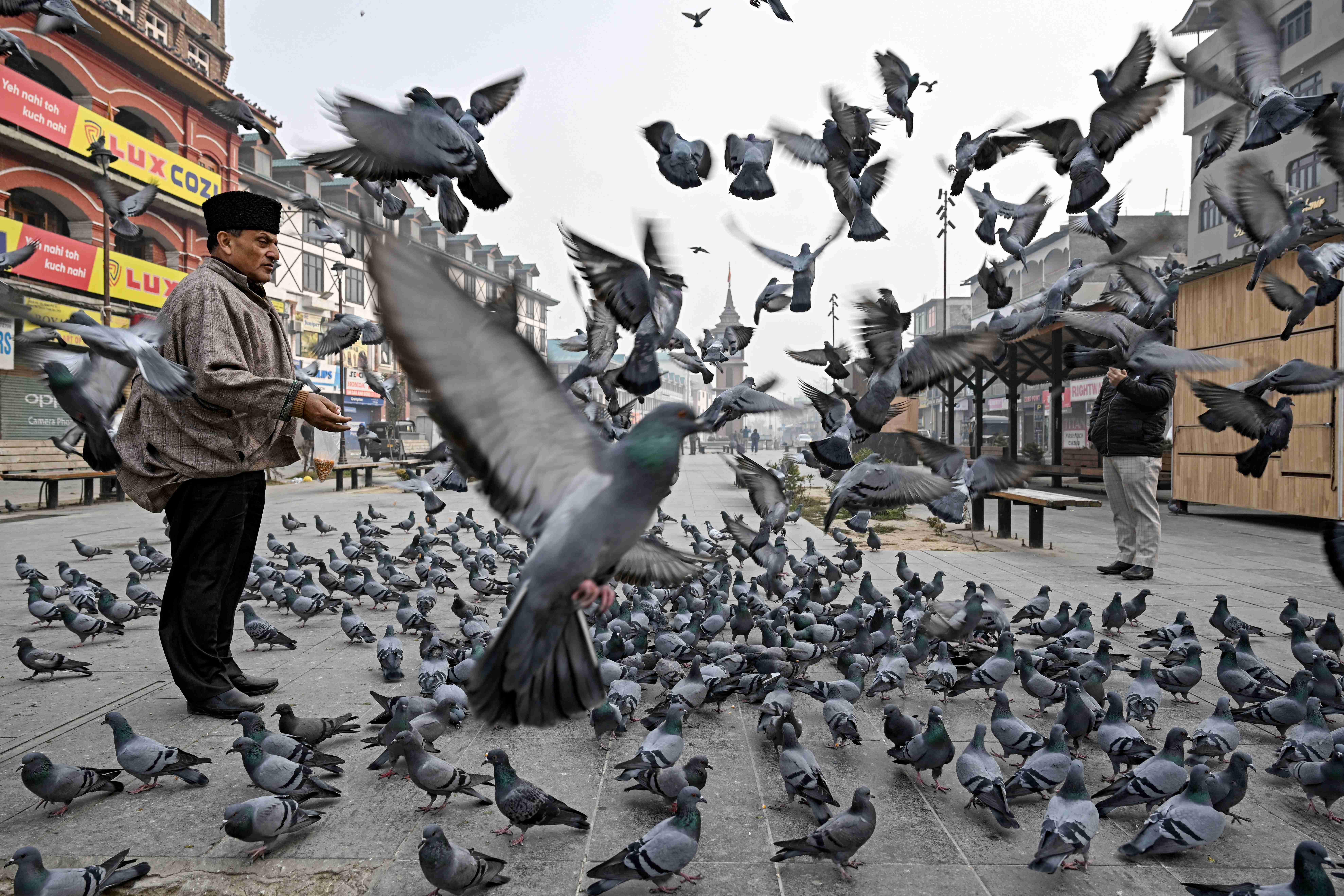
A man feeds a flock of pigeons on a cold morning in Srinagar on December 3, 2025. (Photo by Tauseef MUSTAFA / AFP)
Srinagar, India (Photo byTAUSEEF MUSTAFA / AFP)

Freelancers in Kashmir Fear Losing Access as Verification Tightens

Kashmir’s new “verification drive” claims to root out impostors, yet its heavy bureaucratic demands mainly sideline the independent freelancers who still dare to report in a shrinking media landscape. But here’s the unsettling question that hangs over the Valley like fog at dawn: who really benefits when the storytellers without institutional shields are pushed out of the frame?


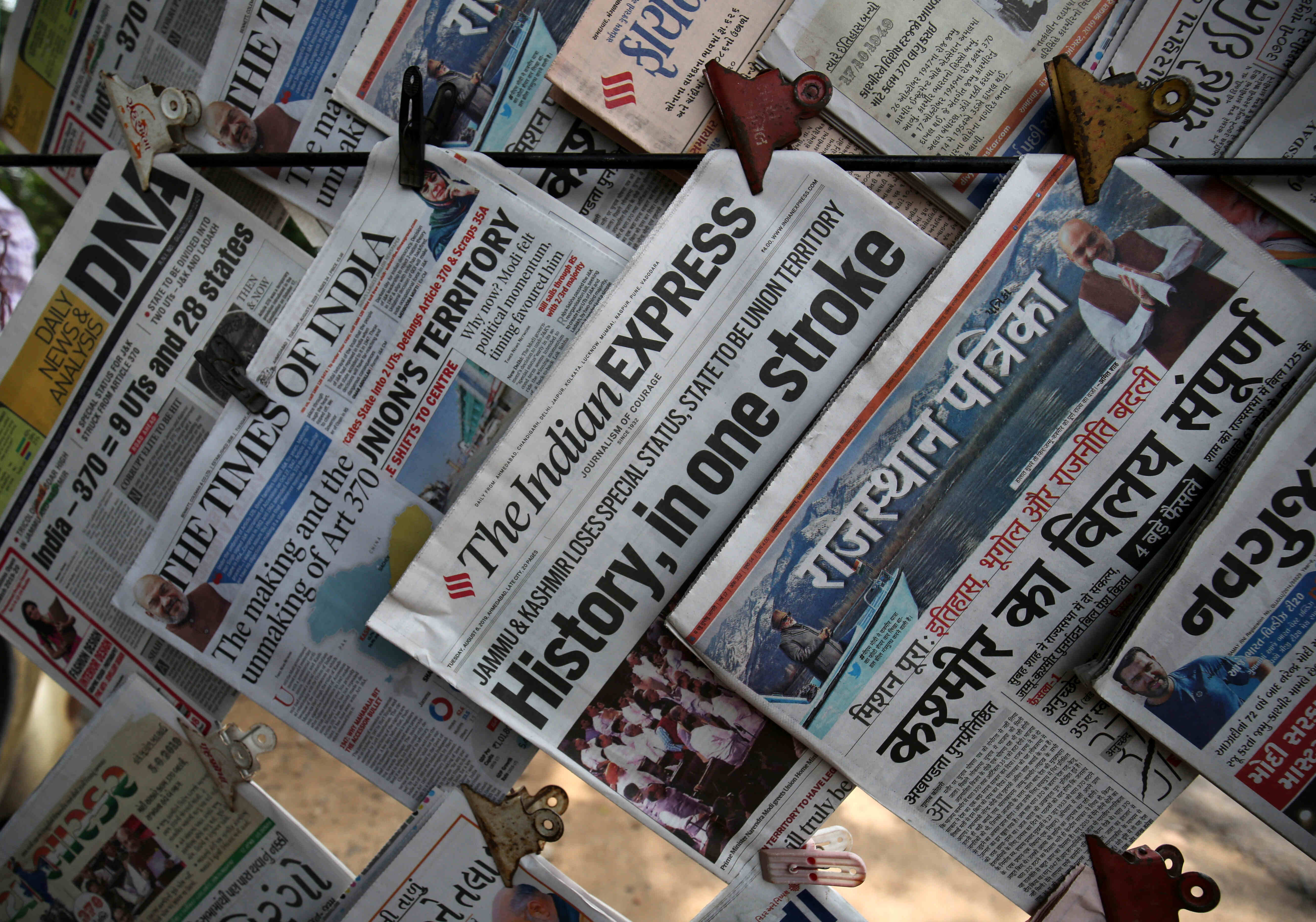
Srinagar: The Kashmir Department of Information and Public Relations (DIPR), a government media body that also oversees the private media sector in the Valley, recently launched a large-scale verification drive to identify so-called ‘fake journalists’, leaving several reputed freelance journalists in limbo.

The Kashmir government’s circular requires journalists to submit documents, including an Aadhaar (a 12-digit ID number) or PAN card (Permanent Account Number, tax identification number), office ID, an appointment letter, contact details, six months’ salary or bank statements, and links to the digital or social media platforms of the media organisation they work for, such as Facebook, YouTube, and X (Twitter).

The circular claims the move aims to safeguard journalism, prevent fake journalists, and ensure transparency for genuine media professionals in the district.


A Verification Drive Built for Salaried Newsrooms

In India, the Aadhaar card is a twelve-digit unique identity number that can be obtained voluntarily by all residents of India based on their biometrics and demographic data, similar to a U.S. Social Security number. The PAN card, on the other hand, serves as a tax identification number, essential for financial transactions and income tax filings. Both documents are indispensable for modern life in India.

While journalists working with mainstream media or regular newspapers rushed to submit the required documents, freelance journalists in the Valley struggled to comply, noting they do not receive regular salary slips or formal letters from the organisations they contribute to.

Approximately 150 students graduate with bachelor’s and master’s degrees in media studies from three universities in Kashmir each year. However, finding suitable jobs in mainstream media is difficult, forcing most of them to turn to freelancing.

“After I completed my master’s in media studies, I got a job at a reputed newspaper, but they paid me only 6,000 rupees ($73) per month. For me, that felt like exploitation, and I left within a month,” said Junaid Ahmad, 27. He then turned to freelancing, where he completed two stories on the environmental crisis within a month and earned 30,000 rupees ($365), which gave him the confidence to continue pursuing freelance journalism.

Junaid said he visited the Information Department and showed them screenshots of his international bylines, but he was told to submit the documents they requested; otherwise, he would not be allowed to cover any government-related functions or events in Kashmir. “Freelancing is not valid for us,” he was told.


Freelancers Pushed to the Margins

For young journalists like Ilhaq Ahmad, 26, who has been in the field for two years, the policy is troubling for freelancers because they do not have immediate access to the documents being requested.

This step, Ilhaq says, does not address the core problems in the media sector. Instead, it appears to restrict freelance journalists who report events on the ground.

“As a freelancer, I now have to think twice before covering any story, because if questioned, I would have nothing to prove my profession,” he said, adding that the administration should review the policy and introduce a fair system that supports genuine journalists while addressing the issue of unverified individuals in the field.


Sajad Lone, another journalist, said the verification drive should focus on educational background. “Just as lawyers need an LLB and doctors require an MBBS, professional journalists should also study media or journalism to ensure ethics, accountability, integrity, and balanced reporting. Proper training and education are essential in this regard,” he added.

“Those harming the profession are all non-professional journalists who lack ethics training,” he said. “The administration should focus on them in the verification drive. Kashmir has produced many freelancers who have reported on the environment, climate change, and rural life, bringing untold stories to global media platforms,” he added.

“Kashmir”, Lone said, “is already facing a severe media crisis marked by shrinking space for independent journalism, intense financial and political pressures, and a climate of fear and self-censorship. This crisis has resulted in job insecurity, low pay, and the departure of many qualified journalists from the profession.”


Press Freedom in a Shrinking Space

Notably, India is ranked 151st out of 180 countries in the World Press Freedom Index 2025. This is an improvement from its 2024 ranking, but it is still considered to be in a "very serious" category for press freedom by the reporting organisation, Reporters sans Frontières (RSF).  

In 2020, the Jammu and Kashmir Media Policy empowered the government to closely monitor news content for “anti-national activities” and “fake news”, while linking compliance to the allocation of government advertising. The move drew strong criticism for enabling officials to shape narratives and exert financial pressure on newsrooms in an already sensitive region.

The policy was widely seen as an effort to curb independent journalism and a direct challenge to free speech in a conflict-hit area that has witnessed some of the world’s longest internet shutdowns in a democracy.

Press freedom organisations, including Reporters Without Borders (RSF), described the policy as “Orwellian” and a form of “prior censorship”, warning that it could further shrink the space for critical reporting.

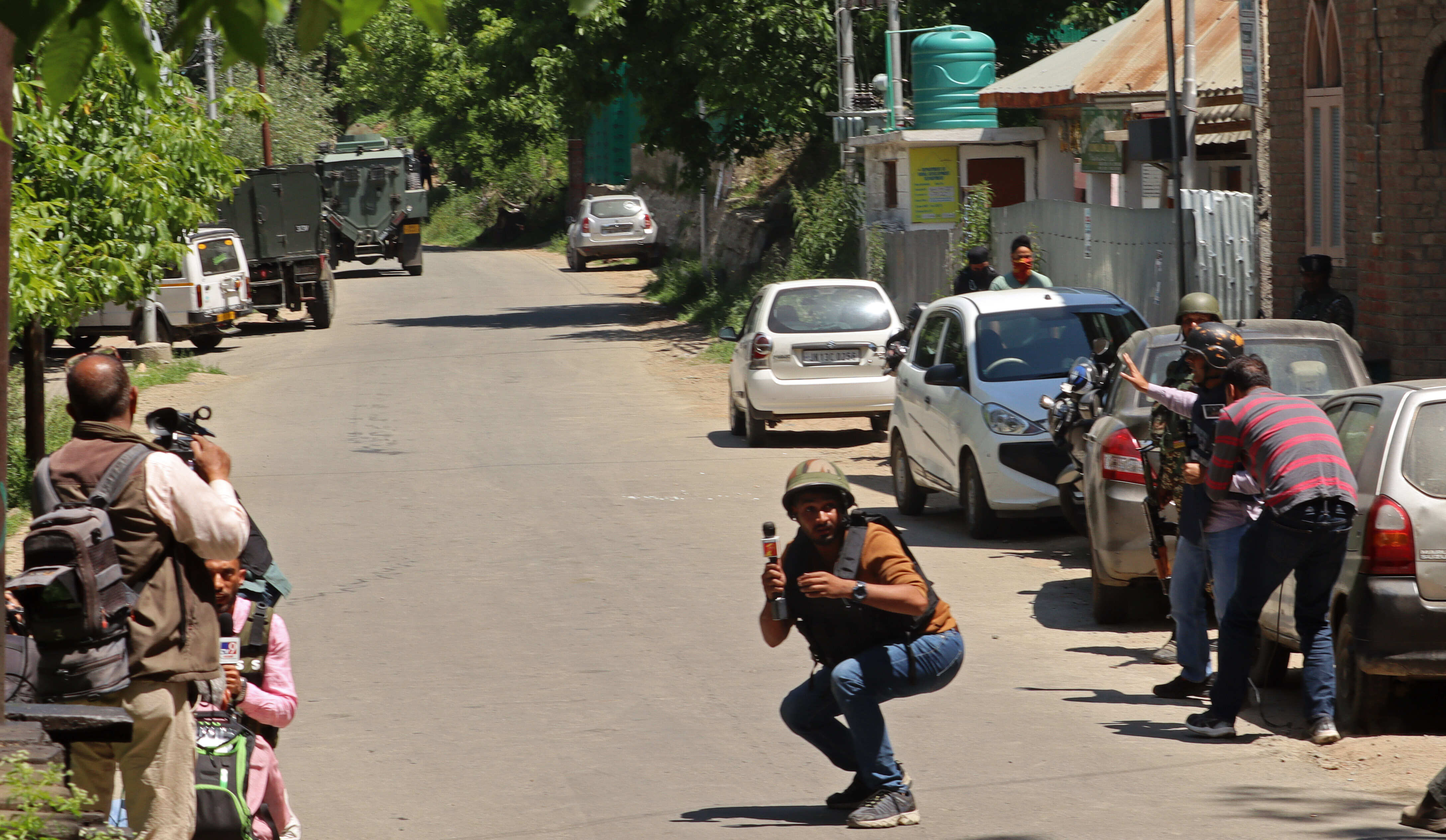
For Aqib Ahmad Khan, a young journalist who often covers armed encounters between security forces and militant groups, the challenge has become more complicated since he turned freelance.

During such incidents, he said he was frequently asked to show an identity card, something he no longer possesses as a freelancer. “In Kashmir, for the security forces, freelancers don’t ‘exist’. You must carry a proper ID card while reporting from sensitive locations,” he said.

“Now the same administration is making it worse by rejecting freelancers altogether.”

Khan said that while a crackdown on “fake journalists” was necessary, the current approach fails to target the actual problem.


In Jammu and Kashmir, the administration defines a “fake journalist” as someone who poses as a media professional without authorisation, registration, or professional credentials, often to engage in unethical activities.

“But what can a genuine freelance journalist do if he is unable to submit all these documents the administration demands?” Khan asked. “By their standards, I am also fake, simply because I don’t fit into their procedure.”

As a freelance journalist, Rashid Andrabi said he works across multiple newsrooms because “that is how this side of the profession functions.” The government’s new requirement, he added, seems to assume that every journalist has a single employer.

“It shuts out freelancers by design,” Rashid said.

“It tells us that unless we fit into a fixed structure, our work does not count.”

He acknowledged that misuse of the journalist title exists in Kashmir, but argued that the solution cannot be to demand documents freelancers simply do not have.

“The basic test is simple: stories, bylines, and editors who can verify the work. If someone has no reporting footprint, no published stories, no editorial trail, then the problem is already clear,” he said.

Rashid, who previously worked as a sub-editor at the well-known weekly magazine Kashmir Life and is now freelancing, said that if the aim is to identify fake journalists, the system should be based on verifiable work.

“Look at what people have produced over time. That will expose pretenders faster than anything else,” he said. “A policy that ignores freelancers is not a filter; it only weakens the profession.”

Rashid, who has multiple bylines across media organisations that regularly publish freelance work, said the administration must recognise this reality of the industry.

Meanwhile, an official responsible for collecting documents at one of the stations in Kashmir, speaking on condition of anonymity, said that freelancers should make a joint representation to Lieutenant Governor Manoj Sinha, the top administrator appointed by New Delhi after the abrogation of Article 370 in 2019.
 

Related Articles

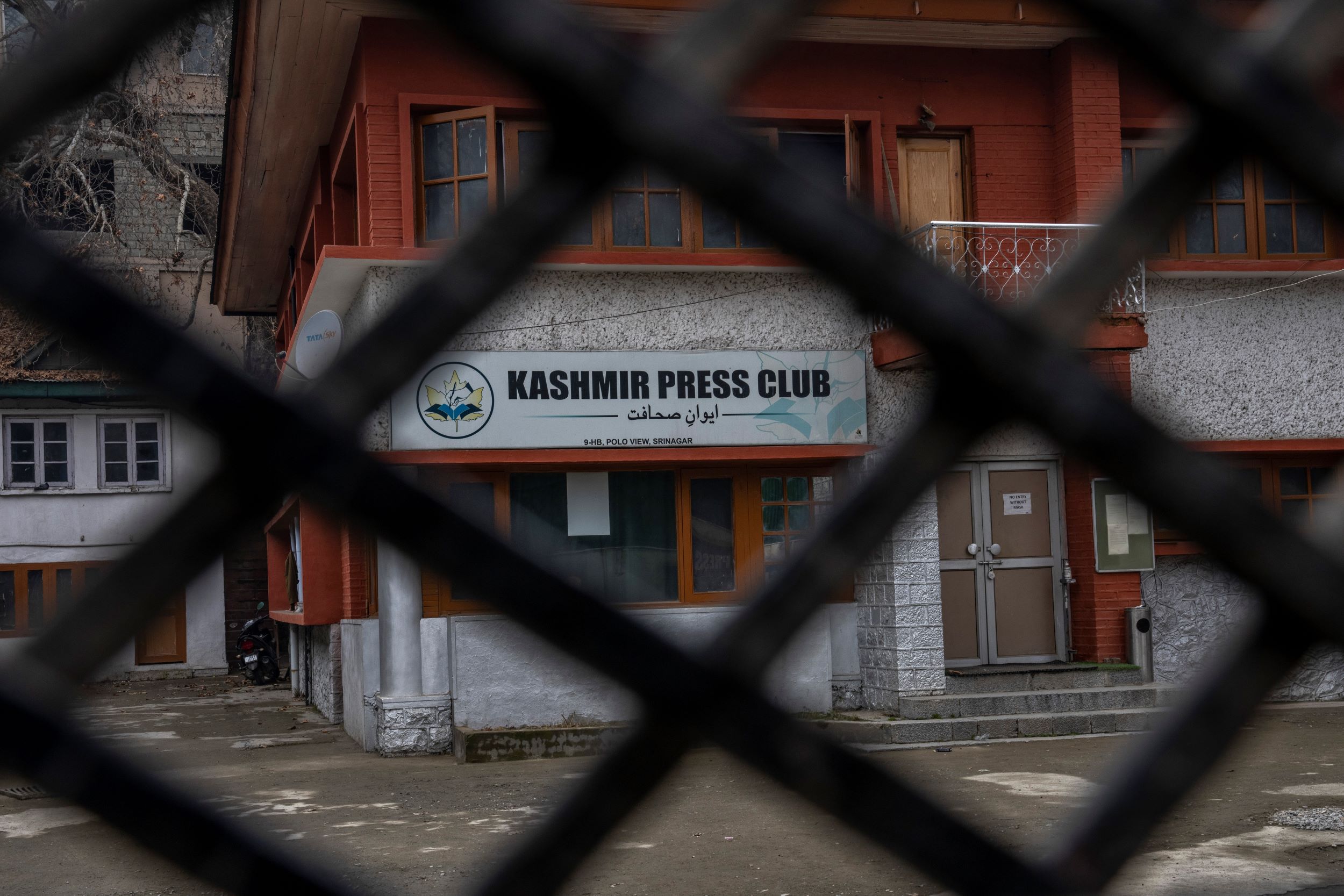
‘A sense of belonging has been taken away from us’ - the closure of the Kashmir Press Club

THE LONG READ: The closure of the Kashmir Press Club in January this year has come as a major blow to independent journalists in the troubled region who relied on it for camaraderie, respite and a ‘place to share ideas’

Sharafat
Meher Qadri, Sharafat Ali Published on: 10 Mar, 2022
Why Are Journalists Being Silenced in Kashmir?

Since the revocation of Article 370 in 2019, press freedom in Indian-administered Kashmir has sharply declined, with local journalists facing harassment, surveillance, and charges under anti-terror laws, while foreign correspondents are denied access or deported for critical reporting. These measures, aimed at controlling the region’s narrative and projecting normalcy, have drawn widespread criticism from international watchdogs, who warn of increasing suppression of both domestic and foreign media.
headshot
AJR Correspondent Published on: 27 Nov, 2024
Branded a ‘troublemaker’ and summoned by the police - life for female journalists in Kashmir

The repeal of Kashmir’s autonomous status by the Indian government, combined with a crackdown on press freedom, has made life extremely tough for women journalists in the region.

Safina
Safina Nabi Published on: 10 Feb, 2022
‘Silence is no longer the answer’ - the Kashmiri journalists living in exile

Kashmiri journalists living in self-imposed exile abroad talk about threats to their families and their determination to keep reporting on human rights abuses

Raqib
Raqib Hameed Naik Published on: 29 Aug, 2022
Suffering in silence - the Kashmiri journalists facing a mental health crisis

THE LONG READ: Al Jazeera Journalism Review has interviewed more than 20 journalists in India-controlled Kashmir who are facing exhausting, insurmountable obstacles to doing their jobs safely every single day

Adil Akhoon
Adil Amin Akhoon, Khalid Bashir Gura Published on: 29 May, 2023
Rise and Fall of Kashmir’s First Independent Magazine, Kashmir Walla

Jailed, silenced, and erased—how a fearless journalist built Kashmir’s most vital independent news platform, only to see it brutally shut down by the state. The Kashmir Walla, known for its bold coverage of politics, conflict, and human rights, became too powerful to ignore—so they ensured it disappeared.

Safina
Safina Nabi Published on: 15 Mar, 2025
Why Are Young Journalists in Kashmir Quitting Before They Begin?

In Kashmir, mounting censorship, political pressure, and shrinking job prospects are forcing a generation of aspiring journalists to abandon the profession, many before they even get the chance to begin, leaving behind a media landscape stripped of dissent, debate, and independent voices.

Abrar Fayaz, Muqeet Mohammed Shah Published on: 23 Sep, 2025

More Articles

Journalists in Maldives Enter New Phase of Government-Controlled Media Repression

As journalists weigh the costs of their work against threats to their lives and families, the fight for press freedom in the Maldives enters a dangerous new chapter, one where the stakes have never been higher.

Sumaiya Ali
Sumaiya Ali Published on: 8 Dec, 2025
Reporting Under Fire: The Struggle of African Journalists Facing Intimidation

African journalists who expose corruption and power now face a brutal mix of arrests, torture, digital surveillance, and lawsuits meant to drain their resources and silence them. From Ethiopia, Nigeria, Malawi, Benin, Sudan, Uganda, and Kenya to exile in Canada, reporting the truth has become an act of personal survival as much as public service.

Nigerian freelance Journalist John Chukwu
John Chukwu Published on: 4 Dec, 2025
Shipwrecked Narratives: How to Keep Migration Stories Afloat

Migration stories don’t become real until you meet people in the journey: the carpenter carrying photos of his fantasy coffins, or the Libyan city worker burying the forgotten dead, or the Tatar woman watching her livelihood collapse at a militarised border. Following these surprising human threads is the only way journalism can cut through collective exhaustion and make readers confront a crisis they’ve been trained to ignore.

Karlos Zurutuza, a freelance journalist and a media trainer. His work has been published in The Guardian, Al Jazeera English, POLITICO, The Middle East Eye and The Independent, among others.
Karlos Zurutuza Published on: 30 Nov, 2025
In-Depth and Longform Journalism in the AI Era: Revival or Obsolescence?

Can artificial intelligence tools help promote and expand the reach of longform journalism, still followed by a significant audience, or will they accelerate its decline? This article examines the leading AI tools reshaping the media landscape and explores the emerging opportunities they present for longform journalism, particularly in areas such as search and content discovery.

. سعيد ولفقير. كاتب وصحافي مغربي. ساهم واشتغل مع عددٍ من المنصات العربية منذ أواخر عام 2014.Said Oulfakir. Moroccan writer and journalist. He has contributed to and worked with a number of Arab media platforms since late 2014.
Said Oulfakir Published on: 24 Nov, 2025
Zapatismo and Citizen Journalism in Chiapas, Mexico

In Chiapas, independent journalists risk their lives to document resistance, preserve Indigenous memory, and challenge state and cartel violence. From Zapatista films to grassroots radio, media becomes a weapon for dignity, truth, and survival.

Ana Maria Monjardino
Ana Maria Monjardino Published on: 26 Oct, 2025
Lost in Translation: The Global South and the Flaws of Content Moderation

Global Rules, Local Consequences: How Biased Moderation Fuels Disinformation in the Global South. Unequal systems of AI and human oversight are failing to protect and often silencing non-Western voices online.

Lucia Bertoldini
Lucia Bertoldini Published on: 22 Oct, 2025
Propaganda: Between Professional Conscience and Imposed Agendas

When media institutions first envisioned editorial charters and professional codes of conduct, their primary goal was to safeguard freedom of expression. However, experience has shown that these frameworks have often morphed into a "vast prison", one that strips journalists of their ability to confront authority in all its forms. In this way, Big Brother dons velvet gloves to seize what little space remains for the practice of true journalism.

فرح راضي الدرعاوي Farah Radi Al-Daraawi
Farah Radi Al-Daraawi Published on: 17 Oct, 2025
Journalists Under Occupation; Palestinian Journalists in the West Bank

Palestinian journalists in the West Bank face extreme physical danger, psychological trauma, and systemic targeting under Israeli occupation, yet continue to report with resilience, amplifying the voices of their people despite global indifference and media bias.

Synne Furnes Bjerkestrand
Synne Bjerkestrand Published on: 13 Oct, 2025
Narrative Without Debate: The Telegraph’s Comment Ban on Gaza Coverage

What does it mean for readers when their voices are deliberately cut off? This content analysis of The Telegraph, a UK-based conservative newspaper known for its pro-establishment stance and alignment with right-leaning narratives, shows it systematically disabled Instagram comments on Israel-Gaza posts, blocking dissent and shaping a one-sided, pro-Israel narrative.

Mohammed Ramees
Mohammed Ramees Published on: 9 Oct, 2025
The Silent Death of Urdu Newspapers in India

With a 200-year history, Urdu newspapers in India are now facing a silent death—trapped in a cycle of decline where circulation has fallen by nearly 25%, advertising is absent, and government support is scarce. What vanishes is more than print: it is the erosion of a cultural and political lifeline that once bound Hindus, Muslims, and Sikhs in common debates and carried the voices of the marginalised into India’s public sphere.

Hanan Zaffa
Hanan Zaffar, Majid Alam Published on: 1 Oct, 2025
Mental Health in Newsrooms

Newsrooms, long lauded as bastions of information, are quietly grappling with a mental health crisis, underscoring an urgent need for systemic support, emotional safety, and sustainable practices to protect those telling the world’s stories.

Faras Ghani Published on: 27 Sep, 2025
Why Are Young Journalists in Kashmir Quitting Before They Begin?

In Kashmir, mounting censorship, political pressure, and shrinking job prospects are forcing a generation of aspiring journalists to abandon the profession, many before they even get the chance to begin, leaving behind a media landscape stripped of dissent, debate, and independent voices.

Abrar Fayaz, Muqeet Mohammed Shah Published on: 23 Sep, 2025
Sudan’s Journalists Are Being Silenced: By Bullets, Exile, and Fear

The collapse of the media industry in Sudan has subjected journalists to physical threats, legal and professional challenges, with no functioning legal system to investigate crimes committed against the press.

Nalova Akua
Nalova Akua Published on: 17 Sep, 2025
Nepali Journalists Trapped Between “GenZ” Protest and State Crackdowns

Nepali journalists are under attack on two fronts: facing violence from protesters in the streets while also being targeted by government crackdowns, restrictive laws, and political interference that threaten press freedom.

Sumaiya Ali
Sumaiya Ali Published on: 12 Sep, 2025
Interview with Zina Q. : Digital Cartography as a Tool of Erasure in Gaza

Amid Israel’s war on Gaza, Zina Q. uncovers how Google Maps and satellite imagery are being manipulated; homes relabelled as “haunted,” map updates delayed, and evidence of destruction obscured, revealing digital cartography itself as a weapon of war. By exposing these distortions and linking them to conflicts from Sudan to Ukraine, she demonstrates how control over maps and AI surveillance influences not only what the world sees, but also what it remembers.

Al Jazeera Journalism Review
Al Jazeera Journalism Review Published on: 6 Sep, 2025
I Don’t Want You to Be a Journalist, Mama”. Do Gaza’s Journalists Have the Luxury of Absence?

Does the Palestinian journalist in Gaza have the freedom to simply “step away”? How do they navigate the balance between their professional responsibilities and their family life? And to what extent does the duty to report justify the personal cost of being separated from one’s loved ones? Journalist Jenin Al-Wadiya sheds light on the deeply human details that rarely make it to the screen.

Jenin Al-Wadiya
Jenin Al-Wadiya Published on: 31 Aug, 2025
The Continent Experience: A New Kind of Newspaper for the Future of Journalism

The Continent is a new way of empowering people through quality journalism, blending the authority of newspapers with the reach of 21st-century distribution. Readers love it. That’s why we built it. It’s a model other newsrooms can learn from and one that comes with its own set of challenges.

Sipho Kings
Sipho Kings Published on: 28 Aug, 2025
Intersections of Journalism and Social Sciences in the Field

The field is where journalism and the social sciences meet at their most dynamic edge. As the world grows more complex, journalists increasingly take on the role of sociologists, without abandoning their core mission to question power and expose uncomfortable truths. By drawing on the methods and insights of social science, journalism deepens its coverage, grounds stories in real-world contexts, and resists the temptation of surface-level narratives.

Mohammed Ahddad
Ahdad Mohamed Published on: 23 Aug, 2025
Anas Al-Sharif’s Killing and the Israeli Media Narrative

Following the assassination of journalist Anas Al-Sharif, Palestinian journalists have been framed in Israeli media as legitimate military targets—part of a deliberate strategy to silence those who bear witness to the truth. This article explores how Hebrew-language media outlets have engaged in rhetoric that incites and legitimises the killing of journalists in Gaza.

Anas Abu Arqoub
Anas Abu Arqoub Published on: 19 Aug, 2025
New Media Reforms in Bangladesh Introduced to Replace Hasina-Era Journalism

Bangladesh’s interim government, led by Muhammad Yunus, has launched ambitious media reforms to undo the legacy of Sheikh Hasina’s 15-year rule, which was marked by censorship, media monopolies, and the notorious Digital Security Act. However, despite promises of greater freedom, journalists remain wary, as self-censorship, restrictive laws, and public scepticism continue to cast doubt on genuine change.

Sumaiya Ali
Sumaiya Ali Published on: 17 Aug, 2025
Monitoring of Journalistic Malpractices in Gaza Coverage

On this page, the editorial team of the Al Jazeera Journalism Review will collect news published by media institutions about the current war on Gaza that involves disinformation, bias, or professional journalistic standards and its code of ethics.

A picture of the Al Jazeera Media Institute's logo, on a white background.
Al Jazeera Journalism Review Published on: 11 Aug, 2025
The Washington Post: When Language Becomes a Veil for Pro-Israel Bias

How did The Washington Post's coverage differ between Israel’s bombing of Gaza hospitals and Iran’s strike on an Israeli hospital? Why does the paper attempt to frame Palestinian victims within a “complex operational context”? And when does language become a tool of bias toward the Israeli narrative?

Said Al-Azri
Said Al-Azri Published on: 6 Aug, 2025
The Human Story in Gaza: The Deadly Dilemma of “Who Do We Tell About?”

In the accelerating context of genocide, is the “pace” of death in Gaza outstripping journalists’ ability to capture human stories? How can they be expected to take their time crafting narratives amid hunger, displacement, and death? And to what extent can postwar documentation hold journalistic value in preserving collective memory and pursuing accountability for the perpetrators?

Mirvat Ouf
Mirvat Ouf Published on: 3 Aug, 2025
The Battle to Keep Journalists Alive in Gaza

Hungry journalists covering the story of starvation in Gaza, surviving on salt to stay alive, selling their work equipment to secure a “sack of flour” for their children, shedding the “shame” of publicly asking for food, and enduring the harshest media environment just to maintain “continuous coverage”.

Mona Khodor
Mona Khodor Published on: 26 Jul, 2025