Al Jazeera Journalism Review

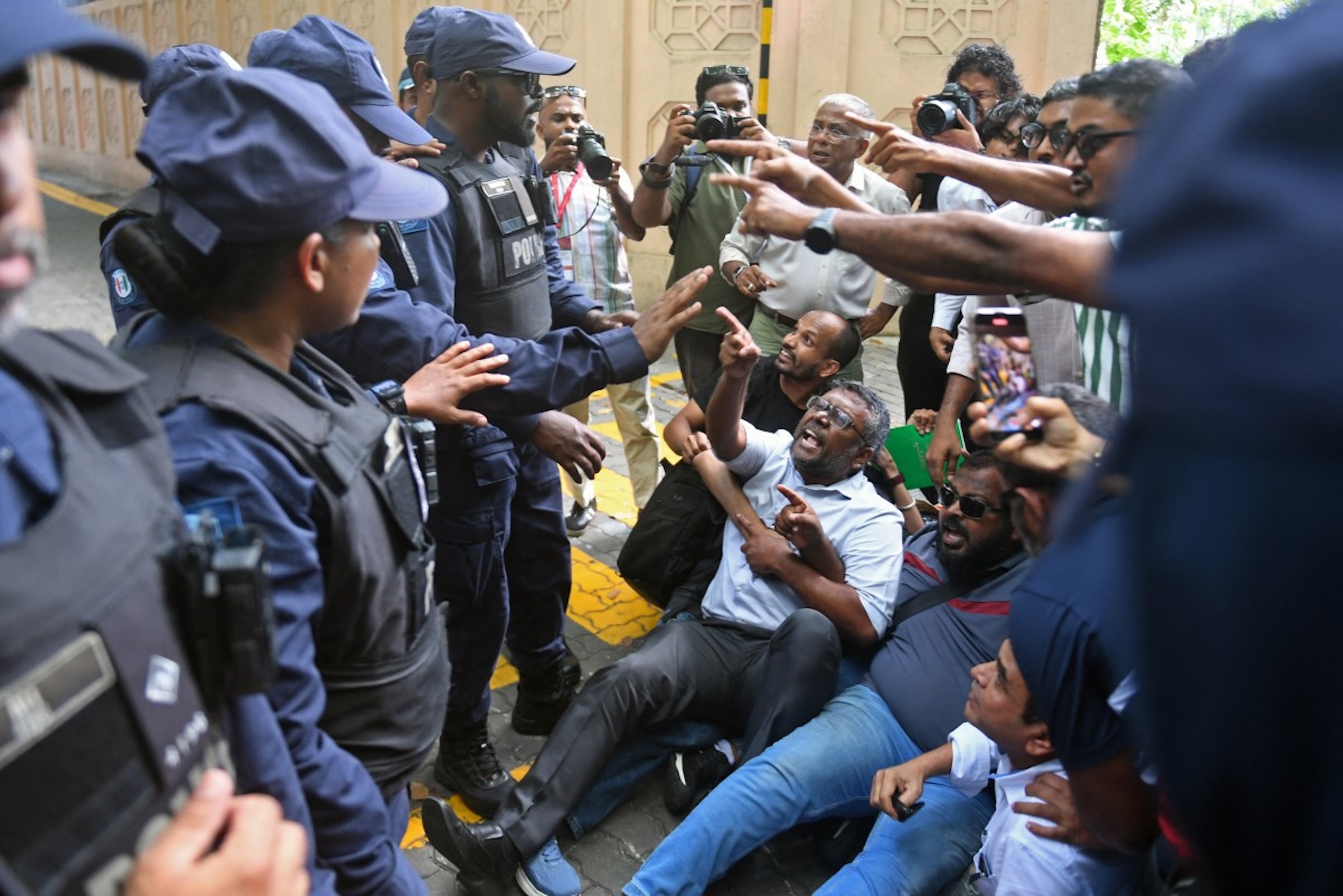
Members and supporters of Maldivian Democratic Party (MDP) shout slogans as police personnel stand guard during a protest outside the parliament in Male on September 16, 2025.
Members and supporters of Maldivian Democratic Party (MDP) shout slogans as police personnel stand guard during a protest outside the parliament in Male on September 16, 2025. (MOHAMED AFRAH / AFP)

Journalists in Maldives Enter New Phase of Government-Controlled Media Repression

As journalists weigh the costs of their work against threats to their lives and families, the fight for press freedom in the Maldives enters a dangerous new chapter, one where the stakes have never been higher.


The turquoise waters of the Maldives are a tourist's paradise, but for the reporters in the island nation, 2025 has been trouble in paradise.

On September 18, 2025, the government led by President Muizzu established a controversial Media and Broadcasting Commission. This new body replaced the Maldives Media Council (MMC) and Maldives Broadcasting Commission (BroadCom).

Around 151 journalists had signed a petition to withdraw the bill behind this media commission. Many protested in person and took to their social media accounts to demand due process for the bill.

However, the Maldivian government went ahead and within one month of its introduction in parliament, the bill was passed.

Former president Ibrahim Solih also criticised the underhanded manner in which the bill was approved, despite protests from the journalists.

“All Doors to Investigative Journalism Closed”

The new commission’s sweeping powers to be able to heavily fine journalists, and its selection process, has raised questions and concerns from the beginning.

Additionally, this new media commission will have three commissioners and a chair, who will be a presidential appointee. The parliament is also given the power to remove members nominated by media outlets.

Critics argue this will undermine the commission’s independence and increase government influence over the media.

However, the Maldives government on its website maintained that the Media and Broadcasting Commission is created to prevent the spread of misinformation, and uphold the rights and responsibilities of journalists.

"The body that decides on these punishments is fully controlled by the government," Moosa Rasheed, founder of the news website Citizen Media, says. He adds that the bill closes all doors to “investigative journalism".

The law contains vague terms prohibiting content that  "diminish a person's dignity”or pose "a threat to national security"— terms that can be weaponized for political purposes.

"Even if a whistleblower approaches us with evidence of government corruption, we face the fear of massive fines and the potential closure of our media outlet if we publish the story," Moosa explains.


Pepper Spray, Death Threats, and Sonic Weapons

The trajectory of press freedom in the Maldives has been turbulent. With the Reporters Without Borders (RSF) ranking the Maldives 104 out of 180 countries in 2025, Maldives remains a challenging ground for journalists.

Moosa points out that there was no press freedom in the country until 2008, when a new constitution guaranteed freedom of speech and the press.

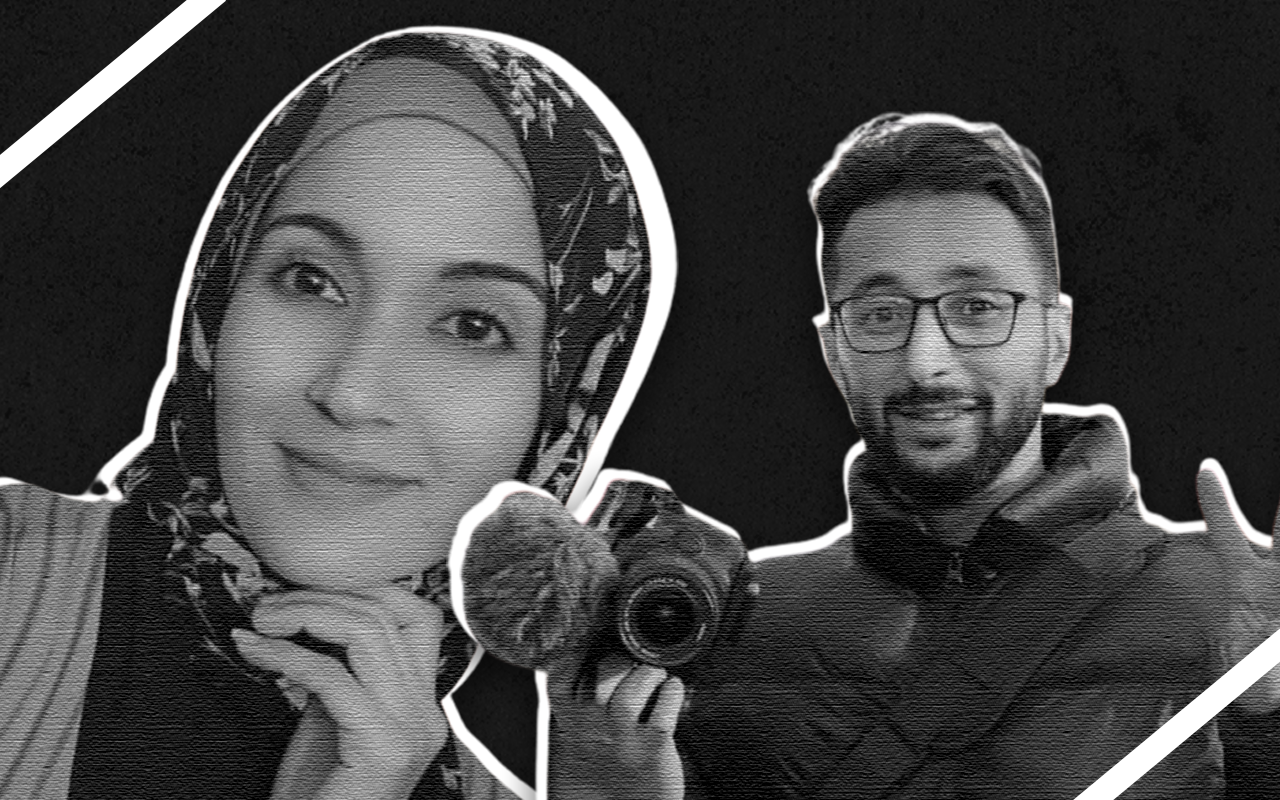
Even after the constitution’s adoption, indirect attacks on the press have continued. Another voice in this struggle is Anoof Junaid, a journalist who shares a similar fear but remains committed to his work. Anoof says he loves being a journalist, but given the lack of freedom and the recently passed media regulation bill, the fear of being fined for reporting on something that would upset the government is definitely rising.

On September 16, when the new media bill was being pushed through in an extraordinary session of the parliament, journalists staged their protests outside the building.

Anoof recounts the day, "I've faced police brutality multiple times, been pepper-sprayed, got pushed around, had my camera kicked, and very recently got attacked with LRAD [Long Range Acoustic Device] at a protest I was covering."

He emphasizes that he has only participated in one protest personally on September 16, while all other times he was present only to document events. "The police have on many occasions gotten in the way of my work despite my complying with all the laws," he says.

The intimidation extends beyond physical confrontation. "I know multiple [journalists who receive] death threats regarding certain articles that upset those in power, death threats due to the recent journalists' protests," Anoof reveals. "They even mentioned their family members' jobs getting threatened."


International Condemnation, Domestic Resistance

The bill has sparked new backlash both internationally and domestically.  UN High Commissioner for Human Rights Volker Türk has appealed to repeal the law, stating that it undermines freedom of expression and "freedom of media".

The United States, the United Kingdom, and the European Union all condemned it.

An array of international and national civil society organisations joined the ranks, such as Reporters Without Borders, Committee to Protect Journalists, and the International Federation of Journalists.

In a show of protest, most media organisations boycotted the commission's member election process entirely.

The result was predictable: only four candidates applied for four available seats, and in October, these individuals were appointed without a vote.

"We don't disagree with regulation in principle," Moosa clarifies. "However, it should not be done by the government. It must be achieved through an independent self-regulatory mechanism."

Ahmed Naif is the President of the Maldives Journalists Association (MJA) and a senior associate editor of the independent news outlet, Dhauru. As MJA President, Naaif has been at the forefront of the campaign to protect press freedom in the Maldives.

Naif believes the Media Control Bill will make self-censorship an official reality for journalists. He highlights that the law is filled with vague words like "undermining the national interest" or respecting “public order”, which are not legal definitions but tools to silence dissent.


Caught Between Sponsors and Safety

Beyond legal restrictions, Maldivian media face a financial model that compromises editorial independence. With a relatively small private sector, most media organisations rely on sponsorships from state-owned enterprises.

"Currently, almost all mainstream media outlets accept sponsorships from the government," Moosa says. "These companies provide huge payouts to the media, but it comes with a price. If a media outlet publishes anything negative about the government or the sponsoring company, the sponsors are cut, which would be a huge financial loss."

Naif points out the most alarming concern to be direct, credible death threats. During the recent protest against the media bill, he received messages explicitly threatening to "kill or stab" him and other journalists.

The constant harassment and these threats make reporters question:  "Is this story worth my life? Is it worth the safety of my family?"

Naif was personally told to leave the country after one of his stories exposed an influential politician and his business dealings. Journalists like Ahmed Rilwan and Yameen Rasheed, who died under mysterious circumstances, cast a dark shadow on the press freedom in the country. Rilwan was forced into a car at knifepoint and later killed, while Rasheed was stabbed to death.


Related Articles

Amid Increasing Pressure, Journalists in India Practice More Self-Censorship

In a country where nearly 970 million people are participating in a crucial general election, the state of journalism in India is under scrutiny. Journalists face harassment, self-censorship, and attacks, especially under the current Modi-led government. Mainstream media also practices self-censorship to avoid repercussions. The future of journalism in India appears uncertain, but hope lies in the resilience of independent media outlets.

Hanan Zaffa
Hanan Zaffar, Jyoti Thakur Published on: 25 Apr, 2024
Journalists are murdered when governments fail to ensure a free press

Over the past four years, everyone I've known who has tried to investigate the operations of mercenaries in Africa has either been killed or injured in attacks

Philip Obaji Jr
Philip Obaji Jr Published on: 12 Jun, 2022
Censorship, Militarisation, and Dismantlement: How Public Media Became a Political Battlefield in Latin America

Public media in Latin America, such as Brazil's EBC and Argentina's Télam, are being undermined through militarisation and dismantlement, threatening their role as public institutions. These actions jeopardise media independence and weaken their ability to serve the public interest, posing a serious risk to democracy.

Rita Freire Published on: 19 Dec, 2024
Journalists in DR Congo Face New Threats, Censorship in a Decades-long Conflict

Countless journalists have been arbitrarily arrested, kidnapped or have disappeared in the fog of the protracted war tearing the eastern Democratic Republic of Congo apart. The renewed M23 offensive augurs a more uncertain future for these ‘soldiers of the pen’.

Nalova Akua
Nalova Akua Published on: 3 Mar, 2025
Press Freedom in Multiple EU Countries on the "Verge of Collapse" Reports Show

The European Civil Liberties Union's Media Freedom 2024 report highlights a decline in press freedom and media pluralism in several EU countries, with calls for comprehensive reforms. The report also points out biases in Western media coverage of the Israeli offensive in Gaza, including restrictions on certain terms and unbalanced reporting. It raises concerns about diminishing media pluralism, journalist prosecution and surveillance, and declining public trust in the media.

A picture of the Al Jazeera Media Institute's logo, on a white background.
Al Jazeera Journalism Review Published on: 13 May, 2024

More Articles

Reporting Under Fire: The Struggle of African Journalists Facing Intimidation

African journalists who expose corruption and power now face a brutal mix of arrests, torture, digital surveillance, and lawsuits meant to drain their resources and silence them. From Ethiopia, Nigeria, Malawi, Benin, Sudan, Uganda, and Kenya to exile in Canada, reporting the truth has become an act of personal survival as much as public service.

Nigerian freelance Journalist John Chukwu
John Chukwu Published on: 4 Dec, 2025
Shipwrecked Narratives: How to Keep Migration Stories Afloat

Migration stories don’t become real until you meet people in the journey: the carpenter carrying photos of his fantasy coffins, or the Libyan city worker burying the forgotten dead, or the Tatar woman watching her livelihood collapse at a militarised border. Following these surprising human threads is the only way journalism can cut through collective exhaustion and make readers confront a crisis they’ve been trained to ignore.

Karlos Zurutuza, a freelance journalist and a media trainer. His work has been published in The Guardian, Al Jazeera English, POLITICO, The Middle East Eye and The Independent, among others.
Karlos Zurutuza Published on: 30 Nov, 2025
In-Depth and Longform Journalism in the AI Era: Revival or Obsolescence?

Can artificial intelligence tools help promote and expand the reach of longform journalism, still followed by a significant audience, or will they accelerate its decline? This article examines the leading AI tools reshaping the media landscape and explores the emerging opportunities they present for longform journalism, particularly in areas such as search and content discovery.

. سعيد ولفقير. كاتب وصحافي مغربي. ساهم واشتغل مع عددٍ من المنصات العربية منذ أواخر عام 2014.Said Oulfakir. Moroccan writer and journalist. He has contributed to and worked with a number of Arab media platforms since late 2014.
Said Oulfakir Published on: 24 Nov, 2025
Zapatismo and Citizen Journalism in Chiapas, Mexico

In Chiapas, independent journalists risk their lives to document resistance, preserve Indigenous memory, and challenge state and cartel violence. From Zapatista films to grassroots radio, media becomes a weapon for dignity, truth, and survival.

Ana Maria Monjardino
Ana Maria Monjardino Published on: 26 Oct, 2025
Lost in Translation: The Global South and the Flaws of Content Moderation

Global Rules, Local Consequences: How Biased Moderation Fuels Disinformation in the Global South. Unequal systems of AI and human oversight are failing to protect and often silencing non-Western voices online.

Lucia Bertoldini
Lucia Bertoldini Published on: 22 Oct, 2025
Propaganda: Between Professional Conscience and Imposed Agendas

When media institutions first envisioned editorial charters and professional codes of conduct, their primary goal was to safeguard freedom of expression. However, experience has shown that these frameworks have often morphed into a "vast prison", one that strips journalists of their ability to confront authority in all its forms. In this way, Big Brother dons velvet gloves to seize what little space remains for the practice of true journalism.

فرح راضي الدرعاوي Farah Radi Al-Daraawi
Farah Radi Al-Daraawi Published on: 17 Oct, 2025
Journalists Under Occupation; Palestinian Journalists in the West Bank

Palestinian journalists in the West Bank face extreme physical danger, psychological trauma, and systemic targeting under Israeli occupation, yet continue to report with resilience, amplifying the voices of their people despite global indifference and media bias.

Synne Furnes Bjerkestrand
Synne Bjerkestrand Published on: 13 Oct, 2025
Narrative Without Debate: The Telegraph’s Comment Ban on Gaza Coverage

What does it mean for readers when their voices are deliberately cut off? This content analysis of The Telegraph, a UK-based conservative newspaper known for its pro-establishment stance and alignment with right-leaning narratives, shows it systematically disabled Instagram comments on Israel-Gaza posts, blocking dissent and shaping a one-sided, pro-Israel narrative.

Mohammed Ramees
Mohammed Ramees Published on: 9 Oct, 2025
The Silent Death of Urdu Newspapers in India

With a 200-year history, Urdu newspapers in India are now facing a silent death—trapped in a cycle of decline where circulation has fallen by nearly 25%, advertising is absent, and government support is scarce. What vanishes is more than print: it is the erosion of a cultural and political lifeline that once bound Hindus, Muslims, and Sikhs in common debates and carried the voices of the marginalised into India’s public sphere.

Hanan Zaffa
Hanan Zaffar, Majid Alam Published on: 1 Oct, 2025
Mental Health in Newsrooms

Newsrooms, long lauded as bastions of information, are quietly grappling with a mental health crisis, underscoring an urgent need for systemic support, emotional safety, and sustainable practices to protect those telling the world’s stories.

Faras Ghani Published on: 27 Sep, 2025
Why Are Young Journalists in Kashmir Quitting Before They Begin?

In Kashmir, mounting censorship, political pressure, and shrinking job prospects are forcing a generation of aspiring journalists to abandon the profession, many before they even get the chance to begin, leaving behind a media landscape stripped of dissent, debate, and independent voices.

Abrar Fayaz, Muqeet Mohammed Shah Published on: 23 Sep, 2025
Sudan’s Journalists Are Being Silenced: By Bullets, Exile, and Fear

The collapse of the media industry in Sudan has subjected journalists to physical threats, legal and professional challenges, with no functioning legal system to investigate crimes committed against the press.

Nalova Akua
Nalova Akua Published on: 17 Sep, 2025
Nepali Journalists Trapped Between “GenZ” Protest and State Crackdowns

Nepali journalists are under attack on two fronts: facing violence from protesters in the streets while also being targeted by government crackdowns, restrictive laws, and political interference that threaten press freedom.

Sumaiya Ali
Sumaiya Ali Published on: 12 Sep, 2025
Interview with Zina Q. : Digital Cartography as a Tool of Erasure in Gaza

Amid Israel’s war on Gaza, Zina Q. uncovers how Google Maps and satellite imagery are being manipulated; homes relabelled as “haunted,” map updates delayed, and evidence of destruction obscured, revealing digital cartography itself as a weapon of war. By exposing these distortions and linking them to conflicts from Sudan to Ukraine, she demonstrates how control over maps and AI surveillance influences not only what the world sees, but also what it remembers.

Al Jazeera Journalism Review
Al Jazeera Journalism Review Published on: 6 Sep, 2025
I Don’t Want You to Be a Journalist, Mama”. Do Gaza’s Journalists Have the Luxury of Absence?

Does the Palestinian journalist in Gaza have the freedom to simply “step away”? How do they navigate the balance between their professional responsibilities and their family life? And to what extent does the duty to report justify the personal cost of being separated from one’s loved ones? Journalist Jenin Al-Wadiya sheds light on the deeply human details that rarely make it to the screen.

Jenin Al-Wadiya
Jenin Al-Wadiya Published on: 31 Aug, 2025
The Continent Experience: A New Kind of Newspaper for the Future of Journalism

The Continent is a new way of empowering people through quality journalism, blending the authority of newspapers with the reach of 21st-century distribution. Readers love it. That’s why we built it. It’s a model other newsrooms can learn from and one that comes with its own set of challenges.

Sipho Kings
Sipho Kings Published on: 28 Aug, 2025
Intersections of Journalism and Social Sciences in the Field

The field is where journalism and the social sciences meet at their most dynamic edge. As the world grows more complex, journalists increasingly take on the role of sociologists, without abandoning their core mission to question power and expose uncomfortable truths. By drawing on the methods and insights of social science, journalism deepens its coverage, grounds stories in real-world contexts, and resists the temptation of surface-level narratives.

Mohammed Ahddad
Ahdad Mohamed Published on: 23 Aug, 2025
Anas Al-Sharif’s Killing and the Israeli Media Narrative

Following the assassination of journalist Anas Al-Sharif, Palestinian journalists have been framed in Israeli media as legitimate military targets—part of a deliberate strategy to silence those who bear witness to the truth. This article explores how Hebrew-language media outlets have engaged in rhetoric that incites and legitimises the killing of journalists in Gaza.

Anas Abu Arqoub
Anas Abu Arqoub Published on: 19 Aug, 2025
New Media Reforms in Bangladesh Introduced to Replace Hasina-Era Journalism

Bangladesh’s interim government, led by Muhammad Yunus, has launched ambitious media reforms to undo the legacy of Sheikh Hasina’s 15-year rule, which was marked by censorship, media monopolies, and the notorious Digital Security Act. However, despite promises of greater freedom, journalists remain wary, as self-censorship, restrictive laws, and public scepticism continue to cast doubt on genuine change.

Sumaiya Ali
Sumaiya Ali Published on: 17 Aug, 2025
Monitoring of Journalistic Malpractices in Gaza Coverage

On this page, the editorial team of the Al Jazeera Journalism Review will collect news published by media institutions about the current war on Gaza that involves disinformation, bias, or professional journalistic standards and its code of ethics.

A picture of the Al Jazeera Media Institute's logo, on a white background.
Al Jazeera Journalism Review Published on: 11 Aug, 2025
The Washington Post: When Language Becomes a Veil for Pro-Israel Bias

How did The Washington Post's coverage differ between Israel’s bombing of Gaza hospitals and Iran’s strike on an Israeli hospital? Why does the paper attempt to frame Palestinian victims within a “complex operational context”? And when does language become a tool of bias toward the Israeli narrative?

Said Al-Azri
Said Al-Azri Published on: 6 Aug, 2025
The Human Story in Gaza: The Deadly Dilemma of “Who Do We Tell About?”

In the accelerating context of genocide, is the “pace” of death in Gaza outstripping journalists’ ability to capture human stories? How can they be expected to take their time crafting narratives amid hunger, displacement, and death? And to what extent can postwar documentation hold journalistic value in preserving collective memory and pursuing accountability for the perpetrators?

Mirvat Ouf
Mirvat Ouf Published on: 3 Aug, 2025
The Battle to Keep Journalists Alive in Gaza

Hungry journalists covering the story of starvation in Gaza, surviving on salt to stay alive, selling their work equipment to secure a “sack of flour” for their children, shedding the “shame” of publicly asking for food, and enduring the harshest media environment just to maintain “continuous coverage”.

Mona Khodor
Mona Khodor Published on: 26 Jul, 2025
Balancing Productivity and Privacy: How Female Journalists Use AI Chatbots

Female journalists in Jordan are harnessing AI chatbots to boost productivity, enhance digital safety, and find emotional support, but their growing reliance also raises critical concerns about privacy, ethics, and the responsible use of emerging technologies in journalism. This article explores how these tools are reshaping their workflows while navigating the challenges of trust and accountability.

Afnan Abu Yahia
Afnan Abu Yahia Published on: 20 Jul, 2025