Al Jazeera Journalism Review

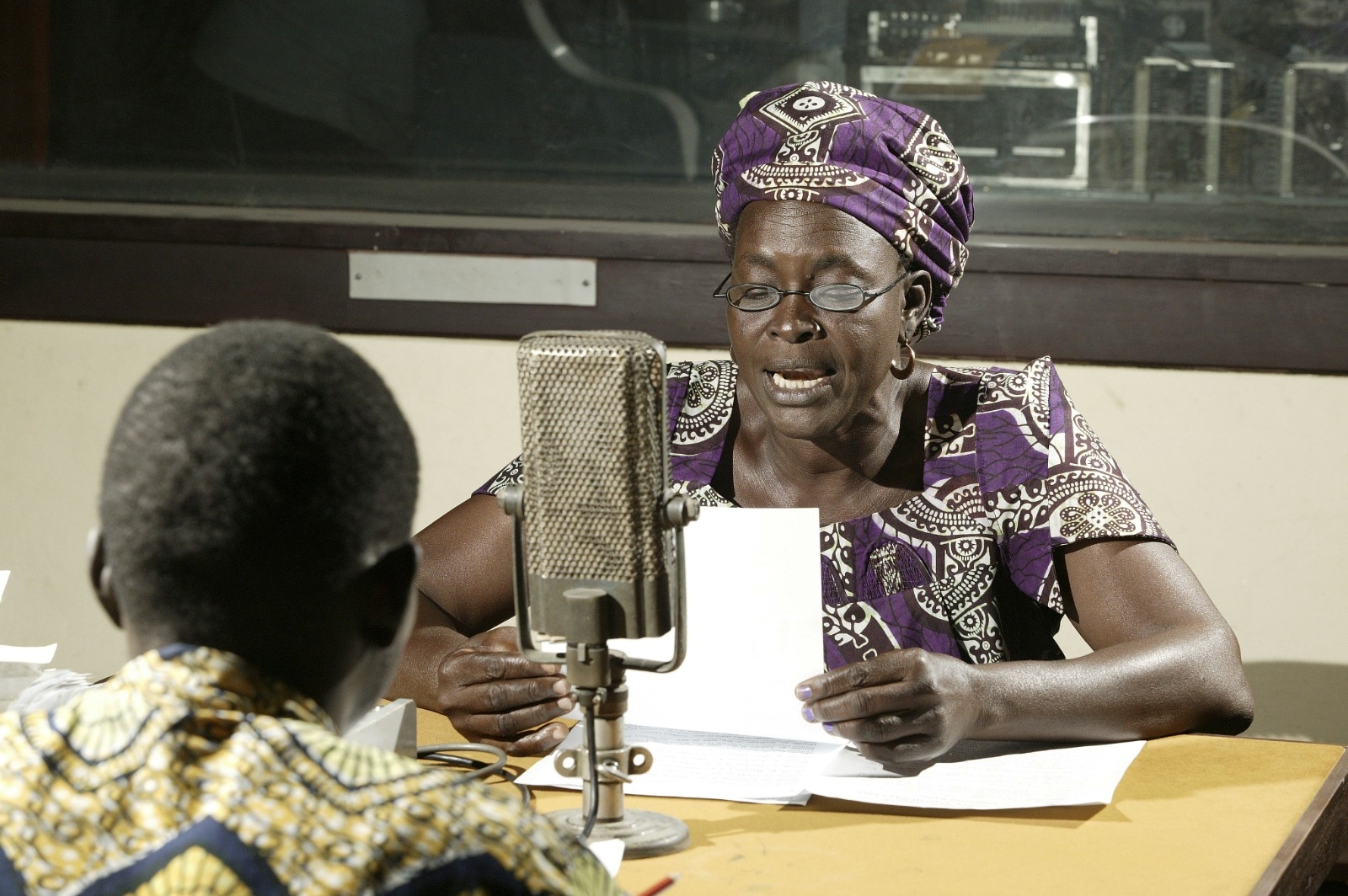
Woman talking on-air at a radio station, Garoua, Cameroon, Africa.
By: Heiner Heine/imageBROKER (Jan 13 2007)

Bilingual on Paper, Unbalanced on Air: English Journalism in a Francophone Cameroon


It’s 14:00 GMT (2:00 PM) in Yaoundé. In just 30 minutes, Sports Hour, a popular English-language programme that airs every Wednesday on Royal FM 88.8, goes live. As usual, the scheduled guests have yet to arrive, though none has officially cancelled.

With the clock ticking, Biwah scrolls through his contact list, searching for someone who not only speaks English but can also weigh in on the day’s topic. “In situations like this, there’s usually no time to stick to a preplanned theme. I find an available guest, settle on a topic they’re comfortable with, and we go live,” he explains. There are no allowances for delay; his boss expects a show, no matter what.

For Biwah and other English-speaking journalists producing content in Cameroon’s French-dominant regions, this is a weekly ritual. Securing English-speaking sources is often the first hurdle, and the pressure to keep programmes and publications running is relentless. In a media landscape where French shapes policy and public discourse, every episode becomes an exercise in resilience, improvisation, and quiet determination.

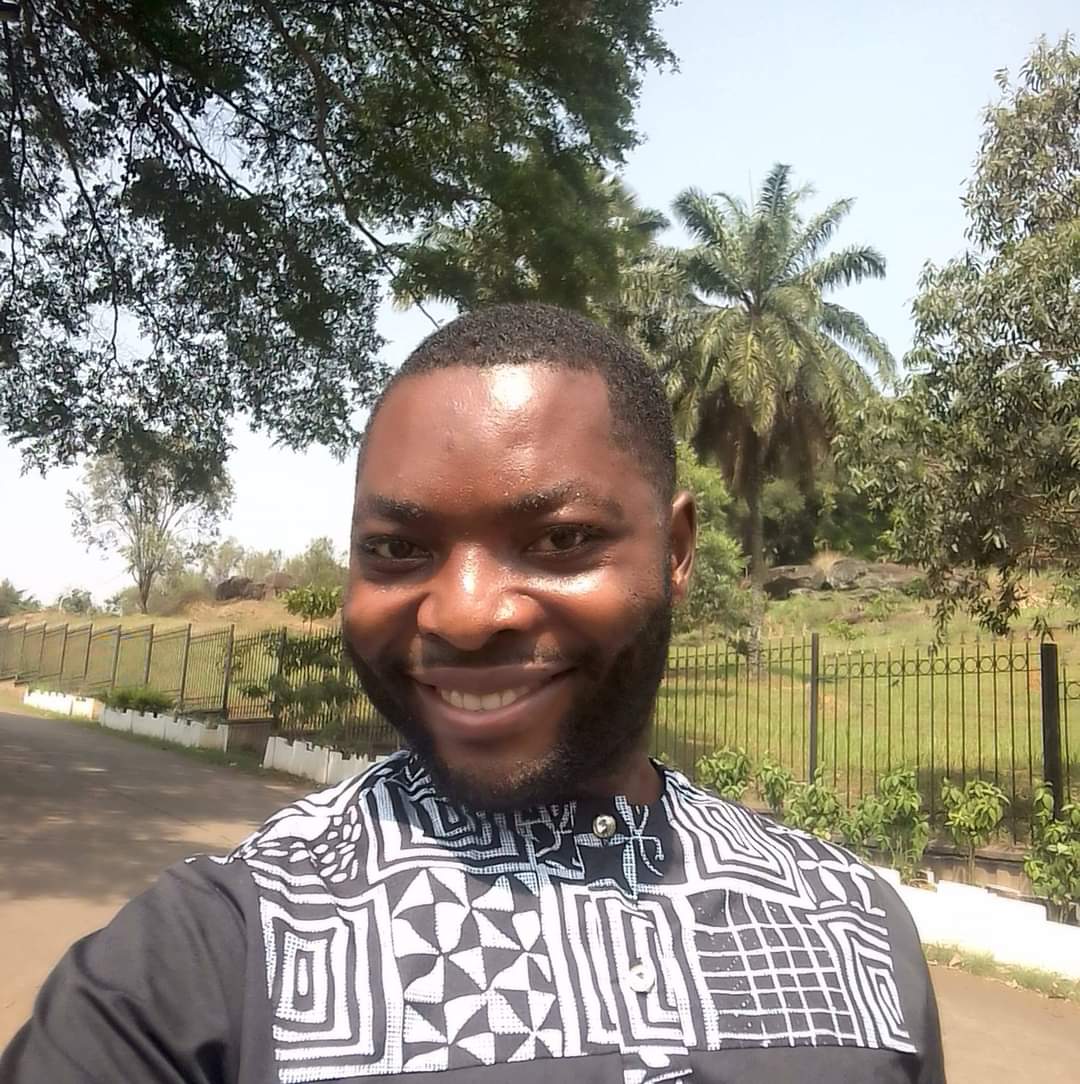
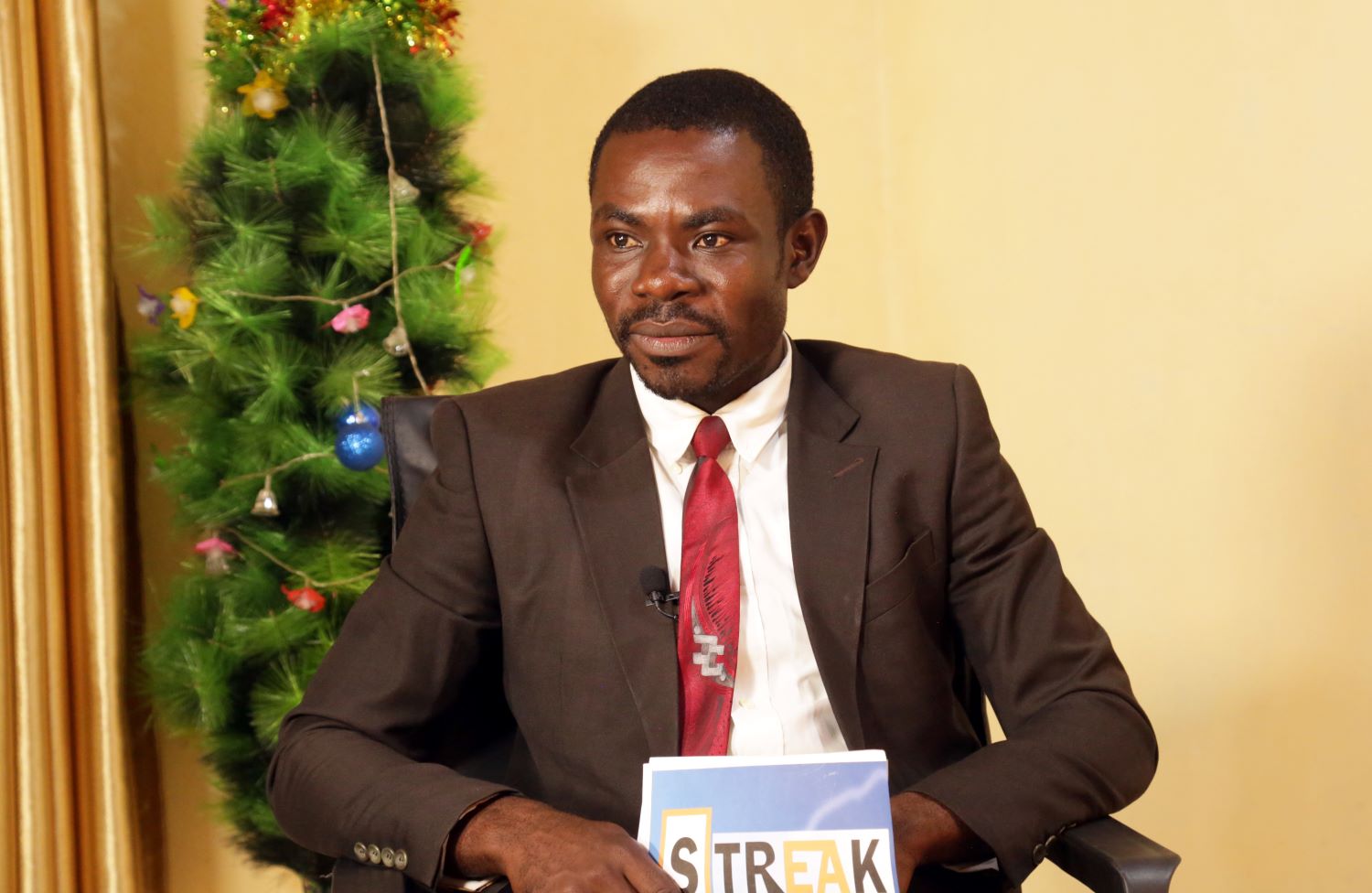
Biwah Bryan is an English-speaking sports journalist and host of Sports Hour, based in Yaoundé.


Where it Started: Language Divide in Cameroonian Media

Cameroon’s bilingualism—French and English—traces back to its colonial partition between France and Britain after Germany’s defeat in World War I. Although the dual-language policy was designed to foster national unity, its implementation has been uneven, particularly within the media sector.

French dominates state-owned outlets such as CRTV and Cameroon Tribune, where airtime, editorial resources, and training opportunities are heavily skewed toward French-language content. Studies indicate that more than 80 percent of CRTV’s programming is broadcast in French, with less than 20 percent in English. In print, French-language newspapers outnumber English-language publications by nearly four to one. While this disparity partly reflects demographics – around 80 percent of Cameroonians are Francophone – it also mirrors institutional priorities.

Efforts to address the imbalance, including the creation of the National Commission for the Promotion of Bilingualism and Multiculturalism (NCPBM) in 2017, have yielded limited results. English-speaking journalists, particularly those working in Francophone cities, often operate with minimal institutional backing. Instead, they depend on personal networks, improvisation, and digital tools to source guests and produce stories.

The NCPBM itself has acknowledged “persistent inequalities in bilingual practice,” noting that state media have yet to achieve equitable representation of both languages. Though the Commission has conducted sensitisation tours and issued reports, critics argue that its measurable impact on media structures remains modest. Bilingualism may be promoted in principle, but in practice, state-owned media continues to favour French.

For Lebga, sourcing English-speaking experts is a daily struggle. “I often travel back to English-speaking regions to find specialists: political scientists, and agricultural experts,” he says. “I rely on colleagues there to help identify suitable interviewees. If I can’t find anyone fluent in English, I conduct the interview in French and translate the responses, which becomes especially difficult with complex subjects like climate change or agriculture.” At times, he turns to translation apps, but they frequently miss nuance and context.

Winton Lebga is an English-speaking journalist and Chief of Rewriting at the English News Desk at CRTV, based in Yaoundé.

Like Lebga, Beng Emmanuel Kum of The Guardian Post, the country’s leading English-language daily, describes the search for English-speaking experts in Francophone regions as “harder than finding water in the desert.”

“Sourcing English-speaking contacts in Francophone areas is a major challenge,” he says. “Eight out of ten sources I consider for most stories are French-speaking. The problem is particularly acute in Yaoundé, where I often conduct interviews in French and then translate them into English. Even when some sources try to speak English, their proficiency is limited, which can lead to misunderstandings and misrepresentation.”


Human cost of coverage

Producing English-language journalism in Cameroon’s Francophone regions comes with significant emotional and logistical challenges. English-speaking journalists often take on multiple roles—reporter, fixer, translator, and advocate—to get a story on air or into print.

“I can comfortably translate, edit, and verify information effectively. However, it doesn't always work perfectly. I still feel limited, particularly in specialised fields such as technology, finance, health, and the environment. Writing a story conceived under such circumstances is already extremely challenging and at times can lead to emotional and psychological strain,” says Beng.

The constant need to locate sources, prepare guests, translate interviews, and verify meaning stretches both newsroom capacity and personal resilience. Many describe feeling burnt out by the improvisational rhythm of their work, particularly in cities like Yaoundé, where English-speaking sources are scarce and institutional support is thin.

For most journalists, each week feels like a test of whether English still matters in the national conversation. The fear of losing relevance – of being sidelined in a media landscape that defaults to French – adds a quiet but persistent pressure to every editorial decision.

For Biwah, that pressure peaks every Wednesday. “I host one of the few English sports programmes in Yaounde, where French dominates. Each week, the challenge is the same: finding English-speaking guests who can bring the topic to life.”

Lebga echoes the strain. “There are times when my interviewee isn’t fluent in English. In such a case, I draft my questions in French, conduct the interview in French, then return to translate and record a voiceover. That’s the reality we face.”

What might take one journalist a few hours can stretch far longer: drafting questions in English, translating them into French, conducting the interview, then interpreting and reworking the responses for broadcast or print. The process demands more than extra time; it demands sustained mental agility and endurance.

The long-term impact of the emotional and logistical challenges that English-speaking journalists face in finding the necessary sources is that many stories are reported superficially or, in some cases, abandoned entirely.

"Over the past two years, I have come up with some interesting stories, particularly in the domains of sports, politics, and the economy. Unfortunately, I have not been able to develop them. I had to set these stories aside, although I hope to report on them one day. I reached out to several experts in these fields, but none were able to effectively articulate the issues I wanted to address in English. It’s quite frustrating," says Beng.

He pauses before adding, “I chose journalism to make an impact, to tell stories, to be a voice for the voiceless, to influence policy. When language becomes the barrier, it’s disheartening. Important stories remain untold.”


Editorial Flip

As the saying goes, where there’s a blockade, ingenuity follows. For many English-speaking journalists, that ingenuity has reshaped the editorial process itself.

Rather than selecting a topic and then searching for the right voice, they often reverse the sequence. The starting point becomes availability: an accessible guest – reached through WhatsApp, Facebook, or personal networks – comes first. The topic is then built around that person’s expertise and comfort zone.

“I’ve learned to work in reverse,” Biwah says. “I find an available guest and create a topic that plays to their strengths.”

While this reverse workflow approach preserves authenticity and allows for deeply personal storytelling, it does limit long-term planning and thematic depth.


What Should Change?

For Beng, the solution is both urgent and practical. “Translation is essential in today’s world,” he says. “In every newsroom I’ve worked in, you find reporters, editors, proofreaders. Adding a translator, whether full-time or part-time, would significantly help reporters like me gather, process, and share information accurately. That support would allow us to achieve the impact we want our stories to have.”

Lebga agrees but argues that the fix must go beyond a single hire. He calls for broader investment - financial, material, and human - to equip journalists with reliable tools and access to quality translation services when needed.

Funding, they suggest, could cover hiring translators, offering modest honoraria to vetted English-speaking guests, and guaranteeing consistent airtime for English-language programs. With that support, producers could plan content strategically rather than scrambling at the last minute.

Newsrooms could also maintain a regularly updated database of Anglophone experts and community voices, giving editors quick access to credible sources. At the same time, donors and media development partners should prioritise training for editors and decision-makers, reinforcing why language equity matters, not only for representation, but for accountability.

Media policy expert Peter Tiako Ngangum believes the issue runs deeper still. “Structural reforms are needed,” he argues. His research on media regulation suggests that Cameroon’s legal framework often restricts rather than enables press freedom, leaving bilingual equity largely unaddressed.

International press freedom advocates, including Media Defence, similarly warn that language discrimination compounds broader patterns of censorship and harassment faced by journalists.

Ultimately, the struggle of English-speaking journalists in Cameroon is not simply about sourcing guests. It is about linguistic equity, institutional will, and press freedom itself. Without sustained investment in translation, training, and policy enforcement, English-language journalism risks further marginalisation in a country that constitutionally affirms bilingualism but continues to practise imbalance.


Related Articles

‘Not an easy ride’ - the long and winding road to digital journalism in Cameroon

How do you mark yourself as a professional reporter in Cameroon when everyone has a Facebook page and claims to be a ‘journalist’?

Akem
Akem Nkwain Published on: 23 Mar, 2022
Caught between warring factions - life as a journalist in Cameroon

Cameroon’s anglophone crisis has resulted in large parts of the country becoming no-go zones for reporters who must find other ways to do their jobs

Akem
Akem Nkwain Published on: 8 Jun, 2022
Journalism in chains in Cameroon

Investigative journalists in Cameroon sometimes use treacherous means to navigate the numerous challenges that hamper the practice of their profession: the absence of the Freedom of Information Act, the criminalisation of press offenses, and the scare of the overly-broad anti-terrorism law.

Nalova Akua
Nalova Akua Published on: 12 Apr, 2024
‘I had to work for free’ - life as a disabled journalist in Cameroon

Working as a journalist is not easy for people with disabilities in Cameroon - many of whom are forced to work as volunteers for years to ‘prove’ themselves able to do the job

Akem
Akem Nkwain Published on: 25 Aug, 2022
‘Other journalists jeer at us’ – life for mobile journalists in Cameroon

Journalists in Cameroon are using their phones in innovative ways to report the news for many different types of media, but major news organisations have still not caught up

Akem
Akem Nkwain Published on: 1 Aug, 2023
Cameroonian Media Martyrs: The Intersection of Journalism and Activism

Experts and journalists in Cameroon disagree on the relationship between journalism and activism: some say journalism is activism; others think they are worlds apart, while another category says a “very thin” line separate both

Nalova Akua
Nalova Akua Published on: 28 Jan, 2024
'If women are dying as a result of it, then I should report about it' - telling the untold stories of Cameroon

Journalists like Comfort Mussa, based in Cameroon, say that seeking out the untold stories of real people and having the bravery to cover taboo subjects are essential to their work

Akem
Akem Nkwain Published on: 3 Oct, 2022
Sports Photojournalism in Cameroon: A Craft at Risk in the Digital Age

Sports photojournalists in Cameroon face growing challenges, from the rise of mobile photography and content creators to financial struggles, piracy, and a widespread expectation for free images. Despite these obstacles, professionals emphasise the need for innovation, investment in training, and greater respect for their craft to ensure the survival of photojournalism in a rapidly evolving digital landscape.

Akem
Akem Nkwain Published on: 30 Jan, 2025

More Articles

Reporting the Spectacle: Myanmar’s Manufactured Elections

Myanmar’s recent elections posed a profound challenge for journalists, who were forced to navigate between exposing a sham process and inadvertently legitimising it. With media repression intensifying, reporting became an act of resistance against the junta’s effort to control information and silence independent voices.

Annie Zaman
Annie Zaman Published on: 7 Feb, 2026
Public Hostility Toward Legacy Media in Bangladesh

The December 2025 arson attacks on Prothom Alo and The Daily Star marked a turning point for journalism in Bangladesh. As public anger replaces state control as the primary threat, reporters are reassessing personal safety, editorial judgement, and professional credibility in a political transition where journalism itself is increasingly treated as an enemy.

Arsalan Bukhari, an independent journalist based in India
Arsalan Bukhari Published on: 4 Feb, 2026
Migration Issues and the Framing Dilemma in Western Media

How does the Western press shape the migration narrative? Which journalistic frames dominate its coverage? And is reporting on anti-immigration protests neutral or ideologically charged? This analysis examines how segments of Western media echo far-right rhetoric, reinforcing xenophobic discourse through selective framing, language, and imagery.

Salma Saqr
Salma Saqr Published on: 31 Jan, 2026
Polarised, Intimidated, Silenced: The Media Under Siege in Cameroon’s Election

Cameroon’s 2025 presidential election exposed a troubling paradox: a nation voting under the watchful eye of power, while its press remained silenced. From the arrest of a teenage reporter to bans on political debate and digital manipulation, freedom of expression is under siege, and journalism is on trial.

Shuimo Trust Dohyee
Shuimo Trust Dohyee, Ngweh Rita Published on: 22 Jan, 2026
What Image of Gaza Will the World Remember?

Will the story of Gaza be reduced to official statements that categorise the Palestinian as a "threat"? Or to images of the victims that flood the digital space? And how can the media be transformed into a tool for reinforcing collective memory and the struggle over narratives?

Hassan Obeid
Hasan Obaid Published on: 13 Jan, 2026
Journalism in Mauritania: Behind the Facade of Press Freedom Indicators

Mauritania holds the top position in the Arab world in the Press Freedom Index published by Reporters Without Borders. However, behind this favourable ranking, the media and journalists face significant challenges, chief among them the ambiguity surrounding the definition of a "journalist" and the capacity of media professionals to fulfil their roles in accountability and oversight. Despite official efforts, the defining feature of Mauritania’s media landscape remains its persistent state of fluctuation.

 Ahmed Mohamed El-Moustapha
Ahmed Mohamed El-Moustapha Published on: 6 Jan, 2026
How Can Journalism Make the Climate Crisis a People’s Issue?

Between the import of Western concepts and terminology that often fail to reflect the Arab context, and the denial of the climate crisis, or the inability to communicate it in clear, accessible terms, journalism plays a vital role in informing the public and revealing how climate change directly affects the fabric of daily life in the Arab world.

Bana Salama
Bana Salama Published on: 19 Dec, 2025
Freelancers in Kashmir Fear Losing Access as Verification Tightens

Kashmir’s new “verification drive” claims to root out impostors, yet its heavy bureaucratic demands mainly sideline the independent freelancers who still dare to report in a shrinking media landscape. But here’s the unsettling question that hangs over the Valley like fog at dawn: who really benefits when the storytellers without institutional shields are pushed out of the frame?

Tauseef Ahmad
Tauseef Ahmad, Sajid Raina Published on: 11 Dec, 2025
Journalists in Maldives Enter New Phase of Government-Controlled Media Repression

As journalists weigh the costs of their work against threats to their lives and families, the fight for press freedom in the Maldives enters a dangerous new chapter, one where the stakes have never been higher.

Sumaiya Ali
Sumaiya Ali Published on: 8 Dec, 2025
Reporting Under Fire: The Struggle of African Journalists Facing Intimidation

African journalists who expose corruption and power now face a brutal mix of arrests, torture, digital surveillance, and lawsuits meant to drain their resources and silence them. From Ethiopia, Nigeria, Malawi, Benin, Sudan, Uganda, and Kenya to exile in Canada, reporting the truth has become an act of personal survival as much as public service.

Nigerian freelance Journalist John Chukwu
John Chukwu Published on: 4 Dec, 2025
Shipwrecked Narratives: How to Keep Migration Stories Afloat

Migration stories don’t become real until you meet people in the journey: the carpenter carrying photos of his fantasy coffins, or the Libyan city worker burying the forgotten dead, or the Tatar woman watching her livelihood collapse at a militarised border. Following these surprising human threads is the only way journalism can cut through collective exhaustion and make readers confront a crisis they’ve been trained to ignore.

Karlos Zurutuza, a freelance journalist and a media trainer. His work has been published in The Guardian, Al Jazeera English, POLITICO, The Middle East Eye and The Independent, among others.
Karlos Zurutuza Published on: 30 Nov, 2025
In-Depth and Longform Journalism in the AI Era: Revival or Obsolescence?

Can artificial intelligence tools help promote and expand the reach of longform journalism, still followed by a significant audience, or will they accelerate its decline? This article examines the leading AI tools reshaping the media landscape and explores the emerging opportunities they present for longform journalism, particularly in areas such as search and content discovery.

. سعيد ولفقير. كاتب وصحافي مغربي. ساهم واشتغل مع عددٍ من المنصات العربية منذ أواخر عام 2014.Said Oulfakir. Moroccan writer and journalist. He has contributed to and worked with a number of Arab media platforms since late 2014.
Said Oulfakir Published on: 24 Nov, 2025
Zapatismo and Citizen Journalism in Chiapas, Mexico

In Chiapas, independent journalists risk their lives to document resistance, preserve Indigenous memory, and challenge state and cartel violence. From Zapatista films to grassroots radio, media becomes a weapon for dignity, truth, and survival.
Ana Maria Monjardino
Ana Maria Monjardino Published on: 26 Oct, 2025
Lost in Translation: The Global South and the Flaws of Content Moderation

Global Rules, Local Consequences: How Biased Moderation Fuels Disinformation in the Global South. Unequal systems of AI and human oversight are failing to protect and often silencing non-Western voices online.

Lucia Bertoldini
Lucia Bertoldini Published on: 22 Oct, 2025
Propaganda: Between Professional Conscience and Imposed Agendas

When media institutions first envisioned editorial charters and professional codes of conduct, their primary goal was to safeguard freedom of expression. However, experience has shown that these frameworks have often morphed into a "vast prison", one that strips journalists of their ability to confront authority in all its forms. In this way, Big Brother dons velvet gloves to seize what little space remains for the practice of true journalism.

فرح راضي الدرعاوي Farah Radi Al-Daraawi
Farah Radi Al-Daraawi Published on: 17 Oct, 2025
Journalists Under Occupation; Palestinian Journalists in the West Bank

Palestinian journalists in the West Bank face extreme physical danger, psychological trauma, and systemic targeting under Israeli occupation, yet continue to report with resilience, amplifying the voices of their people despite global indifference and media bias.

Synne Furnes Bjerkestrand
Synne Bjerkestrand Published on: 13 Oct, 2025
Narrative Without Debate: The Telegraph’s Comment Ban on Gaza Coverage

What does it mean for readers when their voices are deliberately cut off? This content analysis of The Telegraph, a UK-based conservative newspaper known for its pro-establishment stance and alignment with right-leaning narratives, shows it systematically disabled Instagram comments on Israel-Gaza posts, blocking dissent and shaping a one-sided, pro-Israel narrative.

Mohammed Ramees
Mohammed Ramees Published on: 9 Oct, 2025
The Silent Death of Urdu Newspapers in India

With a 200-year history, Urdu newspapers in India are now facing a silent death—trapped in a cycle of decline where circulation has fallen by nearly 25%, advertising is absent, and government support is scarce. What vanishes is more than print: it is the erosion of a cultural and political lifeline that once bound Hindus, Muslims, and Sikhs in common debates and carried the voices of the marginalised into India’s public sphere.
Hanan Zaffa
Hanan Zaffar, Majid Alam Published on: 1 Oct, 2025
Mental Health in Newsrooms

Newsrooms, long lauded as bastions of information, are quietly grappling with a mental health crisis, underscoring an urgent need for systemic support, emotional safety, and sustainable practices to protect those telling the world’s stories.
Faras Ghani Published on: 27 Sep, 2025
Why Are Young Journalists in Kashmir Quitting Before They Begin?

In Kashmir, mounting censorship, political pressure, and shrinking job prospects are forcing a generation of aspiring journalists to abandon the profession, many before they even get the chance to begin, leaving behind a media landscape stripped of dissent, debate, and independent voices.

Abrar Fayaz, Muqeet Mohammed Shah Published on: 23 Sep, 2025
Sudan’s Journalists Are Being Silenced: By Bullets, Exile, and Fear

The collapse of the media industry in Sudan has subjected journalists to physical threats, legal and professional challenges, with no functioning legal system to investigate crimes committed against the press.

Nalova Akua
Nalova Akua Published on: 17 Sep, 2025
Nepali Journalists Trapped Between “GenZ” Protest and State Crackdowns

Nepali journalists are under attack on two fronts: facing violence from protesters in the streets while also being targeted by government crackdowns, restrictive laws, and political interference that threaten press freedom.

Sumaiya Ali
Sumaiya Ali Published on: 12 Sep, 2025
Interview with Zina Q. : Digital Cartography as a Tool of Erasure in Gaza

Amid Israel’s war on Gaza, Zina Q. uncovers how Google Maps and satellite imagery are being manipulated; homes relabelled as “haunted,” map updates delayed, and evidence of destruction obscured, revealing digital cartography itself as a weapon of war. By exposing these distortions and linking them to conflicts from Sudan to Ukraine, she demonstrates how control over maps and AI surveillance influences not only what the world sees, but also what it remembers.

Al Jazeera Journalism Review
Al Jazeera Journalism Review Published on: 6 Sep, 2025
I Don’t Want You to Be a Journalist, Mama”. Do Gaza’s Journalists Have the Luxury of Absence?

Does the Palestinian journalist in Gaza have the freedom to simply “step away”? How do they navigate the balance between their professional responsibilities and their family life? And to what extent does the duty to report justify the personal cost of being separated from one’s loved ones? Journalist Jenin Al-Wadiya sheds light on the deeply human details that rarely make it to the screen.

Jenin Al-Wadiya
Jenin Al-Wadiya Published on: 31 Aug, 2025