Generating images with artificial intelligence poses a broad ethical dilemma around privacy and fabrication, and in the case of generating images of the dead, the problem appears even greater, given the ethical questions it raises about the nature and necessity of using such images journalistically, especially when it comes to psychological harm to families or the exploitation of these images purely to capture digital attention.
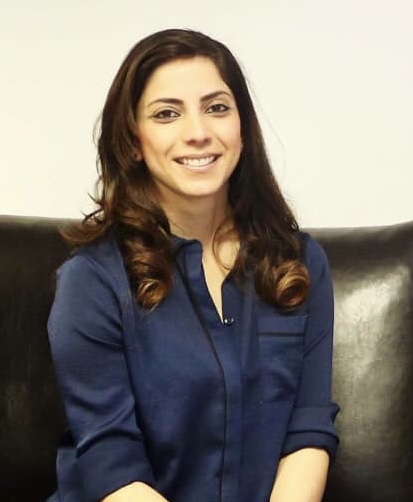
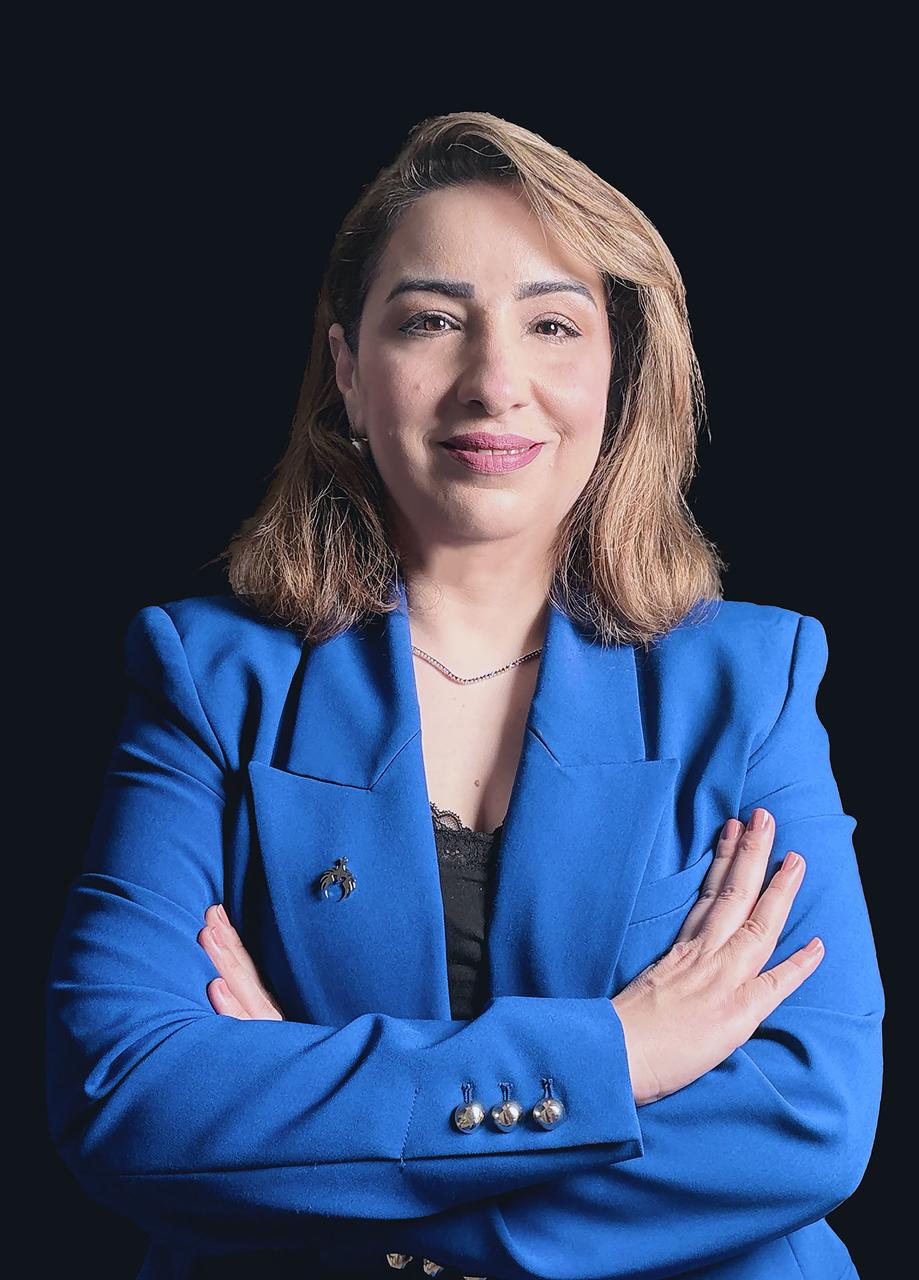
In an unsettling scene, the child Dima al-Yassin, daughter of Dr Rania al-Abbasi, appears on screen to tell the story of a family whose fate was only recently confirmed after they were forcibly disappeared for thirteen years in Syrian regime prisons.
The AI-generated video brings the family members back to life on screen, as Dima narrates what happened to them in a tone of solidarity.
The viewer is led to believe they are watching an emotionally engaging narrative of a real story, meant to keep the victims alive in memory and to demand justice and accountability for the perpetrators. (1)
This scene is not an isolated case; it represents one of many examples that reveal how "digital resurrection" technologies, powered by generative AI, have become a contested media tool: seen by some as a noble extension of human-rights documentation and by others as a slide toward commodifying pain and misleading the public through narratives the victims themselves never produced.
This raises a pressing ethical and conceptual question: where does creative solidarity that serves the cause of justice end, and where does dramatic authorship begin the kind that strips away privacy, misleads the public, and brings victims back to virtual life without clear rules or standards?
Digital Resurrection and Its Generative Mechanisms
Digital Resurrection is the use of digital technologies, including generative AI, to reproduce a deceased person's features, voice, speech style, or personality in images, audio recordings, videos, or interactive environments.
One early example is a project by American journalist James Vlahos, who began recording his dying father's memories in 2016 and then developed a conversational chatbot known as "Dadbot" that mimics his father's personality, memories, and manner of speech. (2)
These technologies later moved into the public and political sphere, when an American organisation used deepfake technology in 2020 to revive teenager Joaquin Oliver (3), a victim of a school shooting, for a political campaign urging voters to support gun-control legislation.
The "digital resurrection" process combines three integrated technical mechanisms. The first is voice cloning: a few minutes of a genuine audio recording may be enough to train a model to mimic a person's tone and manner of speaking. The second is animating still images: algorithms turn a single photograph into a moving, speaking character, with synchronised lip movement and facial expressions. The third, the most fraught and the one that raises the most serious ethical dilemma, is generating text and scripts for full dialogue composed in the voice of the deceased, sometimes drawing on their documented statements and sometimes woven entirely from the content creator's imagination of what might be said.
A study by researchers Tom Divon and Christian Pentzold (4) reveals that digital resurrection is not limited to recalling victims of violence in political or commemorative contexts where a victim may be granted a new digital presence as a witness to the past, even as that presence becomes subject to the agendas of whoever reproduces it. It can also turn victims' digital traces into resources that are extracted, reshaped, and circulated within the media economy. The researchers describe this process through the concept of "Spectral Labour", where the dead become, involuntarily, sources of data, likeness, voice, and emotion that can be repurposed without their consent.
When generative AI techniques are used to make a victim speak through a scenario they never actually voiced, even one inspired by their own story or by documented information about them, the process shifts from recovering historical memory to producing a new discourse in the victim's name. This use becomes even more sensitive when there is no explicit, documented consent from rights holders or the victim's family, raising questions about who owns the narrative, the privacy of memory, and the family's right to decide how their loved one is represented.
The Worlds in Which Digital Resurrection Is Used
These tools are used today in two radically different spaces. In educational and academic institutions, in serious journalism, and in cultural institutions, this kind of content is subject to documented approvals and editorial review before publication. In the open digital space, however, traditional review mechanisms are often absent; any user can produce and publish similar content directly, without ethical evaluation, review, or professional accountability.
Using these tools in digital media without a clear commitment to ethical standards plays directly into the interests of social media platforms, whose algorithms reward content that stirs emotion and drives engagement. This kind of content cannot be separated from the logic of the attention economy that drives those platforms.
The project "In Event of Moon Disaster" offers an important example for understanding the ethical limits of digitally reviving historical figures. Produced at MIT's Centre for Advanced Virtuality, it used deepfake technology to create a synthetic video showing former U.S.
President Richard Nixon (1913–1994) delivering a speech he never actually gave.
The speech is based on a statement drafted by writer William Safire in 1969, prepared in case the Apollo 11 moon landing failed and the two astronauts died, creating a project that appears media-realistic despite never having happened historically. (5)
The importance of this case lies in the sharp line it draws between responsible digital resurrection and the use of the technology in a manner that lacks editorial control. The project did not present Nixon as having actually delivered the speech; rather, it clearly disclosed the synthetic nature of the content, turning the digital manipulation itself into an educational tool to raise public awareness of deepfake technology's power to reshape historical memory.
Preserving Collective Memory, or Consuming the Narrative?
The AI-generated video of Dr Rania al-Abbasi's children sits in a grey area between a humane aim of preserving the victims' image in memory and a more troubling dimension of retelling their story in a voice that never actually came from them in life.
What separates reviving memory in solidarity from commodifying pain is not the type of technology, but who stands behind it and to what end
The MIT model proved that digital resurrection could serve memory and education when it is subject to transparent disclosure and documented consent, while the absence of these two conditions turns the same tool into a weapon for re-traumatising families and exploiting content for engagement.
When digital resurrection is used within institutional media, a gatekeeper (the editors) checks the narrative, its production, and the profession's ethics, and the process shifts from recovering a historical trace to producing a new discourse in the victim's name.
This use becomes more sensitive when rights-holders or the victim's family have not given explicit, documented consent, raising questions about who owns the narrative, the privacy of memory, and the family's right to decide how their loved one is represented.
On the other hand, this technology also reveals a meaningful capacity to humanise numbers and human-rights reports: it can move victims of enforced disappearance from mere statistics in reports into a visual and audible presence that makes their story easier for the public to grasp and engage with. This kind of representation can help reinforce collective memory and keep victims present in the public sphere, rather than reducing their lives to numbers or case files.
Yet this commemorative value does not erase the ethical risks that come with digitally reproducing a victim's voice and personality.
The problem grows more complex when hypothetical scenarios or imagined texts are used in the victim's voice; such use can blur the line between what the victim actually said and what was attributed to them after death and can turn individual suffering into content that circulates within the logic of the attention economy, where emotionally compelling stories compete for views, shares, and virality. The dilemma, then, is not only AI's ability to bring a victim back to life, but also who holds the right to retell their story, on what terms, and for what purpose.
The backlash against [digital resurrection] content grew so sharp that TikTok announced these videos violate its strict policies on harassment, bullying, and using real people's images without consent, and that it bans accounts and removes videos as soon as they are reported.
A Space Free of Oversight
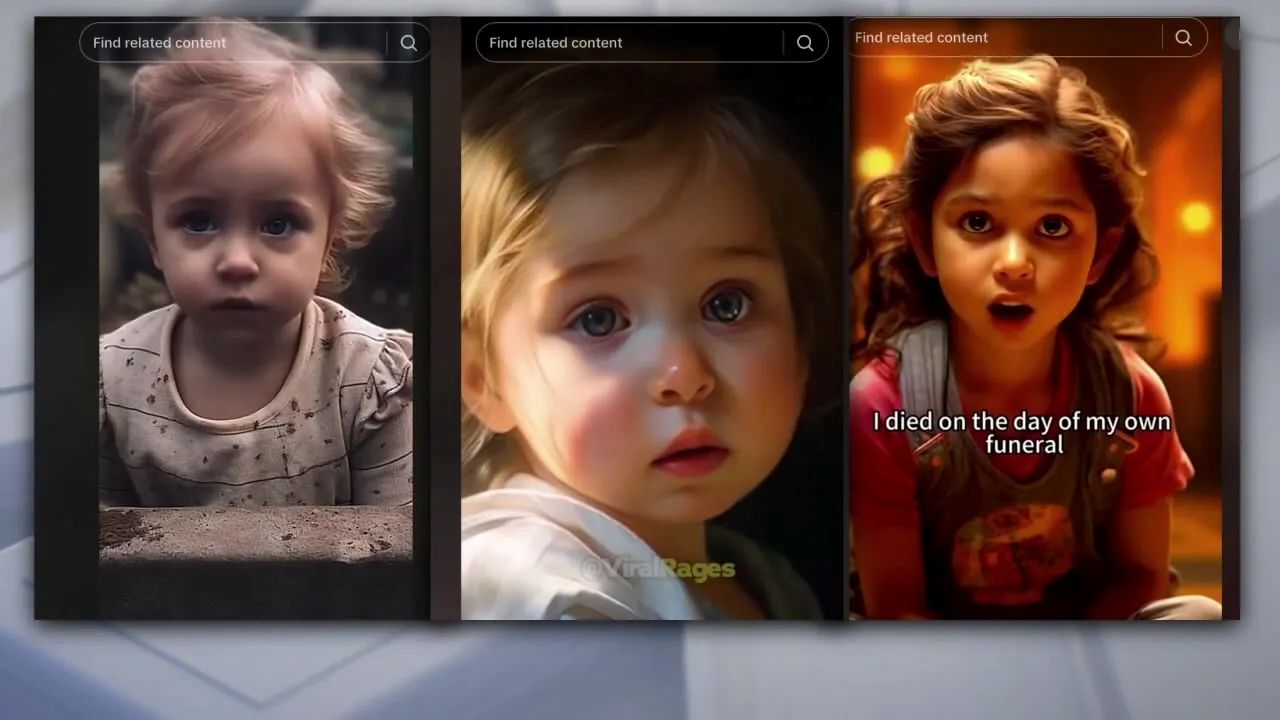
In early 2023, a widespread and ethically shocking controversy spread across platforms such as TikTok: generative AI was used to create animated images and videos of real children who had been victims of horrific murders, narrating the details of their own deaths in the first person. (6)
Content creators used real photos of the victims from news coverage, then used AI tools to animate their faces and generate voices mimicking theirs. A digital persona would appear in the video speaking lines such as "Hi, I'm [victim's name], and today I'm going to tell you how I was killed…" before recounting terrifying and shocking details of their final moments.
The main goal of these videos was to generate shock and curiosity to attract views and engagement.
However, these clips caused real psychological trauma for victims' families. In Canada, Mother Amelie Lemieux was blindsided by a clip showing an AI-generated version of her daughterNorah (11), who was killed along with her sister by their father in 2020, describing the details of her own death. Lemieux described the shock as "worse than the worst punch you could imagine." Baroness Beeban Kidron, a member of the British House of Lords, described this content as tantamount to a direct "emotional assault" on grieving families. (7)
The backlash against [digital resurrection] content grew so sharp that TikTok announced these videos violate its strict policies on harassment, bullying, and using real people's images without consent, and that it bans accounts and removes videos as soon as they are reported. (8)
However, a BBC investigation found that similar clips remained available for months and racked up millions of views despite TikTok's announced ban on this type of content; one content moderator on the platform reported that they had not been informed of the ban even four months after it was issued (7), further evidence that the lack of accountability lies not only with content creators but also with the platforms themselves.
Media and criminal-justice experts see this behaviour as a form of unethical extremism in the inhumane exploitation of human tragedy, turning it into digital entertainment.
According to Paul Bleakley, assistant professor of criminal justice at the University of New Haven, these videos are designed to provoke strong emotional reactions because that is a guaranteed way to draw views and engagement, with a real risk of re-traumatising victims' families. (9)
If it were possible to tell a victim's story through their documented testimony, records, archival photos, and their family's own accounts, what journalistic necessity justifies putting words in their mouth that they never spoke? Technical capability does not necessarily justify its use.
From Re-Enactment to Fabrication
This debate presents a decisive professional dilemma at the heart of the journalistic mission. While the use of digital resurrection in openly declared, advocacy or political campaigns can be understood, its practice within news organisations remains far more problematic, because it collides directly with the principle of documentation and verification. Journalism does not merely produce compelling content; it is built on relaying testimony and verifying its sources, not on generating new statements in the voice of people who have passed away.
In 2025, independent journalist Jim Acosta, formerly of CNN, conducted an interview with an AI-generated digital version of Joaquin Oliver, the young man whose image had earlier been used in a 2020 political campaign. The interview sparked wide debate over the boundaries that should separate media re-enactment from journalistic practice, particularly when such content is presented within a journalistic, rather than an explicitly promotional, frame. (10)
This distinction takes on added importance in light of the principles of the Society of Professional Journalists (SPJ), which places the pursuit and verification of truth at the core of journalistic responsibility, alongside minimising harm and maintaining transparency with the public. (11) The problem is not the use of AI as a tool but rather attributing words that a real person never said to someone who has died, then presenting that speech within a journalistic format, something that approaches "journalistic fabrication", where journalism puts statements in people's mouths that they never made, especially when it is not made clear that this is an artificial reconstruction.
This raises the decisive professional question: if it is possible to convey a victim's story through documented testimony, records, archival photos, and family accounts, what journalistic necessity justifies putting words in their mouth that they never said? Technical capability does not necessarily justify using it.
The problem is not the use of AI as a tool but rather attributing words that a real person never said to someone who has died, then presenting that speech within a journalistic format, something that approaches "journalistic fabrication", where journalism puts statements in people's mouths that they never made, especially when it is not made clear that this is an artificial reconstruction.
A Legislative Race That Falls Short
These abuses have not been confined to media controversy alone; they have also extended into the realm of federal legislation, with rights advocates and legal experts calling for strict laws to prevent the exploitation of victims' images and the generation of digital content depicting deceased individuals without their families' written, documented consent.
In 2024, the Copyright Office recommended that the US Congress enact a federal law protecting individuals from the unauthorised use of their digital likeness, citing the inadequacy and inconsistency of existing laws. (12) This was followed by the introduction of the NO FAKES Act, which would grant every individual, including those who died before or after the law's enactment, a federal right over their digital likeness, passing after death to the executors of their estate or their heirs, along with a mechanism for removing unauthorised content upon notice. (12) The bill, however, remains under deliberation in Congress as of mid-2026 and has not yet become law, meaning this legislative gap still persists in the world's largest digital market.
Between Professional Responsibility and the Digital Void
Between Dima al-Yassin evoking memory and TikTok videos reproducing pain, what separates reviving memory in solidarity from commodifying pain is not the technology itself, but who stands behind it and for what end. The MIT model proved that digital resurrection could serve memory and education when subject to transparent disclosure and documented consent, while the absence of these two conditions turns the very same tool into a weapon for re-traumatising families and exploiting content for engagement.
When digital resurrection is used within institutional media, a gatekeeper remains for the narrative, its production, and the profession's ethics. But once the tool moves into open space, where there is no professional, ethical, or legal check, responsibility shifts. Responsibility becomes shared between the legislator, who must close the legislative gap. The platforms must enforce their policies rigorously, rather than merely in form, before reviving victims turn into a violation once again, this time a digital one.
References
(1) "I am Dima al-Yassin, one of the children of the family…" Video | Facebook, n.d.
https://www.facebook.com/watch/?v=1745008156666320
(2) CBC. (2021, November 19). After her best friend died, this programmer created an AI chatbot from his
texts to talk to him again. CBC. https://www.cbc.ca/documentaries/the-nature-of-things/after-her-best-
friend-died-this-programmer-created-an-ai-chatbot-from-his-texts-to-talk-to-him-again-1.6252286
(3) Luscombe, R. (2024, February 14). Voices of the dead: shooting victims plead for gun reform with AI-
voice messages. The Guardian. https://www.theguardian.com/us-news/2024/feb/14/ai-shooting-victims-
calls-gun-reform
(4) Divon, Tom, and Christian Pentzold. "Artificially alive: An exploration of AI resurrections and spectral
labor modes in a postmortal society." New Media & Society (2025): 14614448251397518.
(5)https://openlearning.mit.edu/news/july-20-mit-virtuality-launches-event…
(6) Silva, G. (2024, February 29). Social media accounts using AI videos of dead children to tell true
crime stories. FOX 11 Los Angeles. https://www.foxla.com/news/social-media-accounts-using-ai-videos-
of-dead-children-to-tell-true-crime-stories
(7) Mayne, E. (2023, September 6). TikTok: Why AI-generated videos have caused panic among parents
of murdered children. BBC News Arabic (original in Arabic).
https://www.bbc.com/arabic/articles/cjldn9p37j9o
(8) https://www.washingtonpost.com/technology/2023/08/09/ai-dead-children-t…
(9) Dickson, E. (2023, May 31). AI deepfakes of True-Crime victims are a waking nightmare. Rolling
Stone. https://www.rollingstone.com/culture/culture-features/true-crime-tiktok…-
children-1234743895/
(10) https://www.axios.com/2025/08/09/deepfake-death-reincarnation-ai-avatar
(11) https://www.spj.org/spj-code-of-ethics/
(12) https://www.congress.gov/bill/119th-congress/senate-bill/4591