Al Jazeera Journalism Review

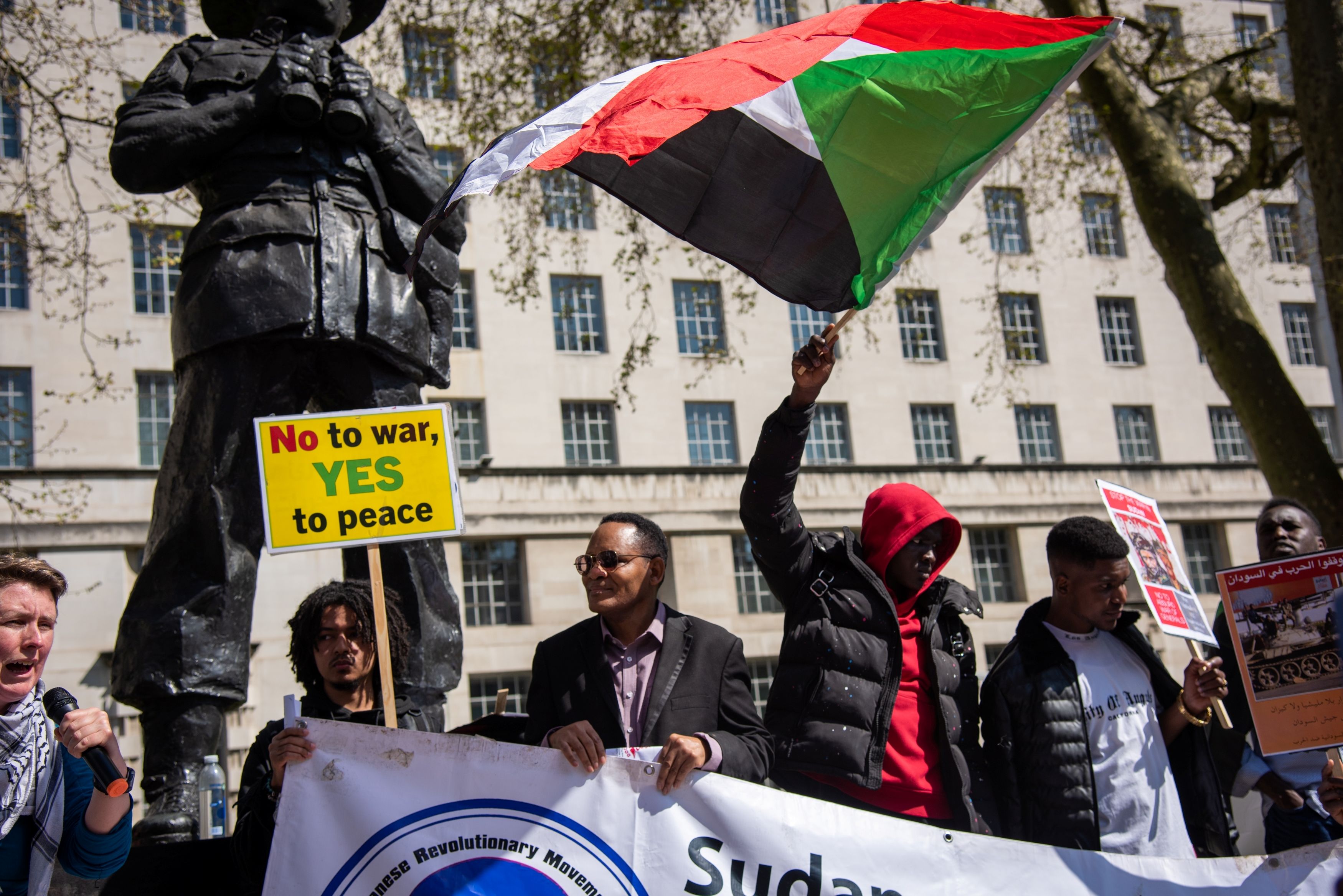
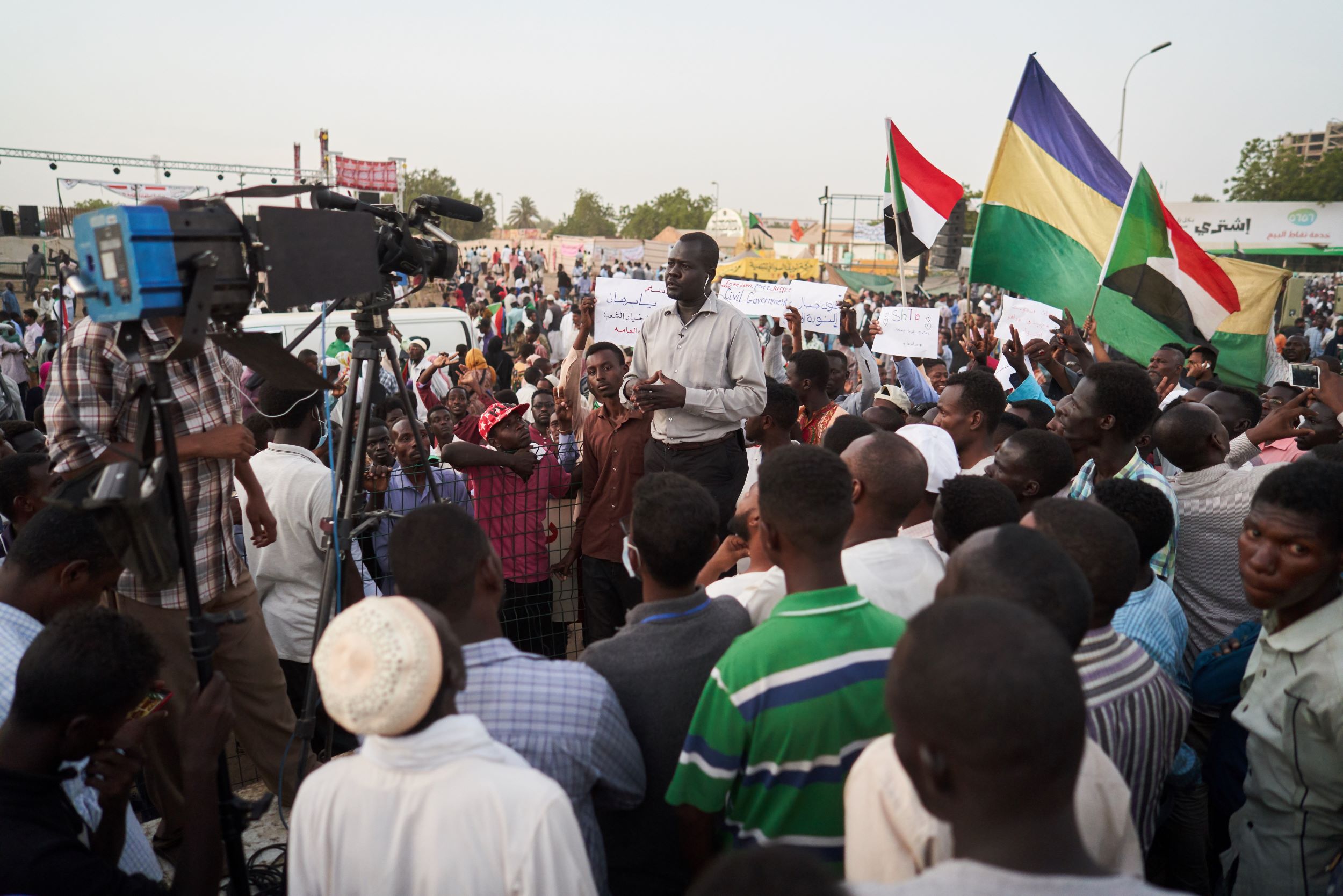
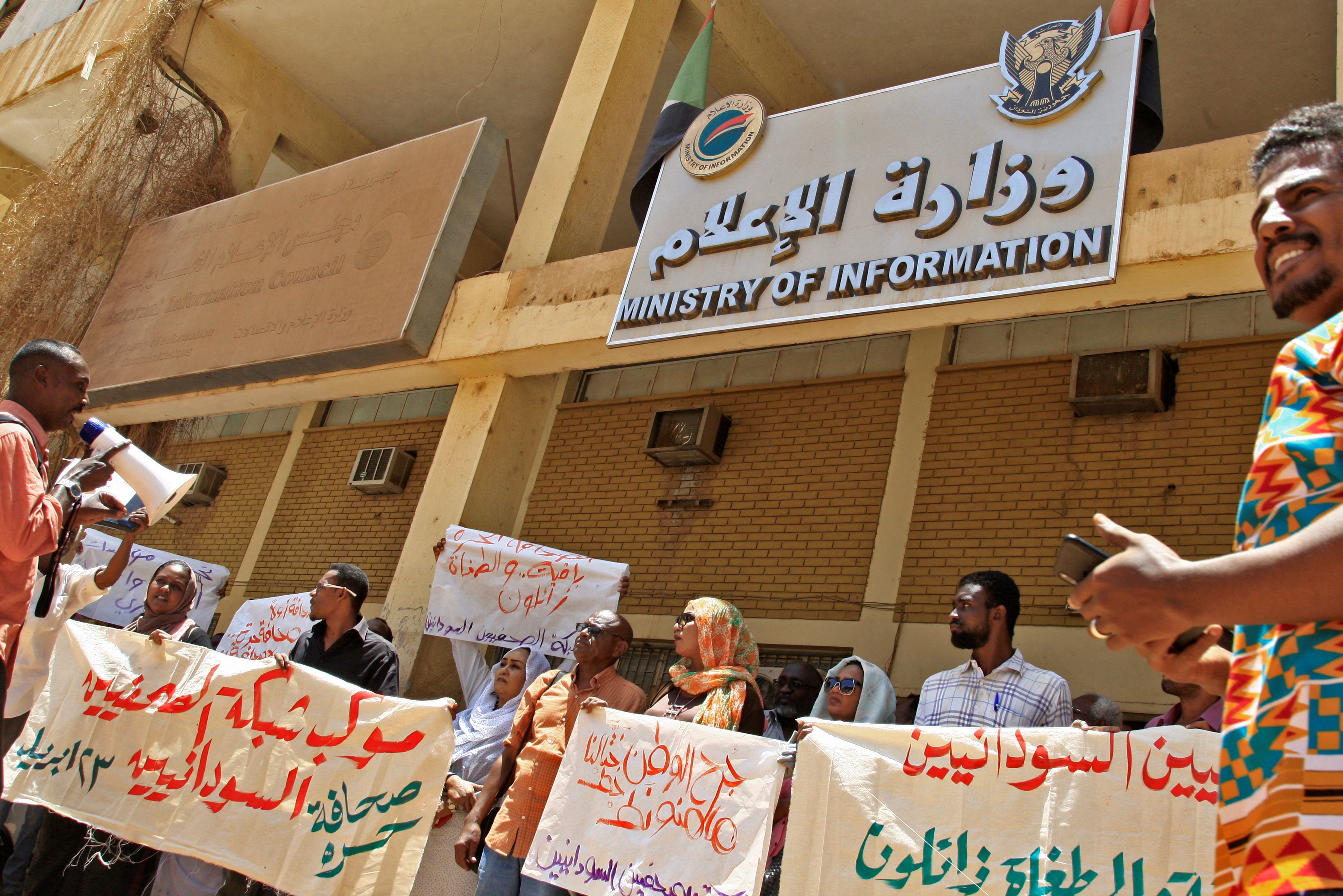
Sudanese journalists take part in a demonstration outside the information ministry. By - (AFP)
Sudanese journalists take part in a demonstration outside the information ministry. (Photo: AFP. Khartoum, Sudan – Apr 2019)

Journalism as a Struggle for Survival in Sudan

With war erupting in Sudan, the country’s media landscape collapsed almost overnight after the Rapid Support Forces entered Khartoum. Many journalists were left without jobs, salaries or shelter, scattered between displacement, exile and siege, as newspapers shut down and media institutions ceased to function. For many, journalism was no longer a profession but a daily struggle for survival.


In the early hours of April 15, 2023, Sudanese journalists awoke to a reality they had never anticipated. That morning was not merely the start of another working day, nor a continuation of the professional hardships they had grown used to in an unstable environment. It was a blunt declaration of the end of an entire phase of their working and social lives, coming in the wake of the Rapid Support Forces’ sweep into the capital, Khartoum.


The struggle to survive

On that day, thousands of journalists suddenly found themselves without institutions, offices, salaries, or any kind of protection against the loss of the most basic foundations of their profession. Everything that had once given them even a minimum of stability collapsed. Offices fell, printing presses stopped, newspapers ceased publication, and media workers were scattered, displaced, exiled, or trapped inside a city that had become an open and perilous theater of war. All of it happened without warning.

Before the outbreak of war, the Sudanese media landscape, despite its fragility, was still functioning. Around 30 daily and weekly newspapers were being published regularly, employing no fewer than 1,000 journalists, both staff and freelancers. Alongside them were nearly 500 journalists in public media institutions, correspondents, producers and editors, in addition to around 200 journalists spread across Sudan’s various states.

In that sense, the number of those actively practicing the profession exceeded 1,700, out of roughly 7,000 registered in the official press registry, the credential that grants legal legitimacy to work as a journalist. Those figures reflected a broad sector facing serious challenges, yet one that was active, productive and helping sustain the flow of information in the public sphere.

The first signs of catastrophe were not tied to freedom of expression or publishing restrictions. They were harsher and more immediate: Where will we sleep? What will we eat? How will we pay the rent?

Those who fled Khartoum, whether as internally displaced people or refugees, found themselves confronting a housing market whose costs were rising faster than their already fragile means could bear. As waves of displacement moved toward the Northern and River Nile states, rents soared to the point that securing even modest housing became a burden pushing the limits of the possible toward the edge of the impossible.

The beginnings of the catastrophe were not about freedom of speech or the difficulties of publication. They were far more brutal and basic: Where will we sleep? What will we eat? How will we pay the rent?

Gradually, suffering crept into the smallest details of everyday life, the kind that never appears in news bulletins, but which defines people’s lives with precision. The conversation was no longer about the future of the profession or how to reform it, but about finding a single meal to stave off hunger.

Journalist Hajar Suleiman, who remained in Khartoum throughout the period of fighting, offers a starkly painful account of her own condition and that of journalists more broadly. She says malnutrition reached life-threatening levels for some journalists: “We may find only one meal in 24 hours.”

In one of the countries of refuge, a well-known journalist says he was unable to obtain diabetes medication. Bitterly, he says they are borrowing even to buy bread, hoping that help might come from aid or from a friend working in the Gulf or in the West.

Another journalist, who had served as editor-in-chief, was forced after seeking refuge in a neighboring country to sell traditional Sudanese products. Summing up his priorities, he says his main goal is simply to pay the apartment rent; everything else comes second. It is a harsh journey from running newsrooms to searching for the day’s sustenance.

Amid this collapse, most journalists relied on sporadic support from relatives working in the Gulf or in Western countries. Important as that support was, it was neither regular nor sufficient. It resembled emergency relief more than a real solution, enough to prevent total collapse, but not enough to open any path toward lasting stability.

With the exception of a small number in government institutions, and a very limited percentage working abroad, more than 80 percent of journalists lost any form of employment with media organizations. The connection between them and publishers was severed, institutions disappeared, and responsibilities dissolved.


An Era Without Guardianship

Criticism is directed first at the state, then at the journalists’ union, and at the dysfunctional relationship between media workers and owners of institutions. Dr. Tareq Abdallah, an academic and journalist, believes the union failed to use its full potential, particularly through its ties with Arab and African organizations. He notes that journalists found themselves without support after media owners left Sudan with little concern for what had happened to their employees. As head of a professional bloc formed before the war, he reproaches the government for ignoring journalists’ most urgent needs for survival.

Journalist Hajar Suleiman agrees, and goes further, saying newspapers issued mass dismissal letters and completely abandoned their staff. Publishers, she says, left without even asking after them or making contact. She also believes, having chosen to remain in Khartoum despite the risks, that the General Union of Journalists “was absent before the war, absent during it, and continues to be absent.”

The union’s secretary-general, Salah Omar al-Sheikh, acknowledges the union’s limited role, attributing it to a state of confusion and a struggle for existence that has afflicted the body since 2019. According to al-Sheikh, that struggle weakened its resources and reduced its ability to communicate with supporting organizations.

The response of the internationally recognized government has also fallen short of the scale of the catastrophe. A small number of journalists received temporary accommodation in Port Sudan, the de facto alternative capital, while others were given symbolic stipends in return for attending press conferences. But these were limited measures that did not begin to address the roots of the crisis.

Even after the capital was retaken, little changed. A brief return visit by a number of journalists to Khartoum was not enough to create conditions that would allow work to resume, given the absence of jobs, insecurity, and weak basic services.

The war has shown most journalists that organizations, especially press organizations, speak more about freedoms at conferences than they are able to offer in concrete terms during times of crisis.

The reality is that access to humanitarian aid often required being physically present in displacement or refugee camps, something that does not fit the nature of the profession, nor the circumstances of many media workers. Sudanese journalists and their families are still living through one of the most critical moments in their history, with no clear horizon for solutions that could restore them to normal life or reopen the path toward recovering even a minimum of professional and human dignity.

It is the tragedy of a sector that suddenly found itself with no ground beneath its feet, no support to protect it, and no certainty to guide it into tomorrow.
Related Articles

Charged with Being a Journalist in Sudan

Between the barricades of the conflicting parties, sometimes displaced, and sometimes hiding from bullets, journalist Iman Kamal El-Din lived the experience of armed conflict in Sudan and conveyed to Al-Sahafa magazine the concerns and challenges of field coverage in a time of deception and targeting of journalists.
Iman Kamal El-Din is a Sudanese journalist and writer
Eman Kamal El-Din Published on: 2 Feb, 2025
Sudan’s Journalists Are Being Silenced: By Bullets, Exile, and Fear

The collapse of the media industry in Sudan has subjected journalists to physical threats, legal and professional challenges, with no functioning legal system to investigate crimes committed against the press.

Nalova Akua
Nalova Akua Published on: 17 Sep, 2025
The Media Landscape in Sudan During the War

The ongoing war in Sudan has dismantled many media institutions, creating a vacuum filled by a vast stream of rumors and false information that has fueled internal conflict. A large segment of the public has turned to social media platforms in search of the truth, while some traditional media outlets continue to operate despite the targeting of their offices and journalists.

Mohammed Babiker Al-Awad
Mohammed Babiker Al-Awad Published on: 2 May, 2025
Sudan shows us why Africans must tell their own conflict stories

Africa lacks freedom of expression because its stories are told by others

Philip Obaji Jr
Philip Obaji Jr Published on: 1 Jun, 2023
Planning and pitching refugee stories

In part three of our series on covering refugee stories, we look at best practice when it comes to planning and pitching to editors. 

Kareem
Kareem Shaheen Published on: 29 Nov, 2021
We need more raw coverage of conflict zones to make people care about all refugees

Coverage of Ukrainian refugees has been more sympathetic because it is usually accompanied by images of the crisis they are fleeing

Tomasz
Tomasz Lesniara Published on: 27 Mar, 2022

More Articles

From Print to Pixels: How Small-Town Journalists in Bihar Are Surviving Threats and Closures

As newspapers vanish across districts like Siwan, Gaya, and Purnea, reporters turn to mobile phones, digital start-ups and community networks to keep local journalism alive.

Rehan Qayoom Mir. An independent journalist whose work has appeared in international and national outlets,
Rehan Qayoom Mir, Sajad Hameed Published on: 12 Apr, 2026
Arab Society and Investigative Journalism: The Dialectic of Culture, Power, and Profession

Investigative journalism in Arab societies operates within a dense web of social, political, and cultural pressures that often push journalists to balance truth-telling against survival, forcing them onto a precarious “razor’s edge.” Yet despite these constraints, moments of crisis can transform society itself from a source of pressure into a powerful ally, driving accountability and reigniting the pursuit of truth.

Musab Shawabkeh
Musab Al Shawabkeh Published on: 7 Apr, 2026
The Revolution That Framed Islam: How 1979 Shaped Western Media on Iran

The 1979 Revolution transformed how the Western world views and reports on Islam. What started as a confused attempt to understand a new religious movement has turned into a permanent media habit of framing Iran through the lens of conflict and suspicion.

Daniel Harper
Daniel Harper Published on: 4 Apr, 2026
The Challenge of Reporting in Chechnya

Independent journalism no longer exists as a functioning practice inside Chechnya. What remains is a profession rebuilt in exile, forced to operate at a distance from the very place it is meant to cover.

Rushda Fathima Khan
Rushda Fathima Khan Published on: 29 Mar, 2026
How AI Can Clean Messy Data; and Where It Can't

Normalising inconsistent, messy, or incomplete data is tedious and time-consuming, but essential. AI can handle grunt work, but editorial decisions remain with the journalist.

KA
Konstantinos Antonopoulos Published on: 21 Mar, 2026
Missiles Made of Words: How Western Media Narratives Shape the Iran–Israel–US Conflict

Western media coverage of the Iran–Israel–US conflict often functions as a weapon of war, using selective language that frames US and Israeli strikes as “self-defence” while depicting Iranian actions as "provocation". This linguistic framing normalises civilian casualties and helps manufacture public consent for military aggression by dehumanising certain populations.

Muqeet Mohammed Shah
Muqeet Mohammed Shah, Ifrah Khalil Kawa Published on: 14 Mar, 2026
How the Ethiopian Civil War Unleashed a Lethal Media Crackdown

There has been a widening crackdown on the media in Ethiopia since war erupted between the central government and Tigray’s regional authorities in 2020, and the pressure appears set to intensify as the country prepares for general elections in June.

Nalova Akua
Nalova Akua Published on: 9 Mar, 2026
Are Netanyahu's and Trump’s Speeches Shaping Western Media Framing?

As political speeches framed the 2026 U.S.–Israeli attack on Iran, segments of Western media echoed their language and narratives, illustrating how strategic rhetoric and news framing can shape public opinion and legitimise military action.

Shaimaa Al-Eisai
Shaimaa Al-Eisai Published on: 6 Mar, 2026
The Taboos of Journalism: A Fragility No One Dares to Expose

Does a journalist have the right to critique their own employer? It is a striking irony that they report on global crises while remaining silent about their own industry's fragility: stagnant wages, eroding professional values, and profit-driven ownership. Journalists must realize that confronting this internal rot is not just a right, but a necessity to save the profession from extinction.

Diana López Zuleta
Diana López Zuleta Published on: 24 Feb, 2026
Bilingual on Paper, Unbalanced on Air: English Journalism in a Francophone Cameroon

In a media landscape where French dominance dictates policy and airtime, English-speaking reporters in Cameroon are forced into a relentless cycle of improvisation, translation, and professional exhaustion. From the "desert-like" scarcity of English-speaking experts to newsrooms that offer no institutional support, this analysis explores how linguistic inequality hollows out the journalistic process, leaving vital stories untold and the promise of a bilingual nation unfulfilled.

Akem
Akem Nkwain Published on: 15 Feb, 2026
Reporting the Spectacle: Myanmar’s Manufactured Elections

Myanmar’s recent elections posed a profound challenge for journalists, who were forced to navigate between exposing a sham process and inadvertently legitimising it. With media repression intensifying, reporting became an act of resistance against the junta’s effort to control information and silence independent voices.

Annie Zaman
Annie Zaman Published on: 7 Feb, 2026
Public Hostility Toward Legacy Media in Bangladesh

The December 2025 arson attacks on Prothom Alo and The Daily Star marked a turning point for journalism in Bangladesh. As public anger replaces state control as the primary threat, reporters are reassessing personal safety, editorial judgement, and professional credibility in a political transition where journalism itself is increasingly treated as an enemy.

Arsalan Bukhari, an independent journalist based in India
Arsalan Bukhari Published on: 4 Feb, 2026
Migration Issues and the Framing Dilemma in Western Media

How does the Western press shape the migration narrative? Which journalistic frames dominate its coverage? And is reporting on anti-immigration protests neutral or ideologically charged? This analysis examines how segments of Western media echo far-right rhetoric, reinforcing xenophobic discourse through selective framing, language, and imagery.

Salma Saqr
Salma Saqr Published on: 31 Jan, 2026
Polarised, Intimidated, Silenced: The Media Under Siege in Cameroon’s Election

Cameroon’s 2025 presidential election exposed a troubling paradox: a nation voting under the watchful eye of power, while its press remained silenced. From the arrest of a teenage reporter to bans on political debate and digital manipulation, freedom of expression is under siege, and journalism is on trial.

Shuimo Trust Dohyee
Shuimo Trust Dohyee, Ngweh Rita Published on: 22 Jan, 2026
What Image of Gaza Will the World Remember?

Will the story of Gaza be reduced to official statements that categorise the Palestinian as a "threat"? Or to images of the victims that flood the digital space? And how can the media be transformed into a tool for reinforcing collective memory and the struggle over narratives?

Hassan Obeid
Hasan Obaid Published on: 13 Jan, 2026
Journalism in Mauritania: Behind the Facade of Press Freedom Indicators

Mauritania holds the top position in the Arab world in the Press Freedom Index published by Reporters Without Borders. However, behind this favourable ranking, the media and journalists face significant challenges, chief among them the ambiguity surrounding the definition of a "journalist" and the capacity of media professionals to fulfil their roles in accountability and oversight. Despite official efforts, the defining feature of Mauritania’s media landscape remains its persistent state of fluctuation.

 Ahmed Mohamed El-Moustapha
Ahmed Mohamed El-Moustapha Published on: 6 Jan, 2026
How Can Journalism Make the Climate Crisis a People’s Issue?

Between the import of Western concepts and terminology that often fail to reflect the Arab context, and the denial of the climate crisis, or the inability to communicate it in clear, accessible terms, journalism plays a vital role in informing the public and revealing how climate change directly affects the fabric of daily life in the Arab world.

Bana Salama
Bana Salama Published on: 19 Dec, 2025
Freelancers in Kashmir Fear Losing Access as Verification Tightens

Kashmir’s new “verification drive” claims to root out impostors, yet its heavy bureaucratic demands mainly sideline the independent freelancers who still dare to report in a shrinking media landscape. But here’s the unsettling question that hangs over the Valley like fog at dawn: who really benefits when the storytellers without institutional shields are pushed out of the frame?

Tauseef Ahmad
Tauseef Ahmad, Sajid Raina Published on: 11 Dec, 2025
Journalists in Maldives Enter New Phase of Government-Controlled Media Repression

As journalists weigh the costs of their work against threats to their lives and families, the fight for press freedom in the Maldives enters a dangerous new chapter, one where the stakes have never been higher.

Sumaiya Ali
Sumaiya Ali Published on: 8 Dec, 2025
Reporting Under Fire: The Struggle of African Journalists Facing Intimidation

African journalists who expose corruption and power now face a brutal mix of arrests, torture, digital surveillance, and lawsuits meant to drain their resources and silence them. From Ethiopia, Nigeria, Malawi, Benin, Sudan, Uganda, and Kenya to exile in Canada, reporting the truth has become an act of personal survival as much as public service.

Nigerian freelance Journalist John Chukwu
John Chukwu Published on: 4 Dec, 2025
Shipwrecked Narratives: How to Keep Migration Stories Afloat

Migration stories don’t become real until you meet people in the journey: the carpenter carrying photos of his fantasy coffins, or the Libyan city worker burying the forgotten dead, or the Tatar woman watching her livelihood collapse at a militarised border. Following these surprising human threads is the only way journalism can cut through collective exhaustion and make readers confront a crisis they’ve been trained to ignore.

Karlos Zurutuza, a freelance journalist and a media trainer. His work has been published in The Guardian, Al Jazeera English, POLITICO, The Middle East Eye and The Independent, among others.
Karlos Zurutuza Published on: 30 Nov, 2025
In-Depth and Longform Journalism in the AI Era: Revival or Obsolescence?

Can artificial intelligence tools help promote and expand the reach of longform journalism, still followed by a significant audience, or will they accelerate its decline? This article examines the leading AI tools reshaping the media landscape and explores the emerging opportunities they present for longform journalism, particularly in areas such as search and content discovery.

. سعيد ولفقير. كاتب وصحافي مغربي. ساهم واشتغل مع عددٍ من المنصات العربية منذ أواخر عام 2014.Said Oulfakir. Moroccan writer and journalist. He has contributed to and worked with a number of Arab media platforms since late 2014.
Said Oulfakir Published on: 24 Nov, 2025
Zapatismo and Citizen Journalism in Chiapas, Mexico

In Chiapas, independent journalists risk their lives to document resistance, preserve Indigenous memory, and challenge state and cartel violence. From Zapatista films to grassroots radio, media becomes a weapon for dignity, truth, and survival.

Ana Maria Monjardino
Ana Maria Monjardino Published on: 26 Oct, 2025
Lost in Translation: The Global South and the Flaws of Content Moderation

Global Rules, Local Consequences: How Biased Moderation Fuels Disinformation in the Global South. Unequal systems of AI and human oversight are failing to protect and often silencing non-Western voices online.

Lucia Bertoldini
Lucia Bertoldini Published on: 22 Oct, 2025