The analysis of field reporting during the war reveals a deep divide between distant geopolitical news and the actual human reality on the ground. This conflict between official media assignments and the lived experience will continue as journalists find themselves abandoning institutional scripts to focus instead on the raw details of daily survival and the preservation of personal memory.
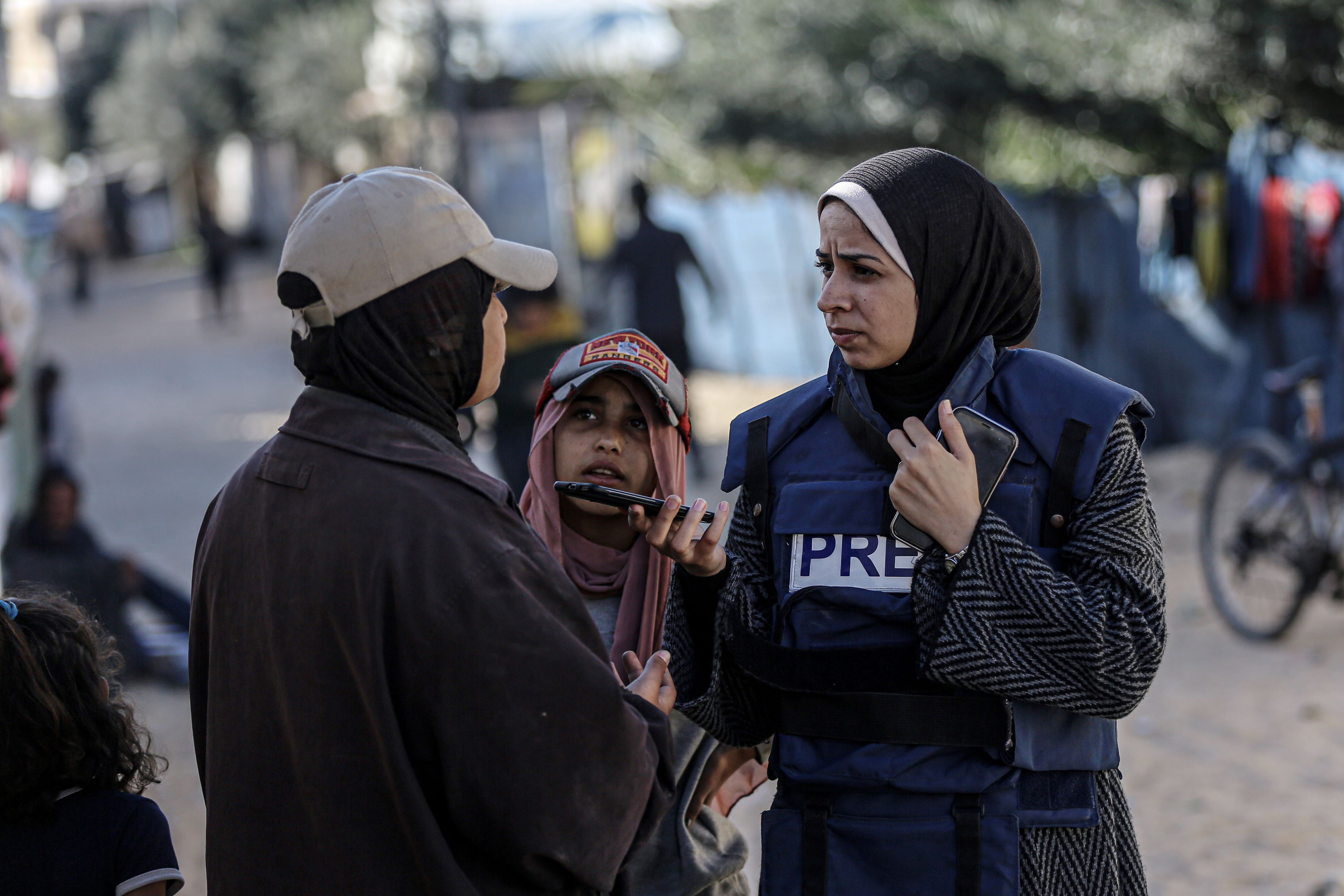
In every field visit during the war, my conversations with people would always depart from the script and branch out into much that is never mentioned between the lines. The angle of treatment I intended to write about would change, because when I asked people, the answer would come from a completely different direction, carrying with it all the moving human details.
I do not remember ever asking people their opinion of Trump’s Plan B, or of recognition of the state of Palestine, or of their view of the ceasefire agreement, without their answers coming wrapped in the details of their arduous daily lives.
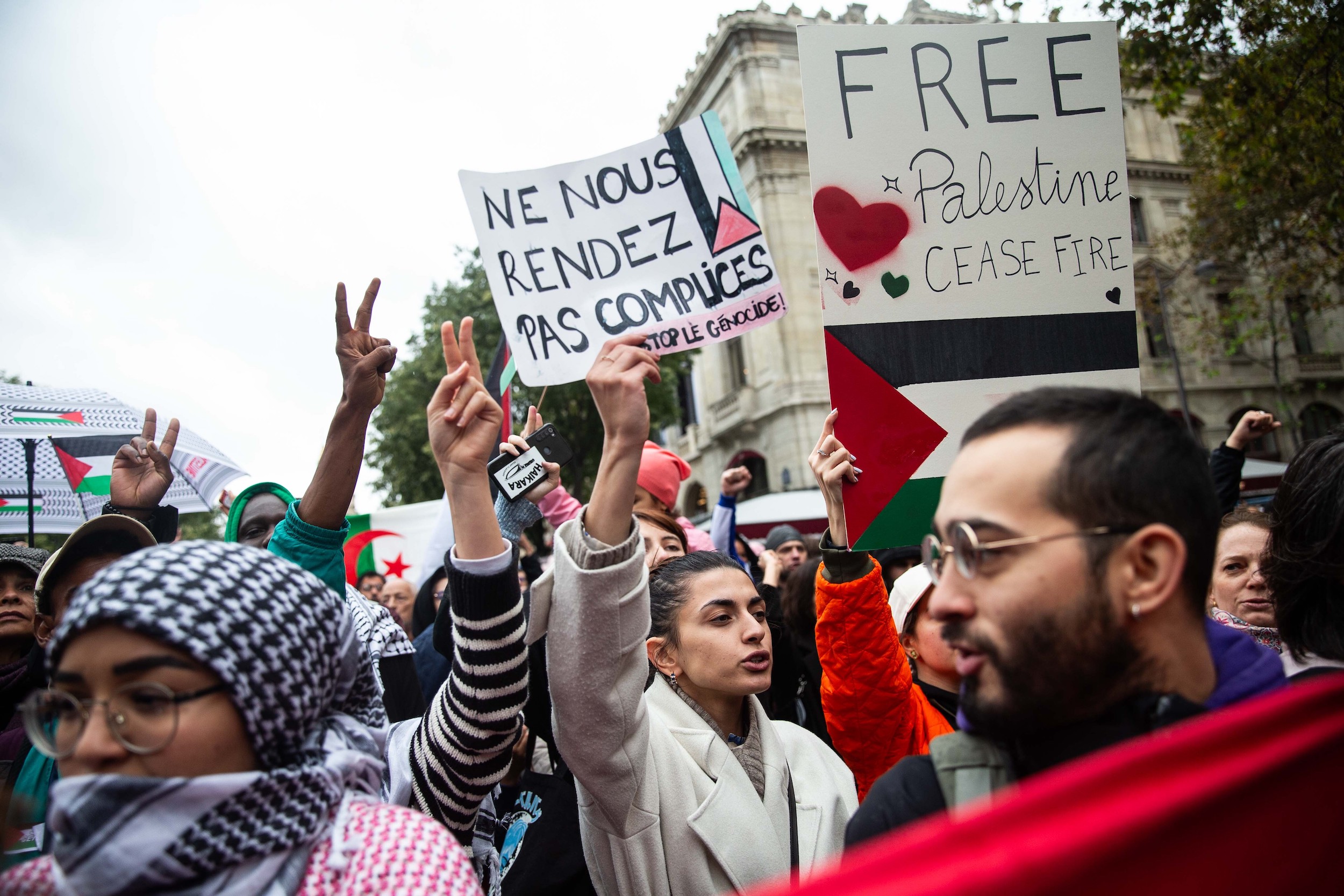
Last September, while Israel was launching its comprehensive military operation to occupy Gaza City and had begun issuing evacuation orders to residents, five countries recognised the State of Palestine: Britain, Australia, Canada, France, and Portugal. That day, while my phone never left my hand as my calls with my family in the north continued so that I could follow the progress of their displacement toward me in the south, I was assigned to write an article about people’s reactions to the recognition of the State of Palestine. I was not the only one whose mood was in no way suited to receiving such news and the tasks that accompanied it; quite simply, such news did not concern us during that difficult period.
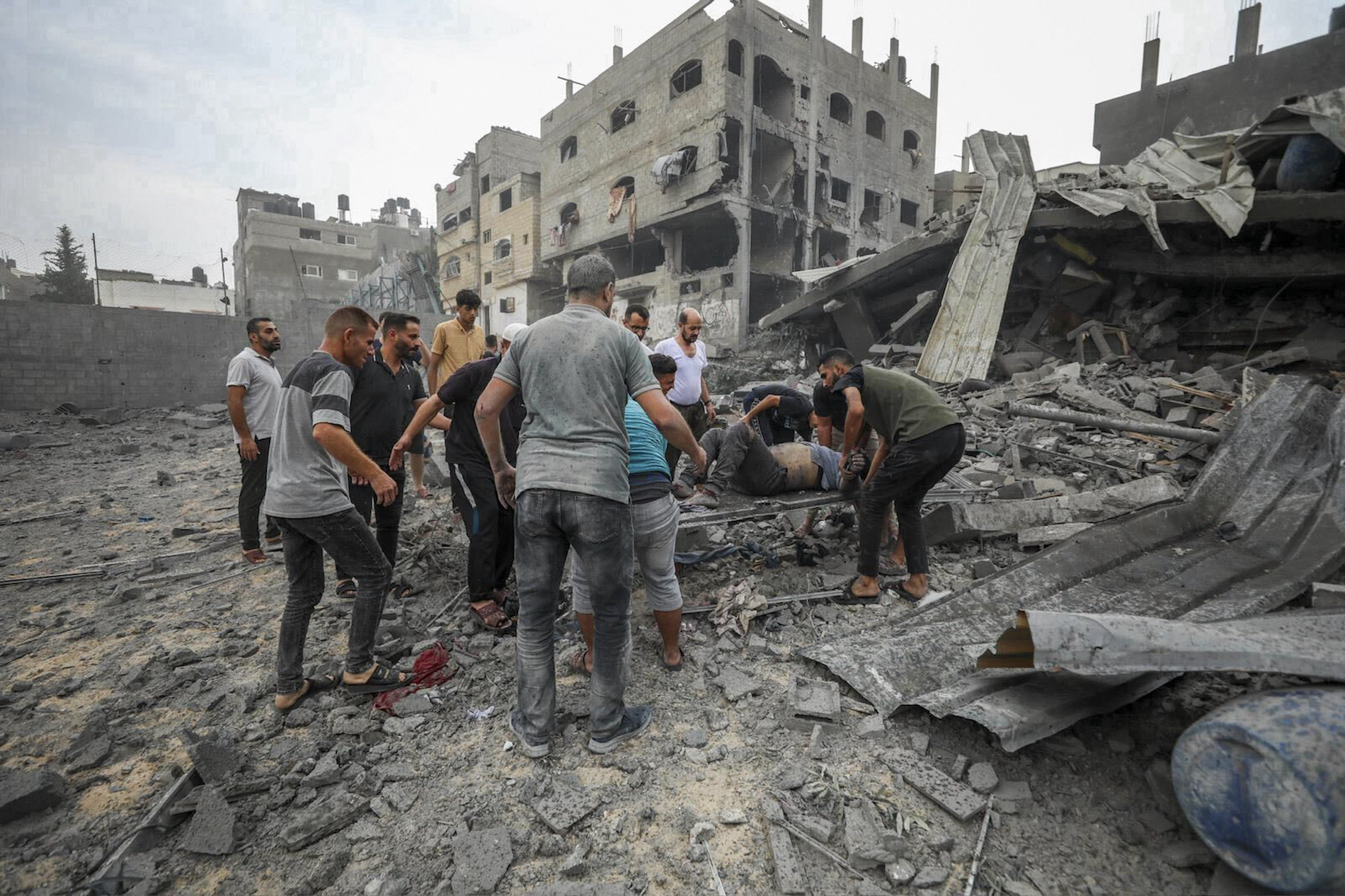
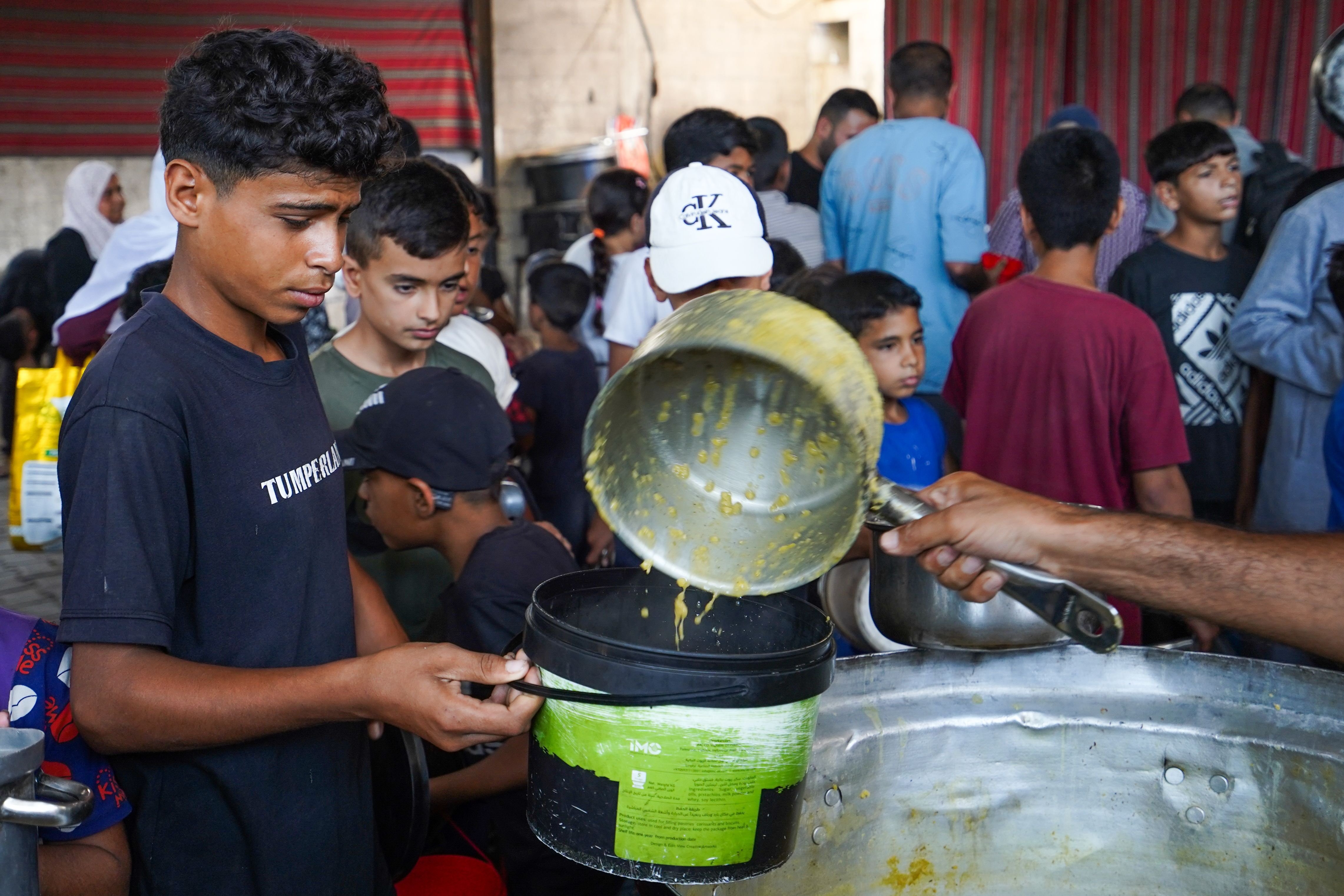
I dragged myself on foot, because transportation was unavailable at the time, to begin work, heading toward one of the camps set up for displaced people in Deir al-Balah in the central Gaza Strip. Along the way, I saw hundreds of families who had recently fled Israeli bombardment in northern Gaza, sleeping on the ground without shelter: children, women, and young women in the prime of life sitting on street pavements and at the corners of buildings, with the belongings and necessities they had managed to bring with them from the north scattered beside them. There were no tents to cover them, no place to host them, and a state of loss even greater than in previous rounds of displacement.
That day, the subject of “recognition of the State of Palestine” seemed entirely out of context, as if we were living in a parallel world that neither knew us nor felt us. I reached the camp, where my photographer colleague was waiting for me. I found a woman in her thirties, with her four children, sitting on the ground beside a tent, cradling her infant son in her lap.
I approached her hesitantly and asked her a question without any introduction: What do you think of five European countries recognising the State of Palestine? The woman stared at my face in confusion and astonishment; it was clear that this question was absolutely “not the time” amid all this apocalypse literally unfolding around us.
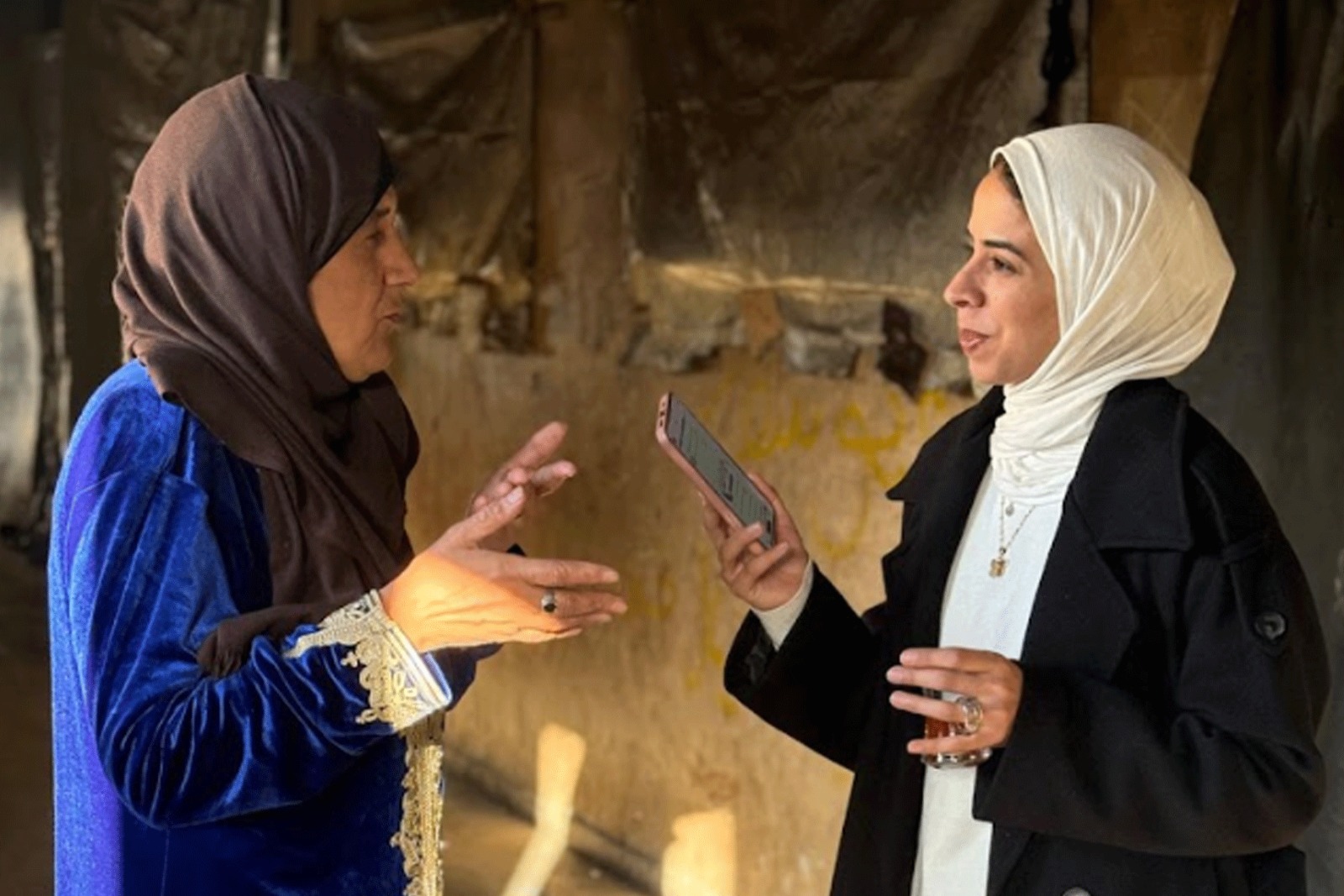
The woman acted as if she had heard nothing and asked me directly, "Can't you, sister, make an appeal for diapers for my little child?” She then continued, explaining her son’s suffering as she showed me the severe rashes affecting his sensitive areas.
Of course, I was not surprised by what the woman said. She immediately began recounting what had happened to her the previous day during her displacement from Gaza City, under intense bombardment, toward the south: how she had been forced to walk more than 18 kilometres with her children and what she endured of crying, screaming, and exhaustion, stopping at times and getting up at others, until she reached the camp in Deir al-Balah in the central Strip.
I approached her hesitantly and asked her a question without any introduction: What do you think of five European countries recognizing the State of Palestine? The woman stared at my face in confusion and astonishment; it was clear that this question was absolutely “not the time” amid all this apocalypse literally unfolding around us.
The woman’s answer was not at all outside the context. Rather, everything happening around us, recognitions, decisions, Arab and international meetings, was outside the context, forming a state of detachment from the “human suffering” of the person living the tragedy on the ground.
Of course, she was neither the first nor the last woman of this kind. Every time, and in every field story in Gaza, no voice rises above the voice of human suffering; no voice rises above the voice of the human story itself.
Why the Human Story, Then?
Because the human story is the only language that does not betray reality. In moments of war, grand political concepts become abstract to the point of cruelty, and they lose their ability to explain what people are actually living. Recognitions, statements, and conferences all seem distant when a person sleeps on the pavement, carries his child for long distances to flee bombardment, or searches for a diaper for an infant in an overcrowded camp.
The human story does not negate politics, but it rearranges its priorities. It places the human being at the centre of the scene and subjects' political decisions to the test of daily life. It is what reveals the gap between what is said in international conferences and what is lived in tents. Therefore, when people’s speech departs from the "script", it does not lose its way; rather, it corrects it. The true script is what has not yet been written: the details of exhaustion, fear, and brokenness that find no place in ready-made questions.
In moments of war, grand political concepts become abstract to the point of cruelty, and they lose their ability to explain what people are actually living. Recognitions, statements, and conferences all seem distant when a person sleeps on the pavement, carries his child for long distances to flee bombardment, or searches for a diaper for an infant in an overcrowded camp.
In the field, one cannot impose a ready-made angle on a reality collapsing before one’s eyes. The human story imposes itself because it is simply the most urgent truth, and because ignoring it means reproducing the very same detachment from which people are already suffering.
In Gaza, the human story does not seek emotional sensationalism, but a deeper understanding. When the daily conversation accompanying a cup of tea and the morning Nescafé becomes about displacement, loss, difficult moments of war, families erased from the civil registry, the prices of flour and bread, and the harsh memories of famine, then we know that the scene has shaken every aspect of life.
During my first return to northern Gaza in January 2025, the shocks began to grow more intense as I listened to a new line of horrifying stories that I had not known during my displacement in the south. Suddenly, I found myself closer to stories told to us by neighbours, friends, and relatives who had decided at the time to remain in the north.
The painful thing is that these stories were told while we were drinking tea with my neighbour Asmaa and her friend Rabaa, as they recounted how Israeli soldiers had surrounded their neighbourhood with tanks, stormed the neighbours’ house, and executed those inside with live bullets, while one child survived.
The two women sat before me describing twelve days of siege during which they saw death with their own eyes. They told me they had been waiting for their turn in the crematorium, and how the water had completely run out in the house. When they tried to ask the soldiers for water, the soldiers shot a young man with an intellectual disability, killing him instantly, and his body remained in the house for two days without their being able to bury him.
Rabaa told me that she could not bear seeing the body of her husband’s nephew before her for days without burial, so she decided to raise a white flag with two other women, carry the body, and bury it in the land next to the house.
I was listening to these details with my heart on the verge of collapse. I never finished the cup of tea, but I was staring at everything before me, wanting someone to tell me that I was dreaming, that this was a dream or a nightmare or anything but the truth. But it was the truth, despite myself. People lived through all these stories, and once again I found myself getting lost in my journalistic terms and in the ideas, I had brought to cover the phase that we then thought was the end of the war. Yet the deeper impact was not in the cruelty of the details alone, but in their deadly ordinariness. For all these atrocities to be narrated over a tea table, and in a tone closer to resignation than shock, reveals the extent to which violence has penetrated daily life and stripped people of their natural right to astonishment.
At that moment, I realised that the human story does not leave its impact through tears alone, but through that heavy silence that follows speech, through the inability to find an appropriate response, or an additional question, or even a sentence of consolation that does not seem banal before such a measure of horror. The real impact was internal and slow, resembling an unseen sediment that nevertheless changes everything inside.
The true impact of the human story lies not only in what it conveys to the reader, but in what it first leaves in you and in how your relationship with writing, with questions, and with the very idea of “coverage” changes in a place where war is no longer news, but an entire life imposed on people and on those who tell their story with them.
Emotions here do not explode all at once; rather, they sleep in. A feeling of guilt because you listened and then returned home; confusion because you are a journalist required to turn this human weight into written material; and fear because what you hear does not concern strangers, but faces you know, places you have passed through, and alleys bearing familiar names.
Those moments make the human story a psychological burden as much as a professional duty. It places you in a grey zone between witness and participant, between the one who conveys pain and the one who carries it with her. When you return to your notebook or your phone to jot down notes, you discover that language itself becomes helpless, and that some stories are not written easily because they remain lodged in the chest, demanding time, honesty, and enough distance to understand what cannot be borne to understand.
Here, the true impact of the human story lies not only in what it conveys to the reader, but in what it first leaves in you, and in how your relationship with writing, with questions, and with the very idea of “coverage” changes in a place where war is no longer news, but an entire life imposed on people, and on those who tell their story with them.
My Aunt’s Vases
What the human story records today is what will remain in collective memory tomorrow. How did people live? How were they displaced? What did they carry? What did they lose? Throughout the war, I decided, as did many people like me, not to cling to memories. The idea of survival was what came first to mind. My earlier sadness over the video of my wedding day, which I had left in my destroyed home, or the key to the house door, or the first clothes my little child wore when he was born, no longer mattered to me. I forced all of this to become ordinary things for me, not because I do not value memories, but because I was no longer able to carry all my things and run.
I realized that the human story does not leave its impact through tears alone, but through that heavy silence that follows speech, through the inability to find an appropriate response, or an additional question, or even a sentence of consolation that does not seem banal before such a measure of horror. The real impact was internal and slow, resembling an unseen sediment that nevertheless changes everything inside.
Vases
A few weeks ago, I decided to return with my family to northern Gaza. My return was part of restoring the collective memory that belongs to me, to my children, and to my husband. It was a simultaneous reconnection with feeling, place, and time, as though the soul were literally returning to the chest despite the sweeping destruction.
The apartment of my aunt, who was in her eighties and died during the war, was the available option for me to live in, and it was, to a large extent, an ideal choice. May God have mercy on my aunt. She had left with all her children and grandchildren for Egypt at the beginning of the war, and fortunately their home, with its four apartments, remained standing and intact. This is something rare, if only you knew, in Gaza.
But what affected me deeply was the survival of the memories belonging to the people of this house: the old photographs documenting my aunt’s children as they grew up, their birthday parties, their graduation certificates, and even pictures of my aunt in her youth, at her wedding, and at work.
What astonished me even more was my aunt’s vases, which had endured for so long through the years of her life. She was known for strictness and firmness, and none of her children or grandchildren would dare approach the display cabinet of vases dating back to the 1990s, the 1980s, and the days of my aunt’s own marriage. This is a true human story.
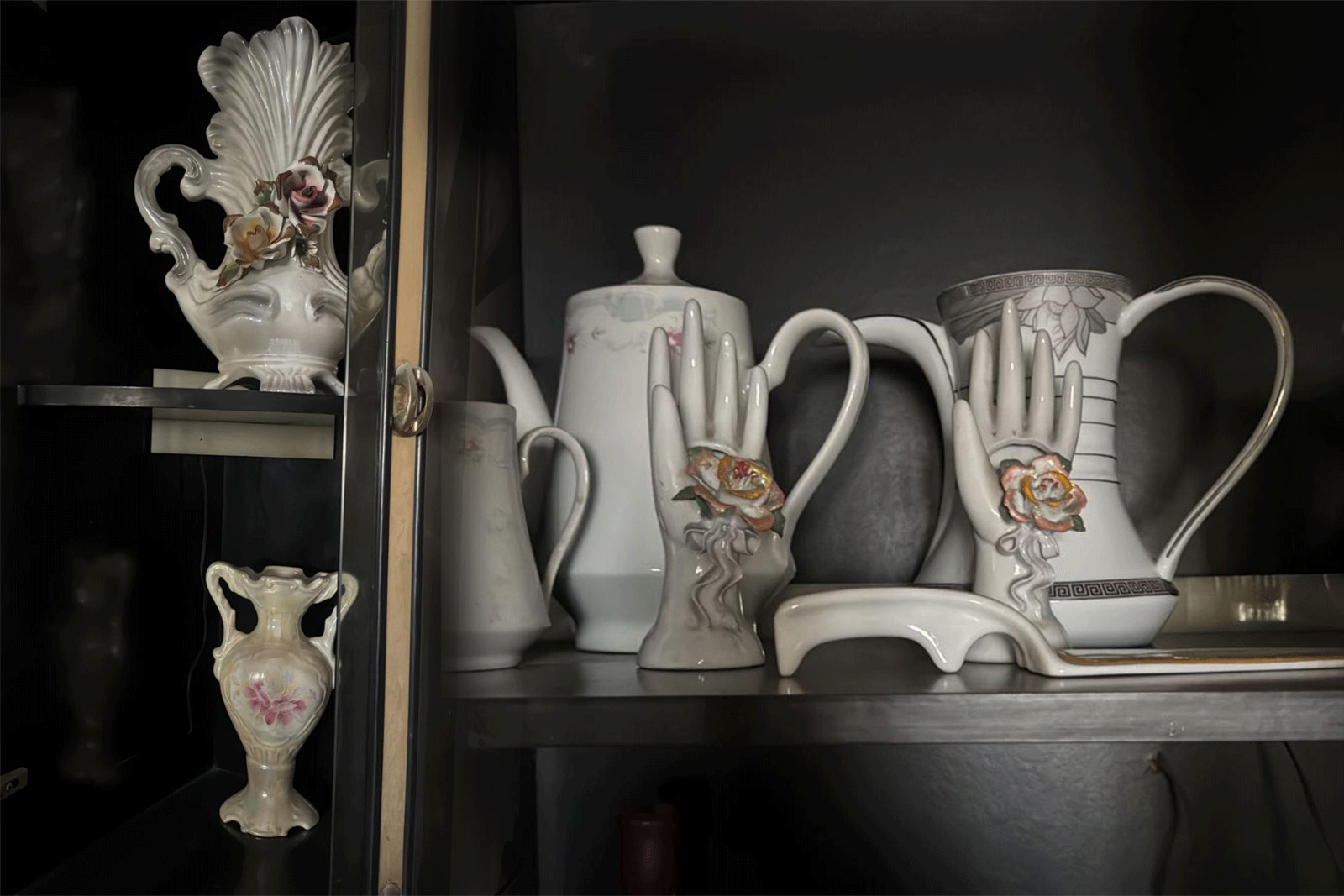
I stood before this “steadfast” cabinet, with all its contents that could break from the slightest sound, and looked out the window at the courtyard facing the house, which had been a gathering point for Israeli tanks during the most recent incursion.
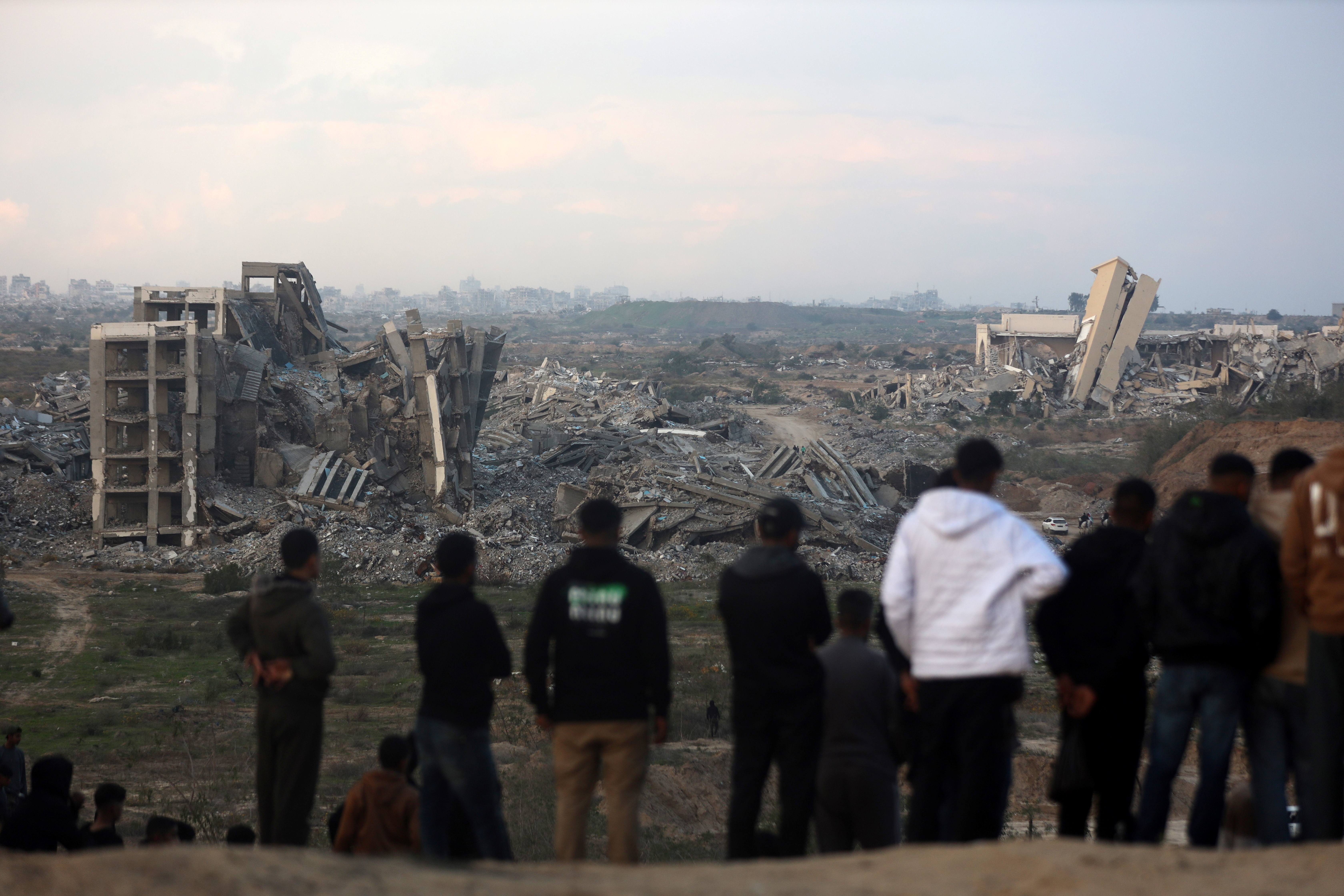
I was struck by astonishment and goosebumps as I wiped each piece of these surviving vases, which I now fear for more than anything else, while my inner voice spoke to me of a small victory achieved by memory. Netanyahu’s strikes, which resemble earthquakes, did not shake these possessions that chronicle the historical ownership of a home and the collective memory of a family whose mother was born three years before the Nakba of 1948.
This is how the value of human stories appears in preserving memory, not only through major narratives or pivotal dates, but through these fragile details that were supposed to be erased: in photographs not hung for display, vases not made to withstand wars, and homes not built to confront tanks.
What is happening in Gaza today is not only the destruction of place, but an attempt to erase memory. Yet memory, as I have learned, is more stubborn than people think. It lives in small things, in homes that were not demolished, and in the stories, people tell unintentionally while drinking tea. It lives in families’ insistence on returning, even to a single room, even amid the rubble. Thus, the human story becomes more than documentation of pain; it turns into an act of preservation. I mean the preservation of a collective memory that resists fading and insists that what existed here deserves to be told, remembered, and inherited, no matter how much the world around it seems determined to forget.
This article was originally written in Arabic.