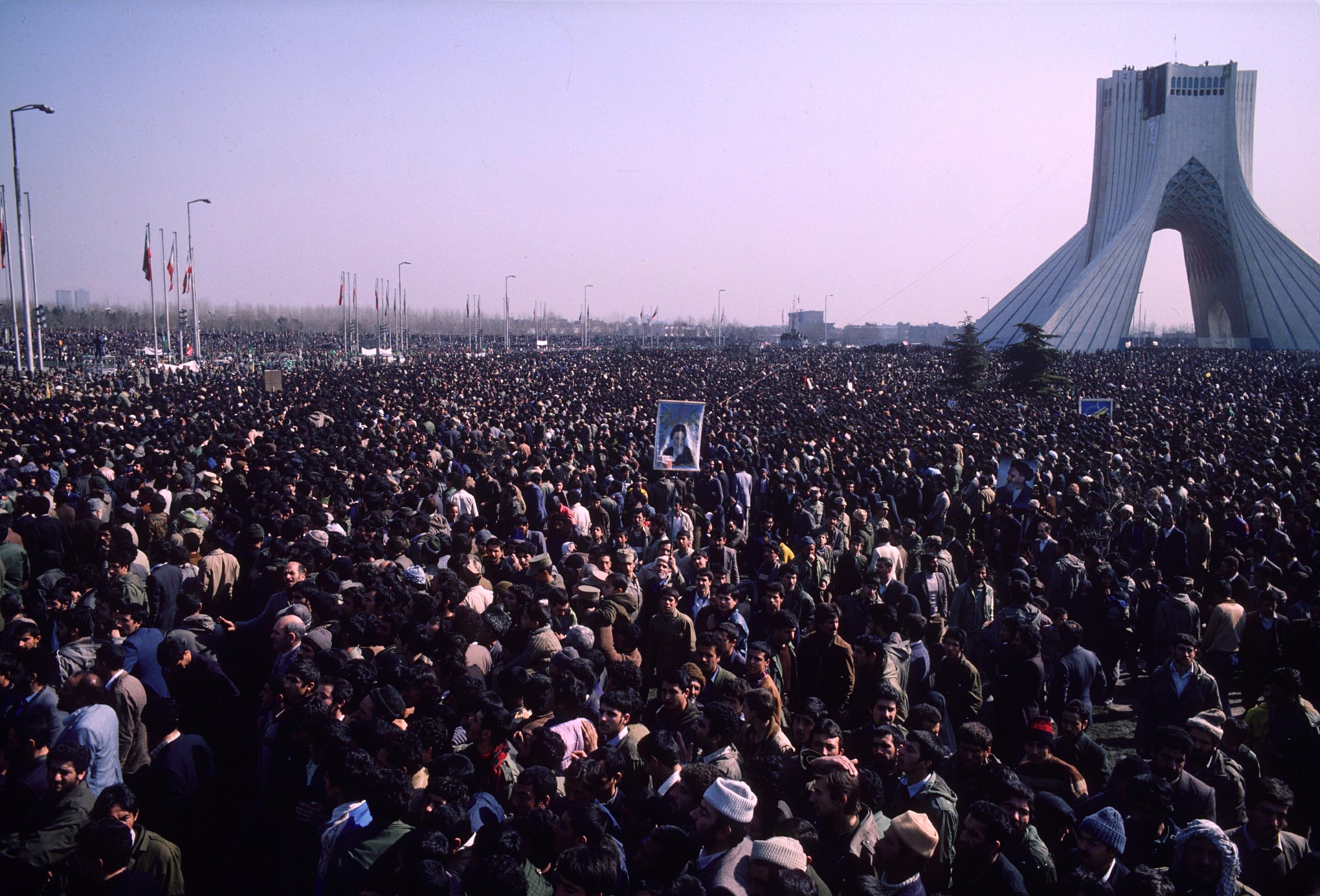

The 1979 Revolution transformed how the Western world views and reports on Islam. What started as a confused attempt to understand a new religious movement has turned into a permanent media habit of framing Iran through the lens of conflict and suspicion.
The Iranian Revolution of 1979 thrust Iran into the mainstream discourse of the West, the US particularly, and became a defining moment in how Western media began to frame political Islam and Iran
In the same year as the Revolution, the Siege of Mecca and its aftermath would divert Saudi Arabia away from western-style reforms towards ultra-conservatism and see the Soviet Union Invade Afghanistan. Yet it is the Iranian Revolution that would essentially shape the way in which the media reports on Islam and Iran to this day.
The Revolution Comes into Focus
As the soon-to-be Supreme Leader Ayatollah Khomeini sat reclined in his seat on an Air France flight chartered toward Iran it was the end of his over 15 year-long exile. The Shah of Iran had already fled the country a couple of weeks earlier, and Khomeini would go on to spearhead the government that would replace the unbroken two and half millennia chain of kings that presided over Iran. When ABC News Journalist Peter Jennings asked the Ayatollah how he felt returning to Iran after years in exile Khomeini simply replied in Persian, “Hichi” – “Nothing.”
To many in the European and the United States news media the unpierceable and stoic persona of the Shiite Cleric Khomeini was baffling, reflecting the presses and Western Worlds inability to gauge the future for Iran within this man.
President Carter had called Iran an “Island of Stability” a little over a year before Khomeini’s flight, now it was an unclear player in the region for the US, and the media often reflected this.
A report analysing The New York Times coverage between 1968 and 1978, the time of the Shah’s western reforms called the White Revolution, found that on average less than half an editorial a year was dedicated to Iran and Iranian affairs.
When protests began in Iran the NYT published on average 24 times as many editorials on Iran per year during this period than it had in the previous decade. Across much of the European and US media was a gravitational pull towards Khomeini, who at the time of the protests in Iran of 1978/79 was living in exile near Paris, a clear oppositional player to the Shah in the narrative of the Revolution.
There he could speak freely and have access to the press for which family, students and close advisors helped him prepare statements and manage journalists where he downplayed certain aspects of his Islamism when talking about what comes after the Shah. As former French Ambassador to Iran, François Nicoullaud, explained many decades after the event:
Intellectuals in France told him to come here. He wanted to go to a Muslim country, but [they] felt it better for him to be in a country where the international media could capture everything, he would say and get the proper media support and coverage.
To observers Khomeini’s long black robes and clericalism made him a striking, almost caricature, type figure. When Robert MacNiel, PBS, interviewed Khomeini on December 1st, 1978, he first describes him as a man of, “a spartan diet of prayer and little food.”
Joan Shore, Junior Correspondent at the Paris Bureau of CBS News, said at the time that, “the French press covered Khomeini's arrival thoroughly and seriously. Finally, two months later, in December, America began to take notice of this bearded old man in France.”
Khomeini’s interaction with the press in Europe not only legitimised himself as the internationally recognised opposition of the Shah but cemented an orientalist image left over from the colonial period of the ‘cleric from the east’. Yet the confusion of what to make of the Islamic Revolution at a time before the US Hostage Crisis was still unclear.
For the NYT in February 1979, Richard Falk, then American Professor at Princeton University wrote an article saying,
“The news media have defamed him in many ways, associating him with efforts to turn the clock back 1,300 years, with virulent anti‐Semitism, and with a new political disorder, “theocratic fascism,” about to be set loose on the world. About the best he has fared has been to be called (by Newsweek) “Iran's Mystery Man.”
The Hostage Crisis and the Hardening of the Narrative
The US Hostage Crisis which saw 66 personnel of the US embassy in Tehran held captive by Iranian students was a turning point. No longer was there a ‘man of mystery’ in Khomeini as the narrative from the United States Media began to shift unequivocally against Iran.
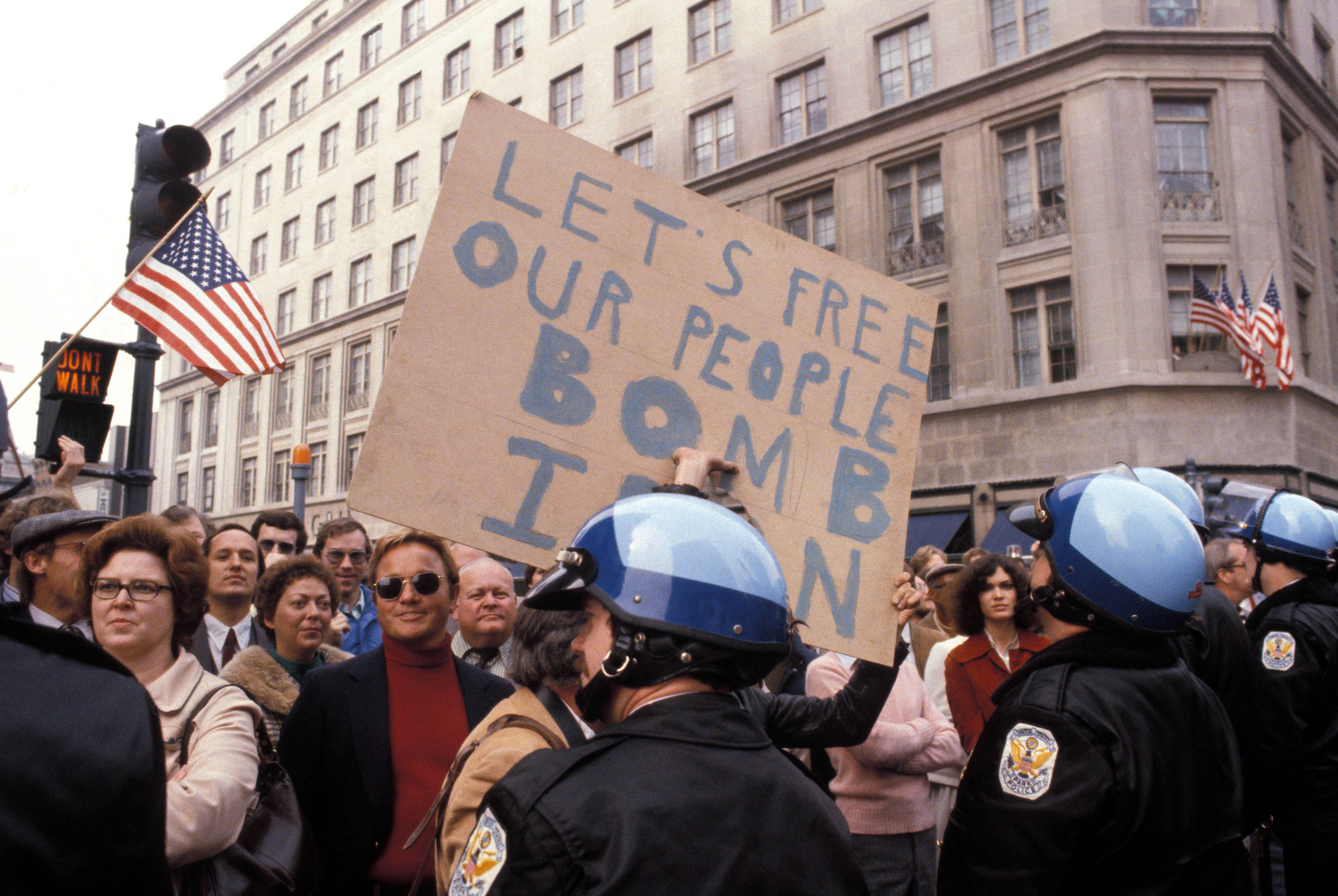
The NYT coverage of Iran increased by 55 times as much during the 444-day captivity of the hostages compared to the ten years between 1968 and 1978. This is due to the obvious outrage of United States Citizens being held by a foreign power but also due to the sharp rise in gasoline prices globally due to the Revolution in Iran affecting oil shipments.
The Chicago Tribune in November 1979, the same month as the hostage crisis began, wrote “Intolerance grips revolutionary Iran.”, “The New Barbarians are loose in Iran," wrote Hal Gulliver in The Atlanta Constitution on November 13th. ABC News published that “the crescent of crisis, sweeping across the world of Islam like a cyclone hurtling across a prairie," on November 21.
In an article for the Columbia Journalism Review titled ‘Iran and the press: whose holy war?’ Edward Said wrote about the lack of fact checking and the demonisation of Iran during this period. He states The Atlanta Constitution on November 8 alleged that the Palestine Liberation Organization was behind the embassy takeover, sources stated as “diplomatic and European intelligence," with the Washington Post saying, "there is some basis to believe that the whole operation is being orchestrated by well-trained Marxists." He states many others in his article with similar false claims.
Although these allegations were untrue their purpose to associate the Iranian Revolutionaries with cold war rivals and terror groups was, Said wrote:
The hardest thing to understand about the news media is why, almost without exception, they regard the movement that overthrew the Pahlavi regime and brought in different, perhaps more popular groups, with such disdain and suspicion. A partial answer, no doubt, is that the movement employed a dramatically unfamiliar (to Western eyes) idiom of religious, as well as political, resistance to tyranny.
Said’s views come from another aspect of the Western Media also, in the form of the Islamic Revolution being an anti-imperialist movement that breaks the shackles of oppressive powers, invalidating the struggles a new government can place upon Iran also.
As a report by the Tony Blair Institute for Global Change outlines:
Just as in 1979 some Western observers thought Khomeini would liberate the Iranian people. Although there is a perception that such a view is confined to the far left, its proponents can be found across the political spectrum.
The Enduring Legacy of 1979
Before the current war between Israel, the United States and Iran, recent media narratives on Iran were focused on protests inside the regime, most notably the Green Revolution of 2009, the Women, Life, Freedom movement in 2022 and the protests at the end of 2025, beginning of 2026.
As Dr. Esmaeil Esfandiary and Dr. Shahab Esfandiary wrote in the book Reporting the Middle East, these protests also became the sole view of many of the West on Iran:
Stories of human rights violations have had a strategic value and function for Western governments in their decades-old battle of narratives with the Islamic Republic of Iran.
Depictions of Islam were also exacerbated following 9/11 and the War on Terror, resulting in Western Media to report on the ideals of the foreign policy of their governments, not necessarily on lived realities. Dr. Ayman Talal Yousef of the Arab-American University spoke of the post-cold war era of media on Islam in a publication about stereotypes of Islam within this period.
That Western media figures, academics, decision-makers and research centres are trying to deliver the idea that Islamic globalism based on extremism and terrorism has become the next threat, replacing Communism
The Western Media’s spontaneous fix on Iran reflects, like most mainstream news, the push and pull of geo-political, geographic and ideological circumstances that shape the world and its apparent spheres of ideological separation. Journalists too have their limits and can only repeat facts of current events, often without being able to give more than a sentence or two on the background of complex issues rooted in history, religion and ideology.
Francis Ghilès, Senior Fellow at the European Institute of the Mediterranean, spoke of the ‘journalist’ when reporting on the MENA Region, saying:
He does not have the time to be an expert in the academic sense. His essential qualification is to produce the right number of words, in television jargon the right “footage”, at the right time. His ability to say some things in an intelligible and entertaining fashion is another essential qualification.
Nearly half a century after Khomeini’s return and the disposure of the Shah, the media today now gives airtime to the son of the Shah as the Iranian diaspora in the West now shout, “Long Live the Shah” instead of “Death to the Shah”. Over 200,000 people came to see the son of the Shah when he spoke in Munich during the Security Conference in February 2026.
The language, imagery and assumptions that emerged in 1979 continue to shape how Iran is reported, suggesting that the revolution did not just transform a nation, but also the lens through which it is still understood.