Al Jazeera Journalism Review

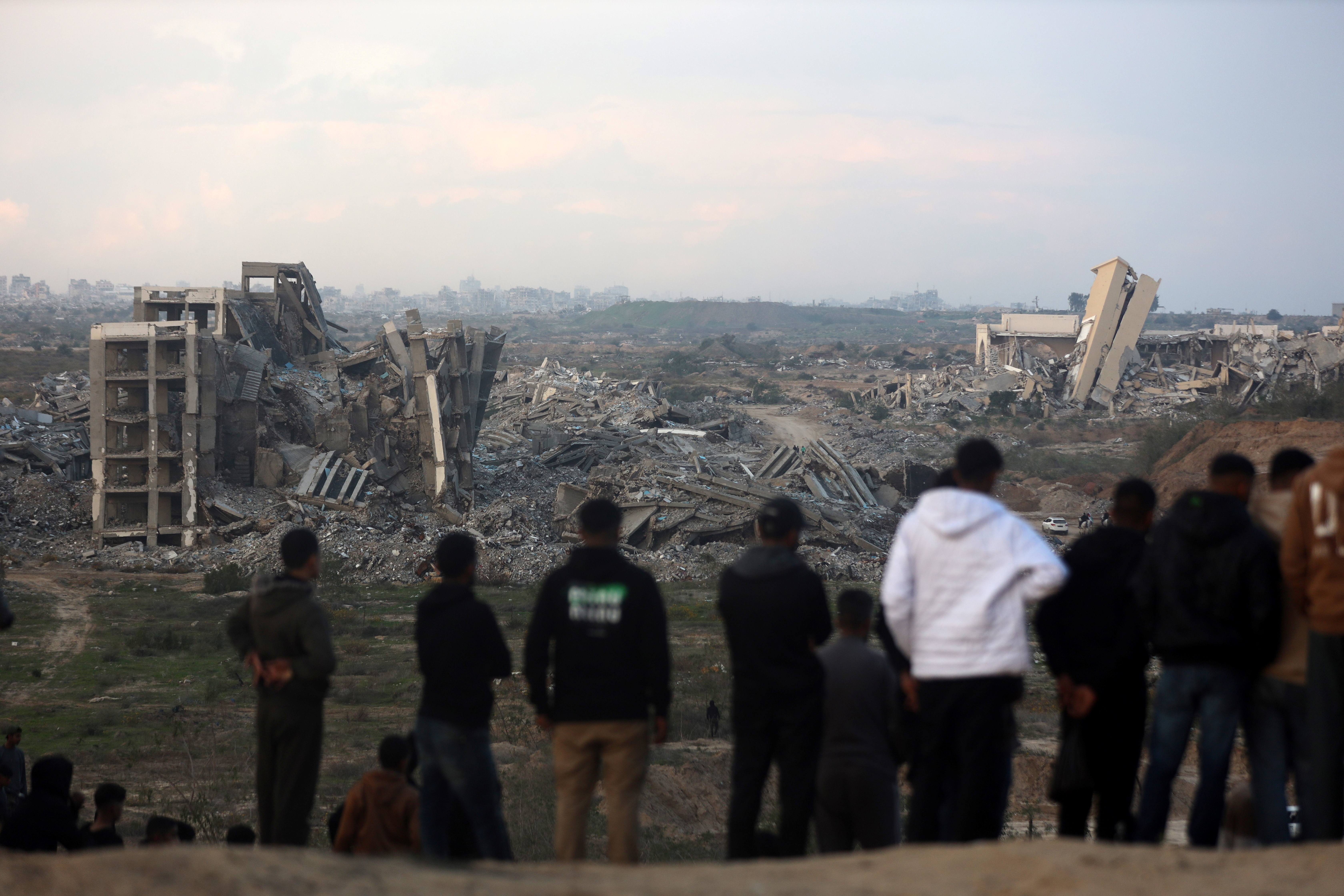
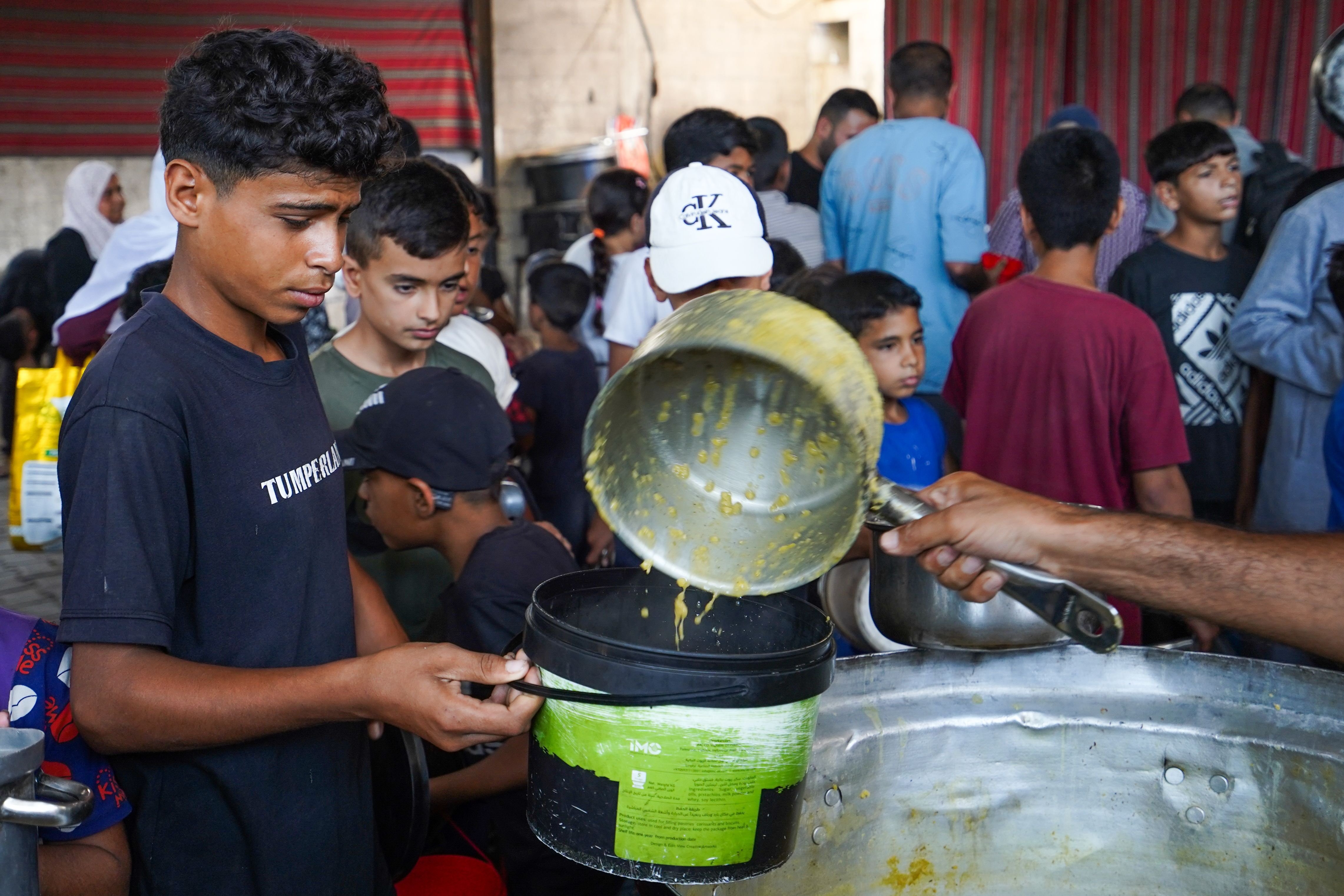
A woman walks past a colorful mural painted on the remains of a destroyed building in the Jabalia refugee camp. As images of conflict move from the frontlines to global exhibitions, the line between raw trauma and curated art becomes blurred.  (Photo: Majdi Fathi. Gaza, Palestine – April 2026)
A woman walks past a colorful mural painted on the remains of a destroyed building in the Jabalia refugee camp. As images of conflict move from the frontlines to global exhibitions, the line between raw trauma and Refined art becomes blurred. (Photo: Majdi Fathi. Gaza, Palestine – April 2026)

The Afterlife of an Image: How Photojournalism Contests Shape Visibility and Responsibility

As photojournalism contests elevate certain images to global prominence, they also influence how violence, dignity, and memory are constructed in the public imagination. 


Several years ago, a prominent European photojournalist gave a lecture about their work at the Frontline Club in London. After a slideshow and explanation of the process of her incredible work depicting refugees in Sudan and mothers in the West Bank, someone asked, “Does the striking aesthetic ‘beauty’ of these photos detract from the context and meaning behind them?” A fair question. After all, as a photojournalist, I know that to have work commissioned, it needs to be truthful yet appealing to the eye to sell or reach a wider audience.  

Photojournalist and documentary photography contests are a clear example of this. A business model where winning photographers and their work receive money, camera gear, and other incentives. Yet it is also the subject of the photo that ‘wins’ and has their image in an ‘afterlife’ of the contest that can be used in promotion, exhibitions, social media, etc., often in contexts far from what they, or the photographer, imagined. It is in the process by which contests choose winning photos and their following dissemination in other environments that one can see the lines blurred between a ‘truthful depiction’ and a ‘beautiful photo’ for mass consumption. 


There’s creating the photograph and then sharing the photograph. And I think that those things are sometimes quite conflated. . .. a really great place to start is to separate them and consider them as two separate processes. Consent to take a photograph is not the same thing as consent for it to appear on a newsfeed or on a billboard.

Dr. Savannah Dodd, founder and director of the Photography Ethics Centre 


The ‘Afterlife’ of a Contest-Winning Photo 

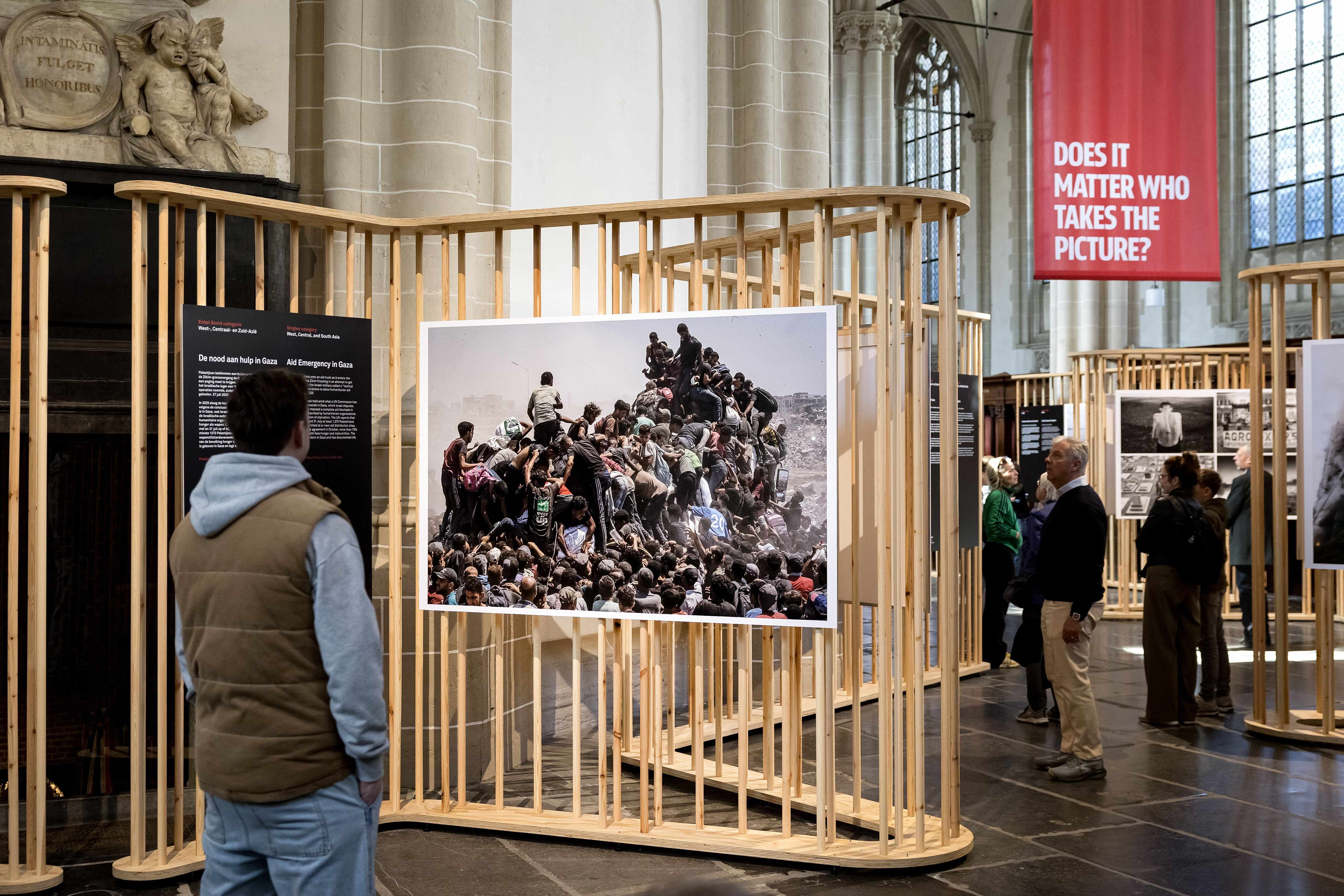
The World Press Photo is the most prestigious and famous photojournalistic contest and organisation in the world, responsible for touring photos in exhibition spaces globally and giving outreach, acclaim and notoriety to the winners and finalists.  

The winner of the 2025 World Press Photo of the Year is a striking, stark and confrontational image, a portrait of nine-year-old Mahmoud Ajjour, who lost both arms in an airstrike in Gaza, photographed by Samar Abu Elouf for The New York Times. The jury described it as “strong composition and attention to light, to be contemplative, sparking questions about the experiences yet to come for the young, wounded boy”. 

A Gazan native herself, Samar’s winning photo was used in the advertisement of the travelling exhibition of the World Press Photo, the armless Mahmoud lining the walls of an ascending escalator in the Barcelona metro. This is the ‘second life’ of the photo, used to inform the public of the exhibition.  

Dr. Savannah Dodd, founder and director of the Photography Ethics Centre, ponders this separation of the photo from its original creation: 

“There’s creating the photograph and then sharing the photograph. And I think that those things are sometimes quite conflated. ... A really great place to start is to separate them and consider them as two separate processes. Consent to take a photograph is not the same thing as consent for it to appear on a newsfeed or on a billboard.” 

Images now move fluidly across platforms and contexts that the photographer may never have anticipated, from exhibitions to social media to commercial spaces. This includes how images are captioned, how they are spatially presented in exhibitions or public advertising, and how much agency we retain – or should retain – over secondary uses. Ethical responsibility does not end at publication; it evolves as images continue to circulate.

Joumana El Zein Khoury, Executive Director of the World Press Photo Contest 2026 

In her book, Popular Trauma Culture: Selling the Pain of Others in the Mass Media, Anne Rothe describes how trauma functions in contemporary culture and how media surrounding suffering is used to make a ‘story or narrative’ to sell to the public. She uses examples of the Holocaust in film depictions, as well as photos and videos utilised by newsrooms.  

Mahmoud’s image seemed eerie plastered on the metro, and later, when witnessing the leaflets for the exhibition with his image used as coasters in a nearby bar, it seemed even more so. This can be seen as an example of a society desensitised to a conflict that has been so much in the public eye via traditional news media and social media since October 2023 or, simply, the method to advertise the real purpose of the World Press Photo: to showcase compelling and urgent stories, deepening our understanding of the world’s complexities to inspire action.  

Yet, much like the famous photo of Che Guevara now plastered on t-shirts and university bedroom walls globally, can the image’s ‘afterlife’ completely strip the original context and intent behind the photo? 

Executive Director of the World Press Photo Contest 2026, Joumana El Zein Khoury, speaks about the nature of the ‘afterlife’ of an image past these contests: 

“The ‘afterlife’ of images is no longer peripheral; it is central to ethical practice today. Images now move fluidly across platforms and contexts that the photographer may never have anticipated, from exhibitions to social media to commercial spaces. This includes how images are captioned, how they are spatially presented in exhibitions or public advertising, and how much agency we retain – or should retain – over secondary uses. Ethical responsibility does not end at publication; it evolves as images continue to circulate.” 

Another aspect of a photo’s ‘afterlife’ is the way it can move a mass audience of people into action. The photo of Mahmoud inspired a fundraising campaign for him to access prosthetic care, signifying how concern can catalyse solidarity and change beyond the publication.  


The ‘afterlife’ of images is no longer peripheral; it is central to ethical practice today. Images now move fluidly across platforms and contexts that the photographer may never have anticipated, from exhibitions to social media to commercial spaces.

Joumana El Zein Khoury, Executive Director of the World Press Photo Contest 2026 


How A Photo Is Chosen 

The documentary, Sea of Pictures, by Misja Pekel, details the journey from photographer to newsroom and judges’ table of the infamous photograph of Aylan Kurdi, the drowned boy on the beach during the peak of the ‘refugee crisis’ in Europe in the mid-2010s.  

In an interview, Aiden White, director of the Ethical Journalism Network, discussed the editorial motivation in choosing the photo to publish, and by extension, what people will see/what photographers will be eligible for: 

“We need aesthetics in pictures as much as we need good language in the use of words. Of course, we need elements in a picture or a video that will reach out to people and communicate quickly and simply the story behind them.” 

When judging photography contests, considerations must be made over the use of editing, consent, context and whether the photo reinforces dominant visual tropes of suffering, the starving African, for example. 

Professor Ingrid Berman, American documentary photographer and professor at Columbia University Graduate School of Journalism, explained how visual clichés are a reflection of the violent reality of our world:

“The truth is that our world has become way more violent, and much of that violence is visible and perpetuating; hence the repetitive images. When children are murdered, parents and family members cry out. Should journalists not photograph that visual trope of the grieving loved ones? When a state bombs people into smithereens, should we not see the results of that violence even though the picture has been seen in some way many times before?” 

As a judge in this year’s World Press Photo contest, Professor Berman sits alongside many other professionals in the photographic and journalistic world, measuring the photos not by their virality or reach in changing policy. Judges examine captions, photographer engagement, and context, not the unforeseeable consequences of global circulation. 

When I first saw Mahmoud’s portrait lining the Barcelona metro, it felt jarring, even unsettling. But perhaps that discomfort is not a failure of photojournalism. Perhaps it is evidence of its power. 


Stretching back decades, the World Press Photo and other photographic contests and archives have determined what images of the global south have become iconic. Reform was made when regional juries were introduced based on the geographical section the submitted photo is from. As Joumana El Zein Khoury states herself: 

“World Press Photo does not merely reflect the field; we actively shape it.” 

Time changes our perceptions, both of what is acceptable as a society and as individuals. Practices within the photojournalistic sphere in the past directly impacted what the World Press Photo contest published and reinforced in the minds of exhibition goers worldwide and within wider media circles, journalistic communities, and those affected directly by the subject of the photos.  

The World Press Photo archives site states the following:

“What voices dominated the contest, and whose voices were excluded? Why did it take over 20 years for a woman photographer to be awarded the Photo of the Year?” 

When I first saw Mahmoud’s portrait lining the Barcelona metro, it felt jarring, even unsettling. But perhaps that discomfort is not a failure of photojournalism. Perhaps it is evidence of its power. 

The issue is not whether such photographs should exist. They must. Violence should not be hidden. 

The question is how institutions that elevate them, that tour them, brand them, monetise them, and historicise them can remain accountable not only to audiences and photographers, but to the people in the frame. 

If contests shape what the world sees, they also shape how suffering is remembered. And memory, once institutionalised, rarely belongs to those who first lived it.


Related Articles

Journalists feel the pain, but the story of Gaza must be told  

People don’t always want to hear the historical context behind horrifying events, resorting even to censorship, but the media must be free to provide it

Aidan
Aidan White Published on: 30 Oct, 2023
Bias towards ideology at the expense of truth... Look for the reasons

Donald Trump’s election as US President in 2016 may have represented a key shift in the issue of ‘fake news’.

A picture of the author, Homam Yehya.
Homam Yehya Published on: 19 Jul, 2021
From News Reporting to Documentation: Practical Lessons from Covering the War on Gaza

From the very first moment of the genocidal war waged by Israel on Gaza, Al Jazeera correspondent Hisham Zaqout has been a witness to hunger, devastation, war crimes, and the assassination of his colleagues in the field. It is a battle for survival and documentation, one that goes beyond mere coverage and daily reporting.

Hisham Zakkout Published on: 26 Jan, 2026

More Articles

Malawi Investigates Poor Pay and Working Conditions for Junior Journalists

Malawi’s investigation into poor pay for junior journalists exposes a deeper crisis where economic hardship is eroding media independence and forcing reporters to choose between ethical integrity and survival.

Benson Kunchezera Published on: 30 Apr, 2026
Journalism as a Struggle for Survival in Sudan

With war erupting in Sudan, the country’s media landscape collapsed almost overnight after the Rapid Support Forces entered Khartoum. Many journalists were left without jobs, salaries or shelter, scattered between displacement, exile and siege, as newspapers shut down and media institutions ceased to function. For many, journalism was no longer a profession but a daily struggle for survival.

Saif al-Din al-Bashir Ahmed Published on: 27 Apr, 2026
From Print to Pixels: How Small-Town Journalists in Bihar Are Surviving Threats and Closures

As newspapers vanish across districts like Siwan, Gaya, and Purnea, reporters turn to mobile phones, digital start-ups and community networks to keep local journalism alive.

Rehan Qayoom Mir. An independent journalist whose work has appeared in international and national outlets,
Rehan Qayoom Mir, Sajad Hameed Published on: 12 Apr, 2026
Arab Society and Investigative Journalism: The Dialectic of Culture, Power, and Profession

Investigative journalism in Arab societies operates within a dense web of social, political, and cultural pressures that often push journalists to balance truth-telling against survival, forcing them onto a precarious “razor’s edge.” Yet despite these constraints, moments of crisis can transform society itself from a source of pressure into a powerful ally, driving accountability and reigniting the pursuit of truth.

Musab Shawabkeh
Musab Al Shawabkeh Published on: 7 Apr, 2026
The Revolution That Framed Islam: How 1979 Shaped Western Media on Iran

The 1979 Revolution transformed how the Western world views and reports on Islam. What started as a confused attempt to understand a new religious movement has turned into a permanent media habit of framing Iran through the lens of conflict and suspicion.

Daniel Harper
Daniel Harper Published on: 4 Apr, 2026
The Challenge of Reporting in Chechnya

Independent journalism no longer exists as a functioning practice inside Chechnya. What remains is a profession rebuilt in exile, forced to operate at a distance from the very place it is meant to cover.

Rushda Fathima Khan
Rushda Fathima Khan Published on: 29 Mar, 2026
How AI Can Clean Messy Data; and Where It Can't

Normalising inconsistent, messy, or incomplete data is tedious and time-consuming, but essential. AI can handle grunt work, but editorial decisions remain with the journalist.

KA
Konstantinos Antonopoulos Published on: 21 Mar, 2026
Missiles Made of Words: How Western Media Narratives Shape the Iran–Israel–US Conflict

Western media coverage of the Iran–Israel–US conflict often functions as a weapon of war, using selective language that frames US and Israeli strikes as “self-defence” while depicting Iranian actions as "provocation". This linguistic framing normalises civilian casualties and helps manufacture public consent for military aggression by dehumanising certain populations.

Muqeet Mohammed Shah
Muqeet Mohammed Shah, Ifrah Khalil Kawa Published on: 14 Mar, 2026
How the Ethiopian Civil War Unleashed a Lethal Media Crackdown

There has been a widening crackdown on the media in Ethiopia since war erupted between the central government and Tigray’s regional authorities in 2020, and the pressure appears set to intensify as the country prepares for general elections in June.

Nalova Akua
Nalova Akua Published on: 9 Mar, 2026
Are Netanyahu's and Trump’s Speeches Shaping Western Media Framing?

As political speeches framed the 2026 U.S.–Israeli attack on Iran, segments of Western media echoed their language and narratives, illustrating how strategic rhetoric and news framing can shape public opinion and legitimise military action.

Shaimaa Al-Eisai
Shaimaa Al-Eisai Published on: 6 Mar, 2026
The Taboos of Journalism: A Fragility No One Dares to Expose

Does a journalist have the right to critique their own employer? It is a striking irony that they report on global crises while remaining silent about their own industry's fragility: stagnant wages, eroding professional values, and profit-driven ownership. Journalists must realize that confronting this internal rot is not just a right, but a necessity to save the profession from extinction.

Diana López Zuleta
Diana López Zuleta Published on: 24 Feb, 2026
Bilingual on Paper, Unbalanced on Air: English Journalism in a Francophone Cameroon

In a media landscape where French dominance dictates policy and airtime, English-speaking reporters in Cameroon are forced into a relentless cycle of improvisation, translation, and professional exhaustion. From the "desert-like" scarcity of English-speaking experts to newsrooms that offer no institutional support, this analysis explores how linguistic inequality hollows out the journalistic process, leaving vital stories untold and the promise of a bilingual nation unfulfilled.

Akem
Akem Nkwain Published on: 15 Feb, 2026
Reporting the Spectacle: Myanmar’s Manufactured Elections

Myanmar’s recent elections posed a profound challenge for journalists, who were forced to navigate between exposing a sham process and inadvertently legitimising it. With media repression intensifying, reporting became an act of resistance against the junta’s effort to control information and silence independent voices.
Annie Zaman
Annie Zaman Published on: 7 Feb, 2026
Public Hostility Toward Legacy Media in Bangladesh

The December 2025 arson attacks on Prothom Alo and The Daily Star marked a turning point for journalism in Bangladesh. As public anger replaces state control as the primary threat, reporters are reassessing personal safety, editorial judgement, and professional credibility in a political transition where journalism itself is increasingly treated as an enemy.

Arsalan Bukhari, an independent journalist based in India
Arsalan Bukhari Published on: 4 Feb, 2026
Migration Issues and the Framing Dilemma in Western Media

How does the Western press shape the migration narrative? Which journalistic frames dominate its coverage? And is reporting on anti-immigration protests neutral or ideologically charged? This analysis examines how segments of Western media echo far-right rhetoric, reinforcing xenophobic discourse through selective framing, language, and imagery.

Salma Saqr
Salma Saqr Published on: 31 Jan, 2026
Polarised, Intimidated, Silenced: The Media Under Siege in Cameroon’s Election

Cameroon’s 2025 presidential election exposed a troubling paradox: a nation voting under the watchful eye of power, while its press remained silenced. From the arrest of a teenage reporter to bans on political debate and digital manipulation, freedom of expression is under siege, and journalism is on trial.

Shuimo Trust Dohyee
Shuimo Trust Dohyee, Ngweh Rita Published on: 22 Jan, 2026
What Image of Gaza Will the World Remember?

Will the story of Gaza be reduced to official statements that categorise the Palestinian as a "threat"? Or to images of the victims that flood the digital space? And how can the media be transformed into a tool for reinforcing collective memory and the struggle over narratives?

Hassan Obeid
Hasan Obaid Published on: 13 Jan, 2026
Journalism in Mauritania: Behind the Facade of Press Freedom Indicators

Mauritania holds the top position in the Arab world in the Press Freedom Index published by Reporters Without Borders. However, behind this favourable ranking, the media and journalists face significant challenges, chief among them the ambiguity surrounding the definition of a "journalist" and the capacity of media professionals to fulfil their roles in accountability and oversight. Despite official efforts, the defining feature of Mauritania’s media landscape remains its persistent state of fluctuation.
 Ahmed Mohamed El-Moustapha
Ahmed Mohamed El-Moustapha Published on: 6 Jan, 2026
How Can Journalism Make the Climate Crisis a People’s Issue?

Between the import of Western concepts and terminology that often fail to reflect the Arab context, and the denial of the climate crisis, or the inability to communicate it in clear, accessible terms, journalism plays a vital role in informing the public and revealing how climate change directly affects the fabric of daily life in the Arab world.

Bana Salama
Bana Salama Published on: 19 Dec, 2025
Freelancers in Kashmir Fear Losing Access as Verification Tightens

Kashmir’s new “verification drive” claims to root out impostors, yet its heavy bureaucratic demands mainly sideline the independent freelancers who still dare to report in a shrinking media landscape. But here’s the unsettling question that hangs over the Valley like fog at dawn: who really benefits when the storytellers without institutional shields are pushed out of the frame?

Tauseef Ahmad
Tauseef Ahmad, Sajid Raina Published on: 11 Dec, 2025
Journalists in Maldives Enter New Phase of Government-Controlled Media Repression

As journalists weigh the costs of their work against threats to their lives and families, the fight for press freedom in the Maldives enters a dangerous new chapter, one where the stakes have never been higher.

Sumaiya Ali
Sumaiya Ali Published on: 8 Dec, 2025
Reporting Under Fire: The Struggle of African Journalists Facing Intimidation

African journalists who expose corruption and power now face a brutal mix of arrests, torture, digital surveillance, and lawsuits meant to drain their resources and silence them. From Ethiopia, Nigeria, Malawi, Benin, Sudan, Uganda, and Kenya to exile in Canada, reporting the truth has become an act of personal survival as much as public service.

Nigerian freelance Journalist John Chukwu
John Chukwu Published on: 4 Dec, 2025
Shipwrecked Narratives: How to Keep Migration Stories Afloat

Migration stories don’t become real until you meet people in the journey: the carpenter carrying photos of his fantasy coffins, or the Libyan city worker burying the forgotten dead, or the Tatar woman watching her livelihood collapse at a militarised border. Following these surprising human threads is the only way journalism can cut through collective exhaustion and make readers confront a crisis they’ve been trained to ignore.

صحفي مستقل ومدرب إعلامي، نشرت مقالاته في الغارديان، والجزيرة الإنجليزية، وبوليتيكو، وميدل إيست آي، وذا إندبندنت، وغيرها.
Karlos Zurutuza Published on: 30 Nov, 2025
In-Depth and Longform Journalism in the AI Era: Revival or Obsolescence?

Can artificial intelligence tools help promote and expand the reach of longform journalism, still followed by a significant audience, or will they accelerate its decline? This article examines the leading AI tools reshaping the media landscape and explores the emerging opportunities they present for longform journalism, particularly in areas such as search and content discovery.

. سعيد ولفقير. كاتب وصحافي مغربي. ساهم واشتغل مع عددٍ من المنصات العربية منذ أواخر عام 2014.Said Oulfakir. Moroccan writer and journalist. He has contributed to and worked with a number of Arab media platforms since late 2014.
Said Oulfakir Published on: 24 Nov, 2025