
Journalism in Latin America is facing a crisis of hostility. In the age of political polarization, governments from both the left and the right are not merely managing states; they are actively harassing critical voices, imposing institutional censorship, and enforcing official narratives that attack independent media to silence disagreement and fake democracy across the region.
Journalism in Latin America, and its relationship with power, whether left-wing or right-wing, is living through turbulent moments marked by tension, danger, hostility, and open confrontation governed by the old popular saying: “Either you are with me, or you are against me.”
In Mexico, El Salvador, and Venezuela, journalists are languishing in prison because they wrote articles that disturbed or angered the ruling authority. In Caribbean countries such as Cuba, there is not even circulation of privately owned newspapers or independent radio stations. There is only Granma, the official newspaper of the Cuban Communist Party. This newspaper does not inform; it indoctrinates. Revolution and loyalty to the regime come first, and anything else is of no great importance.
Moreover, in Cuba, foreign journalists are forced to “disguise” themselves as tourists in order to practise journalism on the socialist island. Recently, Colombian colleagues went to Havana to cover the fuel shortage, famine among the population, and the decline in tourism under the strict capitalist blockade imposed by the United States on Cuba. The journalists had to pose as a “happy couple” seeking only to enjoy walking through the historic centre of Old Havana, chatting with locals, and relaxing on the beaches of Varadero, so that they could do their work while exercising extreme caution when recording with a mobile phone camera. This kind of journalism continues in Latin American countries where the dictatorship of the government, whether left-wing or radical right-wing, decides what is published and what is not.
Journalism in Argentina is living through moments of economic prosperity, while critical journalism is subjected to harassment, criminal prosecution, and stigmatisation from the highest levels of power. Defamation campaigns are paid for from the public treasury, and the far right uses its repressive arm.
Where does democracy lie in Latin America? Free coexistence and social opinion are permitted only so long as they do not tangibly harm the ruling regime. The freedom to report and write about what one sees has become nothing more than a utopia, an illusion, or a distant dream.
In Mexico, my country, which is governed by the left that “promotes” humanity, confronts neoliberalism, and elevates republican austerity under the slogan “the poor first”, an official narrative has been established with the aim of discrediting and attacking any journalist or media outlet, television, newspaper, digital platform, or podcast, that openly criticises the way the budget is managed, the strategy for combating drug trafficking, or the high figures of rampant insecurity.
“Garbage journalism, members of the mafia of power, conservative press, paid press, liars and slanderers, professional deceivers”: these are only some of the descriptions used by Mexico’s last two left-wing presidents, Andrés Manuel López Obrador and the current president, Claudia Sheinbaum, against many journalists for criticising the spread of corruption, the appointment of senior officials’ relatives to government positions, or the denunciation of a failed security strategy.
Going even further, the left-wing governor of the state of Campeche, Layda Sansores, ordered her police to arrest the journalist Jorge González, accusing him of “defamation” and “hate crimes” against the government. Social pressure and the solidarity of journalists prevented him from remaining in prison; nevertheless, a court in Campeche ruled that he be banned from practising his profession for two years. How will this journalist live or work? This is silence and professional terror in its most splendid form. Similar cases have occurred in other left-governed states such as Veracruz, where there “exists” a laughable charge against a journalist accused of “terrorism” for filming, on his phone, the unlawful arrest of a citizen.
Mexico City deserves special mention. Its head of government, who governs a city of more than 20 million inhabitants, attempted to interfere in the editorial line of the press, proposing to “soften the tone of news about violence” or avoid causing noise, saying: “I do not want to see headlines like this” when referring to health crises. This makes clear that, in 2026, the editorial desk can now be managed from the governor’s presidential chair. It is the role of “gatekeeper” exercised from the highest authority.
In Mexico, my country, which is governed by the left that “promotes” humanity, confronts neoliberalism, and elevates republican austerity under the slogan “the poor first”, an official narrative has been established with the aim of discrediting and attacking any journalist or media outlet, television, newspaper, digital platform, or podcast, that openly criticises the way the budget is managed, the strategy for combating drug trafficking, or the high figures of rampant insecurity.
In Argentina, where President Javier Milei belongs to the far right, and where he engages in a pattern similar to Mexico’s of harassment and persecution against the capital’s press, complaints have been filed against eight journalists over the past two years. And imagine why? Yes, for the same reasons denounced by the left in North America: allegations of insult and defamation.
Here, the descriptions and insults Milei directs at journalists are very eloquent: “monkeys, filthy leftists, human waste, whores of the narrative”, in addition to a sentence that reveals much about the stance of power in direct confrontation with Latin journalism: “We do not hate journalists enough.”
Last October, I was visiting Buenos Aires. I spent a week wandering through the most European capital in Latin America, reading newspapers and speaking with correspondents and with people. The conclusions were predictable: the dominant media openly support the official narrative, back the economist and statesman Milei, and are experiencing moments of economic prosperity. By contrast, critical journalism is subjected to harassment, criminal prosecution, and stigmatisation from the highest levels of power. Defamation campaigns are paid for from the public treasury, and the far right uses its repressive arm.
Argentina’s traditional newspaper La Nación counted more than 400 insults from the right-wing Milei against the press in that country. And any resemblance to left-wing leaders, López Obrador in Mexico, Bukele in El Salvador, Petro in Colombia, or Maduro in Venezuela, is purely coincidental!
“Pure political fiction!” That is what Carlos Salinas de Gortari, the former centre-right Mexican president, used to say when the press caught him red-handed in an act of corruption.
What an irony! I thought, as I contemplated, on a dark night, the Obelisk, Argentina’s iconic symbol, built ninety years ago, how similar the Mexican left and the Argentine right appear: overlapping, highly sensitive to social and media criticism, repressive towards those who do not agree with their absolute “truths” and who expose or criticise them. The French king Louis XIV said it better several centuries ago: “I am the state”, the highest degree of the centralisation of power, with no right to accountability, endlessly.
In Latin America, democracy is merely a simulation. Healthy social coexistence between power and the press ends when the economic interests and dominance of the former are affected by the latter. Freedom of the press is transient, and in several Latin countries it is practised “by the drop”, because the free right to think and express oneself is restricted in many countries.
In Latin America, democracy is merely a simulation. Healthy social coexistence between power and the press ends when the economic interests and dominance of the former are affected by the latter. Freedom of the press is transient, and in several Latin countries it is practised “by the drop”, because the free right to think and express oneself is restricted in many countries.
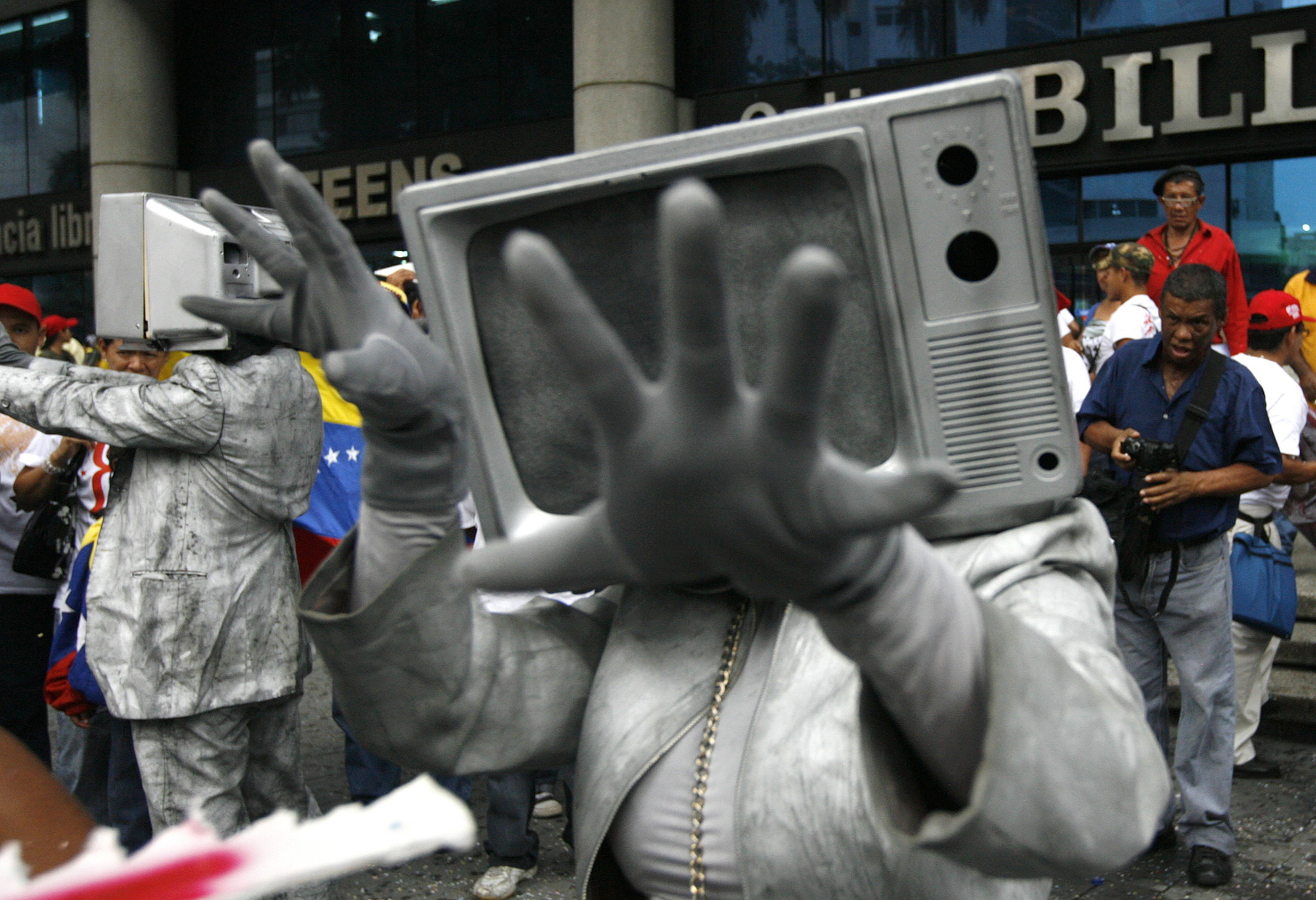
In Venezuela, Nicolás Maduro has fallen, but the socialist regime that governs it has not. In Caracas, my Venezuelan colleagues tell me of slight changes from the era of “Chavismo”: repression is still in force; there have been no printed newspapers for a decade; there is no credibility in the little journalism that exists because it is subject to the Bolivarian regime; critical journalists have already been exiled from the country “for the wellbeing of the republic”.
People do not listen to the news in Venezuela because they feel it offers them nothing. That familiar everyday scene in Latin America of listening to radio news bulletins while driving a car or riding in a taxi does not exist in Caracas and other Venezuelan cities.
In the most extreme case of Venezuela, there is a ban on the platform X, formerly Twitter, and on ChatGPT, both prohibited in the name of national security. The Venezuelan who wants to obtain information is forced to buy expensive VPN services in order to browse digital newspapers from abroad and read critical journalism about his country, and, of course, he does so in complete secrecy.
Chile, one of the most developed countries in Latin America, is living through a very unique duality. For 24 years, Chileans have moved from the left to the right and back again: every four years, they move to opposing poles. Within this arrangement, they live through sharp polarisation, as quiet as it is surreal.
In the Andean country, every newspaper has a label: “This newspaper is left-wing”; “This one belongs to the far right”; “This one misleads”; “This one spreads fake news”; “This one sows fear”; “This one says Chile is collapsing”; “And this one says we are the best economy.” It is a polarisation worthy of sociological and media analysis.
In Ecuador, something strange is happening. There is legislation dating back to 2013, governed by a strict law called the “Organic Law of Communication” (LOC), known as the “gag law”, whereby an auditor or monitor paid from the public treasury decides the penalties and censorship imposed on certain publications. In simpler terms: institutional censorship.
Contempt from the left or the right in power weakens journalistic work and makes it fragile before the reader or viewer. And yet, from every trench, radio, press, or television, every journalist continues to carve out a path so that their work reaches the audience they want to communicate with. In the end, the repressive measures and censorship practised by politicians, whether from the left or the right, are very similar; and thanks to technology, each time we find tools to confront them.
![Workers at Télam mobilise as the Argentine government plans to shut down the state news agency [SomosTelam.com.ar].](/sites/default/files/ajr/2024/Picture1_0.png)
























![Palestinian journalists attempt to connect to the internet using their phones in Rafah on the southern Gaza Strip. [Said Khatib/AFP]](/sites/default/files/ajr/2025/34962UB-highres-1705225575%20Large.jpeg)