Al Jazeera Journalism Review

Common Mistakes Made by Television Correspondents

Television correspondents earn trust not by being first or omniscient, but by reporting what they can verify, using images responsibly, resisting performance and speculation, and putting accuracy before speed. 


Many people think the work of a television correspondent is easy and requires little more than moving from one place to another and standing in front of a camera to report events and developments. This is not true. Appearing on screen is itself a major challenge, and the correspondent must make every effort to convey the picture of an event and the news accurately, quickly and credibly, without making mistakes or slips that diminish professionalism and damage reputation. 

Even so, many Arab television screens feature correspondents who commit professional and ethical errors without accountability. Some causes lie with the correspondent, such as a lack of experience and the absence of professional standards. Other causes relate to media institutions themselves, which fail to provide professional guidance to correspondents, whether when preparing reports or appearing live during major events. Added to this is the rush by many satellite channels to report news quickly in order to win viewers, rather than first ensuring its accuracy and credibility. 

This article aims to identify the most serious mistakes television correspondents make, whether knowingly or because of shortcomings at the institution they work for. 


Words Without Pictures 

Before preparing a report or story, the correspondent should ask: are there enough images available to cover this issue? If yes, proceed. If not, the correspondent should not risk preparing a story that lacks the images which form the basis of television. 

Some time ago, a colleague working in the correspondents’ department of an Arab satellite channel told me a story about one of its reporters. My colleague said the correspondent proposed preparing a story about a traditional custom that had disappeared in his country. When his manager, my colleague, asked how he intended to present the story visually, the reporter hesitated, then said he had found the answer: “We will use old pictures of people practising that custom before it disappeared decades ago.” Beyond the idea's weakness and the lack of relevant visuals, another question arises: why cover an issue its own people have forgotten to the point that it has faded from memory? 

Many people who consider themselves correspondents adopt similar ideas, producing reports that lack images related to the event itself and padding them with footage of streets and passers-by. This is one of the biggest mistakes a television correspondent can make. The golden rule is: if suitable images for the subject being covered are not available, there is no need for the report at all. 


The Know-it-all 

“Abu al-‘Urayf” is a popular term for someone who claims to know everything, pronounces judgment on every matter, and interferes in things that do not concern them. 

The correspondent should always remember that the primary task is to convey events and field observations to the public without inserting personal opinion. The same applies to live coverage, especially during major and sensitive events. In such cases, the correspondent should confine the report to what can be seen directly and what has been obtained from official sources, rather than turning into a political analyst, philosopher or official who claims expertise in every detail. Some time ago, I was watching a correspondent report on the impact of severe weather on a Palestinian satellite channel when he said: “I call on our citizens not to leave their homes because of the accumulation of ice.” At that point, he had shifted from correspondent to public official or police officer, which is not his role. The correspondent made a mistake here, but what was the role of the channel he worked for? Those responsible for him should have warned him and prevented him from repeating it. 

As for a correspondent with long experience, there is nothing wrong with offering an opinion and analysing political events when participating in news bulletins. Years of field and political experience can serve as a qualification in this area. 


Deadly Competition 

Many correspondents make the mistake of prioritising speed over accuracy because of competition with other reporters working for rival satellite channels, particularly during live coverage of fast-moving events. The correct approach is for the correspondent to wait and investigate the story until certain of the truth of everything being reported, even if others publish first. During the tragic case of the Moroccan child Rayan, who fell into a well the previous month and whose death was announced after five days, we saw numerous correspondents on Moroccan and Arab channels reporting developments. At the same time, we witnessed serious errors made by many because of speed and reliance on inaccurate sources, to the point that the world expected Rayan to emerge alive, only to be shocked when his lifeless body was brought out from the bottom of the well. 

This does not absolve correspondents of responsibility, but media institutions sometimes share responsibility for reporters’ errors. Some institutions tend to impose certain information on correspondents during live broadcasts simply because that information is circulating on rival channels. During a live report, a correspondent cannot produce new information beyond what is visible on the ground, especially without a producer supplying the field correspondent with information. In such cases, the newsroom must verify the information. Failure to verify confuses the correspondent and can trap them in errors because of the contradiction between what they see with their own eyes and what the presenter in the studio reports. 

In addition, forcing correspondents to cover events for long hours from the scene can lead many of them into professional mistakes. It is better to allow the correspondent opportunities to gather information from different sources from time to time rather than continue reporting without a chance to pause, breathe and refresh their information. 


Imitation and Affectation 

It is useful for correspondents, especially newcomers, to study the experience of more seasoned colleagues and learn from them, but it is a mistake to imitate them. A smart correspondent learns from others, benefiting from their experiences and mistakes. Another problem some correspondents face is affectation and artificial behaviour, including making movements on screen that are wholly inappropriate. All of this reflects weak personality and a lack of confidence in oneself and in what one is presenting. The viewer is intelligent and can distinguish between a correspondent behaving naturally and one displaying a personality that is not their own. The more spontaneous and natural the correspondent is, the more likely they are to gain the audience’s acceptance and trust. 


Harming Viewers and Victims’ Families 

A professional correspondent avoids broadcasting images of victims, particularly during live coverage, and the more field experience a correspondent has, the more aware they tend to be of this issue. By contrast, those most likely to make the mistake of showing images of the dead and other victims during bombings and wars are journalists who are new to the profession. The spread of citizen journalism through social media has also reinforced this problem, to the point that showing victims’ bodies on television has become normalised. The issue is even more acute on satellite channels that take advantage of the widespread use of smartphones among citizens and broadcast news and images taken from social media without verification. 

Alongside harming viewers, correspondents can also harm victims’ families through the questions they ask them, especially during live coverage, such as asking relatives of a victim how they feel about their loss. What does the correspondent expect in such a situation, that the family will be pleased? 


General Advice 

A good correspondent avoids the mistakes mentioned above and constantly develops professionally by taking part in different media training courses and keeping up with developments in journalistic tools. Routine kills the spirit of journalism and creativity, which can ultimately bore viewers and may even lead the institution to dispense with their services. A good correspondent also updates their methods to keep pace with modern digital media, which has turned many people into citizen journalists who can report news as it happens without falling into the trap of rumours and false news. This in itself poses a challenge to correspondents, who must make considerable efforts to present events and facts from a different and engaging angle without compromising the essence of the truth. 

The broader the correspondent’s knowledge and the stronger their personal relationships with their surroundings, with people and with officials, the better the results they can achieve when dealing with events and developments, including obtaining accurate exclusive news. In this case, they should constantly work on opening channels of communication and building good relationships without allowing those relationships to compromise their professionalism. Many people exploit journalism to build private relationships with officials in pursuit of personal agendas, which affects the way they cover events and damages their credibility. 

Finally, the correspondent must strip themselves of sectarian and ethnic affiliations and remain objective in reporting events as they are, without concealing the truth simply because it conflicts with personal convictions. In this context, the correspondent should, as far as possible, distance themselves from ideologically driven media outlets, because these will first affect their independence and then deprive them of opportunities to develop or move on to better television channels later, regardless of their journalistic skill. 


This article was originally published in Arabic on 22/03/2022 
 

Related Articles

Editorial Workflow in Television Journalism: From Oversight to Quality

Quality television journalism relies on cohesive teamwork rather than individual multitasking. A functional hierarchy is key, restoring the "gatekeeper" role by verifying facts and shielding the public from fake news and propaganda, especially in complex, high-tension environments.

Ali Najeeb Published on: 20 Sep, 2026
Avoiding mistakes in the newsroom - verifying video from external sources

When video of Osama Bin Laden surfaced around the time of the September 11 attacks on New York in 2001, many people questioned its credibility. We examine how Al Jazeera verifies the authenticity of outside materials, much of it produced by 'citizen journalists' 

A picture of the author, Montaser Marai.
Montaser Marai Published on: 15 Feb, 2022
More Articles

Will We Write A Falsified History In The Future?

The digital transition of journalism has exposed a growing archive reliability gap, where online news documents are often subject to fake news, content manipulation, and a lack of verification mechanisms, challenging their role as official historical records.

Said El Hajji
Said El Hajji Published on: 24 Sep, 2026
Editorial Workflow in Television Journalism: From Oversight to Quality

Quality television journalism relies on cohesive teamwork rather than individual multitasking. A functional hierarchy is key, restoring the "gatekeeper" role by verifying facts and shielding the public from fake news and propaganda, especially in complex, high-tension environments.

Ali Najeeb Published on: 20 Sep, 2026
Nepal’s Deadly Floods Expose a Newsroom Safety Gap

Nepal’s deadly floods exposed a wider South Asian newsroom safety gap, where many journalists are often sent into dangerous assignments without formal risk assessments, adequate training, protective equipment, evacuation plans or mental-health support.

Hanan Zaffa
Hanan Zaffar Published on: 10 Sep, 2026
The migrant issue in Libya: did the media pass the test of professionalism?

Libya’s migration debate has become a test of whether the media can report legitimate public concerns without laundering rumours, fuelling hate, or turning vulnerable migrants into scapegoats.

Imad al-Madouli Published on: 2 Sep, 2026
The economics of truth: How Lack of Funding is Compromising Quality Journalism in Africa

Reporting and newsgathering cost money; they require time, patience and experienced personnel. However, globally limited funding is leading to a generally compromised journalism output.

Derick Matsengarwodzi
Derick Matsengarwodzi Published on: 30 Aug, 2026
We survived… and stayed alive!

A Palestinian journalist and mother recounts surviving Gaza’s genocide, where the press vest became a target, motherhood became terror, and staying alive did not feel like salvation.

Yumna al-Sayyid Published on: 19 Aug, 2026
A Continuing Crisis, an Intermittent Story: What Makes Famine Newsworthy?

An analysis of 180 articles from the BBC, The Guardian, The New York Times and CNN found that coverage of hunger in Gaza frequently linked the crisis to political decisions and identified responsibility rather than treating it only as a humanitarian emergency. Tracking the same outlets through early August 2026 also shows that this coverage came in sharp waves, with periods of intense reporting separated by months of limited attention even as severe food insecurity persisted.

Djamil Kerrouche Published on: 16 Aug, 2026
Who Decides the News? Inside India's Algorithm-Driven Newsrooms 

Editors once decided which stories mattered based on evidence, public interest and ethics. Today, recommendation algorithms and engagement metrics increasingly shape editorial decisions, prioritising what keeps audiences scrolling.

Seerat-Un-Nisa Published on: 11 Aug, 2026
As in Rwanda: Can the Israeli Press Be Prosecuted for Participation in Genocide?

Israeli media incitement has helped frame Palestinian journalists as security threats, weakening their legal and professional protection and legitimising attacks against them. Legal accountability is possible through the ICC, universal jurisdiction, and professional pressure against journalists and outlets that incite violence.

Nasser Adnan Thabet Published on: 8 Aug, 2026
A Soldier with the Rank of Correspondent in the Israeli Army

Israeli military journalism developed through a deep fusion of media, censorship, and the army, turning correspondents into carriers of the official security narrative. This embedded model later influenced Western war reporting, where access to the battlefield often came at the cost of independence and critical distance.

Sujood Awais Published on: 4 Aug, 2026
The Phenomenon of “News Avoidance”: Have We Come to Know More Than We Should?

Audiences are increasingly avoiding the news as the constant flow of crises, violence, and tragic human stories creates psychological exhaustion and anxiety. Media outlets need to respond with more responsible editorial choices, stronger media literacy, and coverage that balances urgent events with constructive, humane, and less harmful storytelling.

Wessam Kamal Published on: 17 Jul, 2026
From Srulik to Handala: Caricature as a Media Symbol

From the pro-occupation Israeli character 'Srulik' to the resilient and satirical Palestinian 'Handala', caricature emerges as another battleground for memory and the future. How did these characters come to be, what is their media symbolism, and why does caricature remain so influential?

Sujood Awais Published on: 14 Jul, 2026
“Sometimes You Work for Years Without Pay” – Cameroonian Journalists Demand Safety Nets

While many journalists demonstrate admirable resilience in producing quality journalism under precarious conditions, resilience should not be the only safety net. Journalism deserves protection, because democracy depends on it.

Akem
Akem Nkwain Published on: 11 Jul, 2026
When Modi’s Managed Media Met Europe’s Press

A brief, viral exchange in Oslo between Prime Minister Narendra Modi and a Norwegian journalist has exposed the widening gap between India's tightly controlled media environment and traditional adversarial press culture. Over the past decade, open, unscripted scrutiny has increasingly been replaced by carefully managed public relations, image-driven interviews, and direct digital reach. This systemic shift has reshaped the broader landscape of Indian news media, creating a culture of forced deference that prioritises political showmanship over holding power accountable.

Arsalan Bukhari, an independent journalist based in India
Arsalan Bukhari, Mehrunnisa Maryam Published on: 5 Jul, 2026
How Sources Shaped the Story of Gaza’s Aid-Site Killings

In conflict reporting, the question is rarely only about what happened. It is also who gets to explain what happened. The findings here suggest that the answer to that question often shapes the story that audiences ultimately receive.

Djamil Kerrouche Published on: 1 Jul, 2026
The Stringers Behind India’s Breaking News: No Contracts, Credit or Safety

Thousands of rural Indian freelance reporters, called "stringers," face low pay, police harassment, and total abandonment by the big TV networks that rely on them. These local journalists risk their lives to film breaking news like riots and rallies, but they work without contracts, insurance, or legal help when they get into trouble. This unfair system forces poor, small-town reporters to take on all the danger alone just to keep the national 24-hour news channels running.

Hanan Zaffa
Hanan Zaffar, Majid Alam Published on: 27 Jun, 2026
Why Have Print Newspapers Disappeared in Gaza?

The genocidal war has systematically devastated the media sector in the Gaza Strip. With the occupation destroying over 150 media organizations, printing presses have completely shut down, forcing all newspapers to shift entirely to digital coverage.

Mohamed Abu Shahma Published on: 24 Jun, 2026
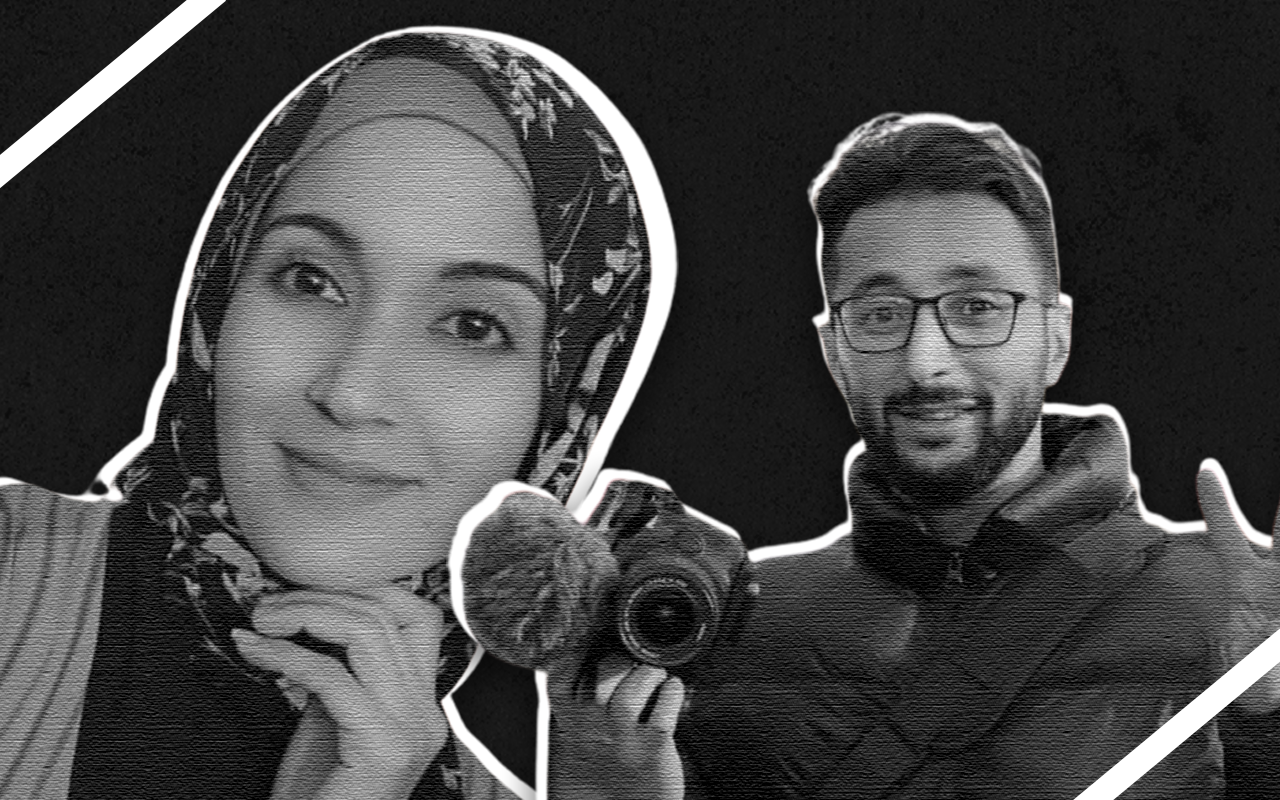
Mohamed al-Khalidi and Marwa Muslim: Forgotten in Life, Vindicated in Death

The occupation killed journalists Mohamed al-Khalidi and Marwa Muslim as part of a systematic pattern of targeting the press, but throughout their careers they also faced neglect, marginalisation, and a lack of recognition. Colleague Maysoun Kahil tells their story, and asks why Palestinian journalists are so often honoured only after death, rather than supported in life.

Maysoun Kahil Published on: 17 Jun, 2026
The Double Ordeal of Freelance Journalists in Gaza

Independent journalists in Gaza face a dangerous double battle. Working without institutional protection or financial safety nets, they risk their lives to report the reality of war, overcoming severe resource shortages and systemic neglect to ensure the world hears the truth.

Noor Abu Rokba Published on: 14 Jun, 2026
The Left and the Right in One Front Against Journalism in South America

Journalism in Latin America is facing a crisis of hostility. In the age of political polarization, governments from both the left and the right are not merely managing states; they are actively harassing critical voices, imposing institutional censorship, and enforcing official narratives that attack independent media to silence disagreement and fake democracy across the region.

Noe Zavaleta
Noe Zavaleta Published on: 8 Jun, 2026
How Journalists are Combating Cybertroopers 

The brutal state crackdown in Đồng Tâm highlights a intensifying withdrawal from free expression in Vietnam, heavily driven by the regime's deployment of state-backed cyberarmies like Force 47. As these digital actors systematically intimidate and mass-report critics, tech giants like Meta further compound the issue by increasingly acquiescing to government censorship requests to protect market share. This coordinated digital assault leaves a dangerous gap in the global conversation, forcing independent journalists to navigate severe online hostility and risk arbitrary imprisonment just to expose state overreach.

AJR Contributor Published on: 25 May, 2026
Vases and Baby Diapers: War as Told by People, Not Politicians!

The analysis of field reporting during the war reveals a deep divide between distant geopolitical news and the actual human reality on the ground. This conflict between official media assignments and the lived experience will continue as journalists find themselves abandoning institutional scripts to focus instead on the raw details of daily survival and the preservation of personal memory.

Maram
Maram Humaid Published on: 21 May, 2026
Safety Strategies Female Journalists Use in Hostile Environments

Female journalists across Africa face layered physical, gender-based, digital, and psychological risks while covering protests, elections, conflict, and crises, forcing them to rely on hard-earned survival strategies as much as newsroom support.

Nigerian freelance Journalist John Chukwu
John Chukwu Published on: 14 May, 2026
The Afterlife of an Image: How Photojournalism Contests Shape Visibility and Responsibility

As photojournalism contests elevate certain images to global prominence, they also influence how violence, dignity, and memory are constructed in the public imagination.

Daniel Harper
Daniel Harper Published on: 5 May, 2026