
Al Jazeera Journalism Review

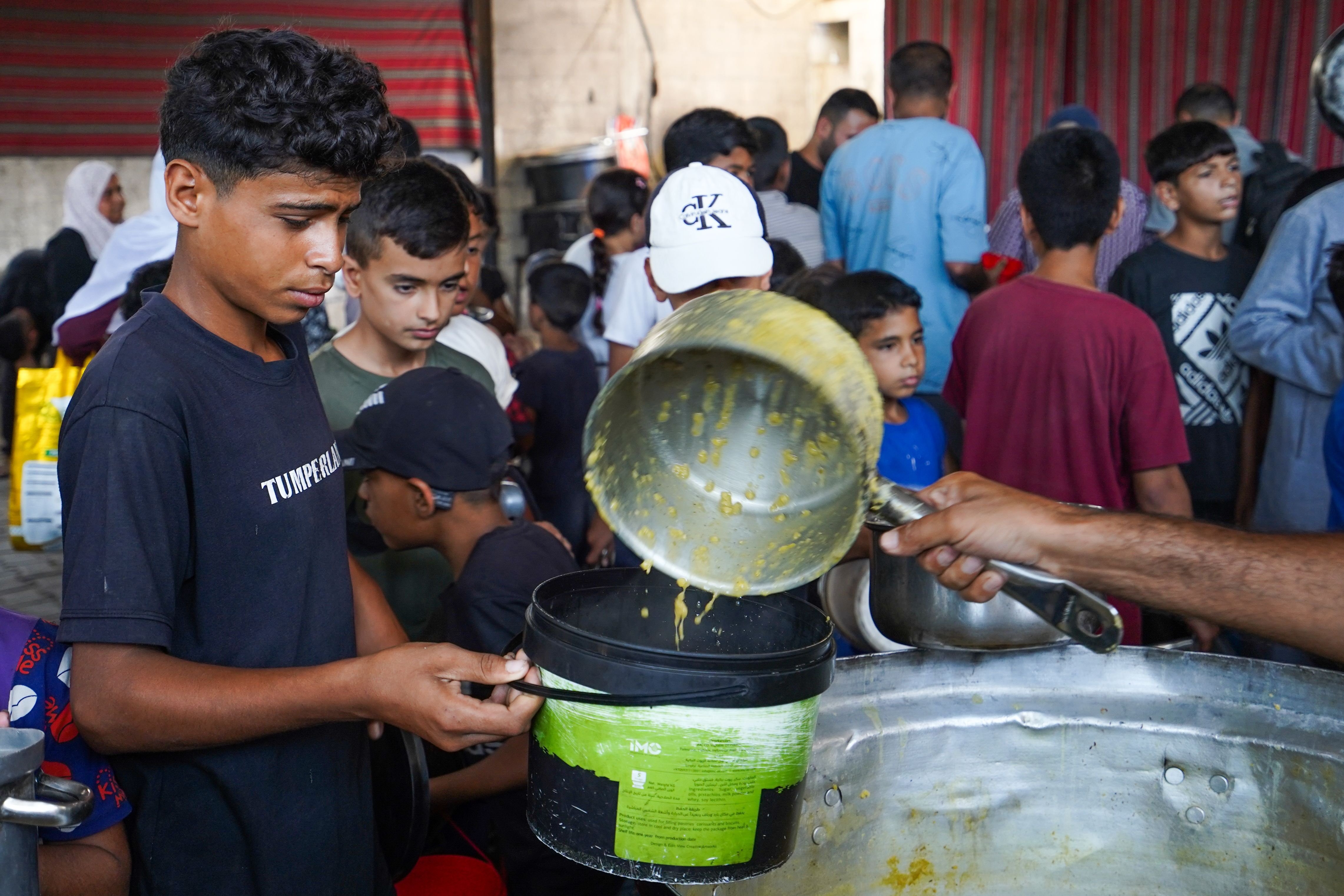
A displaced Palestinian child holds a container to receive a hot meal at a charity kitchen in the Al-Nuseirat camp, as severe food insecurity and restrictions on humanitarian aid continue to affect thousands of families across the Gaza Strip. (Photo: Ramzi Abu Amer/JNA via ZUMA Press Wire. Al-Nuseirat Camp, Palestine – Jul 2026)

A Continuing Crisis, an Intermittent Story: What Makes Famine Newsworthy?

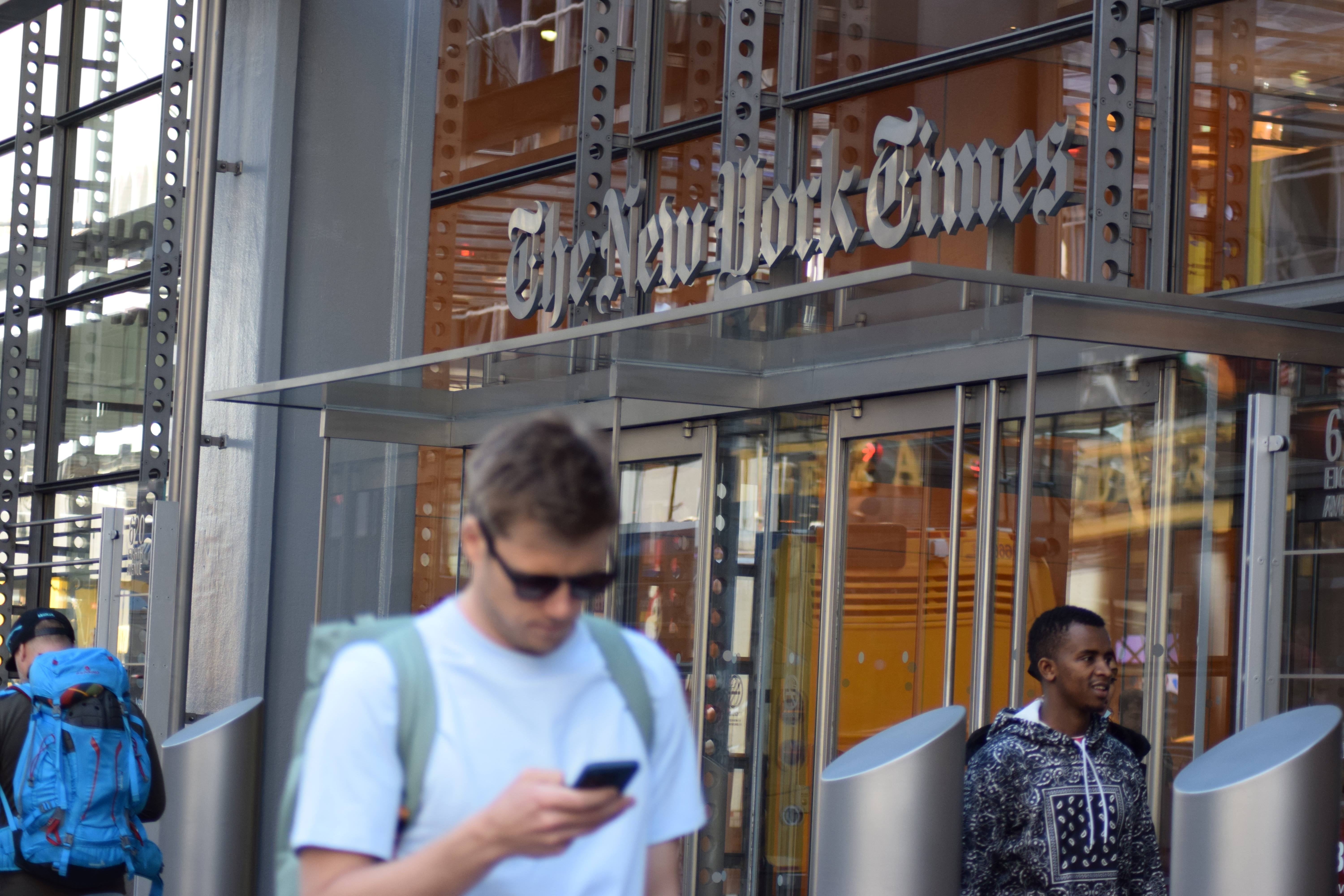
An analysis of 180 articles from the BBC, The Guardian, The New York Times and CNN found that coverage of hunger in Gaza frequently linked the crisis to political decisions and identified responsibility rather than treating it only as a humanitarian emergency. Tracking the same outlets through early August 2026 also shows that this coverage came in sharp waves, with periods of intense reporting separated by months of limited attention even as severe food insecurity persisted.


Coverage of hunger in Gaza has varied considerably since late 2023. Across the BBC, The Guardian, The New York Times and CNN, 81 articles appeared in March 2024. By July 2024, the number had fallen to two, even as food insecurity in Gaza remained severe. Reporting increased again the following year, reaching 50 articles in May 2025 and 68 in July, before declining again later that year. 

Instead of suggesting a simple decline in media interest, these changes raise a broader question about how news organisations cover a humanitarian crisis that remains serious for a long time: what makes an ongoing condition become news again? 

To examine this, I analysed 180 articles published by the four outlets between December 2023 and May 2024, looking at how they framed the food crisis, attributed responsibility and used sources. I then extended the analysis through early August 2026 with a comparable count of news coverage to examine how attention changed after the original study period. 


Responsibility Was Already Visible 

Hunger in Gaza was rarely presented as a purely humanitarian crisis without linking it to political causes, which is a clear strength in the reporting. Reporting starvation without explaining the policies and restrictions contributing to it would show readers its consequences without adequately explaining its causes. In 78.9% of the articles, the food crisis was specifically connected to the blockade, restrictions on aid, border access or other forms of obstruction. This political context appeared in all four outlets, although at different rates: 83% of The Guardian’s articles and 82.9% of the BBC’s included it, compared with 77.4% of The New York Times’ articles and 71.8% of CNN’s. 

A Guardian visual investigation published in March 2024 provided a particularly detailed example of this, tracing the food shortage through Israel’s control of land routes, its inspection and rejection of shipments, and the limitations of delivering aid by air or sea. It described the crisis as “artificially created” and explained how political and military control over the routes into Gaza restricted the amount of food that could reach civilians. Not every article provided this degree of explanation, but political context appeared in a clear majority of the coverage at each outlet. 

Responsibility was similarly explicit, as Israel was directly identified as responsible for the conditions producing hunger in 86.1% of the articles, compared with 12.8% that left responsibility vague or unspecified and just over 1% that explicitly attributed responsibility to Hamas or Palestinian authorities. 

The more significant findings lie in the gap between attributing responsibility and characterising that responsibility. While the coverage overwhelmingly identified political decisions and Israeli actions as central to the production of hunger, it was less willing to describe that action in the context of war crimes. Many UN reports and NGOs had already pointed to war crimes, collective punishment, genocide, the deliberate blockade of aid entry, and weaponizing starvation. However, the clearest evidence of the gap appears when responsibility and criminal framing are considered together. Of the 155 articles that directly identified Israel as responsible for conditions producing hunger, 58.1% did not use criminal or legal language. When the comparison is narrowed to the 135 articles that both identified Israel and connected hunger to blockade, aid restrictions or political obstruction, 61.5% did not refer to war crimes, collective punishment, genocide or starvation as a weapon.  

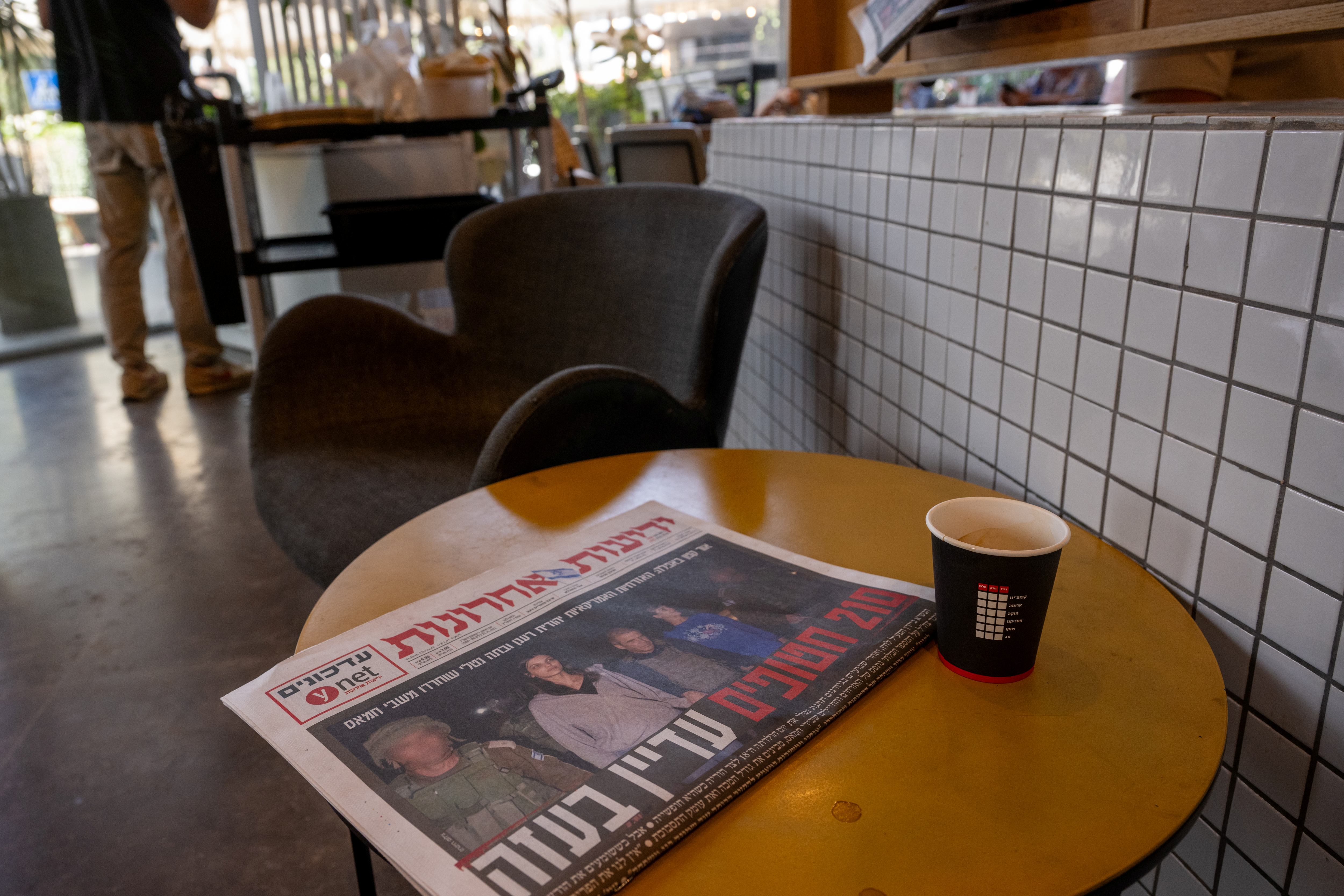
A New York Times explainer published in April 2024 made this distinction clear. It described the crisis as “entirely human-made,” said that food shortages had been created by Israel’s blockade and military operations, and reported accusations that Israel was slowing aid “to punish Gazans.” Yet it did not address whether these actions could constitute collective punishment, a war crime, or the use of starvation as a weapon. It is in this way that much of the reporting identified who was responsible and described the mechanism through which starvation was produced, but stopped short of confronting the legal and political implications of that evidence.  


One Crisis, Different Kinds of Story 

Identifying political responsibility did not prevent these outlets from also presenting hunger as a humanitarian story, with more than 71% focusing substantially on civilian suffering and half giving significant attention to aid delivery. These approaches frequently overlapped, as the same article could describe the effects of hunger, explain the political restrictions contributing to it and follow efforts to deliver food.

There were differences, however, in which parts of the crisis received the most attention. Within this sample, aid operations appeared much more frequently in the BBC and The Guardian, where 71.6% of articles included a substantial aid-logistics frame, compared with 29.3% across The New York Times and CNN. This difference was specific to aid operations rather than humanitarian attention generally, since the two groups devoted almost identical levels of coverage to civilian suffering. The British outlets were therefore more than twice as likely to give sustained attention to aid delivery and the restrictions affecting humanitarian access. This coverage retained its political context, with 87.3% of their aid-focused articles also linking hunger to blockade, restrictions or obstruction. For example, a BBC analysis asking whether Israel was meeting its promise to allow more aid into Gaza found that it was not doing so. Although Israel had announced new crossings and reported an increase in deliveries, truck numbers soon fell again, the UN disputed the Israeli figures, and alternatives by sea and air remained too limited to meet the need. 

UN agencies and international humanitarian organisations were also the most prominent source in 47.2% of all articles, more than any other source category, placing the tasks of humanitarian institutions in a central position within the coverage. 


The Famine Story Came in Waves 

After the March 2024 peak of 81 articles, coverage fell to 34 articles in April, 26 in May and 15 in June, before almost disappearing from the news agenda with only two qualifying articles in July, one in August and one in September. 

Yet food security had not improved enough to account for such a sharp fall in coverage. During the same months in which reporting fell to its lowest levels, an IPC assessment published on June 25 found that 95% of Gaza’s population had faced crisis-level food insecurity or worse between May 1 and June 15 and projected that the figure would reach 96% between mid-June and the end of September, meaning that extremely severe food insecurity persisted. 

Coverage returned on a large scale in 2025, rising to 50 articles in May, 21 in June and 68 in July, followed by another 30 in August. The return coincided with a further deterioration in food security as well as several new developments, including intensified restrictions on aid, the introduction of a new US and Israeli-backed distribution system in late May, new warnings from humanitarian organisations and, in August, the IPC’s formal classification of famine in Gaza Governorate, which Israel disputed

The deterioration itself was measurable. In May 2025, the IPC reported that 93% of the population was experiencing crisis-level food insecurity or worse and described conditions as having deteriorated significantly from its previous assessment, projecting that the entire population would fall into those categories during the following months. A later IPC assessment covering July and the first half of August also found that the entire population it was able to analyse was “experiencing crisis-level food insecurity or worse”, indicating that there were more than half a million people in the most severe category. 

During the same months in which reporting fell to its lowest levels, an IPC assessment published on June 25 found that 95% of Gaza’s population had faced crisis-level food insecurity or worse between May 1 and June 15 and projected that the figure would reach 96% between mid-June and the end of September, meaning that extremely severe food insecurity persisted  

The return was not equally large across the four British and American media outlets. Between May and July 2025, the BBC and The Guardian together published most of the 139 articles (106 articles) identified in the count, compared with 33 from The New York Times and CNN.  

This difference was also notable in the earlier framing results, since the two British outlets had also devoted substantially more of their original coverage to aid operations than the two US outlets.  

With data analysis of only two outlets from each country, these findings cannot be considered a fully representative analysis of these countries’ media coverage trend. However, what we can conclude from this study sample is that the British outlets gave aid operations more attention and returned to the food crisis coverage much more frequently during 2025’s Gaza famine crisis. 

The timing suggests that the 2025 resurgence of coverage developed around a succession of new events rather than the August famine classification alone. Coverage had already risen sharply in May as the aid blockade continued and the new US and Israeli-backed distribution system began operating, before reaching its second-highest monthly total in July amid further deterioration and renewed attention to starvation and aid access. The formal famine classification in August was, therefore, just another major development in an already renewed period of coverage rather than the event that initiated it. 

With data analysis of only two outlets from each country, these findings cannot be considered a fully representative analysis of these countries’ media coverage trend. However, what we can conclude from this study sample is that the British outlets gave aid operations more attention and returned to the food crisis coverage much more frequently during 2025’s Gaza famine crisis. 


When Does an Ongoing Crisis Become New Again? 

The uneven relationship between the severity of the food crisis and the amount of coverage it received makes more sense when considered alongside the way news organisations handle continuing events. Newsrooms operate with limited attention and must continually decide which developments warrant another story, which creates a particular problem for crises that remain severe for months or years without necessarily producing a distinct event every day. New assessments, changes in aid policy, border restrictions, institutional warnings and official classifications can provide the development around which continuing conditions become reportable again. 

The Gaza coverage follows this pattern as severe food insecurity persisted during the low-attention months of 2024 while the substantial deterioration in 2025 coincided with new aid arrangements, humanitarian warnings and assessments as well as a large return in reporting. The prominent role of humanitarian institutions in the original sample also fits this pattern, since the same organisations that journalists relied on to describe the crisis produced food-security assessments, aid statistics and formal warnings that provided new information about changing conditions. This does not establish that these developments caused the peaks in coverage, but it shows that severity alone did not correspond consistently with the amount of attention the crisis received. 

Recognising a continuing crisis and sustaining attention to it are not quite the same journalistic process, since the four outlets often identified political causes and responsible actors clearly when they reported on hunger in Gaza, yet the volume of that reporting still rose and fell sharply as the crisis continued. The pattern points to a broader problem for journalism: a crisis can remain severe without continually producing developments that are treated as new, creating a gap between how long the crisis lasts and how long it can remain continuously newsworthy. 
Related Articles

Why Journalists are Speaking out Against Western Media Bias in Reporting on Israel-Palestine

The article highlights how over 1,500 journalists are speaking out against Western media's biased coverage of the Israel-Palestine conflict, criticizing its dehumanizing language, lack of context, and disproportionate focus on Israeli narratives at the expense of Palestinian voices and journalistic integrity.
Belle de Jong journalist
Belle de Jong Published on: 26 Feb, 2024
Journalist Testimonies on Western Media Coverage of the Gaza War: The Other Narrative

In this article, we compile testimonies from journalists who have criticised their own media institutions as documented in reports, letters, or interviews. Most spoke anonymously out of fear of repercussions—because freedom of expression appears protected only until it reaches the borders of Israel. At that point, constraints emerge, editorial policies shift, and the system of double standards is activated.
Al Jazeera Journalism Review
Al Jazeera Journalism Review Published on: 29 Mar, 2025
Failing Gaza: Pro-Israel Bias Uncovered Behind the Lens of Western Media

Journalists at CNN and the BBC expose the inner workings of their newsrooms, a year into Israel’s war on Gaza.

A picture of the Al Jazeera Media Institute's logo, on a white background.
Al Jazeera Journalism Review Published on: 8 Oct, 2024
What is the CNN Effect and why is it relevant today?

To what level is the news media independent, and to what degree can it influence policymakers? The "CNN effect" suggests that intense media coverage of humanitarian crises can sway public opinion and pressure governments into foreign policy action. It highlights how the media influences political agendas while also raising concerns about journalistic independence and manipulation by political elites.

A picture of the author, Kaouthar Benabid.
Kaouthar Benabid Published on: 22 Feb, 2021
More than 230 Media Professionals Call on BBC to Recommit to Fairness, Accuracy, and Impartiality in its Gaza Coverage

Over 230 members of the media industry, including more than 100 BBC employees, have signed a letter to BBC Director General Tim Davie accusing the BBC of being biased in its coverage of Israel's war in Gaza.

A picture of the Al Jazeera Media Institute's logo, on a white background.
Al Jazeera Journalism Review Published on: 3 Nov, 2024
Anonymous Sources in the New York Times... Covering the War with One Eye

The use of anonymous sources in journalism is considered, within professional and ethical standards, a “last option” for journalists. However, analysis of New York Times data reveals a persistent pattern in the use of “anonymity” to support specific narratives, especially Israeli narratives.

Mohammad Zeidan
Mohammad Zeidan Published on: 8 Sep, 2024

More Articles

Who Decides the News? Inside India's Algorithm-Driven Newsrooms 

For decades, editors acted as journalism's gatekeepers, deciding which stories mattered based on evidence, public interest and professional ethics. Today, many young reporters say that role has increasingly been assumed by recommendation algorithms, software designed not to identify what is important, but what is most likely to keep audiences scrolling… As news organisations compete for audience attention on digital platforms, metrics such as engagement and follower growth are increasingly influencing editorial strategy.

Seerat-Un-Nisa Published on: 11 Aug, 2026
As in Rwanda: Can the Israeli Press Be Prosecuted for Participation in Genocide?

Israeli media incitement has helped frame Palestinian journalists as security threats, weakening their legal and professional protection and legitimising attacks against them. Legal accountability is possible through the ICC, universal jurisdiction, and professional pressure against journalists and outlets that incite violence.

Nasser Adnan Thabet Published on: 8 Aug, 2026
A Soldier with the Rank of Correspondent in the Israeli Army

Israeli military journalism developed through a deep fusion of media, censorship, and the army, turning correspondents into carriers of the official security narrative. This embedded model later influenced Western war reporting, where access to the battlefield often came at the cost of independence and critical distance.

Sujood Awais Published on: 4 Aug, 2026
The Phenomenon of “News Avoidance”: Have We Come to Know More Than We Should?

Audiences are increasingly avoiding the news as the constant flow of crises, violence, and tragic human stories creates psychological exhaustion and anxiety. Media outlets need to respond with more responsible editorial choices, stronger media literacy, and coverage that balances urgent events with constructive, humane, and less harmful storytelling.

Wessam Kamal Published on: 17 Jul, 2026
From Srulik to Handala: Caricature as a Media Symbol

From the pro-occupation Israeli character 'Srulik' to the resilient and satirical Palestinian 'Handala', caricature emerges as another battleground for memory and the future. How did these characters come to be, what is their media symbolism, and why does caricature remain so influential?

Sujood Awais Published on: 14 Jul, 2026
“Sometimes You Work for Years Without Pay” – Cameroonian Journalists Demand Safety Nets

While many journalists demonstrate admirable resilience in producing quality journalism under precarious conditions, resilience should not be the only safety net. Journalism deserves protection, because democracy depends on it.

Akem
Akem Nkwain Published on: 11 Jul, 2026
When Modi’s Managed Media Met Europe’s Press

A brief, viral exchange in Oslo between Prime Minister Narendra Modi and a Norwegian journalist has exposed the widening gap between India's tightly controlled media environment and traditional adversarial press culture. Over the past decade, open, unscripted scrutiny has increasingly been replaced by carefully managed public relations, image-driven interviews, and direct digital reach. This systemic shift has reshaped the broader landscape of Indian news media, creating a culture of forced deference that prioritises political showmanship over holding power accountable.

Arsalan Bukhari, an independent journalist based in India
Arsalan Bukhari, Mehrunnisa Maryam Published on: 5 Jul, 2026
How Sources Shaped the Story of Gaza’s Aid-Site Killings

In conflict reporting, the question is rarely only about what happened. It is also who gets to explain what happened. The findings here suggest that the answer to that question often shapes the story that audiences ultimately receive.

Djamil Kerrouche Published on: 1 Jul, 2026
The Stringers Behind India’s Breaking News: No Contracts, Credit or Safety

Thousands of rural Indian freelance reporters, called "stringers," face low pay, police harassment, and total abandonment by the big TV networks that rely on them. These local journalists risk their lives to film breaking news like riots and rallies, but they work without contracts, insurance, or legal help when they get into trouble. This unfair system forces poor, small-town reporters to take on all the danger alone just to keep the national 24-hour news channels running.

Hanan Zaffa
Hanan Zaffar, Majid Alam Published on: 27 Jun, 2026
Why Have Print Newspapers Disappeared in Gaza?

The genocidal war has systematically devastated the media sector in the Gaza Strip. With the occupation destroying over 150 media organizations, printing presses have completely shut down, forcing all newspapers to shift entirely to digital coverage.

Mohamed Abu Shahma Published on: 24 Jun, 2026
Mohamed al-Khalidi and Marwa Muslim: Forgotten in Life, Vindicated in Death

The occupation killed journalists Mohamed al-Khalidi and Marwa Muslim as part of a systematic pattern of targeting the press, but throughout their careers they also faced neglect, marginalisation, and a lack of recognition. Colleague Maysoun Kahil tells their story, and asks why Palestinian journalists are so often honoured only after death, rather than supported in life.

Maysoun Kahil Published on: 17 Jun, 2026
The Double Ordeal of Freelance Journalists in Gaza

Independent journalists in Gaza face a dangerous double battle. Working without institutional protection or financial safety nets, they risk their lives to report the reality of war, overcoming severe resource shortages and systemic neglect to ensure the world hears the truth.

Noor Abu Rokba Published on: 14 Jun, 2026
The Left and the Right in One Front Against Journalism in South America

Journalism in Latin America is facing a crisis of hostility. In the age of political polarization, governments from both the left and the right are not merely managing states; they are actively harassing critical voices, imposing institutional censorship, and enforcing official narratives that attack independent media to silence disagreement and fake democracy across the region.

Noe Zavaleta
Noe Zavaleta Published on: 8 Jun, 2026
How Journalists are Combating Cybertroopers 

The brutal state crackdown in Đồng Tâm highlights a intensifying withdrawal from free expression in Vietnam, heavily driven by the regime's deployment of state-backed cyberarmies like Force 47. As these digital actors systematically intimidate and mass-report critics, tech giants like Meta further compound the issue by increasingly acquiescing to government censorship requests to protect market share. This coordinated digital assault leaves a dangerous gap in the global conversation, forcing independent journalists to navigate severe online hostility and risk arbitrary imprisonment just to expose state overreach.

AJR Contributor Published on: 25 May, 2026
Vases and Baby Diapers: War as Told by People, Not Politicians!

The analysis of field reporting during the war reveals a deep divide between distant geopolitical news and the actual human reality on the ground. This conflict between official media assignments and the lived experience will continue as journalists find themselves abandoning institutional scripts to focus instead on the raw details of daily survival and the preservation of personal memory.

Maram
Maram Humaid Published on: 21 May, 2026
Safety Strategies Female Journalists Use in Hostile Environments

Female journalists across Africa face layered physical, gender-based, digital, and psychological risks while covering protests, elections, conflict, and crises, forcing them to rely on hard-earned survival strategies as much as newsroom support.

Nigerian freelance Journalist John Chukwu
John Chukwu Published on: 14 May, 2026
The Afterlife of an Image: How Photojournalism Contests Shape Visibility and Responsibility

As photojournalism contests elevate certain images to global prominence, they also influence how violence, dignity, and memory are constructed in the public imagination.

Daniel Harper
Daniel Harper Published on: 5 May, 2026
Malawi Investigates Poor Pay and Working Conditions for Junior Journalists

Malawi’s investigation into poor pay for junior journalists exposes a deeper crisis where economic hardship is eroding media independence and forcing reporters to choose between ethical integrity and survival.

Benson Kunchezera Published on: 30 Apr, 2026
Journalism as a Struggle for Survival in Sudan

With war erupting in Sudan, the country’s media landscape collapsed almost overnight after the Rapid Support Forces entered Khartoum. Many journalists were left without jobs, salaries or shelter, scattered between displacement, exile and siege, as newspapers shut down and media institutions ceased to function. For many, journalism was no longer a profession but a daily struggle for survival.

Saif al-Din al-Bashir Ahmed Published on: 27 Apr, 2026
From Print to Pixels: How Small-Town Journalists in Bihar Are Surviving Threats and Closures

As newspapers vanish across districts like Siwan, Gaya, and Purnea, reporters turn to mobile phones, digital start-ups and community networks to keep local journalism alive.

Rehan Qayoom Mir. An independent journalist whose work has appeared in international and national outlets,
Rehan Qayoom Mir, Sajad Hameed Published on: 12 Apr, 2026
Arab Society and Investigative Journalism: The Dialectic of Culture, Power, and Profession

Investigative journalism in Arab societies operates within a dense web of social, political, and cultural pressures that often push journalists to balance truth-telling against survival, forcing them onto a precarious “razor’s edge.” Yet despite these constraints, moments of crisis can transform society itself from a source of pressure into a powerful ally, driving accountability and reigniting the pursuit of truth.

Musab Shawabkeh
Musab Al Shawabkeh Published on: 7 Apr, 2026
The Revolution That Framed Islam: How 1979 Shaped Western Media on Iran

The 1979 Revolution transformed how the Western world views and reports on Islam. What started as a confused attempt to understand a new religious movement has turned into a permanent media habit of framing Iran through the lens of conflict and suspicion.

Daniel Harper
Daniel Harper Published on: 4 Apr, 2026
The Challenge of Reporting in Chechnya

Independent journalism no longer exists as a functioning practice inside Chechnya. What remains is a profession rebuilt in exile, forced to operate at a distance from the very place it is meant to cover.

Rushda Fathima Khan
Rushda Fathima Khan Published on: 29 Mar, 2026
How AI Can Clean Messy Data; and Where It Can't

Normalising inconsistent, messy, or incomplete data is tedious and time-consuming, but essential. AI can handle grunt work, but editorial decisions remain with the journalist.

KA
Konstantinos Antonopoulos Published on: 21 Mar, 2026