
Israeli media incitement has helped frame Palestinian journalists as security threats, weakening their legal and professional protection and legitimising attacks against them. Legal accountability is possible through the ICC, universal jurisdiction, and professional pressure against journalists and outlets that incite violence.
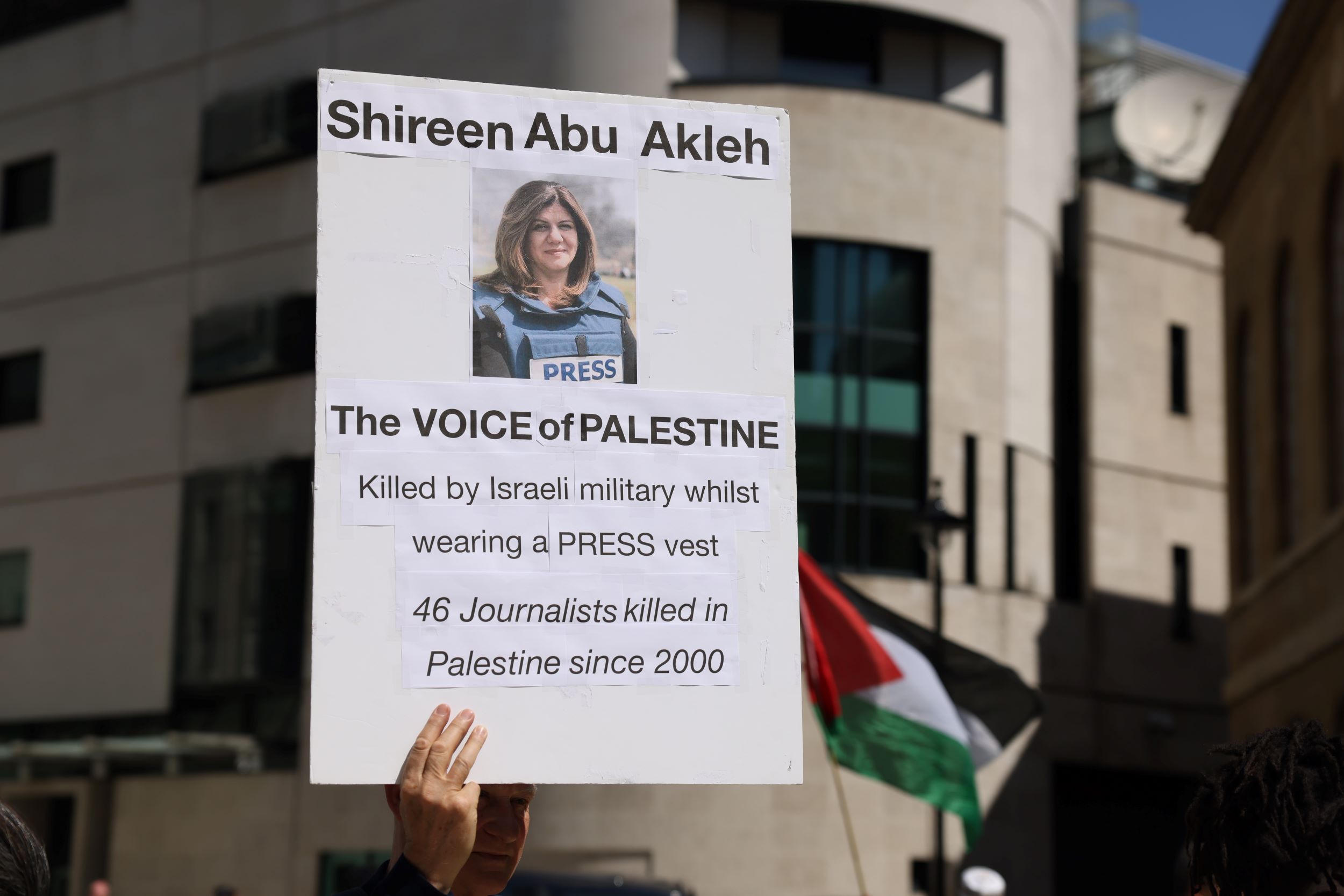
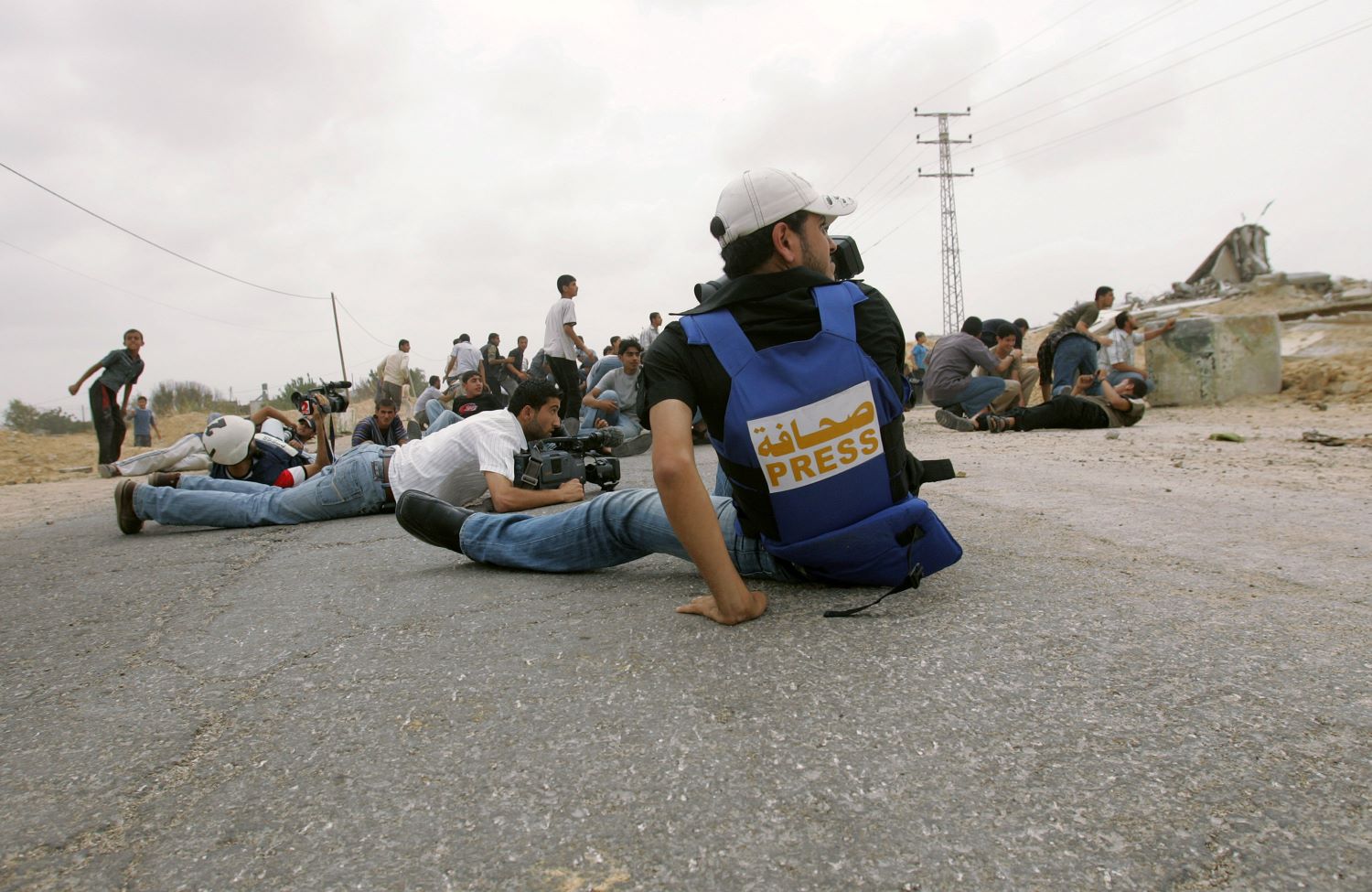
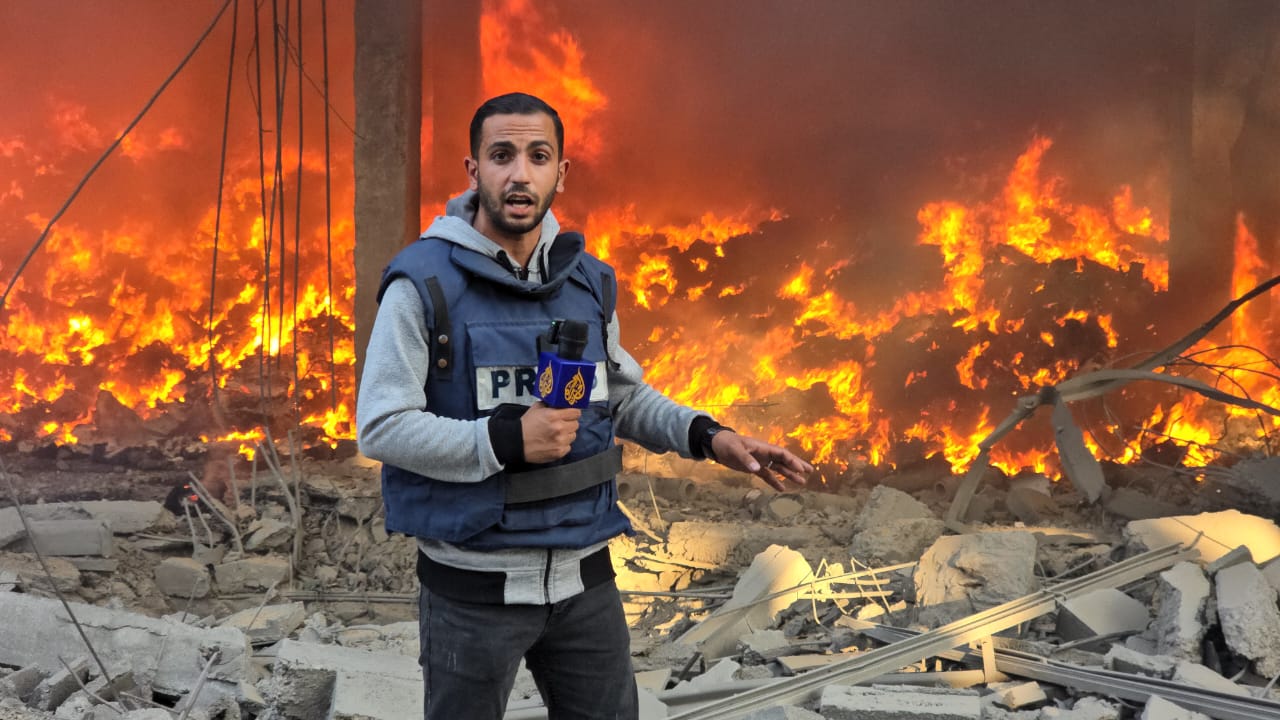
The media is no longer merely a medium for transmitting events in environments of armed conflict. In many cases, it has become an influential actor in the broader context, producing a climate that legitimises violence or calls for it. Previous experiences, from Rwanda to the Balkans, have shown how organised discourse can pave the way for attacks against specific groups and can confer on the perpetrator’s target the status of a “military objective”, that is, a permissible target. In the Palestinian case, and particularly during the genocidal war on the Gaza Strip, the field targeting of journalists has coincided with an Israeli media climate that demonises the Palestinian journalist and strips them of their professional protection by portraying them as a “security threat”, thereby facilitating attacks against them or justifying them after they occur. (1)
Several journalistic and human rights organisations have documented repeated waves of incitement and public accusations against Palestinian journalists, especially Al Jazeera correspondents, on the pretext of “affiliation with armed organisations”. Reporters Without Borders warned of the direct threat this poses to the lives and safety of journalists. (2)
The organised narratives practised by the Israeli press against Palestinian journalists widen the framework of hostility towards them and even move them into the category of enemy rather than their professional position. In doing so, they have paved the way for legitimising operations targeting them. Accordingly, we will present the most important patterns of systematic Israeli incitement used by the Israeli press:
1. Stigmatising Journalists with Security Labels: Fighters, Agents, Propaganda Arms
Perhaps the most prominent pattern of incitement practised by the Israeli media against Palestinian journalists is the stripping away of journalistic status from those working in Gaza by publicly branding them as “terrorists”, “factional affiliates”, or “propaganda arms”. This opens the door to Israeli claims that they no longer enjoy legal protection, and indeed paves the way for justifying assassinations after they occur. (3) Accordingly, Israeli official and media bodies have not ceased accusing a number of Palestinian journalists of belonging to Palestinian armed factions, especially those working for Al Jazeera. This has prompted human rights warnings calling for the protection of journalists, with such accusations described as “dangerous” against pioneers of journalistic work, and as exposing them to the risk of direct targeting. It should be noted that the rules of international humanitarian law provide special protection for journalists as civilians first and foremost, (4) and make the loss of that protection conditional on the fulfilment of the element of direct participation in military operations taking place in the armed conflict. In this way, the law establishes a principal condition for lifting protection from a journalist, even if we were to assume that they had a previous affiliation with military work in Palestinian resistance factions. The same condition of protection also applies to war correspondents.
Perhaps the most prominent pattern of incitement practised by the Israeli media against Palestinian journalists is the stripping away of journalistic status from those working in Gaza by publicly branding them as “terrorists”, “factional affiliates”, or “propaganda arms”. This opens the door to Israeli claims that they no longer enjoy legal protection, and indeed paves the way for justifying assassinations after they occur.
2. Incitement to Verbal and Political Violence
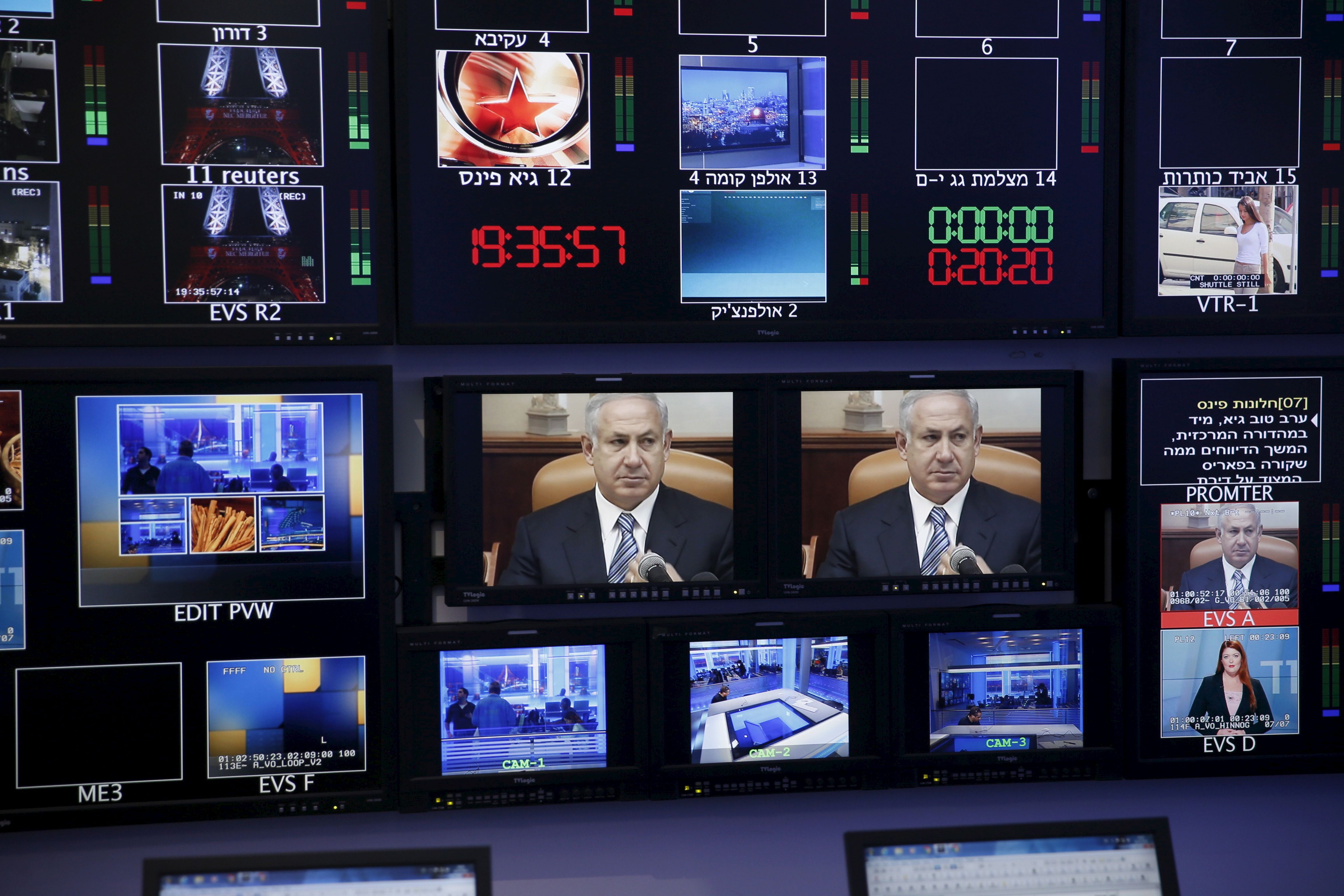
Israeli television channels with an extreme nationalist discourse play a prominent role in broadcasting general inciting messages against Palestinians. These messages seep into Israel’s public sphere through the framing of journalists as part of the hostile system. Three Israeli organisations, Zulat, Hatzlacha, and the Democratic Bloc (5), filed a judicial petition before the Israeli Supreme Court demanding an investigation into the conduct of Channel 14 because of statements that incite the commission of crimes against Palestinians. (6), (7) Although the channel denies the accusations, these facts reveal the level of internal normalisation with a discourse of exclusion and violence, and its impact on the security environments in which Palestinian journalists work. (8) Perhaps the striking irony in this case against the channel is that the objection to its editorial policy arose in part because it was the channel most frequently cited in South Africa’s case against Israel before the International Court of Justice over the commission of genocide.
3. Organised Defamation Campaigns Against Specific Individuals or Media Institutions
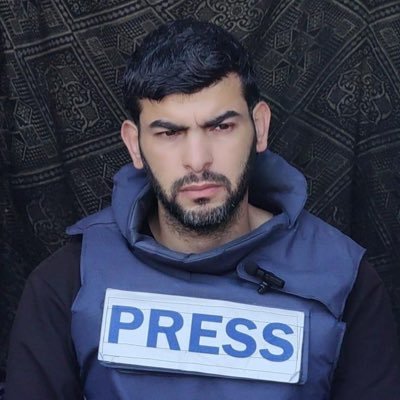
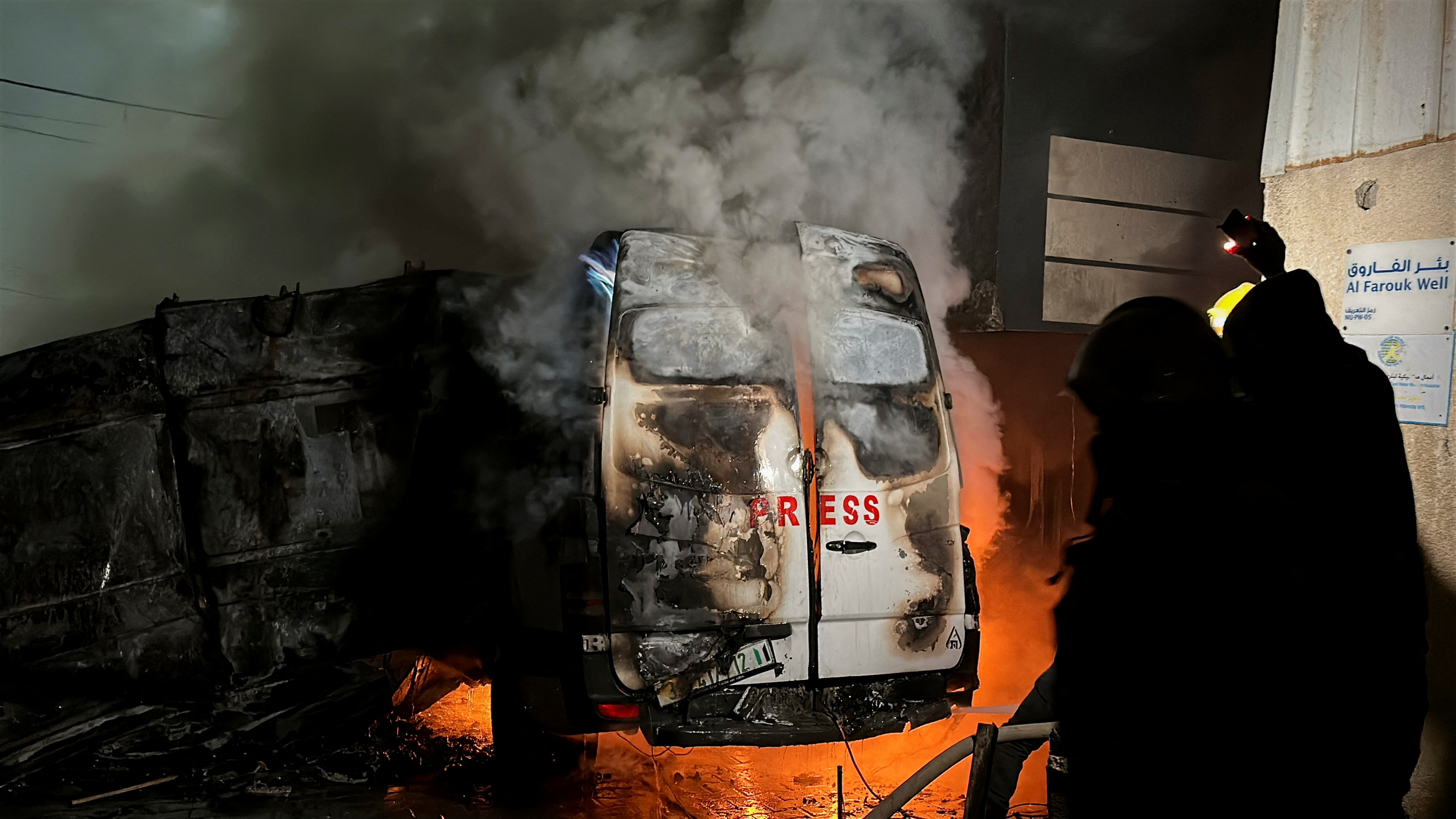
The latest genocidal war on the Gaza Strip has been marked by the launch of organised media campaigns against specific correspondents or specific networks. These campaigns reveal a widespread and systematic pattern across the media, framing the general context inside Israel so that those targeted by these campaigns are presented as a security threat. This creates a social pattern in which targeting media networks and those affiliated with them becomes acceptable in the state’s public sphere. An example is Anas al-Sharif, the Al Jazeera journalist whom Israel assassinated, along with a number of journalists from the channel’s crew, on Sunday, 10 August 2025. (9)
Al Jazeera repeatedly denounced, before the assassination took place, what it described as a systematic “incitement campaign” against its correspondents in Gaza, aimed at justifying their targeting. It also held the Israeli occupation authorities fully responsible for the safety of its staff in the Strip. (10)
In addition, the Israeli authorities take a wide range of other measures, including bans, closures, and raids, on the basis of claims of “incitement” against Israeli practices. Israeli courts have extended decisions banning Al Jazeera broadcasts on the grounds of “incitement” inside Israel, (11) and Israeli forces closed the network’s office in Ramallah and confiscated equipment from it, as documented by press coverage. (12) These escalating measures, to which the Israeli press contributes through the media messages it broadcasts, carry a policy that demonises the journalistic sector and those working in it, and leads to a multiplication of the risk that they will be targeted.
Israeli television channels with an extreme nationalist discourse play a prominent role in broadcasting general inciting messages against Palestinians. These messages seep into Israel’s public sphere through the framing of journalists as part of the hostile system.
4. Legal Manipulation of “Incitement” Classifications to Reverse the Accusation Against the Victim
Israeli policies do not stop at defamation by describing media workers or media networks as platforms for terrorism, as happened in the case of Al Jazeera. They also extend to the use of certain legal frameworks to silence journalistic work. The Counter-Terrorism Law passed by the Israeli Knesset in 2016 left the door open to an expansive interpretation of the concept of “incitement”, (13) which leads to the classification of any narrative that supports the Palestinian side regarding Israeli crimes as incitement and as harm to national security. At the same time, Israeli discourse that describes Palestinians as “human animals” or “legitimate targets” is permitted within the framework of freedoms of expression inside Israel or security necessities. Moreover, the Israeli media presents the Palestinian journalist as a “participant” in enemy propaganda, not as an independent media actor. This normative deviation in classification leads towards incitement against them and the removal of their legal protection as civilians. The aforementioned law has previously been invoked in the context of prosecuting Palestinian civil society organisations, and was condemned by the High Commissioner for Human Rights. (14)
In this context, Law for Palestine launched a continuously updated database containing hundreds of documented examples of incitement against Palestinians, including a special section on Israeli journalists and influencers. (15)
Israeli policies do not stop at defamation by describing media workers or media networks as platforms for terrorism, as happened in the case of Al Jazeera. They also extend to the use of certain legal frameworks to silence journalistic work. The Counter-Terrorism Law passed by the Israeli Knesset in 2016 left the door open to an expansive interpretation of the concept of “incitement”.
Law and Incitement
There are multiple legal frameworks for establishing criminal responsibility for incitement, whether at the national level under the domestic criminal law of states or under international criminal law. Here, we can read this philosophy within the framework of the Rome Statute, which governs the work of the International Criminal Court, in relation to individual international criminal responsibility for incitement, as the major international criminal umbrella for accountability for international crimes, through two complementary tracks under Article 25 of the Statute.
In this Statute, the legislator distinguishes between two types of responsibility for incitement.
The first is incitement as an independent crime in itself in certain contexts, such as direct and public incitement as a condition for criminal responsibility for committing genocide under paragraph (e) of the same article.
The second is incitement as a form of criminal contribution to war crimes and crimes against humanity, if the elements of the crime, knowledge, intent, and moral causation, are present, under paragraph (c).
Accordingly, it is possible to resort to establishing legal responsibility for incitement on the basis of criteria that, collectively, form a foundation for criminally holding the inciter accountable for their incitement. These are as follows:
-
Incitement discourse: Journalists enjoy the protection of international law as civilians. Accordingly, their protection may not be diminished, nor may they be treated as military targets because of their journalistic work. Therefore, any inciting discourse that strips journalists of protection by describing them as terrorists, fighters, or any other labels that contribute to a climate facilitating crimes against them exposes the person issuing it to legal accountability for committing the crime of incitement.
-
The work of human rights experts: This is based on human rights reports issued by special rapporteurs, United Nations experts, and human rights organisations that analyse the act of incitement within the framework of the relevant legal provisions. They do so by proving the crime of incitement through demonstrating intent to provoke one form of violence against those targeted by the incitement, and the contribution of the act of incitement to achieving its intended result. These standards are used fundamentally to separate “sharp journalistic opinion” from “criminal advocacy”, and to determine when journalistic protection exceeds its legal limits and becomes classified as incitement.
-
Relevant legal provisions, responsibility for incitement as individual responsibility: In the context of this article’s focus on the international criminal sphere of legal responsibility, and in the context of the war of aggression on the Gaza Strip and accusations of committing genocide, Article 25(e) of the Rome Statute governing the work of the International Criminal Court required direct and public incitement to commit genocide in order to hold a person accountable for committing the crime of incitement. There is much conclusive evidence that many Israeli journalists incited the targeting of press crews, with knowledge of the expected result of their incitement, and subsequently justified the targeting of Palestinian press crews or celebrated their targeting. This indicates the fulfilment of the elements of incitement as a crime requiring criminal accountability.
International judicial precedents in this framework have established precise standards for the threefold structure of the crime: “advocacy to commit the crime”, “intent through prior knowledge of their ability to influence”, and “the causal relationship between them”. This is clear in the case of Ferdinand Nahimana and others before the International Criminal Tribunal for Rwanda, where a number of journalists and broadcasters were convicted for their role in fuelling genocide through the media, proving that the word can become an instrument of an international crime. (16)
The International Criminal Court has subject-matter, personal, and territorial jurisdiction to examine crimes committed in the Gaza Strip against civilians in general, pursuant to the referral submitted by the State of Palestine to the International Criminal Court. On that basis, the Court has jurisdiction to examine incitement issued on Israeli media platforms under the criminal contribution of incitement and the resulting crimes in the Gaza Strip.
Paths to Accountability
The paths through which individuals who commit crimes of incitement can be held accountable vary, as judicial systems are not the only route through which they can be pursued. From this standpoint, we can indicate the paths of accountability as follows:
1. The International Criminal Court (ICC)
The International Criminal Court has subject-matter, personal, and territorial jurisdiction to examine crimes committed in the Gaza Strip against civilians in general, pursuant to the referral submitted by the State of Palestine to the International Criminal Court. On that basis, the Court has jurisdiction to examine incitement issued on Israeli media platforms under the criminal contribution of incitement and the resulting crimes in the Gaza Strip, which fall within the jurisdiction of the International Criminal Court. Documentation records that monitor incitement, such as the documentation of Law for Palestine, can be relied upon for the purpose of submitting memoranda against Israeli journalists who incite the killing of press crews in the Gaza Strip, in order to obtain arrest warrants against them before the International Criminal Court.
2. Universal Jurisdiction and National Courts
This path is important through the prosecution of Israeli journalists who commit the crime of incitement by initiating criminal cases against them before the national courts of states that have universal criminal jurisdiction, (17) or the courts of states whose nationality Israeli journalists hold as dual nationals.
3. Union Channels and Civil Pressure
As a complement to the judicial path, Israeli journalists who commit crimes of incitement against Palestinian journalists can be pursued through complaints before local and international press unions, and by launching campaigns calling for boycotts of them and of their networks, in addition to revoking their licences, international memberships, and other measures through which they can be pursued.
The documented examples show that a significant part of the Israeli media system, though not all of it, has contributed to creating a climate that demonises the Palestinian journalist and strips them of their professional and legal protection by branding them as a security adversary, justifying attacks against them, or dehumanising them within a narrative that punishes Gazan society as a whole. Yet the dream of criminal, professional, and ethical accountability is not distant; it is possible through organised and targeted efforts to protect journalistic work and journalists, and to stop the chains of incitement that begin in studios and end only with the assassination of journalists. In light of the foregoing, it becomes clear that restoring the standards on which press freedom is founded, including not criminalising journalistic work and rejecting the labelling of journalists as military targets, is not a matter of slogans, but of guarantees for life. When media incitement becomes an actor on the scene of the crime, what is required is not only moral criticism of its practices, but legal accountability that restores matters to their proper order.
References
(1) Saeed Shaheen Allani, “Israeli News Coverage of the War on Gaza 2023–2024 and Its Relationship to the Crime of Genocide: A Qualitative Analytical Study”, Ansaq Journal of Arts and Humanities, Vol. 9, No. 1, 2025.
(2) Reporters Without Borders (RSF), “Gaza: RSF Is Alarmed by the Israeli Army’s Serious Accusations Against Six Al Jazeera Journalists and Calls for Their Protection”, 25/10/2024, at: https://cutt.ly/FrKF1Jyj
(3) Gil Hoffman, “Is the International Media Holding Our Hostages?”, The Jerusalem Post, 22/08/2025, at: https://cutt.ly/4rKF2jOe
(4) Geneva Conventions of 1949 and their Additional Protocols of 1977.
(5) “Zulat: For Equality and Human Rights”, “Hatzlacha/Success: The Movement for the Promotion of a Fair Society”, and “The Israeli Democratic Bloc”.
(6) Ido David Cohen, “‘Gaza Must Be Wiped Out’ | Pro-Netanyahu Channel 14 Incites to Genocide in Gaza, Israeli Groups Claim in High Court Petition”, Haaretz, 08/05/2025, at: https://cutt.ly/9rKF25l6
(7) It should be noted that one reason behind this petition before the Supreme Court is that this channel is the most frequently cited in South Africa’s case before the International Court of Justice.
(8) Brett Wilkins, “Rights Groups List 50+ Calls for Gaza Genocide on Israel’s Channel 14”, Common Dreams, 25/09/2024, at: https://cutt.ly/irKF9Y2u
(9) Al Jazeera, “Anas al-Sharif and His Companions: The Story of the Al Jazeera Crew Killed Before the World”, 12/08/2025, available at: https://cutt.ly/ErKF3yMC
(10) Al Jazeera, “Al Jazeera Network Warns Against the Targeting of Its Journalists in Gaza Because of an Incitement Campaign by the Occupation”, 26/07/2025, available at: https://cutt.ly/IrKF34gO
(11) Voice of America, “Israel Court Extends Al Jazeera Ban”, 14/01/2024, at: https://cutt.ly/crKF8fYw
(12) Al Jazeera, “Press Groups Condemn Israel Closing Al Jazeera Office in Ramallah”, 22/08/2024, at: https://cutt.ly/krKF8MZe
(13) Adalah, “Counter-Terrorism Law”, available at: https://cutt.ly/0rKF84BL
(14) Office of the High Commissioner for Human Rights, “Israel’s Decision to Designate Organisations as ‘Terrorist’ Is an Unjustified Attack on Palestinian Civil Society”, 26/10/2021, available at: https://cutt.ly/OrKF4adW
(15) Law for Palestine, “Law for Palestine Releases Database with 500+ Instances of Israeli Incitement to Genocide”, 04/01/2024, at: https://cutt.ly/arKF4E8Y
(16) International Crimes Database, “The Prosecutor v. Ferdinand Nahimana, Jean-Bosco Barayagwiza and Hassan Ngeze”, at: https://2u.pw/VDdEF
(17) Universal criminal jurisdiction: a legal principle that allows the courts of any state to try perpetrators of serious international crimes, such as genocide, war crimes, and crimes against humanity, regardless of where they were committed or the nationality of the accused or the victims.
This article was originally published in Arabic on 21/11/2025