Al Jazeera Journalism Review

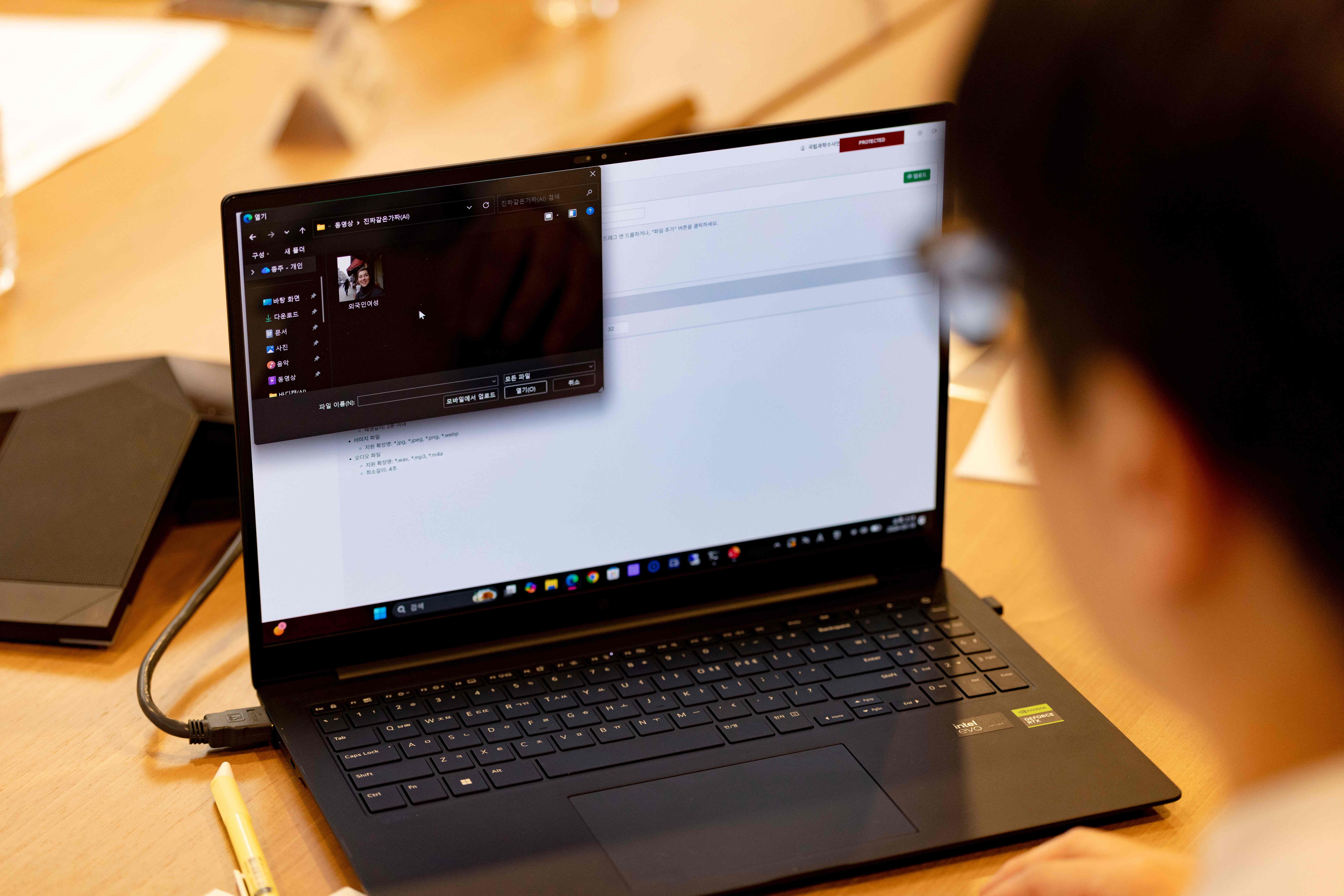
A researcher demonstrates an AI deepfake detection tool designed to combat election disinformation, as AI-generated content poses growing risks to voter choice and media integrity globally. (Photo: Chris Jung/NurPhoto via Shutterstock. Seoul, South Korea – Mar 2026)
A researcher demonstrates an AI deepfake detection tool designed to combat election disinformation, as AI-generated content poses growing risks to voter choice and media integrity globally. (Photo: Chris Jung/NurPhoto. Seoul, South Korea – Mar 2026)

How to Protect News and Information Integrity During Elections

An analysis of threats to Kenya’s media landscape ahead of the August 2027 elections finds that AI deepfakes, synthetic media, and coordinated online campaigns threaten voter choice and democratic integrity. Across Africa, emerging regulation, verification tools, and fact-checking efforts are constrained by limited funding, weak platform accountability, and largely reactive debunking.


Ahead of the August 2027 Kenyan elections, media landscape stakeholders worry that the rise of fake news and information disorder, amplified by Artificial Intelligence (AI), could undermine citizens’ right to reliable information needed to make political choices. 

This also happens in other countries across the world, amid weak online platforms’ accountability that facilitates information disorder – misinformation, disinformation and malinformation. 

Information disorder rises as news consumption shifts to digital media and the struggling local press faces financial challenges. Moreover, perceived political influence leads to substandard journalism. Malicious actors seize the opportunity to spread misinformation and disinformation online. This has happened before in Kenya, Africa, and other parts of the world. 

The misuse of social media platforms, gaps in platform accountability, and limited fact-checking have threatened information integrity and fueled the rise of fake news. This often happens during electoral periods and political crises – protests, coups, and other forms of political instability. AI-generated content has complicated access to reliable information online.  Some paid influencers, unethical journalists, and content creators are spreading false information through organised campaigns to promote misleading narratives.

The high volume and sophistication of AI-driven, targeted disinformation could undermine citizens' ability to form their own political opinions and make informed decisions at the ballot box, warns a recent research article published by the Konrad Adenauer Stiftung. 

Titled "The Rise of Fake News Ahead of the 2027 Kenyan Elections", it documents “sophisticated” and escalating information disorder. This threatens democracy and citizens’ ability to make informed decisions. In Kenya and other parts of the world, news and information consumption has shifted towards digital and social media platforms like TikTok and WhatsApp.  This shift has bypassed gatekeepers and created a complex environment where activism and organised disinformation overlap, according to a recent article by the Konrad Adenauer Stiftung. 

AI-generated content has complicated access to reliable information online.  Some paid influencers, unethical journalists, and content creators are spreading false information through organised campaigns to promote misleading narratives. 

As a result of information integrity challenges, hate speech, misinformation, and disinformation dominate political discourses, thereby undermining elections.  Information disorder also limits access to credible, factual and pluralistic information about candidates, political parties and issues.  For instance, 2024 was dubbed the year of Democracy in Africa – dozens of countries went to the polls. However, several governments deployed digital tools to compromise information integrity, spreading their narratives to stay in power. 

AI tools were used in Rwanda and South Africa to create deepfakes and synthetic media, manipulating public perception. Critics accuse social media platforms of being slow to address this issue, and where they have, the approaches have not been uniform across countries, notes the Collaboration on International  ICT Policy in Eastern and Southern Africa (CIPESA) in its 2024 State of Internet Freedom report that focused on the rising digital authoritarianism and the use of technology to win unfair elections. 

Now, the Media Council of Kenya, the country’s national media regulator, has included AI in its recently unveiled 2027 media coverage guidelines for general elections, signalling the crucial role AI plays in information integrity.  For instance, it can be used to manipulate information for various purposes. The guidelines call for responsible AI use, stating it should not edit electoral information. 


AI-Enabled Disinformation  

Limited digital and information literacy has facilitated the spread of AI-generated content used for disinformation and misinformation. Such content undermines access to reliable information and public perception. This is accelerated by limited skills in fact-checking and verification of misleading content. This includes videos and images used out of context to manipulate and spread disinformation. Other content is created using AI tools to mislead the targeted audience. 

AI enables the rapid production of sophisticated disinformation that many actors in Africa and beyond may be unable to identify. Ahead of the 2024 election year, CIPESA's annual report noted concerns about how AI could harm the polls. It gives examples such as using generative AI to impersonate election officials, cloning election results management processes, and undermining citizens’ privacy rights through access to voters' data.  

The use of AI in election disinformation was cited in Rwanda and South Africa. “Synthetic media, including deepfakes, were evident in many elections, taking some new forms from previous polls – such as allowing easy translation of information, swift generation of fake videos, manipulation of images, and arming of bots. 

"CIPESA Reveals. Synthetic media refers to content that is artificially created or manipulated using digital technologies, often leveraging AI.  

AI enables the rapid production of sophisticated disinformation that many actors in Africa and beyond may be unable to identify. Ahead of the 2024 election year, CIPESA's annual report noted concerns about how AI could harm the polls. It gives examples such as using generative AI to impersonate election officials, cloning election results management processes, and undermining citizens’ privacy rights through access to voters' data.  


Elections and Information Integrity  

In the past, Kenya has experienced disinformation during elections in what experts term a professionalised “disinformation industry”. The weaponisation of information not only deepened ethnic and class divisions but also contributed to profound voter apathy, resulting in the 2022 elections recording the lowest voter turnout since 2002, notes Anna Lisa Hildebrandt in a recent research article on the rise of fake news before and during elections. 

Concerns are now increasing ahead of the 2027 elections over the rise of fake news and online propaganda. The proliferation of unregulated social media platforms has complicated the matter. Hate speech and algorithmic amplification of political propaganda pose a major risk to information integrity. Media landscape players will have to double their efforts in combating information disorder. 

Consistent fact-checking and digital tools that enable information verification will be crucial to debunking claims and fact-checking news and information, protecting information integrity. Other countries worldwide are doing the same. Information disorder is now a global challenge. 


Reactive Fact-Checking 

Given the robust disinformation in Kenya, across Africa, and around the world, legal, technical, and fact-checking tools will play a key role in combating information disorder. However, the challenges remain. For instance, in some countries, “The legal landscape for combating disinformation in Africa is increasingly shaped by a securitisation of information, where false narratives are treated as direct threats to national security." 

"Warns Konrad Adenauer Stiftung. 

In recent years, fact-checking organisations have risen across Africa and around the world. Those initiatives have been combating information disorder by debunking viral claims. However, those fact-checkers face several obstacles, such as funding gaps and sometimes limited collaboration with global social media platforms.  In Africa, some of the leading fact-checking initiatives include Africa Check and PesaCheck. 

Another major challenge is reactive fact-checking. Research indicates that fact-checking in Kenya is primarily reactive, meaning that by the time a claim is debunked, the original disinformation has already reached its peak audience. 

Some local media organisations are making significant efforts to fact-check regularly. For instance, Radio 47 is a local commercial station in Kenya that broadcasts in Kiswahili, a language spoken by most Kenyans and by followers abroad. The station fact-checks online content – videos, images and text, mostly from social media. It debunks the content after its news programmes. This practice can be emulated by other local and foreign media outlets. 

Some international media organisations have also set up fact-checking desks.  One such initiative is the AFP fact-checking desk. However, they face challenges, including limited funds and limited collaboration with social media platforms. For instance, on August 14, 2024, Meta ended access to the decade-old ‘CrowdTangle’, a popular public insights tool for exploring social media content and tracking misinformation. It replaced it with the Meta Content Library and API, which  some stakeholders claim is “less transparent, restricted to academics and non-profit researchers, accessing it is cumbersome and slow, and it has fewer features than CrowdTangle.” 

At the time, Sophie Nicholson, Deputy Chief Editor at Agence France-Presse, Fact-Check Desk, was quoted as saying, "It is very concerning, because there’s nothing else out there right now that we can see that would be as useful or as efficient in our fact-checking work.” This was in an article on Facebook's decision to close CrowdTangle. 


Use Verification Tools 

For effective election information monitoring, various tools have been suggested by fact-checking and media professionals. Such tools allow users to fact-check viral claims and other forms of disinformation. 

One such tool used in several countries is 'I verify'; the platform supports actors worldwide in preventing and mitigating disinformation, misinformation, and hate speech. Managed by the United Nations Development Programme, national counterparts implement it to verify information flagged by the general public. The tool is being used in the Democratic Republic of Congo, Honduras, Kenya, Liberia, Madagascar, Nigeria, Pakistan, Sierra Leone, and Zambia. 

Other tools are being created; for instance, Delphine Nyaboke, a Mozilla fellow, is developing Bias Lens, a tool designed to flag bias before a story or an AI-assisted draft goes live. The developer says it will use AI to detect misinformation, misleading framing, cultural or gender bias, or missing context altogether in Kenyan elections, and that it could potentially be deployed in other African countries. 

Some measures implemented in South Africa to combat hate speech, misinformation, and disinformation ahead of the elections include the Real411 election reporting portal and various fact-checking initiatives by the media and independent fact-checkers such as Africa Check and AFP. 


Initiatives to Address Disinformation 

Cipesa's 2024 report cites several initiatives across Africa to protect information integrity, especially those used during the 2024 elections. 

Some measures implemented in South Africa to combat hate speech, misinformation, and disinformation ahead of the elections include the Real411 election reporting portal and various fact-checking initiatives by the media and independent fact-checkers such as Africa Check and AFP. 

Similarly, in Rwanda, ahead of the July 2024 elections, a coalition of local media organisations and Africa Check partnered to fact-check information, ensuring voters received accurate information to make informed decisions. In Chad, Meta held a workshop in April 2023 to raise awareness of its community standards on disinformation management. 

To sum up, the fight to protect news and information integrity, especially during elections, will involve strong and independent media organisations, constant fact-checking,   advanced media and digital literacy for citizens, stable and strong fact-checking organisations, platform accountability to address context bias and increase content moderators from the Global South, and increased use of fact-checking tools to debunk online claims.



Related Articles

Artificial Intelligence's Potentials and Challenges in the African Media Landscape

How has the proliferation of Artificial Intelligence impacted newsroom operations, job security and regulation in the African media landscape? And how are journalists in Africa adapting to these changes?

Derick Matsengarwodzi
Derick Matsengarwodzi Published on: 18 Feb, 2024
Weaponized Artificial Intelligence: The Unseen Threat to Fact-Checking

How has artificial intelligence emerged as a powerful tool during wartime, and what strategies are fact-checkers adopting to confront this disruptive force in newsrooms? The work of fact-checkers has grown significantly more challenging during the genocide in Palestine, as the Israeli occupation has relied heavily on artificial intelligence to disseminate misinformation.

Ahmad Al-Arja
Ahmad Al-Arja Published on: 18 May, 2025
Journalism and Artificial Intelligence: Who Controls the Narrative?

How did the conversation about using artificial intelligence in journalism become merely a "trend"? And can we say that much of the media discourse on AI’s potential remains broad and speculative rather than a tangible reality in newsrooms?

Mohammad Zeidan
Mohammad Zeidan Published on: 23 Feb, 2025
Analysis: Could Artificial Intelligence Replace Humans in Journalism?

Recent advances in AI are mind-blowing. But good journalism requires certain skills which, for now at least, only humans can master

Mei Shigenobu مي شيغينوبو
Mei Shigenobu Published on: 17 Jul, 2023
Fact-Checking: The Last Line of Defense Against Occupation Propaganda in Palestine

Manipulation of information, intensive propaganda campaigns, and widespread disinformation were key features of the "narrative" battle that accompanied the war on Gaza. From the very beginning, the occupation sought to provide media cover for potential war crimes, but the work of fact-checkers exposed the foundations of its propaganda.

Khaled Attia Published on: 7 May, 2025
Caught between warring factions - life as a journalist in Cameroon

Cameroon’s anglophone crisis has resulted in large parts of the country becoming no-go zones for reporters who must find other ways to do their jobs

Akem
Akem Nkwain Published on: 8 Jun, 2022
Why Wartime Fact-Checking Still Depends on Human Networks

As AI accelerates wartime misinformation, fact-checkers across Gaza, Ukraine and Lake Chad are finding that the most effective defence still depends on human networks, local knowledge and shared verification infrastructure.

Linda Ngari Kenyan journalist
Linda Ngari Published on: 16 Sep, 2026
This Indian fact-checking newsroom is at the forefront of the fight against disinformation on the war in Gaza

In the digital battleground of Gaza's war, a surge of disinformation, primarily from Indian Hindu nationalists, paints Palestinians negatively, fueled by Islamophobia and pro-Israeli sentiments; yet, Alt News emerges as a crucial counterforce, diligently fact-checking and debunking these misleading narratives, even in Arabic, amidst a sea of manipulated social media content.

Meer Faisal
Meer Faisal Published on: 5 Dec, 2023
Reporting the Spectacle: Myanmar’s Manufactured Elections

Myanmar’s recent elections posed a profound challenge for journalists, who were forced to navigate between exposing a sham process and inadvertently legitimising it. With media repression intensifying, reporting became an act of resistance against the junta’s effort to control information and silence independent voices.
Annie Zaman
Annie Zaman Published on: 7 Feb, 2026

More Articles

Docudrama: Aesthetic Narration as an Alternative to the Missing Camera!

The use of drama in documentaries sparks a debate between fears of fabrication and the celebration of filling gaps left by missing visual archives. This hybrid format occupies a middle ground, merging emotional impact with documentary reality. Its use requires strict ethical constraints to prevent deception. With the rise of digital platforms, "docudrama" has transcended the rigid limits of television, venturing into new creative and cinematic horizons.
Hani Bishr Published on: 13 Sep, 2026
Moroccan Journalism Between State Support and Market Dominance: Can the “Information Economy” Save the Profession?

Moroccan journalism remains trapped between state dependency and market pressure, and its survival may depend on turning information into sustainable public value rather than cheap content for clicks.

Anas al-Shaara Published on: 24 Aug, 2026
Anas al-Sharif: “I am the owner of a cause before I am a journalist”

From documenting the occupation's crimes on social media platforms to covering the war of genocide on Al Jazeera, journalist Anas Al-Sharif defied harsh field conditions and the lenses of snipers. He lost his father and a number of his loved ones, yet he chose to convey the "Palestinian narrative to the world." In this interview, we get to know the face and features of a Palestinian journalist stripped of protection and faithful to the belief that "coverage continues."

Anas al-Sharif Published on: 10 Aug, 2026
As in Rwanda: Can the Israeli Press Be Prosecuted for Participation in Genocide?

Israeli media incitement has helped frame Palestinian journalists as security threats, weakening their legal and professional protection and legitimising attacks against them. Legal accountability is possible through the ICC, universal jurisdiction, and professional pressure against journalists and outlets that incite violence.

Nasser Adnan Thabet Published on: 8 Aug, 2026
Can Africa’s Media Decolonise Climate Story?

Despite efforts in combating climate change and finding climate solutions in the Africa, the continent’s climate story is still told through the lens of colonisation. The dominant stories centre on the victimhood; especially during climate disasters. Such stories don’t mention the side of the continent’s efforts to adapt to climate change.

Jean-Pierre Afadhali Kenyan journalist
Jean-Pierre Afadhali Published on: 21 Jul, 2026
The Phenomenon of “News Avoidance”: Have We Come to Know More Than We Should?

Audiences are increasingly avoiding the news as the constant flow of crises, violence, and tragic human stories creates psychological exhaustion and anxiety. Media outlets need to respond with more responsible editorial choices, stronger media literacy, and coverage that balances urgent events with constructive, humane, and less harmful storytelling.

Wessam Kamal Published on: 17 Jul, 2026
In Gaza… Testimonies That Have Not Been Told

Beyond the frontline dangers, reporting during the Israeli war involves enduring arrest, torture, systematic incitement, and assassination. This reality forces journalists into a relentless struggle to keep reporting from the depths of mass displacement, starvation, and a complete breakdown of daily infrastructure.

Mohamed Abu Qamar Published on: 8 Jul, 2026
When Modi’s Managed Media Met Europe’s Press

A brief, viral exchange in Oslo between Prime Minister Narendra Modi and a Norwegian journalist has exposed the widening gap between India's tightly controlled media environment and traditional adversarial press culture. Over the past decade, open, unscripted scrutiny has increasingly been replaced by carefully managed public relations, image-driven interviews, and direct digital reach. This systemic shift has reshaped the broader landscape of Indian news media, creating a culture of forced deference that prioritises political showmanship over holding power accountable.

Arsalan Bukhari, an independent journalist based in India
Arsalan Bukhari, Mehrunnisa Maryam Published on: 5 Jul, 2026
The Left and the Right in One Front Against Journalism in South America

Journalism in Latin America is facing a crisis of hostility. In the age of political polarization, governments from both the left and the right are not merely managing states; they are actively harassing critical voices, imposing institutional censorship, and enforcing official narratives that attack independent media to silence disagreement and fake democracy across the region.

Noe Zavaleta
Noe Zavaleta Published on: 8 Jun, 2026
Humanitarian Storytelling: Reclaiming Voice in Crisis Reporting

Humanitarian storytelling is evolving. In the age of algorithmic amplification, humanitarian organisations are not merely sharing aid updates; they work side by side with responsible media; they are providing accountability, combating harmful narratives, and demonstrating the human reality behind the crisis and news headlines.

Shereen Nanish. A media consultant from Palestine/Jordan with over 10 years of experience in journalism and humanitarian communications. Based in Germany.
Shereen Nanish Published on: 1 Jun, 2026
On the Misunderstanding Between Media and Diplomacy

The analysis of international crisis coverage reveals a clear structural gap between the immediate, simplified narratives produced by the media and the slow, complex processes of diplomacy. The tension between the two fields appears set to persist as reporters are forced to trade detailed, long-term tracking of negotiation for fast-paced, dramatic framing and the immediate demands of the attention economy.

Said Al-Azri
Said Al-Azri Published on: 28 May, 2026
How Journalists are Combating Cybertroopers 

The brutal state crackdown in Đồng Tâm highlights a intensifying withdrawal from free expression in Vietnam, heavily driven by the regime's deployment of state-backed cyberarmies like Force 47. As these digital actors systematically intimidate and mass-report critics, tech giants like Meta further compound the issue by increasingly acquiescing to government censorship requests to protect market share. This coordinated digital assault leaves a dangerous gap in the global conversation, forcing independent journalists to navigate severe online hostility and risk arbitrary imprisonment just to expose state overreach.

AJR Contributor Published on: 25 May, 2026
Journalism After the Genocide in Gaza: One War Has Ended, and Other Wars Have Begun!

The post-ceasefire reality for Gaza’s journalists reveals a challenging shift from documenting active daily bombardment to navigating an overwhelming landscape of community and structural ruin. The pressure on reporters appears set to escalate as they struggle to rebuild their own lives from absolute zero while fighting to ensure that ongoing human suffering, systemic displacement, and political marginalization are accurately documented and held to account.

Yousef Fares
Yousef Fares Published on: 17 May, 2026
US-Iran Islamabad Talks: How Journalists Report from Outside Closed Doors

The "Islamabad Talks" highlight a growing contradiction in modern diplomacy where journalists are physically present but denied direct access to negotiations. The pressure on transparency appears set to intensify as reporters are forced to trade traditional eyewitnessing for outside in investigation and geopolitical speculation.

Anam Hussain
Anam Hussain Published on: 2 May, 2026
Can Artificial Intelligence Become a Documentary Film Director?

AI opens new possibilities in documentary filmmaking, from sorting archives to speeding up production. But documentary is not built on technology alone: it depends on the director’s vision, creativity, and ability to shape meaning. Can AI, for instance, make a film like Ordinary Fascism?

Bashar Hamdan, investigative producer and documentary filmmaker at Al Jazeera Media Network
Bashar Hamdan Published on: 23 Apr, 2026
When Speaking Up Backfires: How Social Conformity Silences Journalists

While state censorship remains a reality, freedom of speech in Africa faces a rising internal threat: the community itself. This article examines how social conformity, digital echo chambers, and ingrained bias create a modern "chilling effect". This pressure forces journalists to choose between aligning with popular narratives or facing professional and social marginalisation.

Derick Matsengarwodzi
Derick Matsengarwodzi Published on: 16 Apr, 2026
Has the Global South Benefited from the Digital Transformation?

Despite the promise of digital technologies to amplify voices and expand media reach in the Global South, structural barriers, such as political repression, technological dependency, and persistent digital divides, continue to limit their impact. Real progress requires not only technological adoption but also institutional reform, stronger journalistic capacity, and independent ethical frameworks to challenge dominant Western media narratives.

Al-Shafi Abtidon
Al-Shafi Abtidon Published on: 18 Mar, 2026
Missiles Made of Words: How Western Media Narratives Shape the Iran–Israel–US Conflict

Western media coverage of the Iran–Israel–US conflict often functions as a weapon of war, using selective language that frames US and Israeli strikes as “self-defence” while depicting Iranian actions as "provocation". This linguistic framing normalises civilian casualties and helps manufacture public consent for military aggression by dehumanising certain populations.

Muqeet Mohammed Shah
Muqeet Mohammed Shah, Ifrah Khalil Kawa Published on: 14 Mar, 2026
How the Ethiopian Civil War Unleashed a Lethal Media Crackdown

There has been a widening crackdown on the media in Ethiopia since war erupted between the central government and Tigray’s regional authorities in 2020, and the pressure appears set to intensify as the country prepares for general elections in June.

Nalova Akua
Nalova Akua Published on: 9 Mar, 2026
Are Netanyahu's and Trump’s Speeches Shaping Western Media Framing?

As political speeches framed the 2026 U.S.–Israeli attack on Iran, segments of Western media echoed their language and narratives, illustrating how strategic rhetoric and news framing can shape public opinion and legitimise military action.

Shaimaa Al-Eisai
Shaimaa Al-Eisai Published on: 6 Mar, 2026
Journalism in Gaza… A Race Against the Train of Genocide

In the following account, Amira Nassar presents a narrative filled with intricate detail, intimate exchanges, and an unyielding struggle over the meaning of writing amid slaughter and starvation. Part of The Journalism Review’s documentary project recording the testimonies of journalists in Palestine and the Gaza Strip during the ongoing genocide, it stands as a testament against oblivion and the machinery of extermination.

Amira Nassar
Amira Nassar Published on: 27 Feb, 2026
Kukurigo: Revolutionising news in Zimbabwe's WhatsApp era

The emergence of Kukurigo during Zimbabwe’s 2018 elections marked a turning point for digital journalism, transforming WhatsApp from a hub for misinformation into a vital platform for verified news. By leveraging the app’s low data costs, this grassroots initiative bridged the information gap for under-resourced communities, establishing a new model for media credibility and public service within an unstable political landscape.

Enock Muchinjo
Enock Muchinjo Published on: 19 Feb, 2026
The Epstein Files and the Art of Drowning the Truth

The mass release of millions of files related to Jeffrey Epstein serves as a metaphor for a wider crisis of the digital age: an overabundance of information that obscures rather than illuminates the truth. In an era where data floods replace traditional censorship, citizens risk becoming less informed, underscoring the vital role of professional journalism in filtering noise into meaningful knowledge.

Ilya إيليا توبر 
Ilya U Topper Published on: 12 Feb, 2026
Reporting the Spectacle: Myanmar’s Manufactured Elections

Myanmar’s recent elections posed a profound challenge for journalists, who were forced to navigate between exposing a sham process and inadvertently legitimising it. With media repression intensifying, reporting became an act of resistance against the junta’s effort to control information and silence independent voices.

Annie Zaman
Annie Zaman Published on: 7 Feb, 2026