
The analysis of international crisis coverage reveals a clear structural gap between the immediate, simplified narratives produced by the media and the slow, complex processes of diplomacy. The tension between the two fields appears set to persist as reporters are forced to trade detailed, long-term tracking of negotiation for fast-paced, dramatic framing and the immediate demands of the attention economy.
Coverage of international crises, especially in contexts of war, reveals a clear gap between what diplomacy says and what the media presents. This gap does not necessarily stem from a lack of information or from direct bias so much as it is linked to a profound difference in the nature of the two fields in terms of language, function, and rhythm. Each operates according to a different logic in understanding reality and dealing with it, which makes the divergence between them sometimes appear as though it were a contradiction, while in truth it is a difference in structure and tools.
While diplomacy moves along a slow, cumulative path based on gradual negotiation, the exchange of messages, and the building of understandings through successive stages, the media operates within an immediate timeframe that requires it to present events quickly and frame them in a clear, narratively accessible, and shareable form. This makes the media concerned with explaining what is happening to the public, while diplomacy is preoccupied with changing the course of what is happening or containing it within complex balances that do not all appear in public.
While diplomacy moves along a slow, cumulative path based on gradual negotiation, the exchange of messages, and the building of understandings through successive stages, the media operates within an immediate timeframe that requires it to present events quickly and frame them in a clear, narratively accessible, and shareable form.
This structural difference is reflected first at the level of language. Diplomacy tends to use open-ended, probabilistic expressions that avoid decisiveness, such as speaking of “positive indicators”, “existing channels of communication”, or “the possibility of reaching an understanding”. These formulations reflect the nature of negotiation, which is not based on final outcomes but on managing changing possibilities. The media, by contrast, relies on decisive language based on clarity and definition, such as escalation, collapse, failure, and agreement. This is a language that allows for strong headlines and quickly intelligible narratives, but at the same time it reduces the complexity that characterises actual political processes. In this sense, diplomatic discourse does not appear absent from media coverage so much as it appears less present because it does not align with the requirements of media narration, which needs clarity and sharpness of expression.
The difference also extends to the basic function of each field. The media seeks to shape public opinion and influence the public’s perception of events, and therefore focuses on the angles that are most dramatic and most capable of spreading. Diplomacy, meanwhile, works to manage relations between conflicting or negotiating parties, which requires a degree of calculated ambiguity and sometimes secrecy, because the premature announcement of certain details may lead to the failure of the negotiating track itself. From here, the media becomes concerned with showing what is happening, while diplomacy is preoccupied with making what will happen. This is a fundamental difference that explains much of the misunderstanding that arises when the two discourses are compared.
This gap becomes clearer when looking at how wars are covered. Media outlets tend to foreground narratives of escalation, the faltering of political tracks, and the absence of solutions, while diplomatic efforts continue to operate away from the spotlight or at the margins of coverage. This can be explained through the theory of media framing, which holds that the media does not convey reality as it is, but rearranges it according to specific angles that reflect its editorial priorities. The media does not necessarily exclude diplomatic facts, but it rearranges them so that they become less prominent compared with more appealing narratives such as escalation or confrontation. This leads the public to receive an incomplete picture of the overall scene, not because of a lack of information, but because of the way that information is organised within the media narrative.
The media becomes concerned with showing what is happening, while diplomacy is preoccupied with making what will happen. This is a fundamental difference that explains much of the misunderstanding that arises when the two discourses are compared.
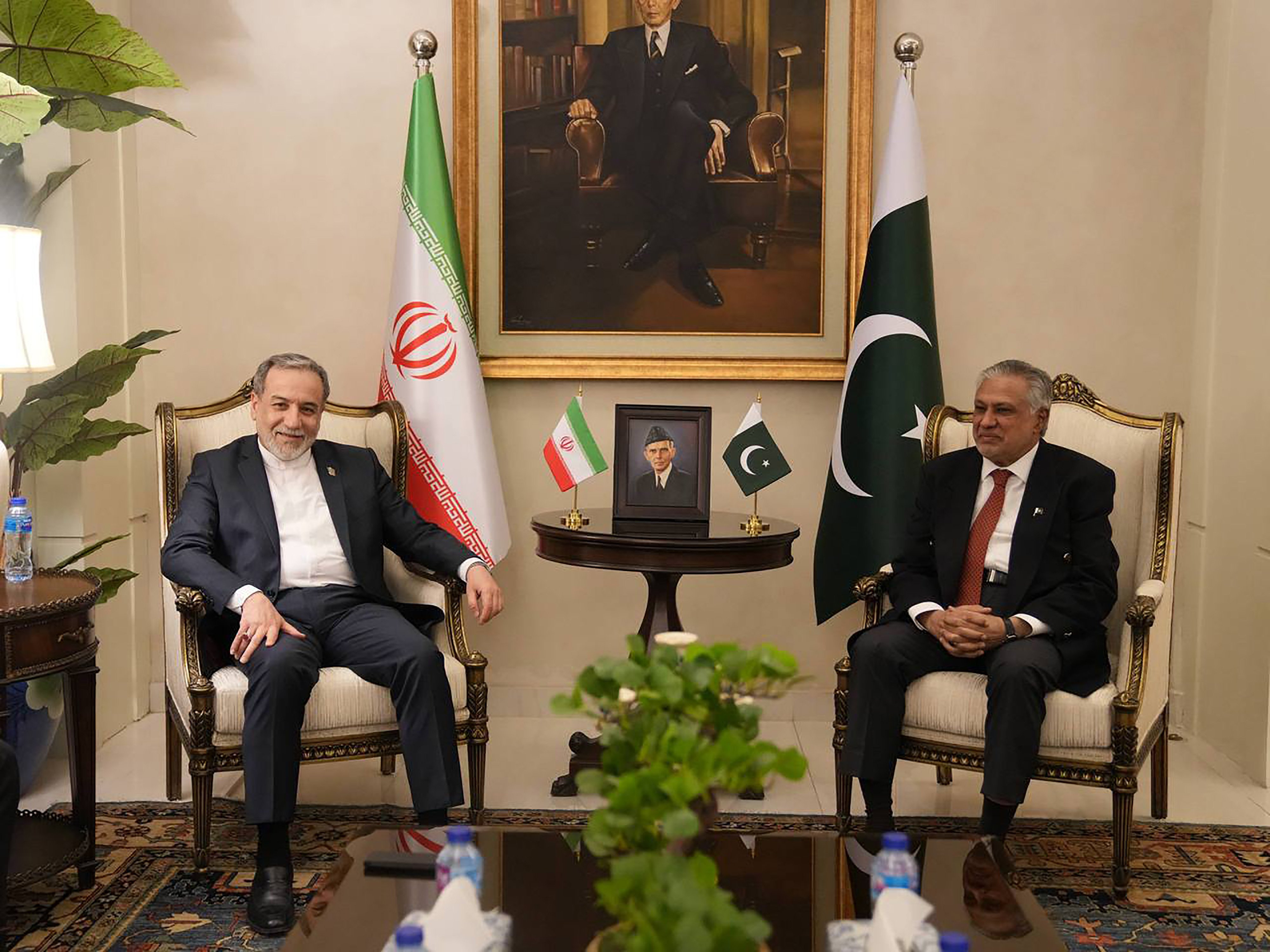
This disparity appears clearly in coverage related to the American-Israeli war on Iran and its repercussions for the Middle East, where many media outlets focused on highlighting security risks and military escalation and linked the course of negotiation to the logic of threat. By contrast, Omani diplomatic discourse presented a different model, based on the call for a ceasefire and a return to dialogue as the only viable path. This contrast does not merely reflect a difference in political positions; it also reveals a difference in the way meaning is constructed. Diplomacy presents an open path that is subject to change, while the media tends to present a relatively complete picture that the public can understand quickly, even if this comes at the expense of some aspects of complexity.
The matter becomes more complicated with the nature of the contemporary media environment, which is built on what may be called the attention economy. Media institutions compete to attract the public in a space crowded with information, which pushes them to favour stories that are more dramatic and more capable of spreading. In the context of wars, narratives of escalation and confrontation are more attractive than narratives of negotiation and gradual solutions, because the former present a clear conflict and sharp binaries between two sides, whereas the latter present a complex path based on concessions and balances. This makes diplomatic discourse less able to compete within this economy built on speed and impact.
Nevertheless, the relationship between media and diplomacy cannot be reduced to one of contradiction or opposition. The media does not necessarily work against diplomatic tracks, but it also does not operate according to their logic. It is governed by different considerations related to the nature of journalistic work, the demands of the public, and the pressure of time, while diplomacy is subject to political and strategic considerations that require it to move cautiously. From here, the apparent tension between them is, to a large extent, the result of a difference in rhythm: diplomacy needs time and calm, while the media works under the pressure of the moment and the acceleration of events.
Nor does this disparity mean that one of the two fields is absolutely more accurate than the other. The media reveals important aspects of reality and contributes to holding political actors to account, while diplomacy provides channels of communication that can prevent conflicts from worsening. The problem appears when one is evaluated by the standards of the other. When the media is asked to reflect the full complexity of diplomatic tracks, it may lose its ability to communicate with the public; and when diplomacy is asked to be fully transparent, it may lose its negotiating effectiveness.
The media produces a fast and simplified narrative that enables the event to be understood, while diplomacy manages a complex and gradual track aimed at reaching an outcome. Between these two logics, a state of apparent tension takes shape, but in essence it expresses a difference in the way reality is dealt with.
In light of the transformations that the media sphere has witnessed in recent years, especially with the spread of social media, the boundaries between the two discourses are no longer as fixed as they once were. Diplomatic discourse itself has become, in part, directed at the broad public through digital platforms, in an attempt to influence public opinion or manage the international image of the state. This has led to a partial overlap between the two fields, but it has not eliminated the fundamental differences between them. Rather, it has made them more complex, because diplomatic messages are sometimes formulated in a media-like language, while media outlets have come to deal with official statements that carry within them negotiating dimensions that do not fully appear.
In this context, understanding the relationship between media and diplomacy becomes necessary for explaining how narratives around wars and crises are formed. The media does not merely transmit events; it contributes to arranging them within a specific frame. Diplomacy does not merely manage negotiation; it also seeks to direct messages in a way that serves its objectives. Between these two paths, the general image that reaches the public is formed—an image that may reflect part of reality, but does not fully encapsulate it.
Accordingly, the gap between the two discourses does not stem from a flaw in either one so much as from a difference in function, language, and rhythm. The media produces a fast and simplified narrative that enables the event to be understood, while diplomacy manages a complex and gradual track aimed at reaching an outcome. Between these two logics, a state of apparent tension takes shape, which may sometimes be understood as contradiction, but at its core it expresses a difference in the way reality is dealt with: the media seeks to interpret it, while diplomacy attempts to change it.
![Workers at Télam mobilise as the Argentine government plans to shut down the state news agency [SomosTelam.com.ar].](/sites/default/files/ajr/2024/Picture1_0.png)



















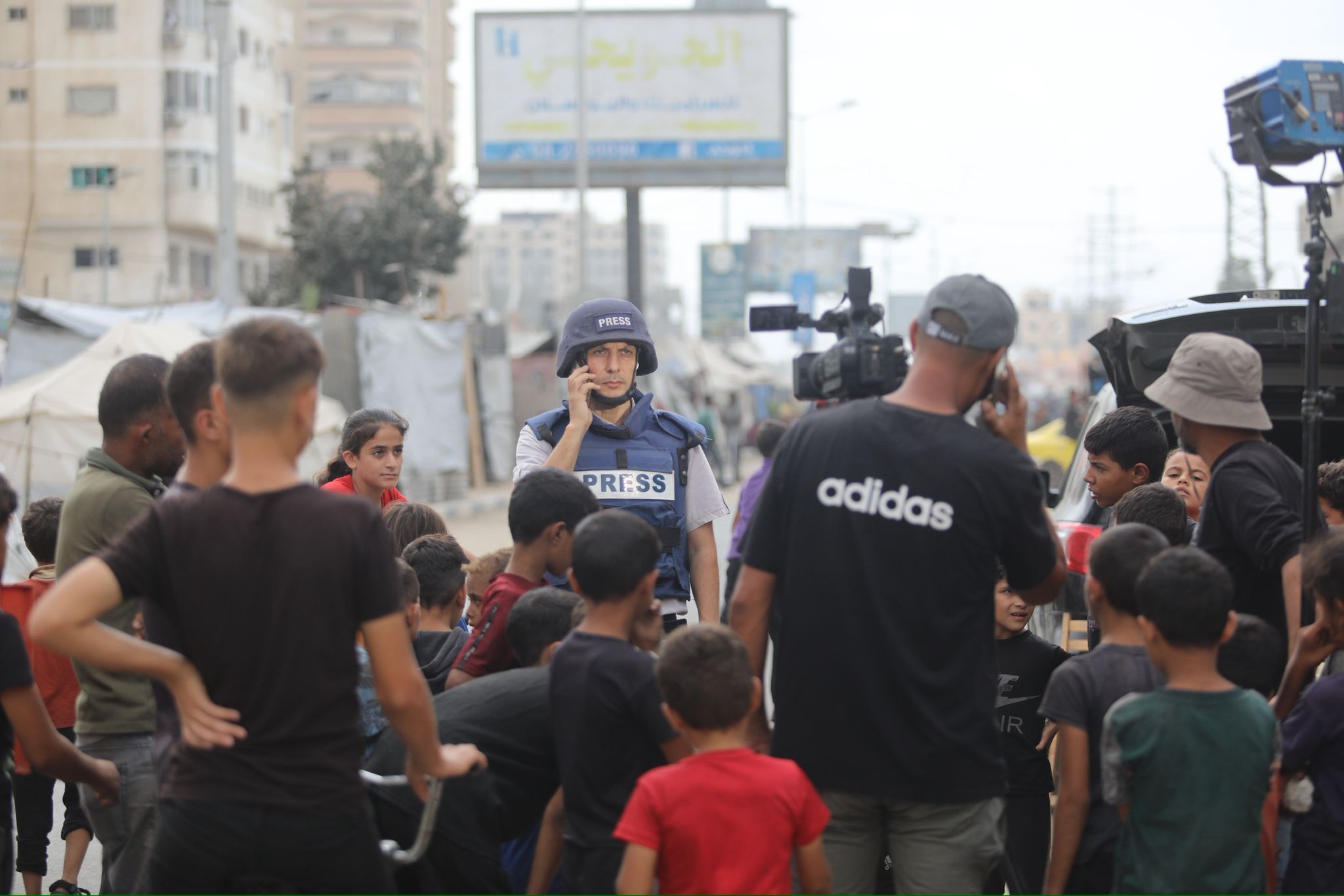






![Palestinian journalists attempt to connect to the internet using their phones in Rafah on the southern Gaza Strip. [Said Khatib/AFP]](/sites/default/files/ajr/2025/34962UB-highres-1705225575%20Large.jpeg)